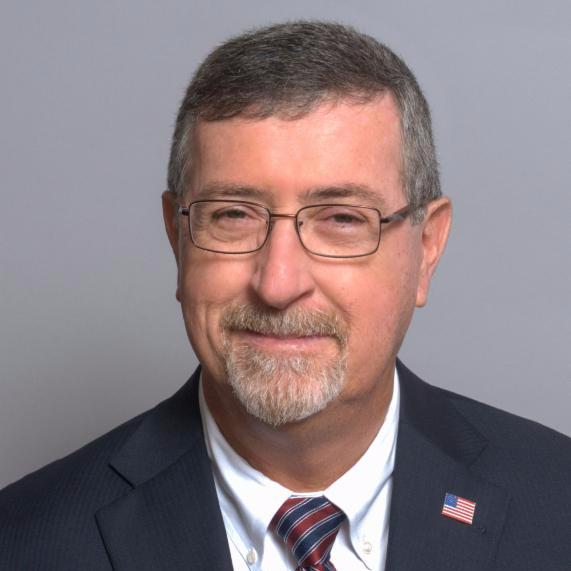
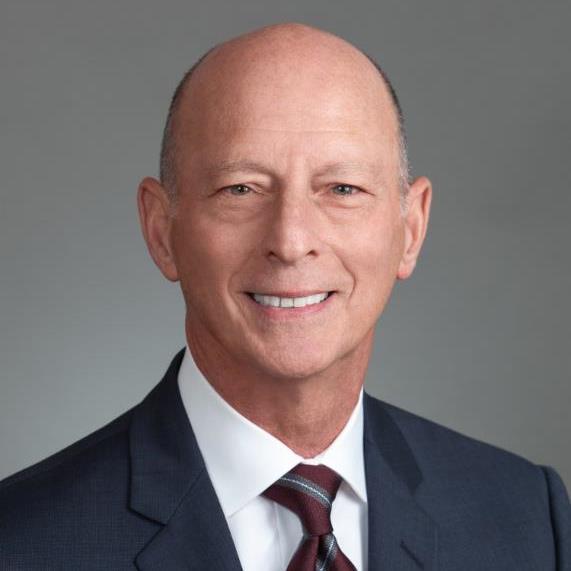
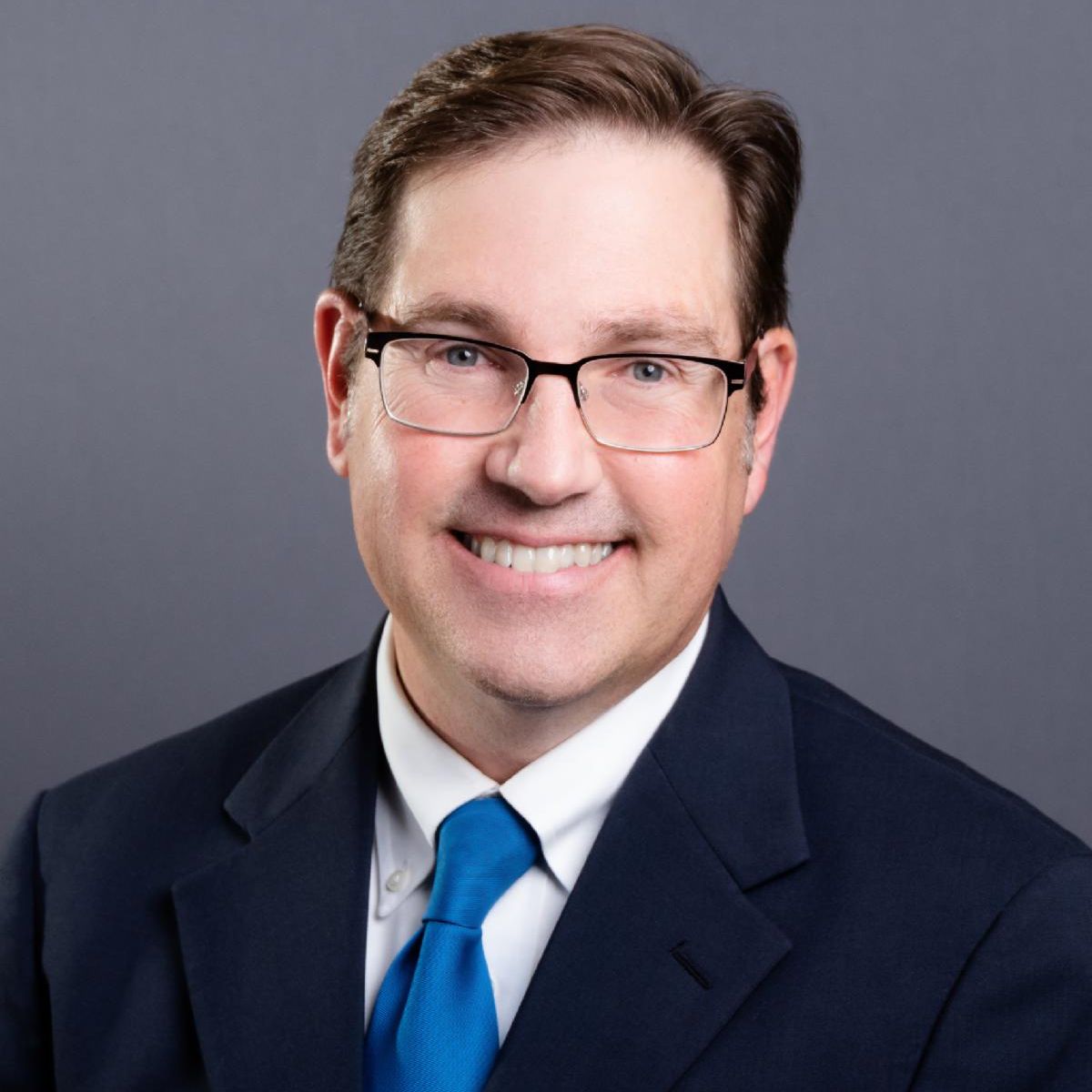
As a statewide group, collectively we are looking toward the future and considering the current and potential impacts of COVID-19 on the land development industry. We are working hard to help you navigate the many novel and complex business and legal issues that are arising. You can find the new federal and state government actions which we are tracking here.
|
|
 WHY SHOULD LANDOWNERS AND DEVELOPERS SUPPORT LEGISLATION TO ALLOW
FLORIDA'S LOCAL GOVERNMENTS TO USE
VIRTUAL PUBLIC MEETINGS AND HEARINGS?
|
The COVID-19 pandemic has changed how most industries, political entities, and companies operate, and local governments are no exception. It has taken a pandemic for landowners and developers to realize that one of the most significant risks in getting business done is in whether their local government is prepared to conduct operations during an emergency situation. At the beginning of the pandemic, local governments were faced with the difficult situation where in-person meetings 1 were no longer a safe option, yet there are certain statutory and constitutional requirements to transact official business. To keep the business of local governments moving, Governor DeSantis suspended the in-person meeting requirement under Executive Order ("EO") No. 20-69, but this suspension was never intended to last forever, or even to the end of the pandemic. As the State of Florida moves into Phase 3 and the suspension expires, local governments are again left with a difficult situation of resuming in-person public meetings with the risk of continuing the spread of COVID-19, or potentially violating Florida Statutes and continuing virtually. I. Legal BackgroundArticle I, Section 24(b) of the Florida Constitution requires that all local government meetings where "official acts are to be taken or . . . public business . . . is to be transacted . . . be open and noticed to the public." The Florida Sunshine Laws, chapter 286, Florida Statutes, require all local government meetings to be open to the public at all times and, for certain "propositions," there must be an opportunity for public comment. Neither the Sunshine Law nor the Florida Constitution specifically requires that members of the public body be physically present during a meeting or even addresses the means of holding public meetings. For the last 23 years, many state agencies and other special entities have conducted public meetings via communications media technology in full compliance with Florida Statutes and the Florida Constitution. So why are local governments treated differently? Under section 166.041(4), Florida Statutes, for a municipality to enact an ordinance or adopt a resolution, there must be "an affirmative vote of a majority of a quorum present." The word "present" has been interpreted by many Florida Attorney Generals, including the current Attorney General Ashley Moody, as an in-person meeting requirement for the majority of a quorum. Other statutes require public meetings be held at an "appropriate place" in the county or municipality. See section 125.001(1), Florida Statutes; section 166.041(1)(a), Florida Statutes. Under this interpretation, fully virtual local government public meetings are impermissible. At the beginning of the pandemic in Florida, Governor DeSantis signed EO No. 20-69, suspending any Florida Statute requiring a quorum to be physically present or a local government body to meet at a specific public place. This EO was subsequently extended by EO No. 20-123, EO No. 20-150, EO No. 20-179, EO No. 20-193, and finally EO No. 20-246 to November 1, 2020. Once EO No. 20-69 expires, local governments will be faced with another tough decision amid this pandemic. While there have been many bumps and bruises along the way, with some local governments pausing certain types of public meetings for months until it and the public could be trained on the new technology platforms to conduct virtual meetings, most local governments have adjusted. Some local governments have adopted hybrid options, where the governing body appears virtually and the public appears in-person, in compliance with social distancing requirements and mandatory mask orders. Others are completely virtual, with members of the public registering to appear in advance of the meeting and are then sent a link and password to participate. And then, there are a few local governments that have continued in-person public meetings with precautions but without any virtual technology platforms. II. Why the Legislature Should Allow Virtual Meetings to ContinueSeveral advantages to virtual public hearings have emerged in the last six months. The most important is that it increases public access and participation in local governments. The United States and Florida Constitutions provide a fundamental right to petition the government. Yet, in many instances, there is only a small percentage of the public with the time to sit through hours-long public meetings and wait for their allotted time to speak. Many public meetings are during the day when people are working, raising equity concerns about who can actually arrange to attend these meetings. With virtual public hearings, members of the public can address their government from the comfort of their own home or office while completing other tasks until it is their turn to speak. This allows more people to get involved in their local governments and provides local governments with a more well-rounded picture of the public's perception of projects or policies. Second, virtual meetings could be used to decrease costs for the local government and public. There is less overhead, such as wear and tear on buildings, security, and printing. And members of the public no longer have to take time off of work to sit at an indefinite public meeting or spend the time and resources required to make what can be a long trek to the site of a hearing. Third, many local governments have found that the meetings can be conducted more efficiently and that public comment is more meaningful and to the point. It is no secret that public meetings can occasionally turn into an episode of Parks and Recreation. But, because of technology features, the governing body can quickly take back control from unruly members or those who try to speak beyond their allotted time. The virtual public meetings do, however, come with their fair share of risks. Individuals without internet access will be at a disadvantage. This issue is why some local governments, such as the City of Tampa, have moved to the hybrid approach of providing individuals with a public space to speak, but the governing body and staff appear via a virtual platform. Another risk is the technology glitches that can derail or halt a meeting. However, as this technology becomes more common, updates are made, and the local governments and public get comfortable with sharing screens and unmuting themselves, we expect the glitches to decrease. So where will public meetings go from here? Because EO No. 20-69 will expire next month, the only path to continuing virtual public meetings is through legislation in the 2021 Legislative Session. Again, it has taken a pandemic for landowners and developers to realize that one of the most significant risks in getting business done is in whether their local government is prepared with a plan to conduct operations during an emergency situation. We believe that, when faced with emergency situations such as pandemics and hurricanes, local governments should be able to choose whether to move to fully virtual meetings. Our growing Land Development, Zoning & Environmental team and Director of Government Affairs, Marco Paredes, are uniquely positioned to advocate for our clients and assist in formulating strategies to achieve their policy goals regarding virtual local government meetings and other challenges from the COVID-19 pandemic. Please contact us should you have any questions. 1 For purposes of this Article, "meetings" and "hearings" will be used interchangeably, though we recognize the higher level of due process required for hearings. |
LEGAL UPDATE
|
|
Third DCA Holds That a Local Ordinance Imposing Fines on Short-Term Rentals Directly Conflicts With Florida Law
In 2010, the City of Miami Beach (the "City") enacted by local ordinance banning short-term rentals for apartments and townhomes. If property owners violated the ordinance, fines were imposed depending on the number of previous violations, ranging from $20,000 to $100,000. A local property owner brought suit against the City, claiming that the fines imposed by the ordinance exceeded statutory limits as well as raising several constitutional arguments. The Third DCA found that the fines imposed by the ordinance were in direct conflict with the Local Government Code Enforcement Boards Act (the "Act") found in section 162.09(2)(d), Florida Statutes (2020). Noting that state statutes are superior to municipal ordinances, the Court held that the ordinance was in violation of the Act. The Court held that the fines imposed by the ordinance were thus severed from the ordinance; however, the Court held that the remainder of the ordinance was still good law. View More
|
Northern District of Florida Rules That County's Amendment to Land Development Code Placed a Substantial Burden on Religious Non-Profit Transition Home
City Walk - Urban Mission Inc. ("Plaintiff") operates a religious-based transition home for registered sex offenders and other adults in need. The Plaintiff is located within the jurisdiction of Wakulla County (the "County") and thus is subject to its Land Development Code ("LDC"). The Plaintiff, upon approval by the County to operate as a "family care home," signed a 10-year lease for the property in 2013. Due to complaints by neighbors, and after several attempts by the County to cite the Plaintiff for violations of the LDC, the County's LDC was amended in 2015 to only allow "community residential homes" ("CRH"), removing "emergency shelter homes" and "family care homes" as approved uses under the LDC. Despite originally qualifying as a family care home, the Plaintiff was unable to qualify as a CRH under the amended Code and proceeded to file suit against the County under the Religious Land Use and Institutionalized Persons Act ("RLUIPA"), arguing that the County violated RLUIPA by placing a substantial burden on its ability to exercise its religion. The Court ruled in favor of the Plaintiff, stating that: (1) the LDC amendment placed a substantial burden on the Plaintiff's exercise of religion, and (2) the County failed to show the amendment serves a compelling interest and was the least restrictive means of furthering that interest. View More
| |
Southern District of Florida Rules That City's Code Enforcement Actions and Ordinances Applying to For-Profit Recovery Home Were Not in Violation of the Americans with Disabilities Act or the Fair Housing Act
Sailboat Bend Sober Living ("Plaintiff") operates a for-profit recovery home for recovering addicts in the City of Fort Lauderdale (the "City"). Over a span of eight years, the Plaintiff received several code enforcement citations, including the lack of a fire sprinkler system, lack of a current business license, and emergency escape routes being blocked by AC units and boarded windows. In order to comply with the City's code, the Plaintiff chose to reduce the number of tenants living in the recovery home rather than upgrade the property to be in compliance. The Plaintiff eventually brought suit against the City, claiming that the City's code violated both the Americans with Disabilities Act ("ADA") and the Fair Housing Act ("FHA"). The Court disagreed with the Plaintiff, ruling that: (1) the code was not discriminatory, (2) the City was not required to waive fire code requirements as a reasonable accommodation under the ADA, and (3) the City did not intentionally discriminate against the recovery home. View More
| |
First DCA Grants Electric Company Prescriptive Easement Over Private Property From Mistaken Placement of Utility Poles Fifty Years Prior
Okefenoke Rural Electric Membership Corporation ("OREMC") inadvertently placed transmission lines on Plaintiff's, Dayspring Health, LLC ("Dayspring"), private property fifty years ago. Dayspring filed suit against OREMC, claiming they did not consent to the use of the lines on their property. OREMC claimed it was entitled to a prescriptive easement over the property because the utility poles have been on the property for decades, which would grant OREMC the property without providing just compensation to Dayspring. The First DCA held that OREMC did have a prescriptive easement because Dayspring's predecessors did not consent to the utility poles' placement on their property. Further, there was no evidence that the prior property owners or OREMC knew the utility poles were on private property. The court stated that landowners cannot be unaware that their property is being used and simultaneously consent to its use. View More
| |
Fourth DCA Holds That a Court May Not Substitute Its Judgement for Governmental Body Asserting Right of Eminent Domain
Brevard County (the "County") sought to acquire easements over five beachfront properties for the Brevard County Shore Protection Project ("Project"). The County filed a petition for eminent domain (the "Petition") in December 2018 seeking an unrestricted public use on the entire easement. Disputes at the trial court arose over the Petition's description of the easement's legal boundaries and the conducted survey's legal description of the easement. The trial court entered an order of taking in favor of the County finding that the importance of the easement was "obvious." However, the court limited the order "to reference such public use as is currently in existence." On appeal, the Fifth DCA reversed the lower court's ruling, holding that while the County did not violate the state's eminent domain statute requirements, the County failed to provide substantial evidence to show that the entire easement was reasonably necessary for the public use. The evidence showed that only a portion of the properties were needed for the public use requirement. Furthermore, the Court found the trial court unlawfully attempted to cure the defects in the County's Petition, and therefore acted outside the scope of its authority. View More
| |
Third DCA Holds That Developer Properly Brought a Cause of Action for Declaratory Relief When Local Government Exempted Itself From Filing Application for Comprehensive Plan Amendment
Yacht Club by Luxcom, LLC ("Yacht Club") planned to develop a large-scale hospital on a 71-acre parcel of land located in the Village of Palmetto Bay (the "Village"). The Vice Mayor proposed a comprehensive plan change and a zoning map change in an effort to stop the development. Unlike other applicants for comprehensive plan changes, the Village was exempted by the Village's Code of Ordinances ("Code") from having to submit an application for these changes. The Yacht Club subsequently filed a single-count complaint against the Village alleging that the Village's exemption from filing an application to amend the comprehensive plan was in violation of section 163.3181, Florida Statutes, which requires the Village to "provide effective public participation." The trial court dismissed the complaint because the Yacht Club had not yet exhausted other remedies available in challenging comprehensive plan and zoning map amendments. The Third DCA reversed, holding that the Yacht Club's complaints were challenging existing portions of the Code, rather than the proposed legislative changes. The Court determined that the challenge was properly sought under section 86.021, Florida Statutes. View More
| |
First DCA Denies Motion to Stay Alcohol License Suspension Due to Non-Compliance With COVID Emergency Orders; Dissent Argues That the Agency Did Not Provide Enough Evidence to Support Suspension of License
The Department of Business and Professional Regulation ("DBPR") suspended the license of Show-N-Tail ("Plaintiff"), a gentlemen's club that made a significant portion of its revenue from alcohol sales, when DBPR discovered that the club was not in compliance with COVID emergency orders. The Plaintiff challenged the suspension, requesting that the First District Court of Appeal ("Court") stay the suspension because the loss of the license would cause serious economic harm to the business. The Court denied the motion to stay. However, the dissent provided a lengthy opinion arguing that the stay should be granted because DBPR did not provide sufficient evidence for the Court to determine that a stay would cause harm to the state. View More
| |
Second DCA Holds That Local Governments Must Give Notice and an Opportunity to Submit Proposals When Selling Any Property Located in a Community Redevelopment Area
The City of Tampa ("City") issued a Request for Proposals ("RFP") for a historic building located in a Community Redevelopment Area ("CRA"). The City later entered in a lease with a developer for the building. However, the lease included another building that had not been part of the original RFP. Riverside Heights Development ("Riverside") brought suit against the City, arguing that the City had failed to provide notice and an opportunity for redevelopers to submit offers for the properties as required by section 163.380, Florida Statutes. The Court agreed, and held in favor of Riverside. The Court reasoned that the statutes language, requiring that "any property" being sold by the City in a CRA be noticed and accept proposals, applied to any property-not just properties acquired after the CRA was formed. View More
|
TEAM MEMBER SPOTLIGHT
|
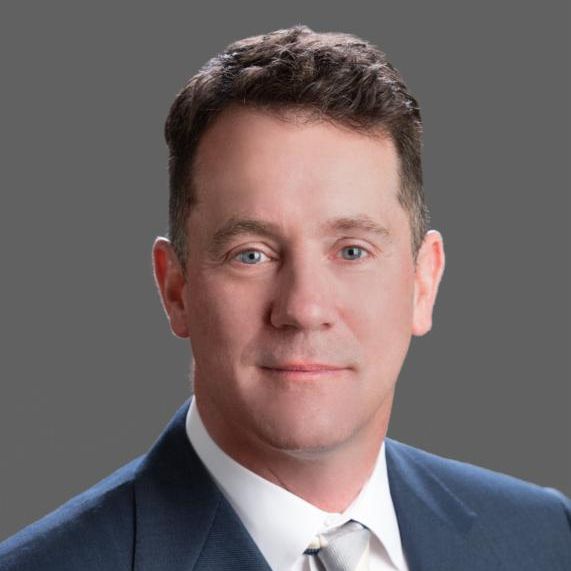
With the 2020 election quickly approaching, we want to highlight the head of our Election and Political Law practice area.
|
Glenn's Practice: Glenn represents clients in every aspect of participation in the political process and in complex civil and government-related matters across the country. In his Election and Political Law practice, he advises public officials, candidates and campaigns, political action committees, corporations, membership and non-profit organizations, lobbyists, and high-net worth individual donors on a range of issues, including campaign advertising and finance, disputed elections, Florida Open Government / Sunshine Laws, and ethics issues. Glenn also counsels clients on drafting and advancing proposed legislation, constitutional amendments, and other ballot initiatives.
|
Recent Experience: Glenn is the Chairman and legal counsel of the All Voters Vote committee, sponsor of Amendment 3 - the All Voters Vote amendment. This proposed amendment to Florida's Constitution would let all voters vote in the primary elections for the Florida Legislature, Governor, and Cabinet, regardless of the political party affiliation of the voter or candidate. Currently, those primaries are closed to all voters except party members (who can only choose between candidates from their own party). Approximately 3.8 million voters are blocked from voting in closed primaries merely because they did not join one of the two major political parties. Florida's closed primary system disproportionately impacts minority, women and young voters. Under All Voters Vote, no voters are excluded based on party registration. If the measure is adopted, voters will no longer be forced to join a party just to cast a meaningful ballot and have their voice heard. In an All Voters Vote primary, all candidates appear on the same ballot and all qualified registered voters can cast a ballot for the candidate of their choice-regardless of partisanship. From there, the top two vote getters advance to the General Election. This system is already used throughout Florida in over 400 municipal and county elections every cycle. Glenn successfully argued before the Florida Supreme Court to put the measure on the ballot, and, now, it is up to the voters to decide. All Voters Vote is Amendment 3 on the General Election ballot and has garnered significant media attention.
All Voters Vote received a "Yes" recommendation from Florida Tax Watch, an independent, non-partisan, nonprofit research institute and government watchdog. More information about the initiative can be found in the below articles:
|
|
|
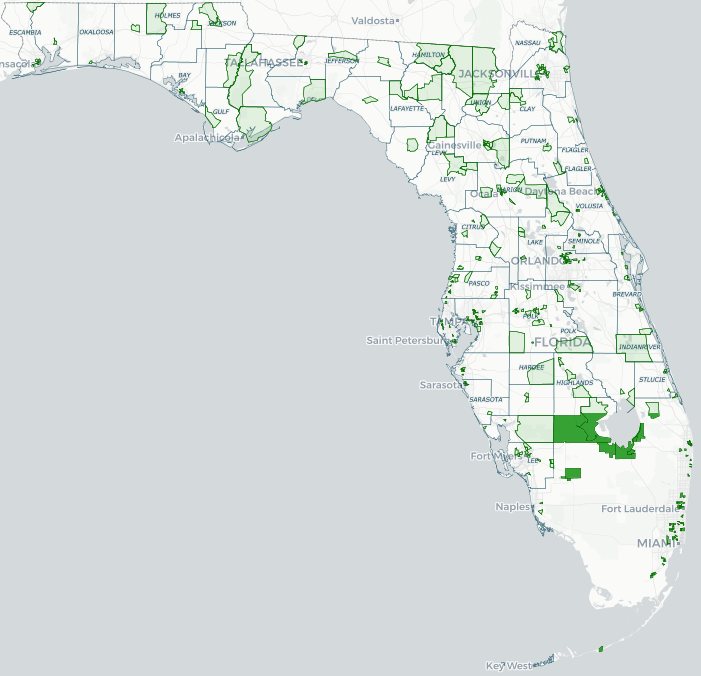
QUALIFIED OPPORTUNITY ZONES
|
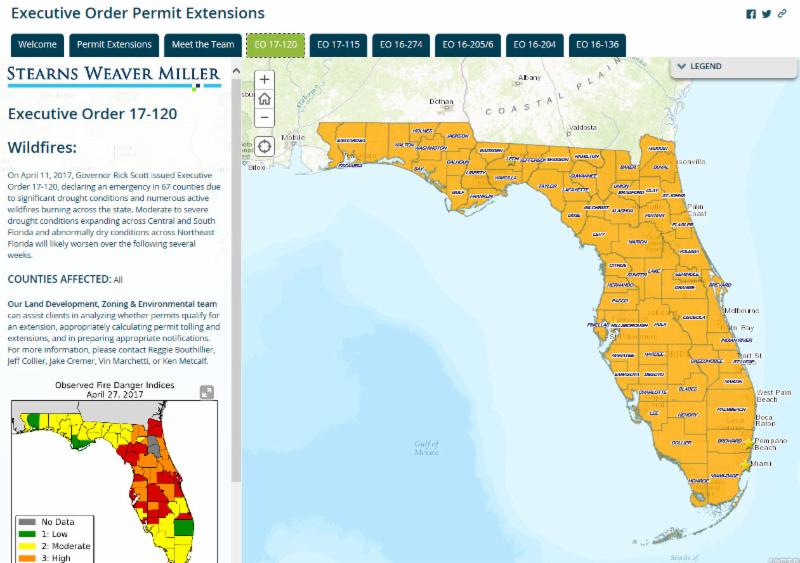
EXECUTIVE ORDER PERMIT EXTENSION TRACKER
|
RECENT NEWS
|
|
|
MEET THE TEAM
|
*Jeffrey Cooper, Ken Metcalf, Michael Paparesta, Marco Paredes, Chris Smith, and David Smith are not attorneys and are not authorized to practice law.
Ken and David are highly experienced planners. Ken is AICP certified.
Chris is a highly experienced GIS analyst.
Jeffrey and Michael are highly experienced real estate analysts.
Marco is a highly experienced government affairs professional.
|
Special thanks to Nicholas Marler, Nicole Neugebauer, and Christopher Perrigan who assisted in the drafting of this edition. Nicholas is a third-year Juris Doctor Candidate at Stetson University College of Law. Nicole is a Juris Doctor Recipient and is pending admission to the Florida Bar. Christopher is a second-year Juris Doctor Candidate at the Florida State University College of Law.
|
|
|
|
|