|
IN THIS ISSUE: May 12, 2025
Legal Updates | Team Member Spotlight | Speaking Engagements | News Updates | Meet the Team
| |
|
Shands v. City of Marathon, No. 3D21-1987, 2025 WL 396272 (Fla. 3d DCA Feb. 5, 2025).
Florida Third District Court of Appeals Determines that Transferred Development Rights Apply to Just Compensation Instead of Property Value for Regulatory Takings
The Shands purchased an island in the Florida Keys but were prevented from developing the island due to Monroe County’s adoption of a Comprehensive Plan that altered the zoning status of the island from General Use to Conservation Offshore Island. The Shands applied to construct a dock to access the island, but were denied, and the zoning authority foreclosed any use of the island other than for beekeeping or personal camping. The Shands filed a lawsuit, claiming a regulatory taking of the island because they had no economically beneficial use of their property. The City of Marathon countered, arguing that the transferred development rights (“TDRs”) awarded to the Shands gave the property enough value to avoid a regulatory taking. The Third District Court of Appeal (“Third DCA”) relied on Justice Scalia’s concurrence in Suitum v. Tahoe Regional Planning Agency, 520 U.S. 725 (1997) to hold that the government may not “avoid a categorical, as-applied takings claim by awarding TDRs.” The Third DCA concluded that by allowing conservation as the only future use of the island, the Shands were required to preserve the island in its natural state, which implicated a regulatory taking regardless of TDRs being offered.
| | |
Hochstein v. City of Miami Beach, No. 1:24-cv-24690-KMM, 2024 WL 496658 (S.D. Fla. Dec. 3, 2024)
United States District Court Holds that Resolution Requiring Special Events Permits for “Art Basel” in Miami is Not a Taking and Does Not Warrant a Temporary Injunction
In November of 2024, the City of Miami issued the “Art Week PHS House Party Resolution” (“Resolution”) amending the City’s special event guidelines to require permits for parties in single-family homes on Palm, Hibiscus and Star Islands during the week of “Art Basel.” Once the Resolution passed, each plaintiff applied for a special events permit where the City expedited the processing and issued permits for each party. After Art Basel week, the plaintiffs filed a lawsuit asserting that the Resolution violated constitutional due process and First Amendment rights, Florida law, and municipal law. The plaintiffs also requested a temporary injunction from the Resolution. The United States District Court for the Southern District of Florida held that the Resolution did not violate constitutional due process or First Amendment rights because a taking did not occur since the special events permits were issued and the plaintiffs had no vested right to host parties. The Court then held that the Resolution did not violate any Florida laws because the statutes the plaintiffs cited were inapplicable statutes related to declaring a state of emergency and notice requirements. The Resolution was not related to a state of emergency and the notice requirements for ordinances do not apply to actions temporary in nature, such as the Resolution. The Court also held that the Resolution did not violate municipal law because members of the community were able to speak at the City Commission meeting regarding the Resolution, the Resolution was on the Commission’s agenda, and notice was provided. The Court further held that targeted electronic notices for the plaintiffs were not required because the Resolution did not impact the plaintiffs’ quality of life. Finally, the Court also held that the plaintiffs did not suffer irreparable harm because any lost costs could be sought through money damages.
| | |
Osborne v. Walton County, No. 1D2021-3898, 2025 WL 467201 (Fla. 1st DCA Feb. 12, 2025)
Florida First District Court of Appeal Holds Failure to Properly Notice Substantial Change to a Development of Regional Impact Development Order Warranted Reversal
Appellant Samuel Osborne challenged the process by which Walton County (the “County”) amended a Development of Regional Impact Development Order (“DRI DO”) on the grounds that the County did not follow special public notice requirements. The DRI DO at issue was revised to settle a previous lawsuit between the homeowner’s association, the County and the developer, Sandestin Investments, LLC (“Sandestin”). Sandestin believed that the revision did not substantially or materially alter the previous DRI DO therefore no additional round of public notice was required for the Walton County Board of County Commissioners (“Board”) to adopt the revised DRI DO. Accordingly, property owners within 300 feet of the project site did not receive notice, by certified mail, that a meeting was held to discuss the revised DRI DO. Osborne appealed and the trial court granted summary judgment in favor of Sandestin because the County complied with general notification requirements under Section 125.66, Florida Statutes. Osborne appealed to the First District Court of Appeal (“First DCA”). The First DCA revised the final summary judgment and remanded to the trial court because the changes between the original DRI DO and the revised DRI DO were substantial and material. Specifically, the revised DRI DO was broader than the original DRI DO because it included a settlement agreement. Accordingly, special notice was required and the County failed to properly notice the revised DRI DO hearing before the Board of County Commissioners.
| | |
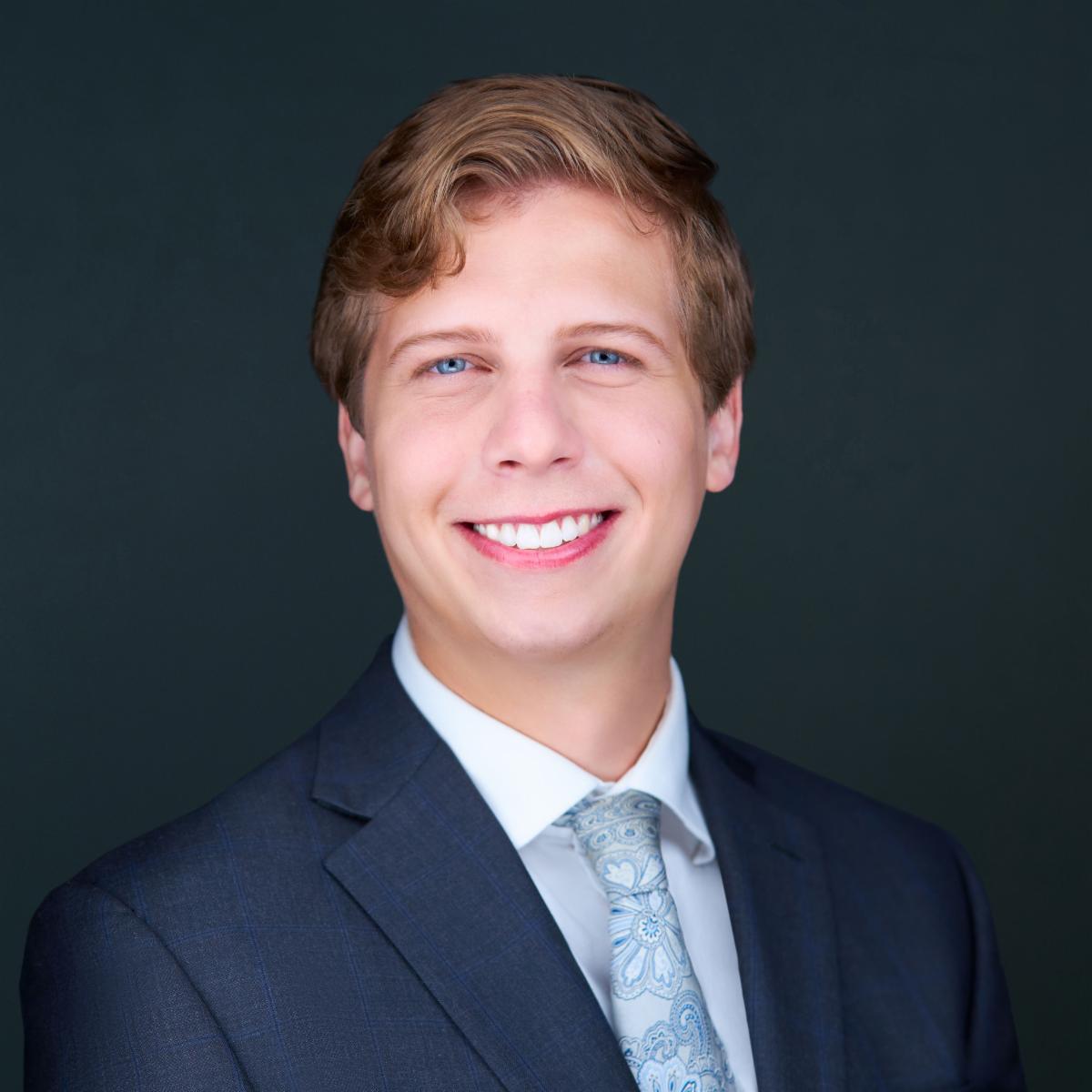
Nicholas M. Sanders
Associate | Tampa
813-222-5056
Email | View Bio
| | |
Nick's Practice:
Nicholas “Nick” Sanders focuses his practice on complex commercial litigation matters in state and federal court. He also has experience in a wide-range of complex land use, permitting and entitlement issues, including his involvement in administrative actions before state and local governmental agencies.
During law school, Nick served as a Judicial Extern to the Honorable Judge Charlene E. Honeywell at the United States District Court for the Middle District of Florida. Nick also clerked with the litigation and land development, zoning and environmental departments in the firm’s Tampa office.
| | UPCOMING SPEAKING ENGAGEMENTS | | |
May 14, 2025 | 2:00 p.m. - 2:30 p.m.
Join Shareholder Jacob Cremer at the Florida Policy Project Florida Housing Summit for a fireside chat "Permit to Build: Cutting Red Tape in Florida & Beyond" which will explore smart solutions to reduce permitting delays from government tape.
Click here for more information.
| | |
Julu 15-18, 2025
We are looking forward to connecting at the 39th Annual Environmental Permitting Summer School in Marco Island!
We are excited to collaborate with industry experts at the conference and are proud to be presenting, sponsoring, and exhibiting again this year.
Register for the conference and visit us at Booth #216! Stay tuned for more information regarding our speakers' schedule of presentations.
| |
-
5/7/25: Landowner and Developer Feedback Critical at Upcoming Public Hearings on Tampa’s Comprehensive Plan Updates
-
5/2/25: Proposed Rescission of Definition of “Harm” Under the Endangered Species Act—and What It Might Mean in Florida
| | MEET OUR LAND DEVELOPMENT, ZONING & ENVIRONMENTAL TEAM | | *Anastasia Barnes, Shawn Halphen, Ken Metcalf, Chris Smith, David Smith, Cynthia Spidell, and Barry Wilcox are not attorneys and are not authorized to practice law. Anastasia, Ken, David, Cynthia, and Barry are highly experienced planners. Ken, Cynthia, and Barry are AICP certified. Chris and Shawn are highly experienced GIS analysts. | | The information provided in this email does not, and is not intended to, constitute legal advice; instead, all information in this email is for informational purposes only. Information in this email is general in nature and may not constitute the most up-to-date legal or other information. Readers of this email should contact us or an attorney of their choice to obtain advice with respect to any particular legal matter. No reader of this email should act or refrain from acting on the basis of information in this email without first seeking legal advice from counsel. Only your individual attorney can provide assurances that the information contained herein – and your interpretation of it – is applicable or appropriate to your particular situation. This email does not create an attorney-client relationship between the reader and the authors of the email or this law firm. | | |
About Stearns Weaver Miller
Stearns Weaver Miller is a Florida-based law firm with more than 150 attorneys and offices in Miami, Coral Gables, Fort Lauderdale, Tampa and Tallahassee. For nearly 50 years, our multidisciplinary team of attorneys and professionals have worked collaboratively to help our clients understand and resolve complex legal issues and disputes. For more information, please visit stearnsweaver.com.
| | | | |