View as Webpage


SciStarter Newsletter − 2026

Flash floods can become dangerous quickly. A new system from UC San Diego, the National Weather Service, and NASA uses satellite data and machine learning to help forecasters identify risks sooner. Read more.


Technology can tell us a lot, but observations from people on the ground remain essential. For example, NOAA⁠ combines public reports with radar, satellite, and other data to improve forecasts and deepen our understanding of weather patterns.


This month, measure precipitation, report local conditions from your phone, or safely clear a storm drain before rain arrives. You can also participate indoors—even helping NASA scientists study clouds and climate on Mars. You never know—we may need that someday!


A quick safety note: Join in only when conditions are safe and follow each project’s instructions.


Science thanks you!


Cheers!

The SciStarter Team

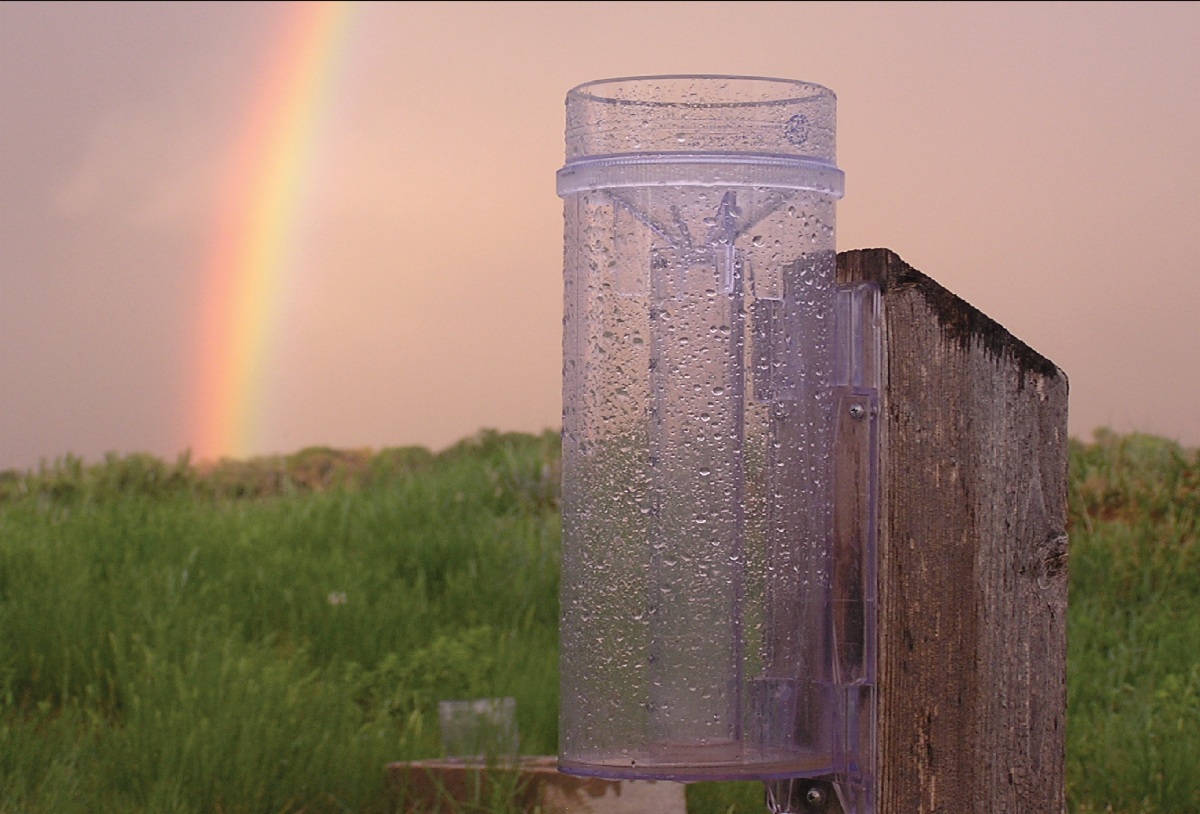
CoCoRaHS

Rain can vary dramatically from one street to the next.


With a simple rain gauge, you can measure and report precipitation where you live and add your observations to a network used by meteorologists, researchers, emergency managers, farmers, and more.


CoCoRaHS participants need an approved rain gauge and project training.


Location: USA, Canada, and the Bahamas

Image Credit: University of Oklahoma

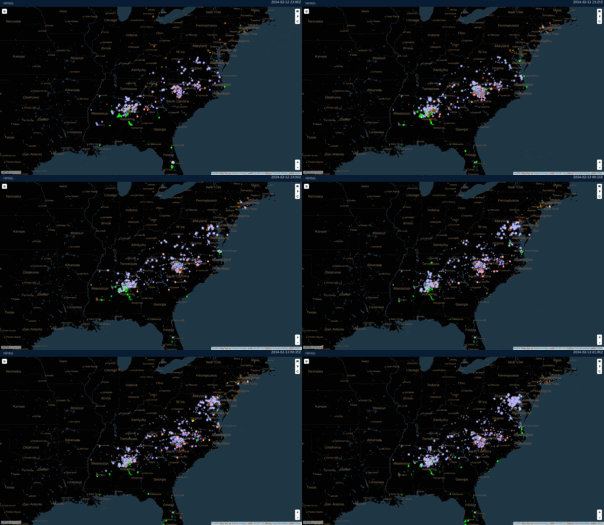
mPING

Radar can show what is happening in the sky, but it cannot always tell what is actually reaching the ground.


Report weather from your phone: rain, snow, hail, fog, and other conditions happening right where you are.


Your report gives weather researchers a quick reality check from below the clouds.


mPING is a project of NOAA’s National Severe Storms Laboratory.


Location: Global

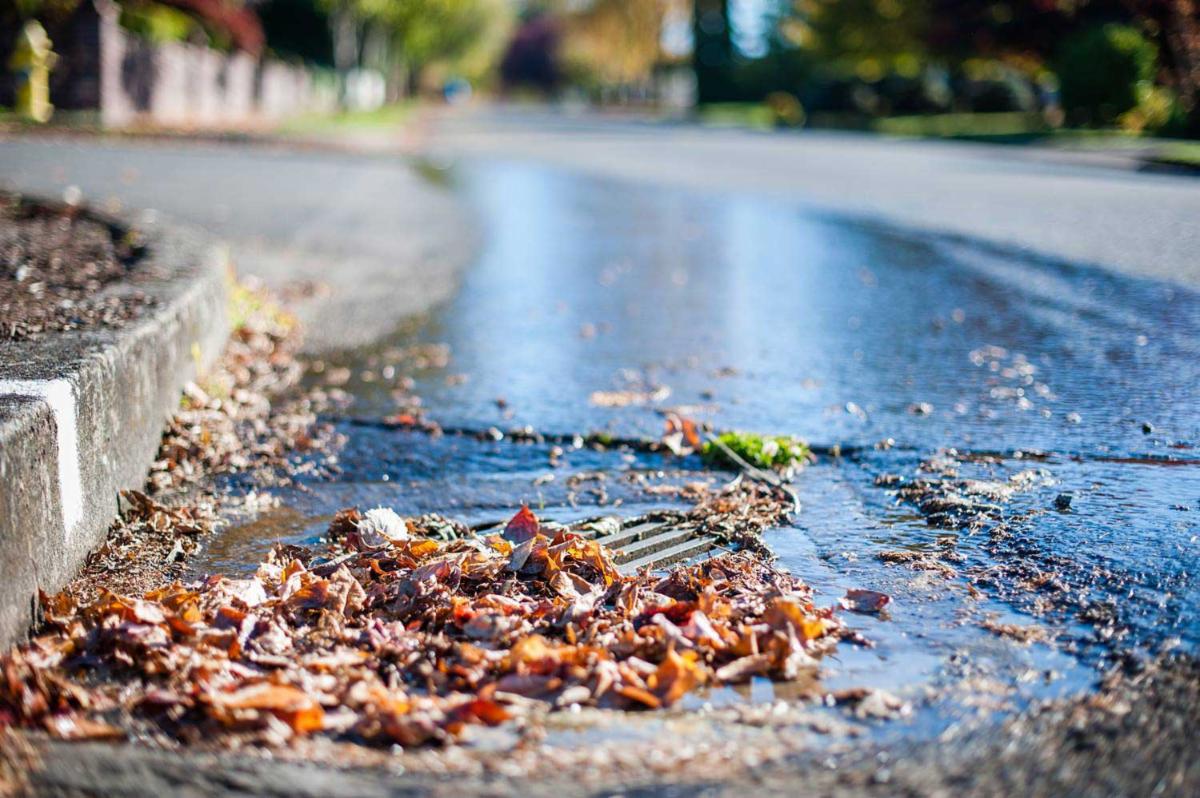
Cleanlet

Find and safely clear a drain! When leaves and litter clog a storm drain, heavy rain has fewer places to go. Cleanlet connects volunteers with registered stormwater inlets that need clearing and can alert participants when rain is on the way.


A few minutes of cleanup can help keep the water flowing where it belongs.


Cleanlet drains should be cleared before storms and only when safely accessible.


Location: USA (where registered Cleanlet inlets are available)

SKYWARN

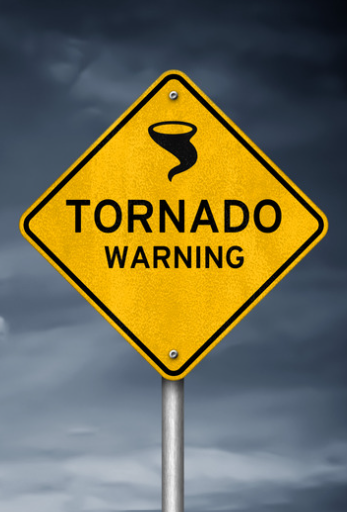
Become a trained weather spotter! When severe weather strikes, SKYWARN volunteers report hail, flooding, tornadoes, damaging winds, and more directly to National Weather Service forecasters, providing critical on-the-ground information.


Make sure to follow instructions and prioritize safety when reporting.


Participants must complete training and report from a safe location.


SKYWARN is a program of NOAA’s National Weather Service.


Location: USA

Not sure where to start? Citizen Science 101 for beginners.

Consider taking your citizen science journey to the next level by earning SciStarter's LinkedIn-ready digital credential. SciStarter's Foundations of Citizen Science training is free, self-paced, and entirely online.


In about an hour, you'll learn how to contribute to real research, find projects that match your interests, and build skills in data collection and scientific inquiry.

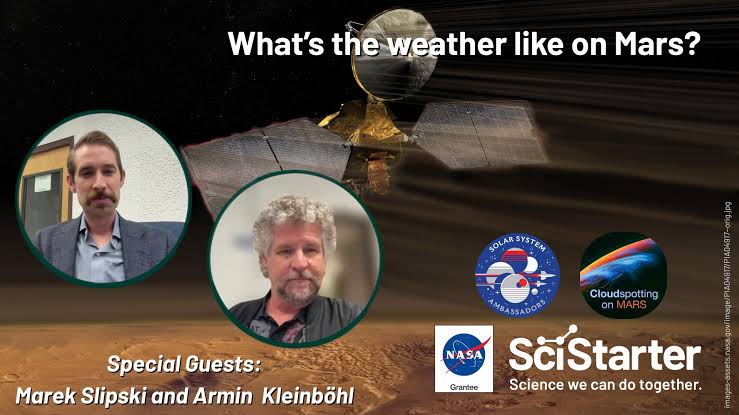
SciStarter Classic: What's the Weather Like on Mars?

As part of the Do NASA Science webinar series, leaders from the Cloudspotting on Mars team joined the SciStarter community to share how to identify clouds and atmospheric features in online images of Mars to inform future missions.


The event recording features the presentation and an audience Q&A.

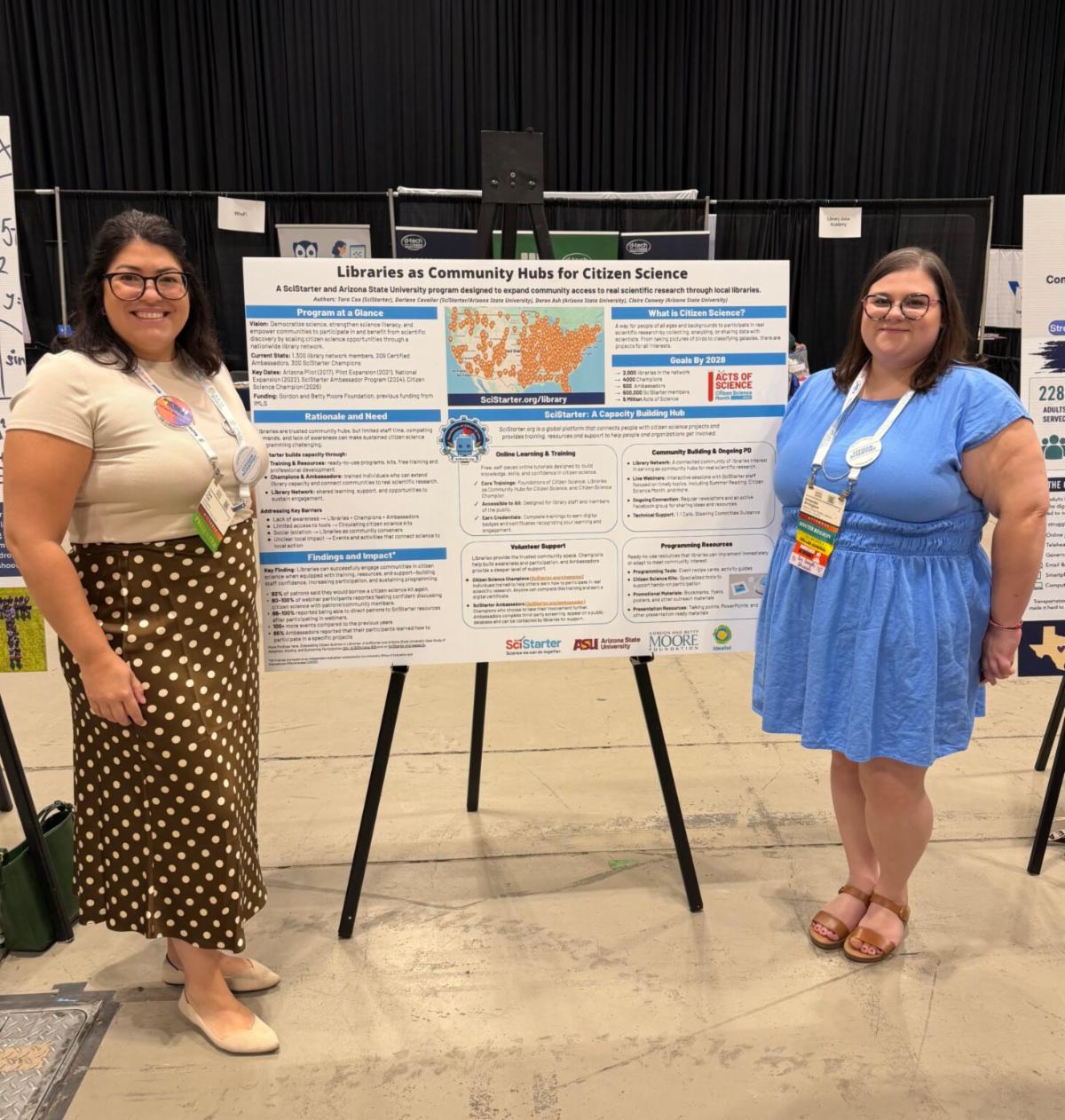
SciStarter at the Association for Rural & Small Libraries Conference

At the Association for Rural & Small Libraries Conference, SciStarter staff were joined by librarians who use SciStarter kits and resources in their programming.


Want to learn how to represent SciStarter at a library conference? Read our blog!

Stall Catchers Turns 10: Global Catchathon

Our friends at Stall Catchers are celebrating their tenth anniversary this October! This gamified research project asks participants to watch videos of blood vessels and mark whether they are stalled or flowing, helping Alzheimer’s researchers at Cornell University analyze data.


Whether you’re a supercatcher or just getting started, join the Global Catchathon this October. Make a team with friends, join the October 1 kickoff, and catch all month long.


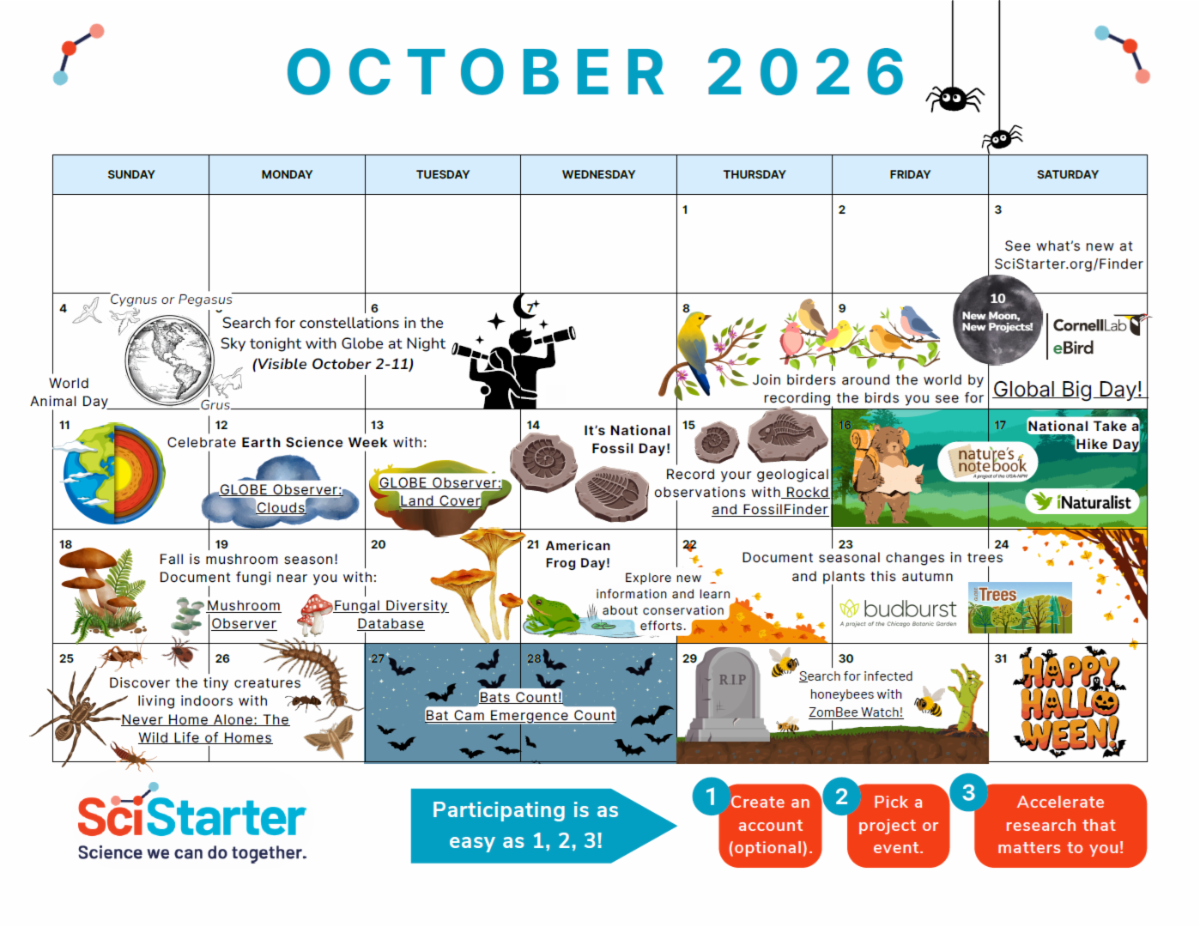
October offers something for everyone.

Click here to explore and print the calendar.


New projects & events featured on SciStarter


...and thousands more featured on the project finder and the event finder! Find an online or local project or event near you.

X Share
LinkedIn Share