View as Webpage


THE UNIVERSITY OF ARIZONA JAMES E. ROGERS COLLEGE OF LAW       |        September 30, 2026


Oct. 7

LLSA and Short Story Reading Club Special Collaboration

Oct. 22–24

Homecoming Weekend

Oct. 24

Red & Blue BBQ


Greetings,


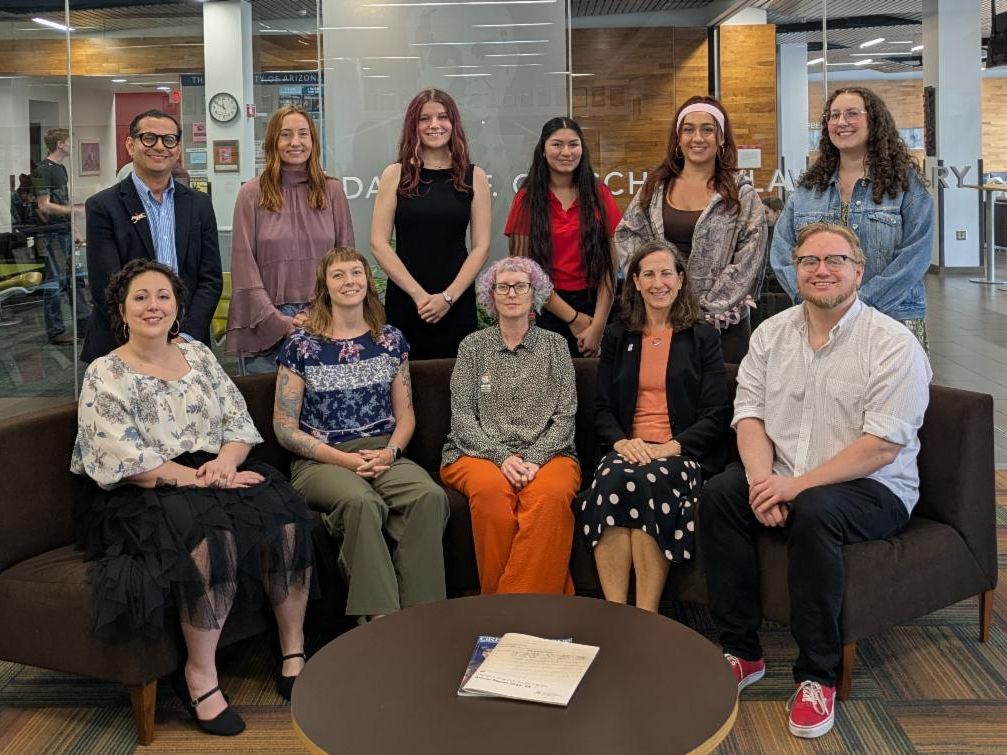
I’m guest-writing this week’s newsletter to highlight what’s happening at the Daniel F. Cracchiolo Law Library.


In addition to our core work teaching legal research (and other courses) to our law students and supporting faculty research and scholarship, members of the law library team have recently earned national recognition for their work on everything from preservation of Navajo Nation documents to integration of generative AI.


Our work has an impact well beyond the library stacks (both physical and virtual). The law library’s leadership on the AI conversation will shape how law students learn across the nation and, in turn, impact the firms and organizations they join after graduation.


We are also working to spread information to underserved populations. Our award-winning, grant-funded document digitization work in partnership with the Navajo Nation is helping the tribe secure their water rights and protect their Indigenous information and data sovereignty. And our correspondence initiative and best practices guide for incarcerated patrons is reaching individuals with limited access to legal information whose everyday lives are touched by the justice system.


Read on to learn more about these and other initiatives.


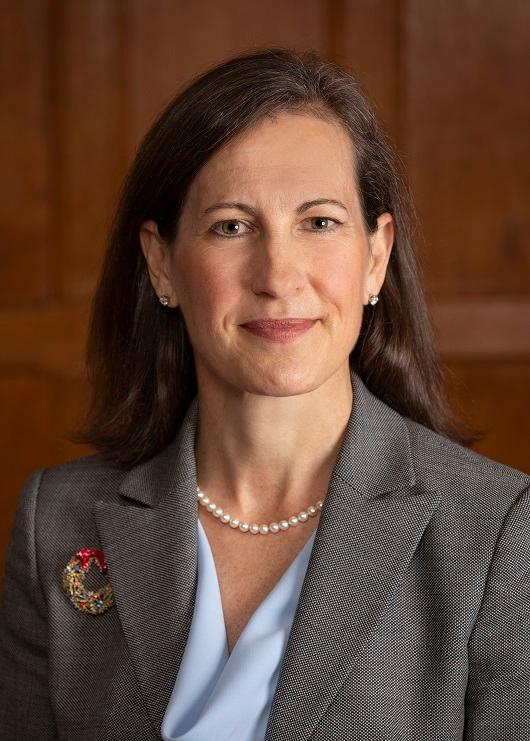
Teresa Miguel-Stearns

Director, Daniel F. Cracchiolo Law Library

Associate Dean for Legal Information Innovation

Professor of Law


FEATURE


Law Librarians Rock in Cleveland: Multiple Awards at Annual Conference

Arizona Law had a strong showing during the American Association of Law Libraries (AALL) Annual Meeting and Conference held over the summer in Cleveland, including awards for student and faculty publications and information access.


Student Papers Explore AI for Pro Se litigants, U.S. Embassy Libraries


Emily Poling (above, right), a third-year law student/Master of Arts in Library & Information Sciences (MLIS) student, and MLIS student Safia A. Francis (above, left) received the 2026 AALL/LexisNexis Call for Papers Award in the Student Division category. 


The AALL/LexisNexis Call for Papers Committee promotes scholarship through its annual Call for Papers competition, recognizing outstanding scholarship by law librarians, legal information professionals and students.


Poling’s paper, “The Reasonable Pro Se Litigant in the Age of AI,” explores the leniency that pro se litigants have traditionally been afforded by courts and examines the potential impact that AI could have on this leniency. According to Poling, the paper “argues for better education around the risks of relying too heavily on generated content, which often contains hallucinations, and ultimately concludes that courts should not hold pro se litigants to higher standards, even with the availability of AI tools.” 


“I am honored to be recognized with this award,” Poling said. “It’s incredibly encouraging to feel like I have a place in this profession and that I have something valuable to contribute.”


Francis was recognized for “Embassy Libraries and American Information Diplomacy: A Literature Review,” which traces the history of U.S. Embassy libraries abroad from the founding of the republic to present. Francis argues that these institutions functioned not merely as instruments of soft power projection but as reciprocal knowledge-building institutions whose recurrent defunding reflects a persistent failure of American foreign policy to recognize information access as a foundational diplomatic resource.


“As I begin my career in library and information science, this recognition is especially meaningful,” said Francis. “It affirms that the questions I am most passionate about—the histories embedded in collections and the ways we discover, preserve and share them—matter to our profession. I am deeply grateful for this recognition.”


Poling and Francis wrote their papers for their final projects in Miguel-Stearns’ Law Library Practice & Administration class, a cross-listed Law and Information Science class that is part of the College of Law and College of Information Science’s collaboration in educating the next generation of law librarians. The Law Library Fellows program also meets that objective.

AI and Information Access Projects Awarded


The AALL also honored law library faculty with its Advocacy Awards, which recognize outstanding contributions to advancing access to government information and strengthening the public’s right to know, as well as exemplary advocacy efforts in support of libraries and intellectual freedom.


The law library received the Public Access to Government Information Award for the Navajo Nation Department of Water Resources Library Preservation Project. Led by Associate Librarian and Head of Collections & Access Services Jessica Ugstad (MLS ’25, MA ’22, MLIS ’16) the project is preserving thousands of documents of the Navajo Nation Department of Water Resources Library. The documents are helping the tribe secure water rights on its land and protect the tribe’s Indigenous information and data sovereignty. The project also is providing wider public access to historic records including maps and other oversized materials. The Agnese Nelms Haury Program also awarded Ugstad and the team the 2026 Indigenous Resilience Leadership Award.


In addition, AALL Academic Law Libraries Special Interest Section has presented the short-form Outstanding Publication Award to Associate Librarian Cas Laskowski (MLIS ’17) and the AI & Future of Law Libraries white paper. Laskowski leads this national project, including the drafting of the white paper and the project’s next steps, which are well underway (see article below).


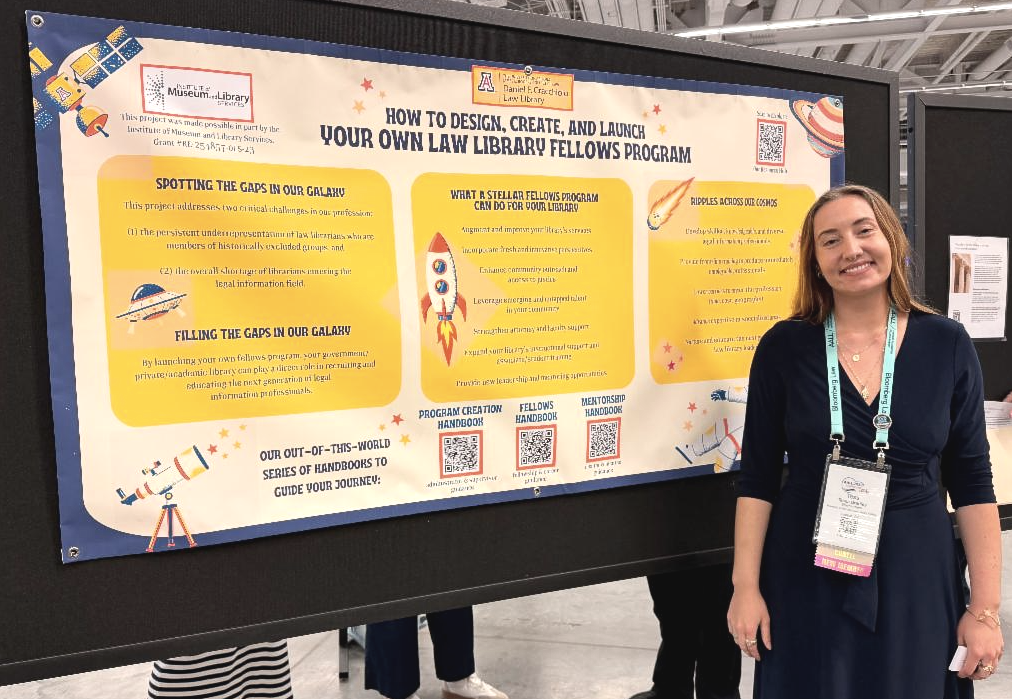
Finally, Law Library Fellow Tess Bradley (MLIS ’27) was awarded the AALL Legal Information Services to the Public Kathy Garner Grant, which covers a significant portion of the costs associated with attending the AALL annual meeting. Roberta Shaffer, former Law Librarian of Congress, who supports our Fellows Program with annual donations, also supported her attendance at the meeting. Bradley presented a poster about the Law Library Fellows Program.

FROM AROUND THE COLLEGE


Law Library Leading the AI Conversation on Campus and Around the Country

Since the beginning of the current generative AI era, the legal profession has been at the forefront of the conversation. From privacy concerns and hallucinated case cites to the potential for broader access to legal information and tools, both the benefits and drawbacks have been on full display.


Recognizing the importance of AI in the future of legal education and the profession, the law library was an early leader among law schools, conducting research and hosting a series of roundtables with institutions across the country.


In the past year, the library has expanded on previous AI projects through thoughtful strategic planning, training and hiring. Learn more about the latest initiatives below.


Strategic Plan to Guide Library Team


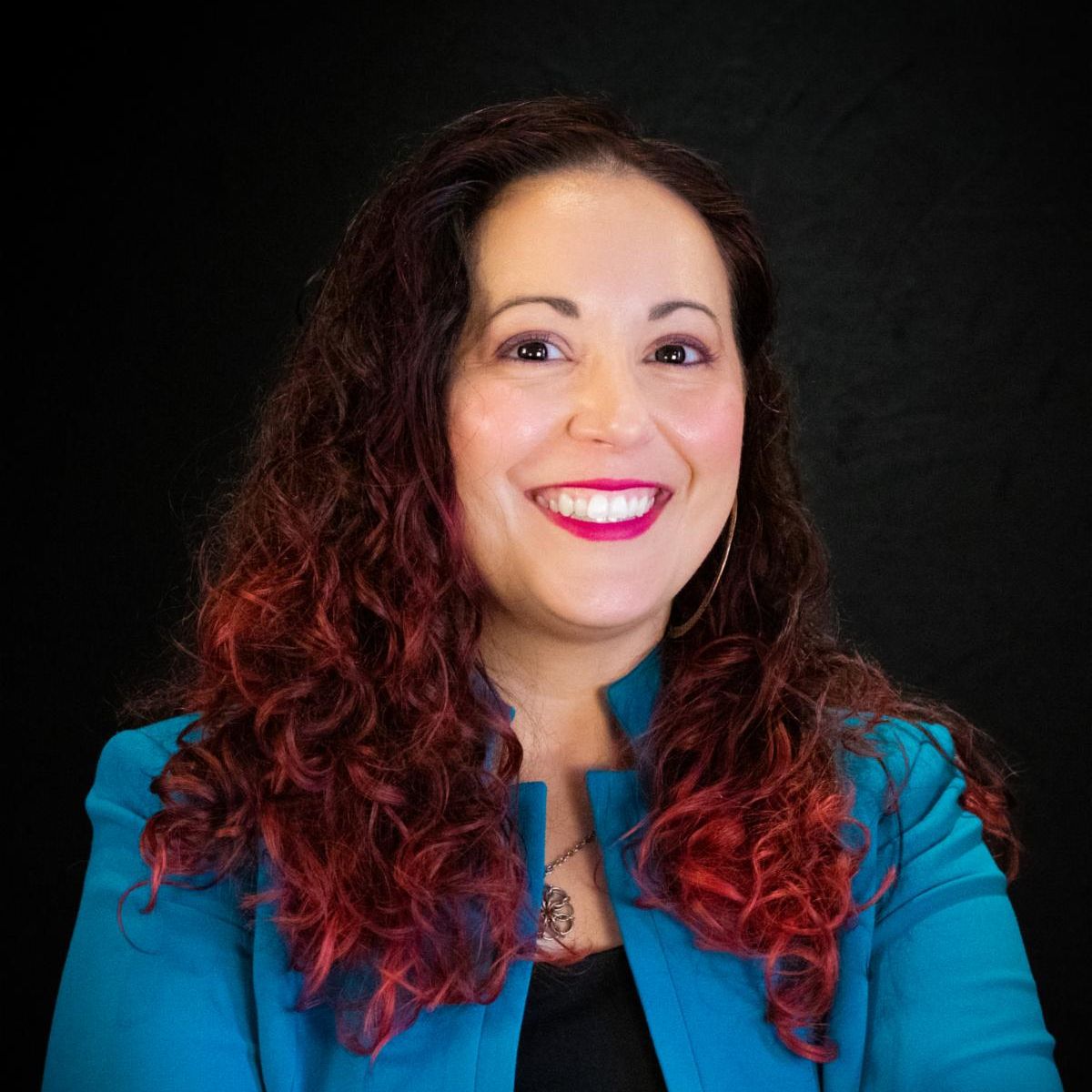
Meaningful engagement with AI cannot be the province of one or two specialists. So, at the charge of law library director Teresa Miguel-Stearns (MLIS ’06) , Cas Laskowski (above, left) drafted a Law Library AI Strategic Plan. The plan is already being implemented, with the team investing in formal training at the 2025 IDEA Institute on Artificial Intelligence, where several earned the Association for Information Science and Technology Foundational AI Certificate.


By early summer 2026, the library launched phase one of its strategic plan, as Laskowski led monthly trainings covering how different AI systems work, their potential uses, and their known issues. In the coming year, the team will study how libraries are using AI to identify potentially applicable workflows, and will draft an internal AI policy aligning all use with the library’s and university’s mission, values and guiding principles. Library Specialist Matt Clemens (MLIS ’24), who recently joined the team, is also employing his AI skills in a variety of collections workflows.


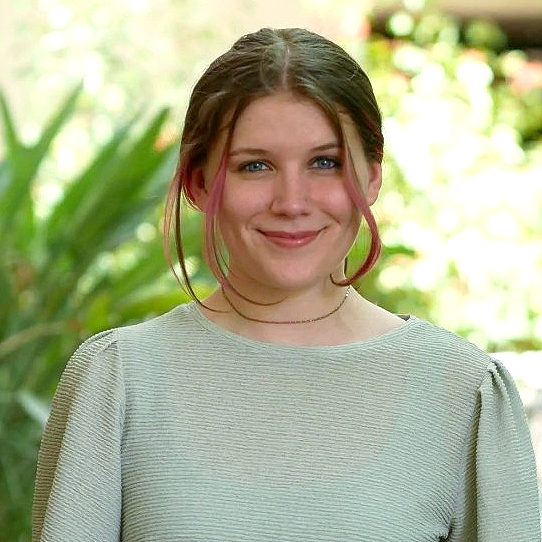
In addition, law student-turned-Law Library Fellow Emily Downs (above, right) worked with Laskowski to update the Law Practice in the Age of AI & Big Data course. In this two-credit experiential course, students develop a technological solution that enhances a hypothetical firm’s pro bono efforts and evaluate and utilize AI tools for risk and case strategy. Laskowski developed a new companion site for the class, built with AI assistance, to deepen engagement for students, particularly those who arrive without technical experience. Downs and Laskowski are also designing an AI upskilling program for law library fellows, giving each a clear path to foundational skills, with optional advanced training where it fits their career goals.


Future of Law Libraries: From Roundtables to Action


In 2023, Laskowski and Miguel-Stearns co-founded a national initiative to explore the role of AI in law libraries, The Future of Law Libraries: Artificial Intelligence, Opportunities, and Advancement initiative. The initiative hosted a series of regional roundtables culminating in a white paper synthesizing the findings from those conversations.


The initiative has now entered its second phase, with three teams of over 50 librarians nationwide drafting the steps necessary to realize the roundtable recommendations. Laskowski leads the four-person Steering Committee guiding this work, with an update due at the end of 2026.


Laskowski’s expertise was in demand well beyond Tucson over the past year, with presentations on AI use at the Arizona Judicial Conference and the Library of Congress AI Literacy & Learning Summit. She also co-wrote a chapter, AI and Machine Learning in Law Libraries, for the book Law Librarianship Practice: Challenges and Opportunities in Law Firm, Government, and Academic Libraries.


Laskowski is serving in advisory roles on AI for the Arizona Judicial Branch, Harvard’s Institutional Data Initiative, and, most recently, she joined the council at Harvard Law School’s Institutional Data Summit.


Law Library Teams Up with Faculty to Leverage AI


The law library team has also begun to explore how AI might become part of our service to the law school community. Laskowski is collaborating with Kristine Huskey, Director of Clinics, to integrate legal AI tools in the college’s clinical programs, giving students critical exposure to tools that they will use in practice upon graduation. Laskowski also leveraged AI vibe coding in her collaboration with Professor Keith Richotte, director of the Indigenous Peoples Law and Policy Program, to build the interactive website for his Supreme Court Indian Law Database.

Law Library Creates Guide for Serving Incarcerated Patrons

In May 2026, the law library published the Legal Information for Incarcerated People Libguide. This guide includes best practices and resources for libraries that want to start reference-by-mail programs to prisons. Acquisitions and Reference Library Associate Lindsay Kriebel (MLIS ’19) co-wrote the guide with Madeline Knight (MLIS ’26), Law Library Fellow, as part of Knight’s capstone internship project.


Since 2024, the law library has been responding to reference requests for incarcerated people in Arizona. Services include providing resources for individuals conducting their own research, book chapters, copies of court forms, and contact information for legal aid organizations. The new guide fills the gap of a lack of guidance for other libraries interested in providing similar resources to incarcerated people.


Kriebel was recently awarded the Arizona Library Association Emerging Leader Award for her work in this area and for other initiatives she has undertaken on behalf of the law library and the law library’s patrons. The award is given to one who shows exceptional promise as a leader in the field and Lindsay certainly answers that call!

Territorial Law Libraries a Bridge to the Community

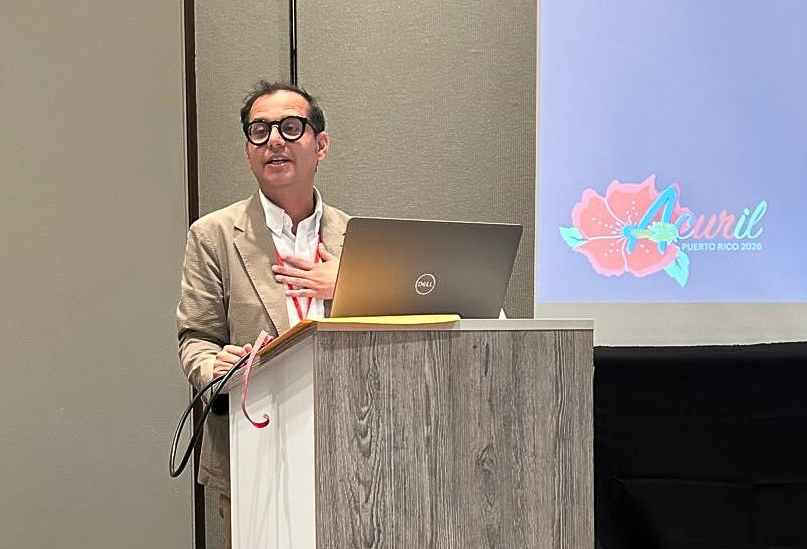
International & Comparative Law Librarian Marcelo Rodríguez received a grant from the University of Arizona Center for Latin American Studies to attend and present at the recent annual meeting of the Association of Caribbean University, Research & Institutional Libraries. He gave two presentations related to his work, research and forthcoming book on law libraries and librarians in U.S. Territories. Rodríguez’s presentations featured colleagues from the U.S. Virgin Islands federal district court and the Supreme Court of Puerto Rico. 


“The idea behind this project was simple but important: to showcase territorial law libraries that are engaged in activities and initiatives extending far beyond traditional legal research services,” Rodríguez wrote on the law library blog. “While legal research remains a central part of their mission, many territorial law libraries have evolved into dynamic community institutions that provide legal information to the public, deliver research training, support civic education initiatives, and create opportunities for greater public engagement with the law.”


IN THE NEWS


Do You Have News?

Your success is the college’s success, and we want to celebrate with you! If you have landed a new job, received an award or recognition, stepped into a leadership role or have good news in general, let us know.

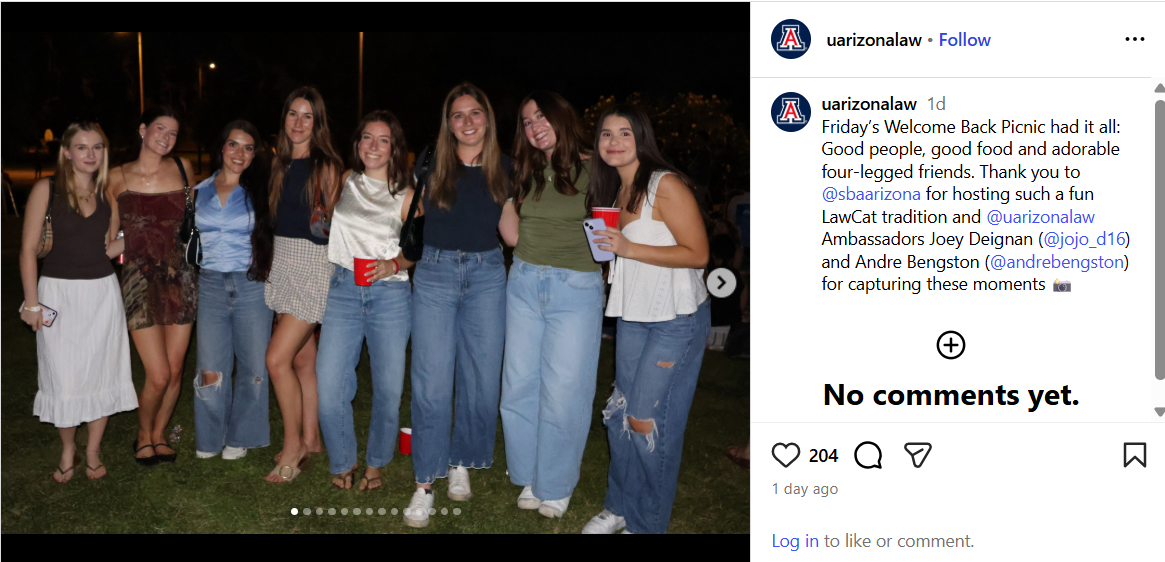
Instagram, @uarizonalaw


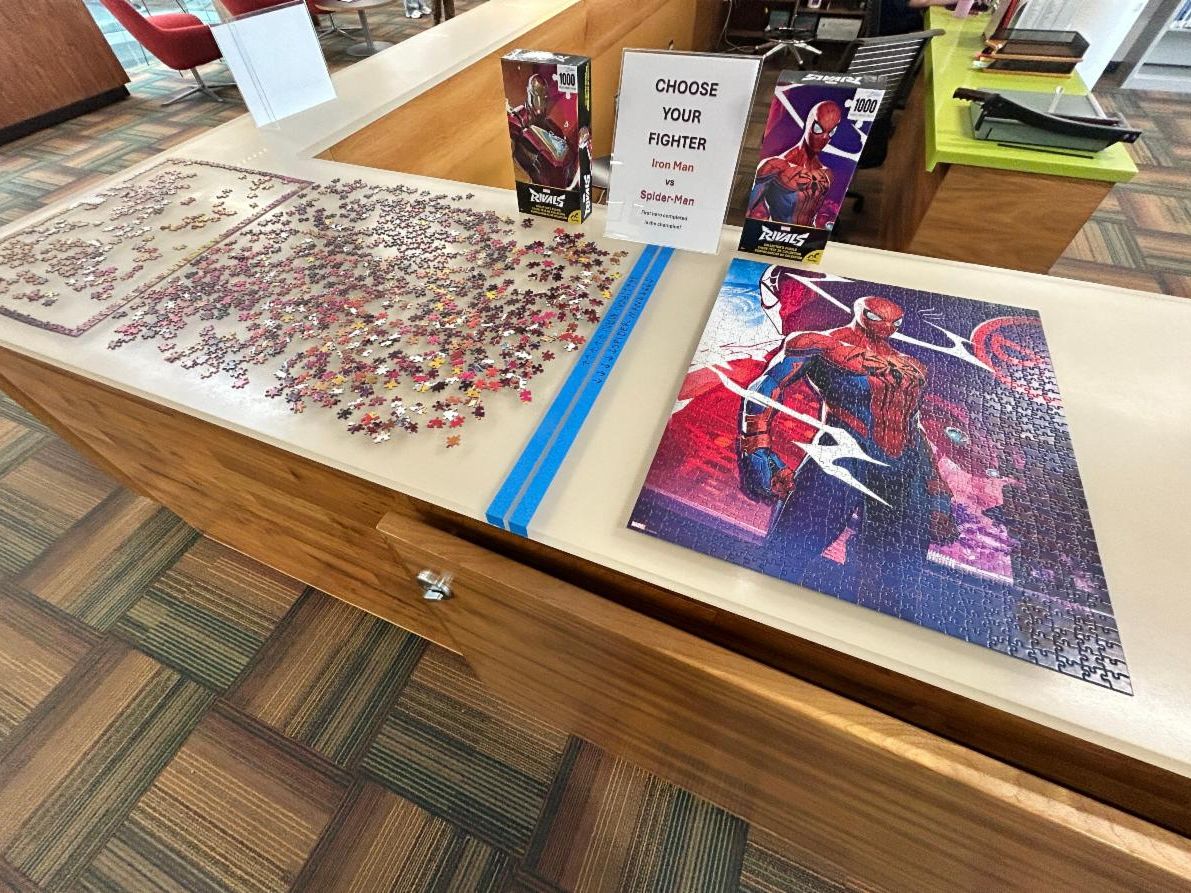
Of course, scholarship, speaking engagements and awards are only part of what the law library does. We are here daily, teaching and serving students, helping them access necessary resources and even providing a little levity and encouragement, like our superhero puzzle contest. (Judging by the rate at which the puzzles were constructed, Spider-Man was the clear victor.)


We deeply support our faculty, too, led by Cynthia Condit (JD ’09, MLIS ’10), our faculty services and scholarly communications lead. Cynthia works closely with College of Law faculty in support of their varied research projects and in disseminating their scholarship, while Lauren Williams, our access services lead, tracks down books and documents for faculty and student researchers alike.


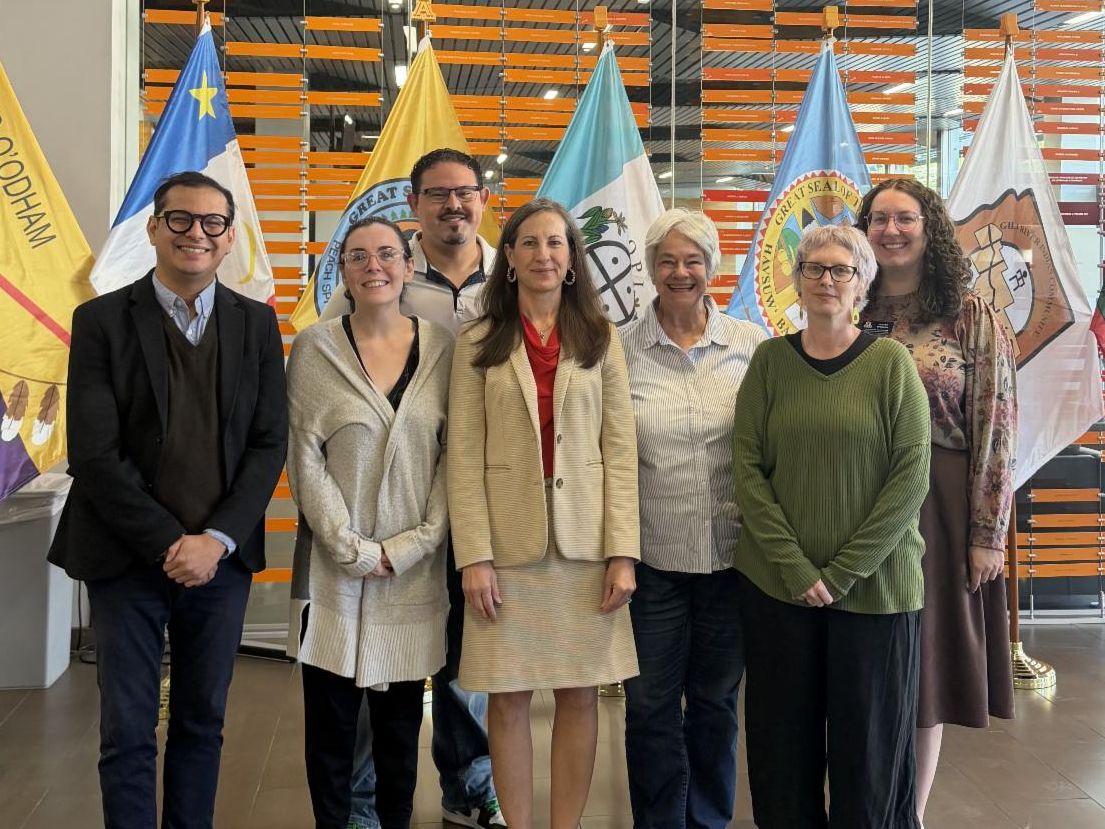
We also collaborate with other organizations at the College of Law and throughout the university, like our work with the Native and Indigenous Law Students Association and the Office of Native American Advancement & Tribal Engagement to host and display the flags of the twenty-two federally recognized tribes in Arizona, a highly visible and meaningful recognition of Indigenous peoples and communities we serve, educate and work alongside at our world-class land-grant institution.


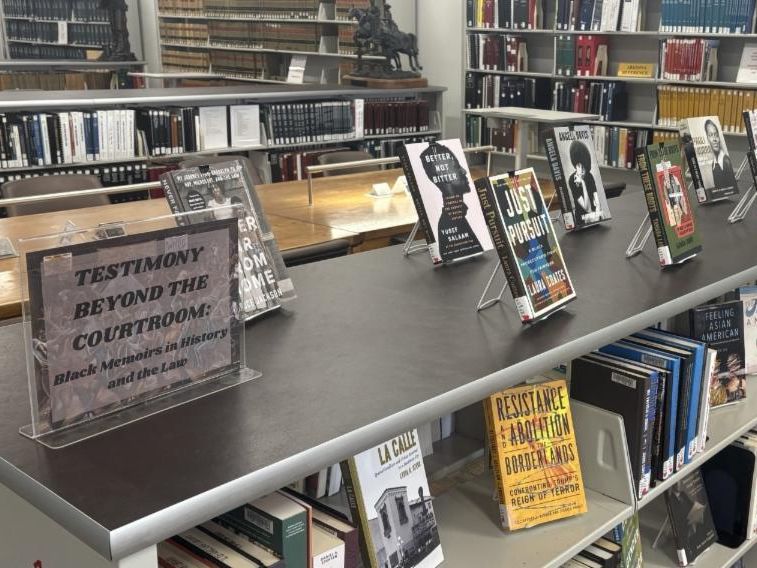
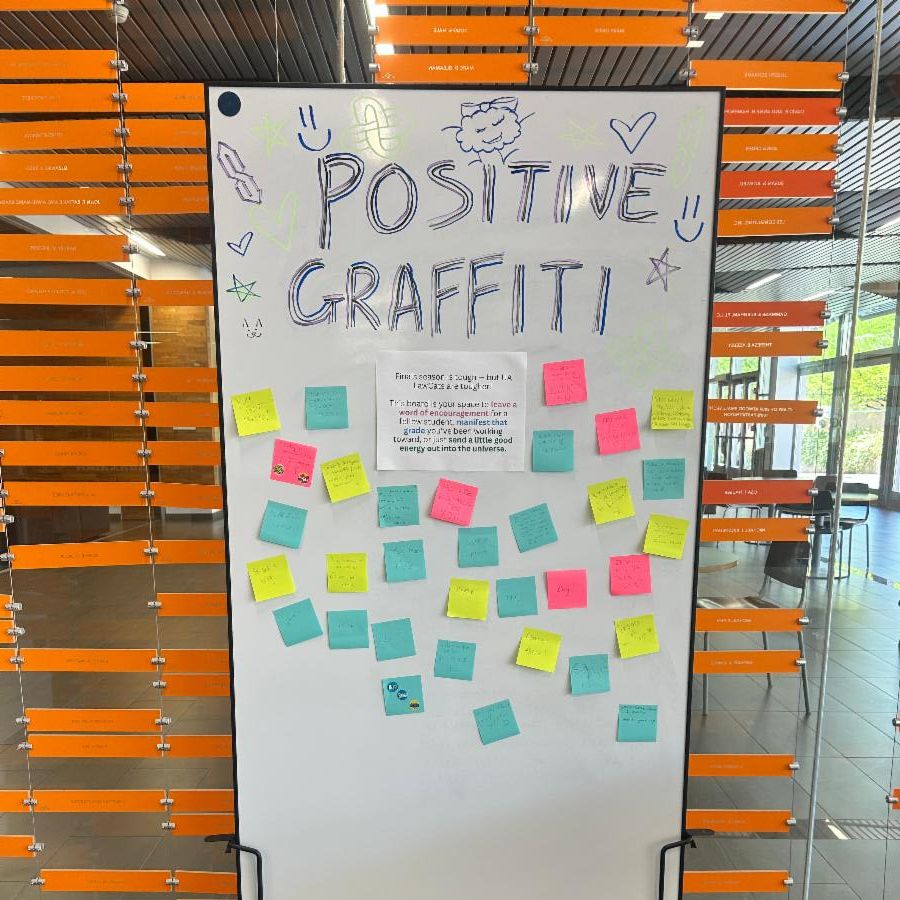
If you are on campus, come see us. Browse one of our monthly book displays or leave a positive message for students. Check out the Daniel F. Cracchiolo Law Library Blog, where you can see what we’re up to throughout the year, and peruse our Annual Report for a closer look at the deeply impactful work of our entire team.


Until next time, stay curious and cite your sources.


Teresa

Facebook  Instagram  X  LinkedIn