East Asia and Pacific Gender Innovation Lab |
|
THEME OF THE QUARTER:
Female Entrepreneurship
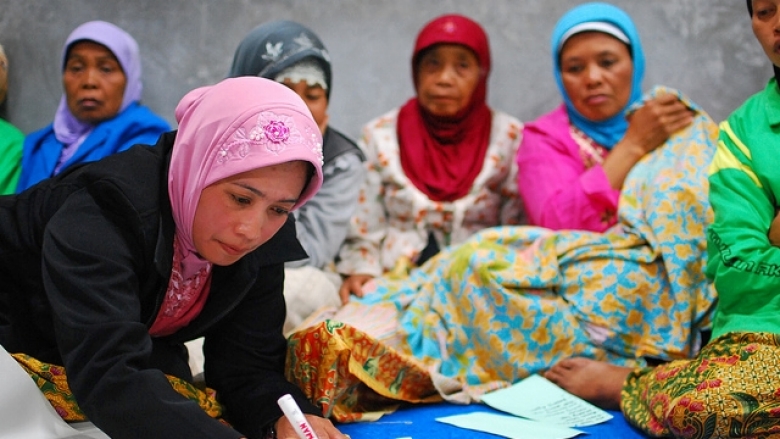
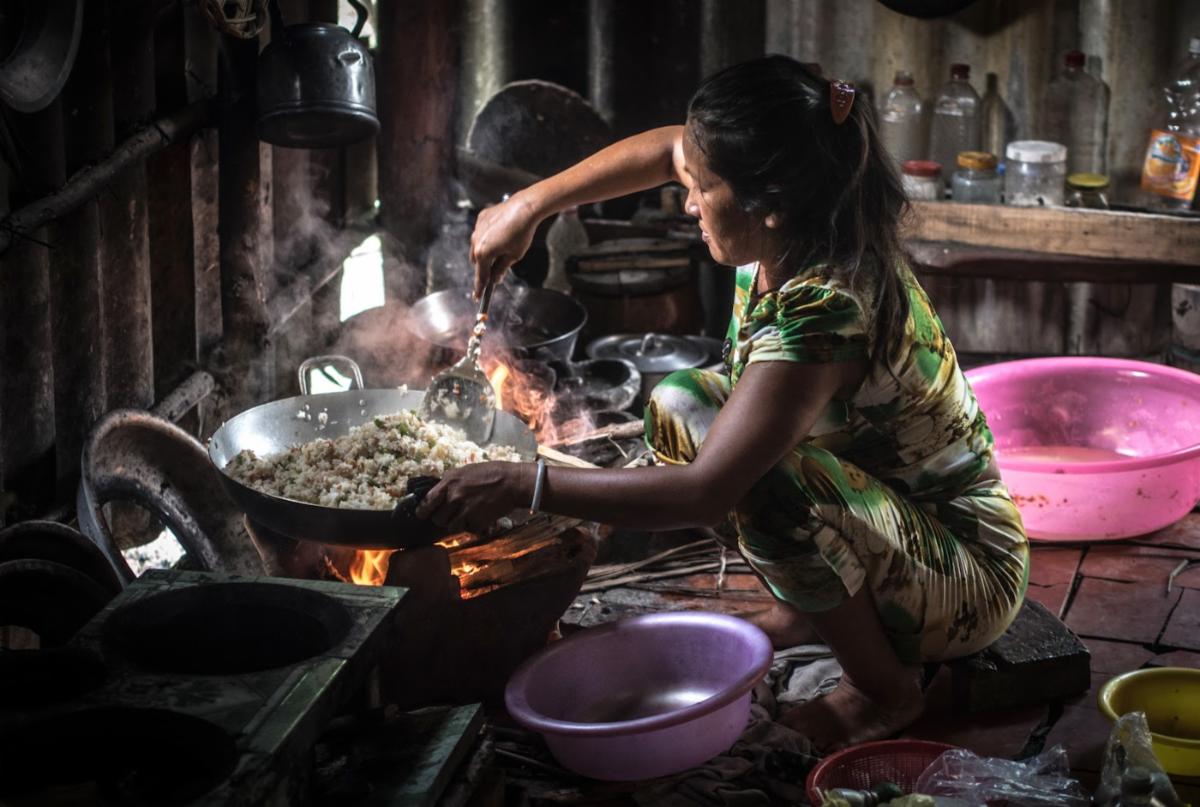
A gender-equal distribution of talent in the economy leads to increased growth and improved equity of opportunity, benefitting society as a whole. However, female entrepreneurs worldwide see their choices and preferences in the labor market constrained by social norms, domestic duties, and lower access to information and finance compared to their male counterparts. This newsletter covers new estimates of gender gaps in entrepreneurship in Southeast Asia and presents descriptive evidence on their drivers, as well as promising interventions for closing some of these gaps.
|
|
Enterprising Women: Toward Equal Business Opportunity in Southeast Asia |
|
Removing barriers to female entrepreneurs can unleash untapped potential for economic growth and foster equality of opportunity. This EAPGIL report systematically analyzes factors associated with gender differences in opening and growing micro, small and medium enterprises (MSMEs) in Southeast Asia. It combines a review of existing evidence with new analysis from five Southeast Asian countries: Cambodia, Indonesia, Lao People’s Democratic Republic, Timor-Leste, and Vietnam.
The report finds significant gender gaps, which differ by the scale of the enterprise. Women are as likely as men to run microbusinesses, but they earn lower profits. Women are less likely than men to own SMEs, but if they do, then gender gaps in performance are not statistically significant in most countries.
Gender gaps in microenterprise performance and SME ownership are linked to lower levels of inputs in women-owned enterprises, including time for own labor, hired labor, capital, and skills. Gender norms, legal inequities, and market failures constrain inputs that are available to women and shape their preferences on how to allocate limited resources. The report reviews global evidence on policies that can address the gender gaps identified based on Southeast Asian data.
|
|
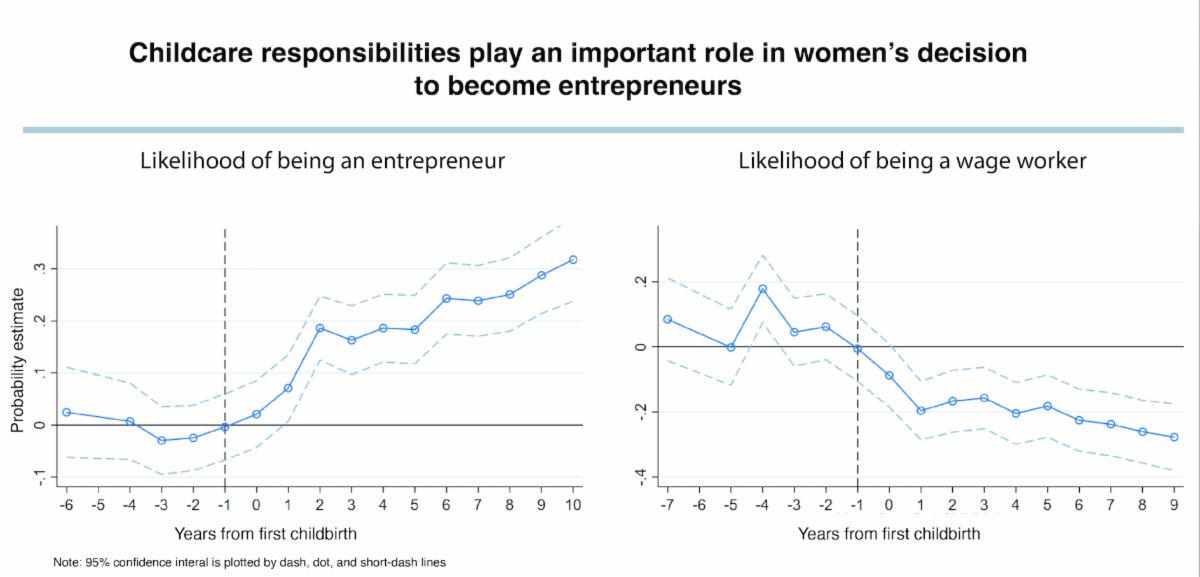
After the birth of their first child, women in Indonesia are more likely to be entrepreneurs and less likely to be wage workers.
Source: Enterprising Women report author calculations using the Indonesia Family Life Survey (IFLS)
|
|
Breaking Barriers : Female Entrepreneurs Who Cross Over to Male-Dominated Sectors |
|
Global evidence shows that female entrepreneurs operate smaller businesses and are concentrated in less profitable sectors than men. EAPGIL, the Africa Gender Innovation Lab and the Latin America and Caribbean Gender Innovation Lab analyzed sectoral segregation in 10 countries across three regions. The Breaking Barriers report establishes stylized facts on sectoral segregation among entrepreneurs and studies the characteristics of “crossovers” – women who cross over from female-concentrated sectors (FCS) into male-dominated sectors (MDS). The study builds on previous research and on a global social media survey of entrepreneurs from 97 countries. Globally, the average male-owned firm in an MDS has over double (+116 percent) the profits of a female-owned firm in an FCS. It is thus not surprising that female entrepreneurs who cross over to an MDS perform better than those who remain in an FCS in all countries studied except for Cambodia. Evidence suggests that “crossovers” share some common characteristics, such as education, past exposure to male-dominated sectors through work experience or training, or through male relatives, mentors, or role models, and spousal support. Based on these findings, the study proposes interventions that appear promising to support women to cross over into an MDS. |
|
Female Entrepreneurs and Branchless Banking
|
|
EAPGIL collaborated with the Center for Global Development and J-PAL Southeast Asia to conduct an impact evaluation of interventions aimed to increase access to branchless banking for female entrepreneurs in rural Indonesia, where access to traditional banking services is low. The impact evaluation asks whether supply-side interventions, such as incentives for banking agents, can work in isolation or whether they have a greater impact when paired with a demand-side intervention – in this case, financial literacy training. Agents were randomly allocated to groups receiving either high or low incentives for each new client they recruit to use the product. The demand-side intervention consisted of financial literacy training and mentoring for a randomly selected subset of female entrepreneurs in both the high incentive and low incentive villages. We find that both interventions had significant impacts on the beneficiaries’ profits although the take-up of branchless banking was minimal.
Follow the links below to the IE report, a research note, and a policy brief based on the IE.
|
|
EAPGIL research informs policy recommendations to strengthen Indonesia’s financial sector |
|
Policy recommendations from joint research between EAPGIL and the Finance Competitiveness and Innovation Global Practice were featured in the June edition of Indonesia Economic Prospects. Specifically, EAPGIL’s research contributed to the recommendation to expand partial credit guarantees for MSMEs and to support effective graduation policies from the People’s Business Credit program (KUR) in Indonesia. |
|
Speaking at the ERCD and SDTC-GEN joint seminar on Gender and the total work of older workers in Asia on October 5, 2022, EAPGIL’s Hillary C. Johnson discussed research on unpaid care work, including findings from EAPGIL studies. Use passcode fm45JKx! to view a recording of the discussion here. |
|
EAPGIL’s Hillary C. Johnson presented EAPGIL’s recent report on female entrepreneurship at the Regional dialogue on enabling women’s entrepreneurship through smart legislative and policy reforms, organized jointly with the World Bank Women Business and the Law team and UN ESCAP on August 31, 2022 in Bangkok, Thailand. Visit the event page to watch a recording of the presentation.
|
|
About East Asia and Pacific Gender Innovation Lab |
|
Part of the East Asia and Pacific Office of the Chief Economist, EAPGIL carries out impact evaluations and inferential research to generate evidence on what works in closing gender gaps in assets, economic opportunities, and agency, and how closing these gaps can help achieve other development outcomes. Ultimately, EAPGIL seeks to increase the welfare of women and men in East Asia and the Pacific by promoting the uptake of effective policies and programs identified based on evidence. We gratefully acknowledge funding from the Umbrella Facility for Gender Equality (UFGE) to carry out this work. EAPGIL is supported by UFGE in partnership with the Australian Department of Foreign Affairs and Trade. UFGE has received generous contributions from Australia, Canada, Denmark, Finland, Germany, Iceland, Ireland, the Netherlands, Norway, Spain, Sweden, Switzerland, the United Kingdom, the United States, the Bill and Melinda Gates Foundation, and the Wellspring Philanthropic Fund.
|
|
|
|
|
|
|