Our Mission


Ignatians West is a community of mature adults rooted in Ignatian Spirituality. We share our skills, talents, experience, and hearts as part-time volunteers in nonprofit agencies. We assist and companion poor and marginalized persons, making real the transformative power of God’s love in both those who serve and those who are served.

The First Sunday of Lent 2026


The Lent of my youth, and that of many reading this, was one of sacrifice (denial), and personal prayer for the forgiveness of sin. The focus was on what we were giving up and, along the 40-day journey, we checked in with each other to see how it was going. One vivid memory from my childhood Lent was the rule against eating meat on Friday. We genuinely believed that eating meat on Friday during Lent was a sin.


I checked in with my sister to ask about her memories of Lent in our household of six children. Given that she is nearly 10 years younger than I am, her experience, while similar, had a gentler tone. She agreed that the rule of abstaining from meat on Fridays was a prominent memory, adding that she also remembered Lent as a time apart, a special time we observed as a family. She reminded me that she came of age after Vatican II, when the spirit of the law balanced the letter of the law.


While almsgiving, fasting and prayer remain the prominent themes of Lenten practice, the way we observe them has evolved. Fr. Patrick Mullen, pastor of Padre Serra Parish in Camarillo, shared a list in the weekly bulletin that expanded on the lists of Pope Francis and Pope Leo. The list looks at fasting through a broad lens and includes consideration of fasting from:

  • despair
  • taking God or other people for granted
  • blaming others for personal failures
  • judging others by surface details
  • teasing
  • nagging,
  • impatience,
  • disrespect,
  • envy
  • eating poorly
  • careless driving or bicycle riding
  • loving things more than people or God
  • giving bad example
  • any untruth, lies
  • self-centeredness
  • blindness to others' needs
  • gluttony with food or drink
  • thinking the worst of others
  • insecurity, accepting honestly one's own strengths


The change that would take place if even one of these fasting suggestions were followed for the forty days of Lent would certainly bring a change of heart. It would also be a gift to those who live and work with us.


Richard Rohr is quoted as saying, “If, in reading the Gospels, we do not hear Jesus speaking to our contemporary situation, we are missing their meaning.” Today, we hear of the temptations Jesus faced as he prayed alone in the desert for forty days and nights. Satan offered to assuage his physical need for hunger, test his trust in God, and give him unlimited power over the world. Jesus rejected each temptation with words that left no doubt of his belief and trust in God.


We can relate to these temptations. They speak to our physical, spiritual, and emotional needs – our appetites, faith, and yearning for status and success. Each is a human need that must be continually checked, as each can derail us if misused. While few of us can retreat and pray alone for forty days, we do have the freedom to spend some time each day in prayer, asking for the wisdom to live in accordance with God’s will. That might be enough for Lent this year. In the quiet it is possible that things unimagined will be revealed.


Whatever choice each of us makes to observe Lent this year, let it be gentle and nurturing. Let it bring greater awareness of God into our lives.


Peace,

Anne                                                                                     

Frank Bognar joined our February meeting to present his work on nuclear disarmament. It was a thoughtful and challenging presentation.


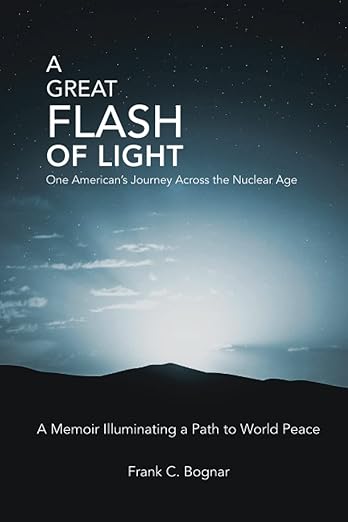
A Great Flash of Light is a new book by Frank C. Bognar, subtitled “One American’s Journey Across the Nuclear Age.“ But this book is much more than a historical reflection. As also noted on the cover, it’s “A Memoir illuminating a Path to World Peace.”


The book begins on July 16, 1945, the day the United States detonated the first atomic bomb, six months before the author was born. Bognar’sdescription is stark, detailed, and haunting. It definitely sets a tone—until you turn the page.


The early chapters are filled with a young boy’s awakening view of a dangerous world within the one he cherishes. Heartwarming moments and laugh-out-loud antics are sprinkled throughout— from working on the farm, to book reports, to band practice. But Bognar also notes the “drop and cover” bomb drills, brothers going off to war, and his admiration for a war hero named John Kennedy. He later devotes three chapters to Kennedy’s emotional struggle during the Cuban Missile Crisis with details unknown at the time—a reminder of how dangerously close we came to nuclear destruction.


A Great Flash of Light is an insightful read on how the nuclear age began, how the race to acquire nuclear weapons evolved, and what we can do to change the notion that they keep us safe. A heavy topic made easier by Bognar’s style of alternating between the lessons of historical events, and the heart and humor of a lifetime he treasures.


Ultimately, A Great Flash of Light is a uniquely written call to action. We have the power to stop the violence and the mindset that leads to war. Bognar affirms that “with faith in one another and in our common humanity,” world peace will be achieved if we choose to make it so.

About the Author...


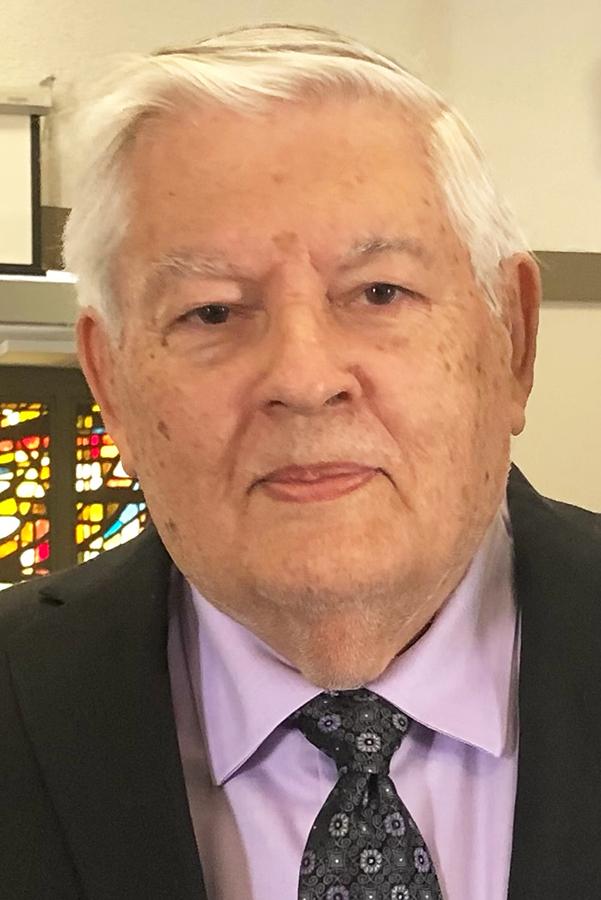
Frank C. Bognar is the author of a memoir entitled A Great Flash of Light: One American’s Journey Across the Nuclear Age. He has written the book to help sound the alarm on the closeness of nuclear danger, and to help set a direction to reach a nuclear weapons’ free world.

As a teen, he lived through the thirteen days of the Cuban Missile Crisis, and along with the public, felt a sense of total powerlessness as the world began to drift towards a war no one

wanted, and no one seemed able to stop. From that surreal experience, as an adult he researched the background to the crisis, which helped him to understand the extreme danger the world faces today.


He served as an Army Infantry Officer and General Staff Officer, V Corps, Frankfurt, Germany, and was trained as a Psychological Operations Officer at Fort Bragg, North Carolina. When leaving the service, he earned a masters’ and doctorate in public administration, which introduced him to the deeper international drama of the Cuban crisis, and provided a chilling vantage point of how close we came to the end of civilization.


He currently serves as Board Chair of the Nuclear Age Peace Foundation, whose mission is to help create a “just and peaceful world, free of nuclear weapons.” ‘The foundation holds consultative status at the United Nations advising on the issue of nuclear danger. The foundation is also a member agency of the International Campaign for the Abolition of Nuclear Weapons (ICAN). For its efforts to educate and advocate for complete, total, verifiable disarmament of nuclear weapons, the foundation was awarded the 2017 Nobel Peace Prize for its work on the United Nation’s Treaty on the Prohibition of Nuclear Weapons.


It is the author’s belief that our world is at an existential crossroad, the moment of choice, when we must make the decision of placing our faith and our future in the possession and advancement of nuclear weapons, or in renouncing them. Our collective decision will impact everything we treasure, and everyone we love.

MAILING ADDRESS

8601 Lincoln Blvd., Suite 180-306 • Los Angeles, CA 90045


ADMINISTRATIVE OFFICE

Center for Catholic Education • University Hall, LMU


PHONE

805-443-0812 (C)

Facebook  Instagram  YouTube