|
Dear Friends of CRRJ,
Our field – recovering the history of racial violence – has grown immensely since CRRJ was launched in 2007. That year, Congress passed the Emmett Till Unsolved Civil Rights Crime Act, designed to facilitate the prosecution of Jim Crow era assaults on Black and other BIPOC communities. At Northeastern Law, also in 2007, CRRJ brought together national civil rights leaders to consider how we might support the affected communities and expand what we know about these atrocities, particularly the thousands of incidents that would never see a courtroom. In the 18 years since our conference on Crimes of the Civil Rights Era, dozens of projects have emerged across the nation to address this history, reaching beyond lynching and beyond the Black-white dynamic to capture the full range and depth of twentieth century racial violence.
This past July, at a conference that was both stimulating and galvanizing, CRRJ once again brought into conversation researchers, racial justice activists, and teachers to explore opportunities to advance the work of recovery, deepen collaboration, and share practical and doctrinal insights. Even as the national landscape speaks to devastating retrenchment in civil rights practice and values, this conference affirmed that our work goes on: we continue to uncover, teach about, and disseminate the details and the impact of racial violence in America, and to define new remedial modalities that translate this history into a policy agenda for today.
Thanks for your ongoing support.
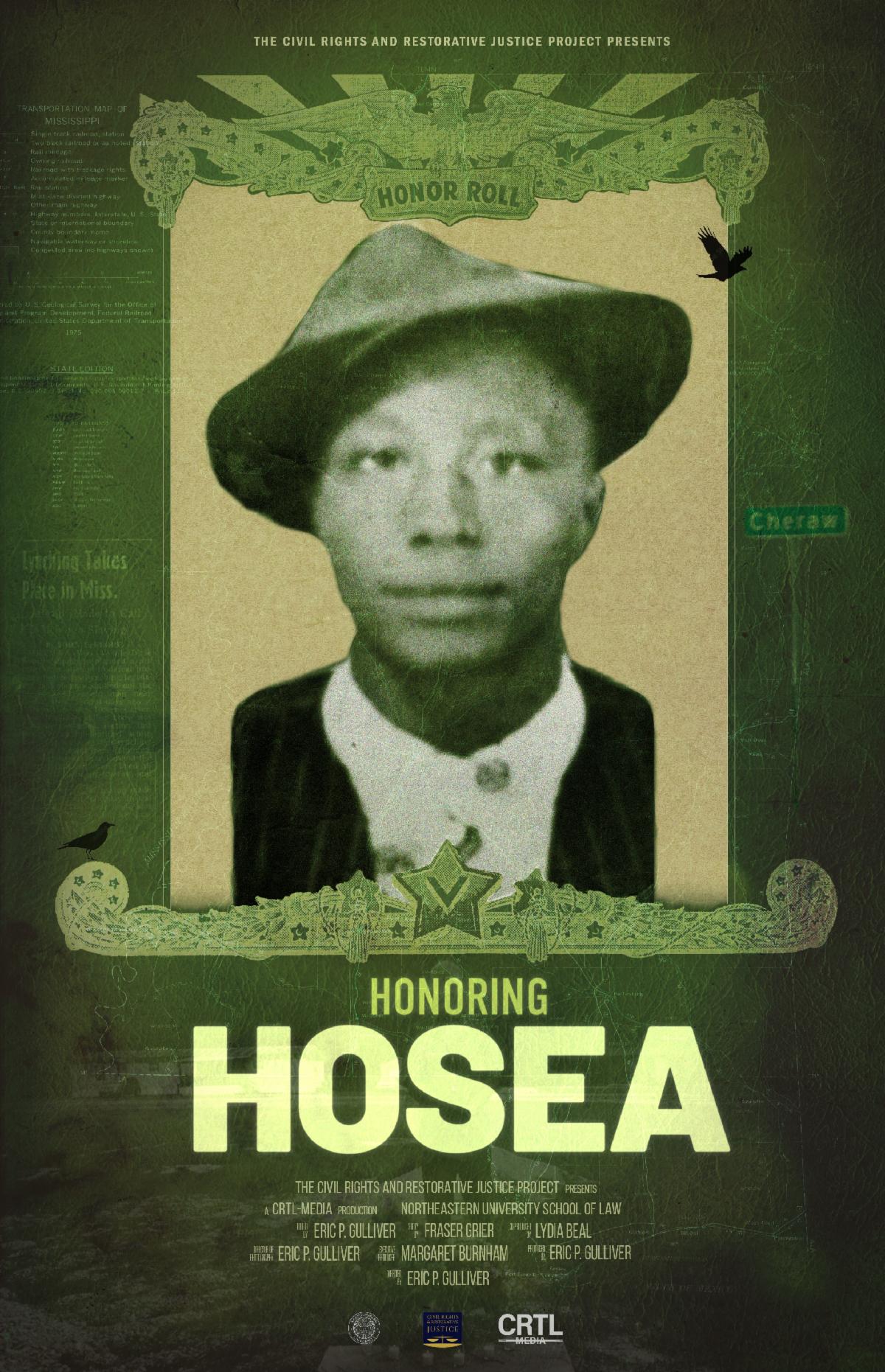
| | CRRJ Director and founder, Professor Margaret Burnham | | CRRJ Produces Documentary on the 1948 Killing of Hosea Carter in Mississippi | | Above: Film poster for Honoring Hosea, directed by documentary maker, Eric Gulliver, produced by CRRJ’s Associate Researcher, Lydia Beal. | | |
CRRJ’s latest documentary film release, Honoring Hosea chronicles the life, murder, and legacy of Hosea “Shant” Carter, a Black World War II veteran lynched in 1948 Marion County, Mississippi, for the perceived impropriety of speaking to a white woman.
Through intimate recollections by his son Jimmie Carter, the film incorporates historical and legal insights from CRRJ Director Margaret Burnham and CRRJ partner, The Louis A. Berry Institute for Civil Rights and Justice Director Ada Goodly Lampkin. The film reconstructs Carter’s life as a devoted father and principled community member, his death at the hands of a white mob, and the systemic complicity of local law enforcement.
Decades later, Jimmie Carter returns to Marion County to reckon with his father’s memory, hold a memorial, and seek long-denied closure. In revisiting past horrors, Honoring Hosea confronts the silence surrounding racial terror, calling viewers to remember, reflect, and honor the lives lost to America’s legacy of racial violence.
| | Updates at CRRJ and in the Field | |
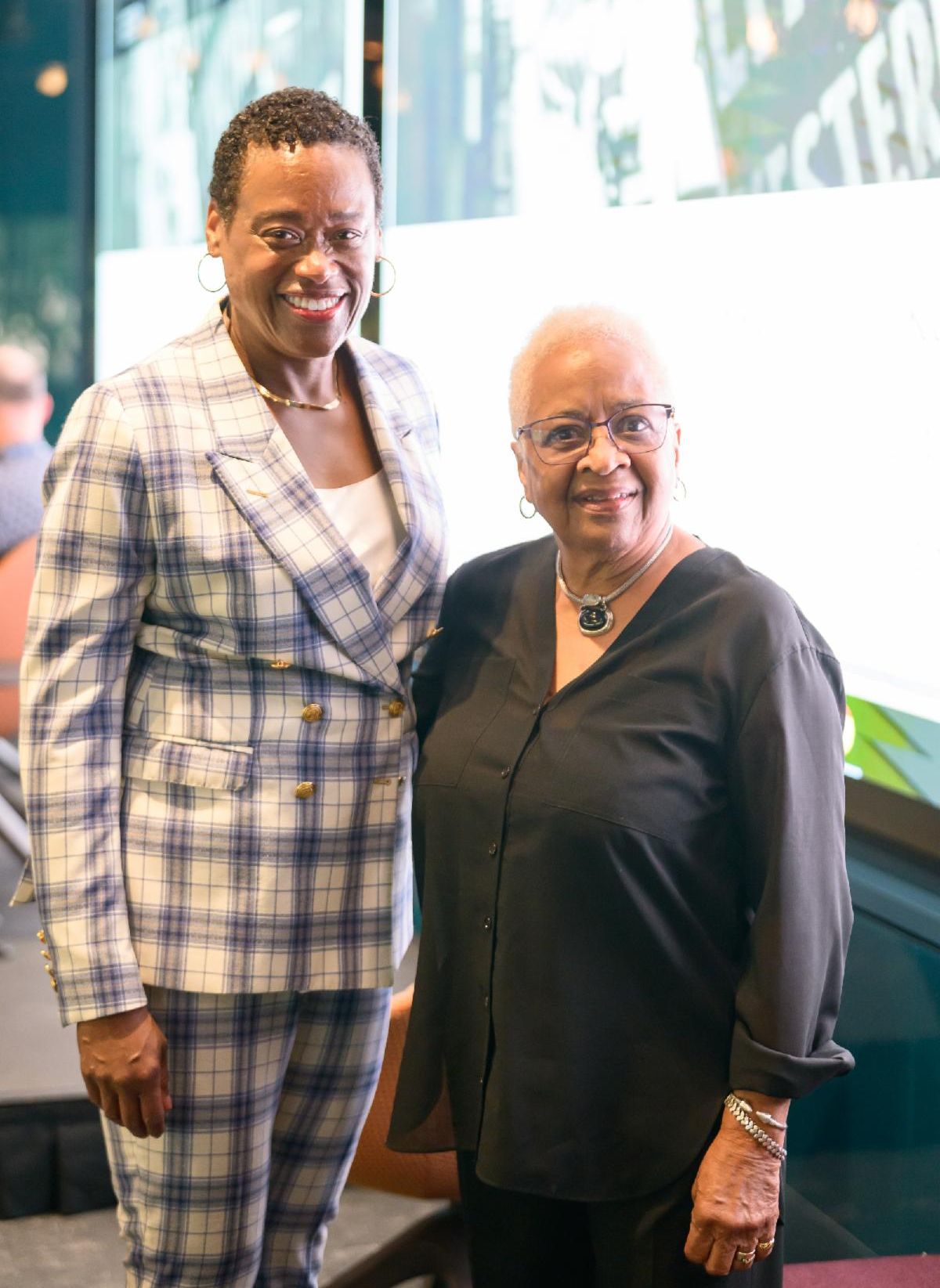
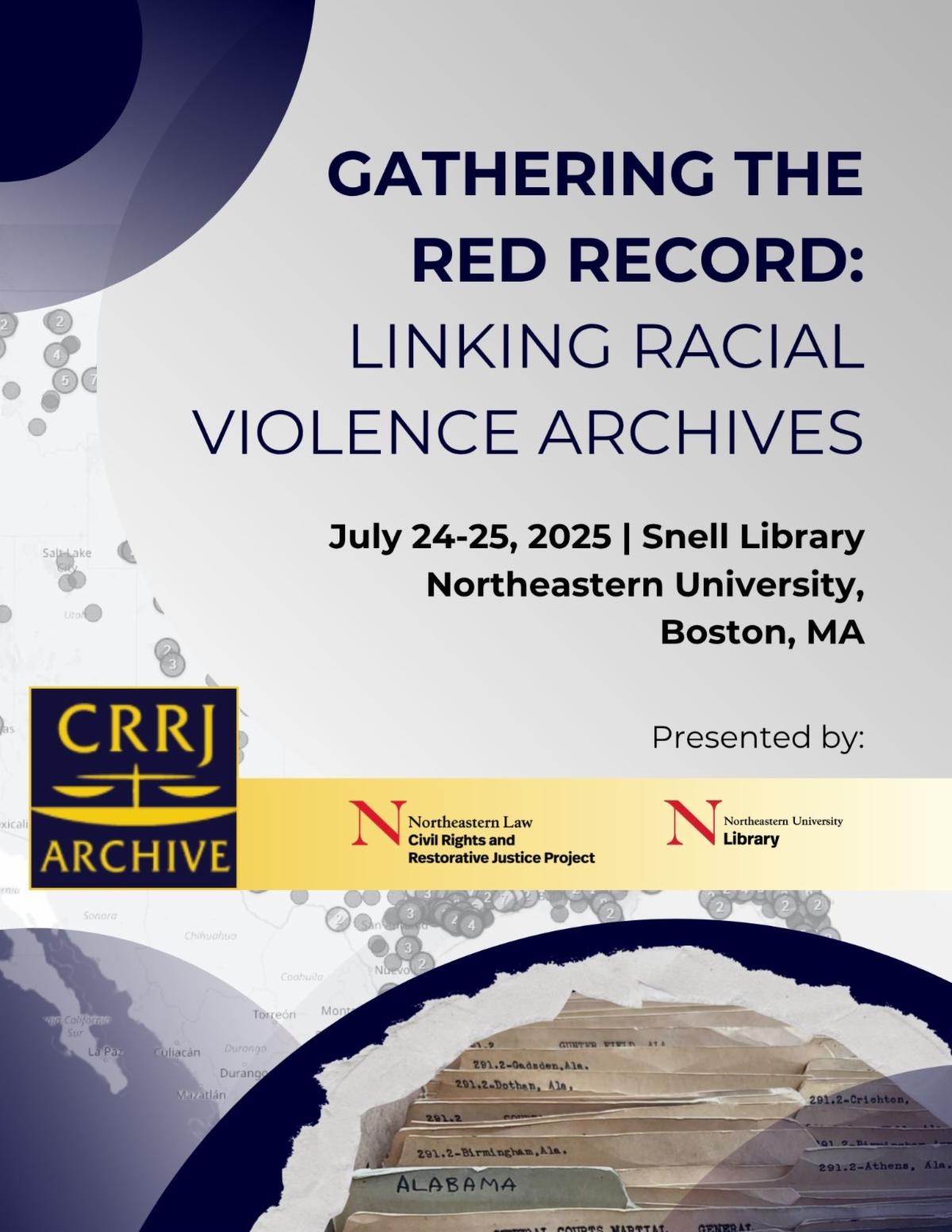
Gathering the Red Record: Burnham-Nobles Digital Archive Updates, National Anti-Black Violence Database Discussed | In July 2025, the Civil Rights and Restorative Justice Project launched Version 2 of the Burnham-Nobles Digital Archive, and welcomed archivists, historians and legal scholars from across the country for a two-day conference titled Gathering the Red Record: Linking Racial Violence Archives. The gathering addressed the need for a comprehensive national database of historical racial violence and announced the public release of the latest Archive updates. | | | | Above (left to right): MIT Chancellor, Melissa Nobles, and CRRJ Founder and Director, Margaret Burnham. Photo by michaelmanningphotography.com. | | |
|
CRRJ Travels to Memphis for Memorial Honoring Lives Taken by Memphis Police Department | |
CRRJ joined a citywide memorial in Memphis honoring lives taken by the Memphis Police Department, cases dating from the Jim Crow era to the present.
Following the leadership of the families and communities directly impacted by this violence, CRRJ’s Research Associate, Lydia Beal, travelled to Memphis to support efforts to honor those lost, recover buried histories, and call for accountability.
| | | |
The Burnham-Nobles Digital Archive presented at Digital Commonwealth's annual conference | This spring, Lydia Beal, CRRJ's Research Associate, and Joy Zanghi, CRRJ's Project Archivist, presented the Burnham-Nobles Digital Archive (BNDA) at Digital Commonwealth's 19th Annual Conference. Their presentation spoke to the title of this year's conference, Ethics and Access: Treating Users and Collections with Care. | | | |
CRRJ's Inaugural Archive in Action Essay Contest Winner Announced | |
First prize in CRRJ's first Archive in Action Essay Contest, went to Zai'ere Watson, an 11th grader at Grimsley High School, in Guilford County, North Carolina, whose essay, "It Ends When They End," detailed the 1946 killing of J.C. Farmer in Wilson County, NC.
Farmer, a 19 year-old WWII veteran, was killed by a posse in Wilson County, NC. He was waiting for a bus when a policeman attacked him. Following a scuffle with the officer, Farmer was shot and killed.
| | | |
Spotlight on: Raymond Wilkes III, CRRJ Senior Staff Attorney | Raymond Wilkes first participated in the Civil Rights and Restorative Justice Clinic at Southern University a decade ago. Now he's back at Northeastern University as CRRJ's Senior Staff Attorney. | | | |
Henry Andrews and Issac Mayo: A Reckoning for Black WWII Veterans killed by police officers in 1947 | Henry Andrews and Issac Mayo, both World War II veterans, were shot and killed by police officers, in North Carolina, in 1947. The circumstances remain unclear, as descendants search for answers and fight to have their relatives' stories remembered. | | | |
CRRJ Federal Reparations Project Launched at NU Mills Conference, in Oakland CA | A pivotal moment in the national dialogue on reparative justice took place at Mills College at Northeastern University during a two-day conference, Towards Justice: Addressing Racial Violence, Advancing Legal Clarity, and Restoring Community. National leaders in the reparations movement joined experts and advocates in the field on February 27-28, 2025, to provide the tools and insights necessary to drive real, lasting change in their communities. | | | | Launched in 2007 by University Distinguished Professor Margaret Burnham, the center of CRRJ’s work is the investigation of racially motivated homicides in the Jim Crow South, and the creation of the Burnham-Nobles Digital Archive, which contains more than 1,000 cases. In 2022, CRRJ became a program of the Law School's Center for Law, Equity and Race. | | We rely on donors like you to continue our work. Donations are used for litigation expenses, field research and restorative justice projects. With your help, we can continue training tomorrow’s civil rights lawyers, filling in the gaps in U.S. history and informing our national dialogue on racial redress and criminal justice. | | | | |