|
When Meetings Replace Leadership
Many leadership teams repeatedly meet on the same issue without ever deciding what to do. They discuss, gather more information, seek broader alignment, and schedule another meeting. The problem becomes well known—but remains unsolved.
This is not careful management. It is often avoidance disguised as process.
Over time, the organization develops an unspoken rule: no one should act until everyone is comfortable. In centralized companies, this tendency is especially common. People learn to stay in their lane, move decisions upward, honor the approval process, and avoid personal accountability.
Those who act decisively may even be resented. The question becomes, “Why do they think they have the right to make that decision?” Rather than rewarding initiative, the company rewards those who protect the bureaucracy.
The Cost of Indecision
The effects are costly:
- Problems remain unresolved while meetings multiply.
- Capable employees become frustrated, disengage, or leave.
- Leaders bring problems upward rather than solving them.
- Customers, quality, labor efficiency, and profitability suffer.
- The organization becomes busy without becoming effective.
A company can have full calendars, detailed reports, and frequent leadership meetings while still failing to lead. The core problem is often confusion between consensus and alignment. Consensus means everyone agrees. Alignment means people understand the decision, know their role, and commit to execution—even if they would have chosen differently.
Most operating decisions do not require unanimous agreement. They require a clear decision-maker, sound input, and accountability for the result.
Replace Meetings With Decisions
Every significant issue should answer these questions:
- Who makes the final call?
- Required input?
- Who should be consulted?
- Deadline?
- When will the decision be made?
- Execution owner?
- Who will carry it out and report results?
Leadership meetings should also distinguish between information-sharing and decision-making. Before discussing an agenda item, clarify whether the purpose is to inform, discuss, decide, or solve.
When the purpose is to decide, the meeting should end with a decision, an owner, a due date, and a measurable expected outcome.
A useful leadership question is:
“We have discussed this enough. What decision is needed today, who owns it, and what will be different by the next meeting?”
That changes the team’s focus from analyzing problems to resolving them.
Upgrade the Team
The deeper answer is to build a team of leaders rather than bureaucrats. A bureaucrat protects process, waits for permission, escalates responsibility, and measures success by compliance. A leader uses judgment, takes ownership, makes decisions within appropriate boundaries, and measures success by results.
Organizations need leaders who can say:
- “Here is the problem and the relevant evidence.”
- “Here is my recommendation.”
- “Here is the risk.”
- “Here is what I need from the team.”
- “Here is what I will do next.”
Not every reliable administrator is ready for a leadership role. Some people are excellent at coordination, controls, or technical work but lack the willingness or capability to make tradeoffs, address conflict, and accept accountability. They may still add value, but they should not occupy roles that require decisive leadership.
Senior leaders must stop promoting people solely because they faithfully manage the existing system. Leadership roles require judgment, courage, execution, and the ability to produce results through others.
Make Accountability Visible
Use a simple decision log: record the decision, accountable leader, deadline, expected result, and review date. This prevents the team from reopening decisions without new evidence and makes ownership visible.
Most importantly, leaders must support responsible action. If people are punished for every imperfect decision, they will learn to delay, escalate, and hide behind process. If they are coached through mistakes and held accountable for learning, they will develop sound judgment.
A healthy leadership team does not repeatedly meet to admire a problem. It decides what must be done, assigns the right owner, removes barriers, and follows through until results are achieved.
Conclusion
Organizations do not become decisive by holding more meetings or creating more approval steps. They become decisive when leaders clarify who owns each decision, set clear boundaries, expect action, and hold people accountable for results.
The goal is not reckless speed. It is disciplined execution: get the right input, make the call, act, measure the outcome, and adjust when necessary.
Companies that consistently do this will outpace competitors still trapped in the cycle of meetings, hesitation, and bureaucracy.
The question isn't whether you should make this shift. It is what's keeping you from starting today?
Question for You to Ponder
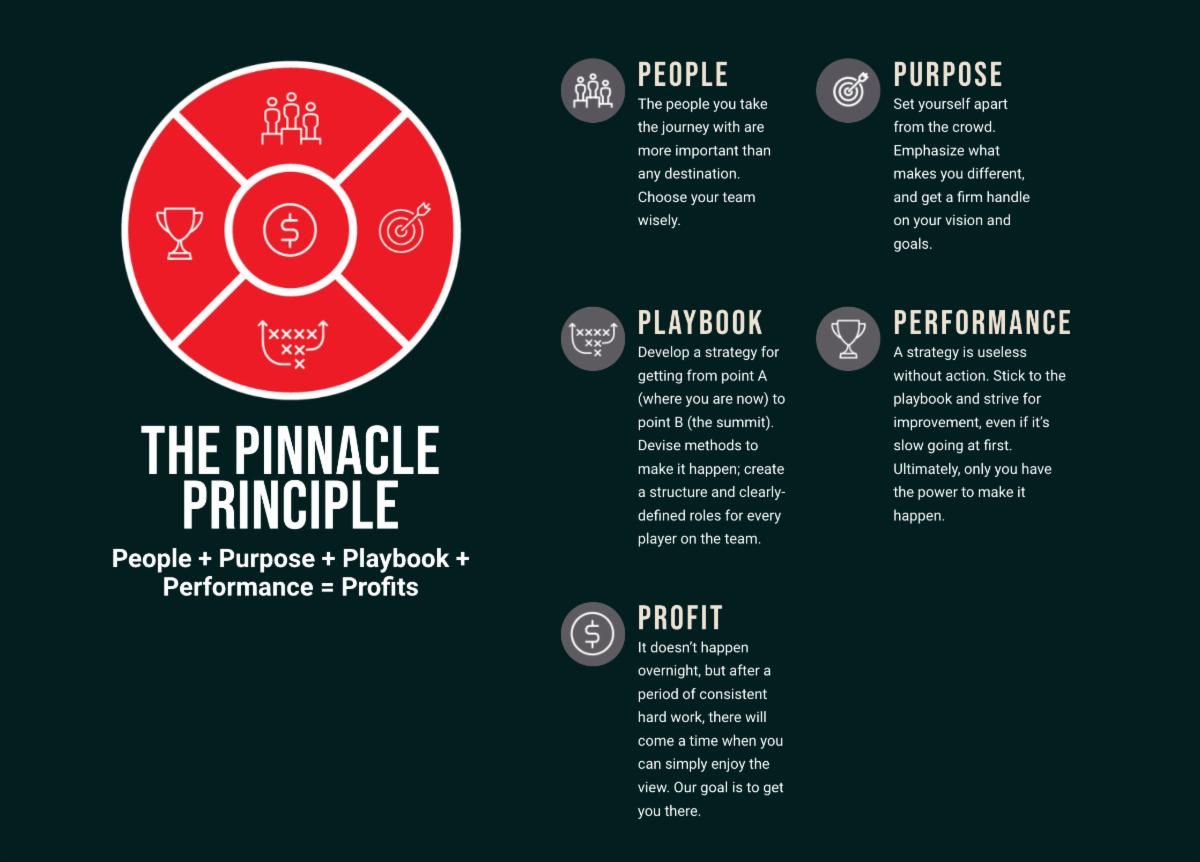
Are you ready to lead your business to its Pinnacle?
Outcome (if you act)
More profit and a better quality of life.
Call to Action
-
Ask me for a copy of the Path to Pinnacle
- Schedule a Meeting with Me
Our Mission: Accelerate Profitable Growth and Improve Execution
|