|
Why Age Discrimination Is Bad Business, Not Just Bad Ethics
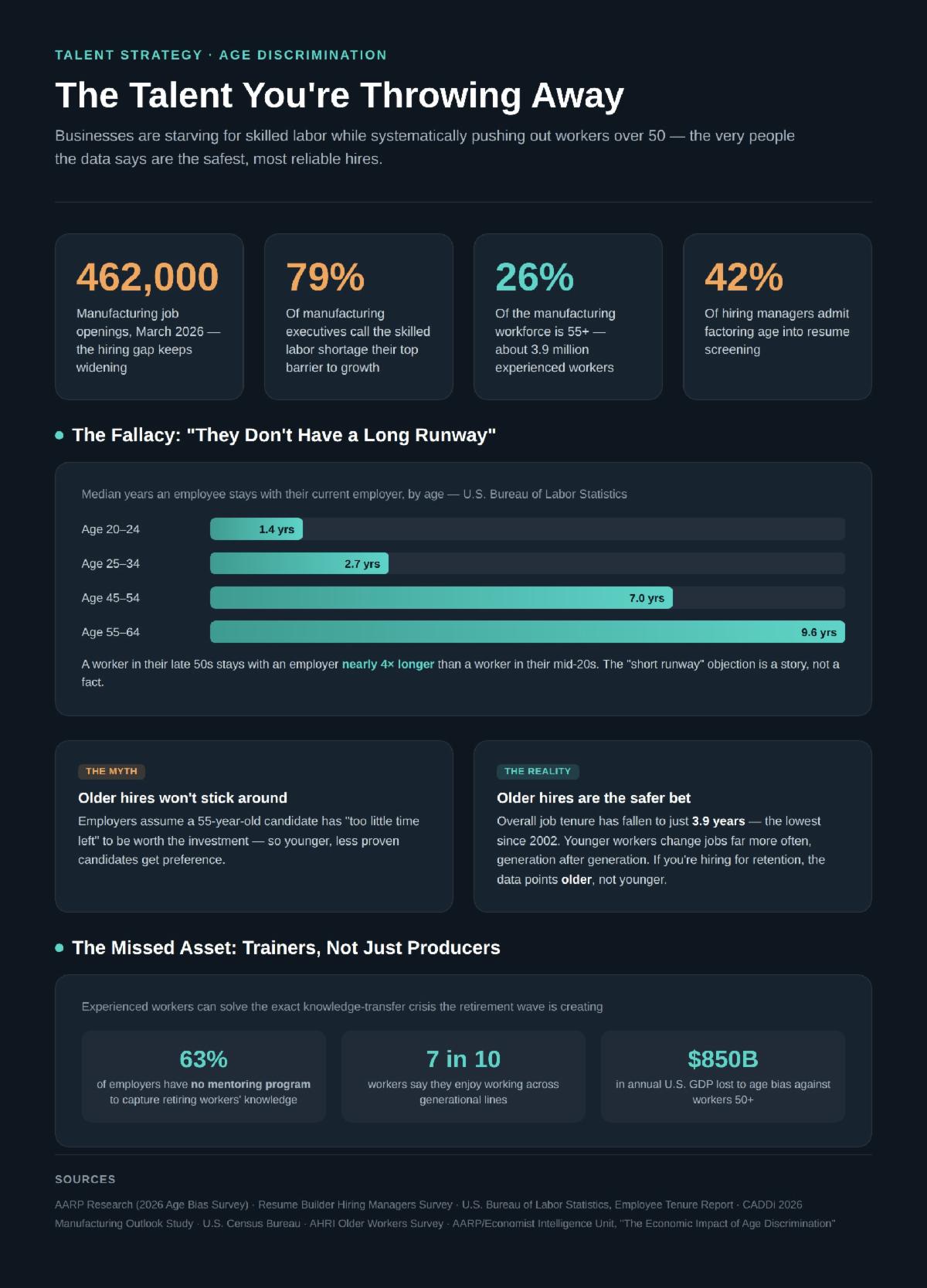
Walk into almost any manufacturing plant today and you'll hear the same complaint from ownership: "We can't find good people." Manufacturing job openings hit 462,000 in March 2026, and 79% of manufacturing executives now rate the skilled labor shortage their top barrier to growth. The Manufacturing Institute projects 3.8 million new skilled workers will be needed by 2033, with nearly half of those jobs likely going unfilled.
Meanwhile, ask that same plant what happens to a 55-year-old machinist who gets laid off. Odds are, they struggle to get hired anywhere else — not because they can't do the work, but because of their birth year. This isn't two unrelated problems. It's one: businesses are starving for talent while systematically pushing away one of the most capable segments of the workforce they have. That's not just unfair. It's stupid.
The Discrimination Is Real
A 2026 AARP survey found nearly a quarter of workers 50-plus feel they're being actively pushed out of their jobs, and 64% report having seen or experienced age discrimination firsthand. Employers aren't shy about it either: in a Resume Builder survey of 1,000 hiring managers, 42% admitted factoring age into resume screening, and 34% said they specifically have concerns about hiring anyone over 60.
The Irony: We're Retiring Our Own Talent Pool
Manufacturing's workforce is already older than the economy overall — median age 44.3 versus 42.1 — and workers 55-plus make up 26% of manufacturing employment, about 3.9 million people. Census data shows the share of manufacturing firms where at least a quarter of staff is over 55 nearly tripled from 14% in 2006 to over 40% in 2022 — the largest jump of any major industry (U.S. Census Bureau).
The people with the most process knowledge, troubleshooting instinct, and customer relationships are retiring fastest — and businesses are least willing to recruit their replacements from that same pool. That's shooting yourself in the foot.
The Fallacy: "They Don't Have a Long Runway"
The standard excuse for passing over an older candidate is "we need someone for the long haul." The data says the opposite. Per the Bureau of Labor Statistics, median tenure rises steadily with age:
- 20 to 24 years of age - 1.4 years of tenure
- 25 to 34 years of age - 2.7 years of tenure
- 45 to 54 years of age - 7 years of tenure
- 55 to 64 years of age - 9.6 years of tenure
A worker in their late 50s stays with an employer nearly four times longer than one in their mid-20s. Overall tenure has actually been falling, down to 3.9 years in 2024, the lowest since 2002, and research confirms younger generations have always changed jobs faster than older ones — this isn't a Gen Z quirk, it's a lifecycle pattern.
Flip the logic: if you're hiring for retention, the data says recruit older, not screen them out. Yes, older workers have fewer years left before retirement in absolute terms — but that's the wrong lens. What matters is expected tenure with your company, and there they win decisively.
The Missed Asset: Trainers and Mentors
Older workers aren't just candidates for roles they're screened out of — they're the fix for the knowledge-transfer crisis the retirement wave is creating. Yet 63% of employers report having no mentoring program at all to capture that institutional knowledge before it walks out the door.
A veteran machinist or plant supervisor isn't just a body filling a seat for a few more years — they can compress a new hire's learning curve dramatically while still producing. Research cited in Harvard Business Review found older employees outperform younger ones on nearly every dimension of job performance, with less absenteeism and stronger soft skills, and they hit the ground running because they've already done the job . AARP research shows seven in ten workers enjoy working across generational lines, with mentoring cited as one of the most rewarding parts of staying in the workforce longer.
The same person you're reluctant to hire at 58 because "they won't be here long" is exactly who could train your next three hires to replace the knowledge you're about to lose anyway.
What This Means for Your Business
If you're fighting a talent shortage, look at your own hiring funnel:
- Does your job posting or recruiter quietly filter out candidates over 50?
- Do you assume someone in their late 50s isn't worth investing in — even though tenure data says they're your safest long-term bet?
- Do you have any structured way to capture veteran knowledge through mentoring before it retires with them?
None of this requires charity. It requires recognizing that a real solution to your labor shortage has been sitting in your applicant pool, getting passed over for reasons the data doesn't support. Age discrimination in hiring isn't just legally and morally indefensible. For a business fighting to find skilled talent, it's one of the more self-defeating decisions you can make.
The question isn't whether you should take action. It is what's keeping you from starting today?
Question for You to Ponder
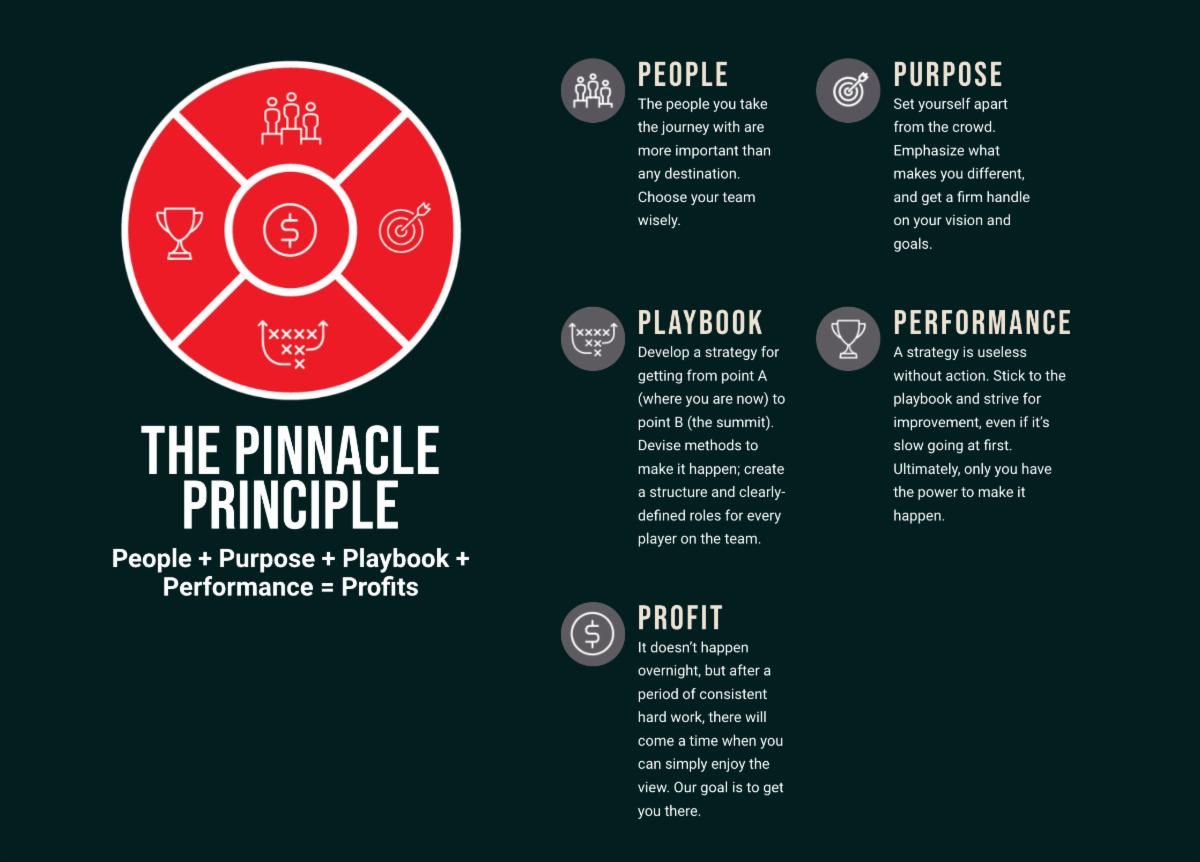
Are you ready to lead your business to its Pinnacle?
Outcome (if you act)
More profit and a better quality of life.
Call to Action
-
Ask me for a copy of the Path to Pinnacle
- Schedule a Meeting with Me
Our Mission: Accelerate Profitable Growth and Improve Execution
|