|
If you’re reading this, you may be asking yourself some important—and sometimes uncomfortable—questions about your relationship with food. I want to start by saying this clearly: curiosity is not a diagnosis, and concern is not a failure. Many people experience moments of uncertainty before they ever decide whether support feels right for them.
At CHEAR, we often meet individuals who say, “I don’t know if what I’m experiencing is binge eating disorder—but something doesn’t feel right.” That instinct matters. Our latest blog post explores common signs of binge eating disorder (BED) and how to recognize when additional support may be helpful. It’s not meant to label—it’s meant to inform and reduce confusion.
You deserve accurate information, compassionate care, and options that don’t rely on shame or rigid control. Whether you choose to take the next step now or simply gather knowledge, we’re glad you’re here.
Warmly,
Dr. Kerri Boutelle
Director, CHEAR
|
|
We encourage you to stay connected with CHEAR on social media, and let us know how we can help you on your journey to health and wellness.
| |
Insurance at CHEAR’s Outpatient BED Clinic
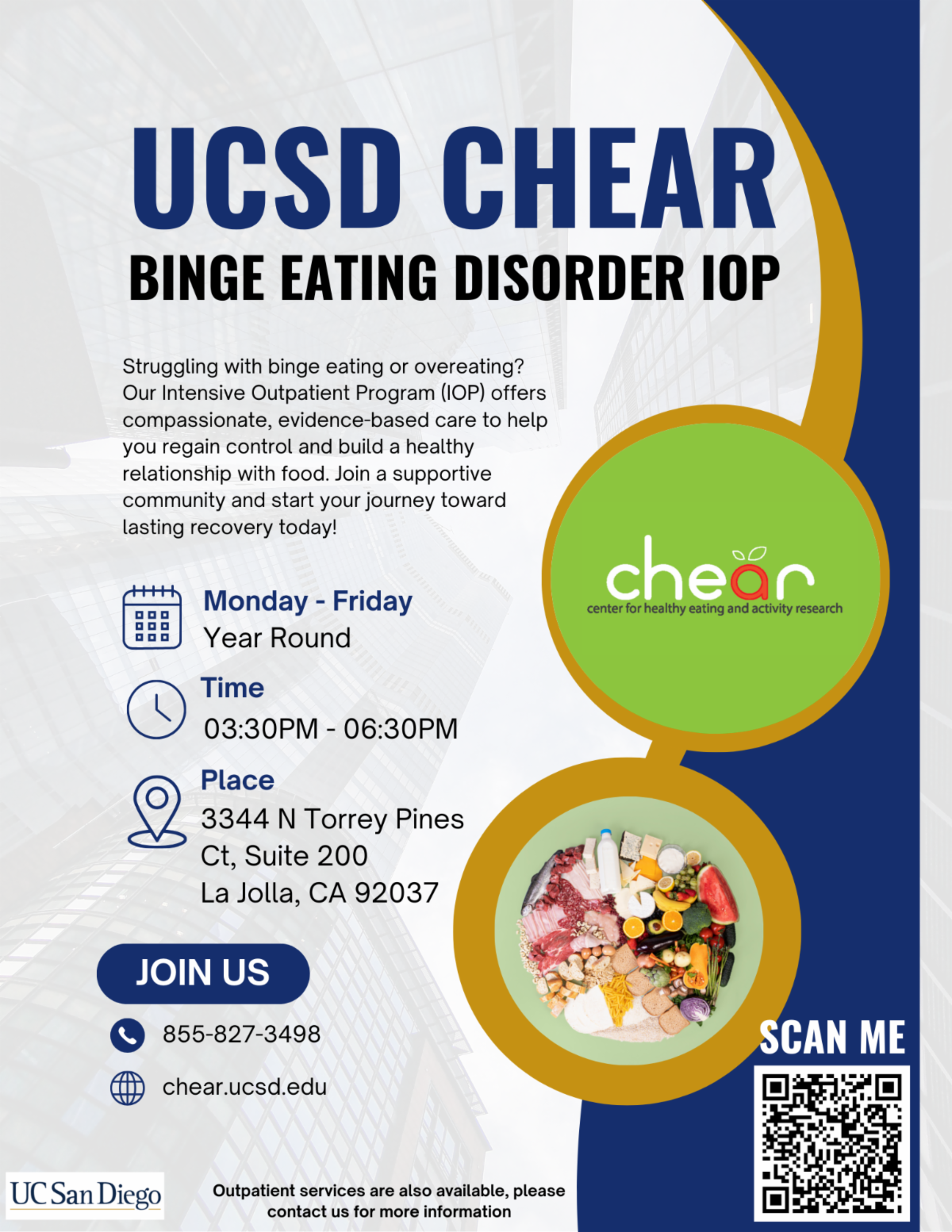
We know that starting treatment can feel overwhelming—not just emotionally, but financially, too. That’s why CHEAR works hard to make care as accessible as possible. Our Outpatient Binge Eating Disorder (BED) Clinic partners with a wide range of insurance providers, including Aetna, Optum (UnitedHealthcare), Cigna, Anthem Blue Cross, Kaiser Permanente, Sharp, MHN, and Health Net.
What does this mean for you? It means you don’t have to put off getting help because of financial uncertainty. Our team will verify your benefits, explain your coverage in plain language, and walk you through any potential costs before you begin. By working directly with insurance companies, we take the guesswork out of the process—so you can focus on healing, not paperwork.
Because recovery should be about building peace with food and life, not worrying about surprise bills.
👉 Take the first step today—let us help you check your coverage and explore treatment options.
| | | |
Binge Eating Disorder—Symptoms & When to Get Help
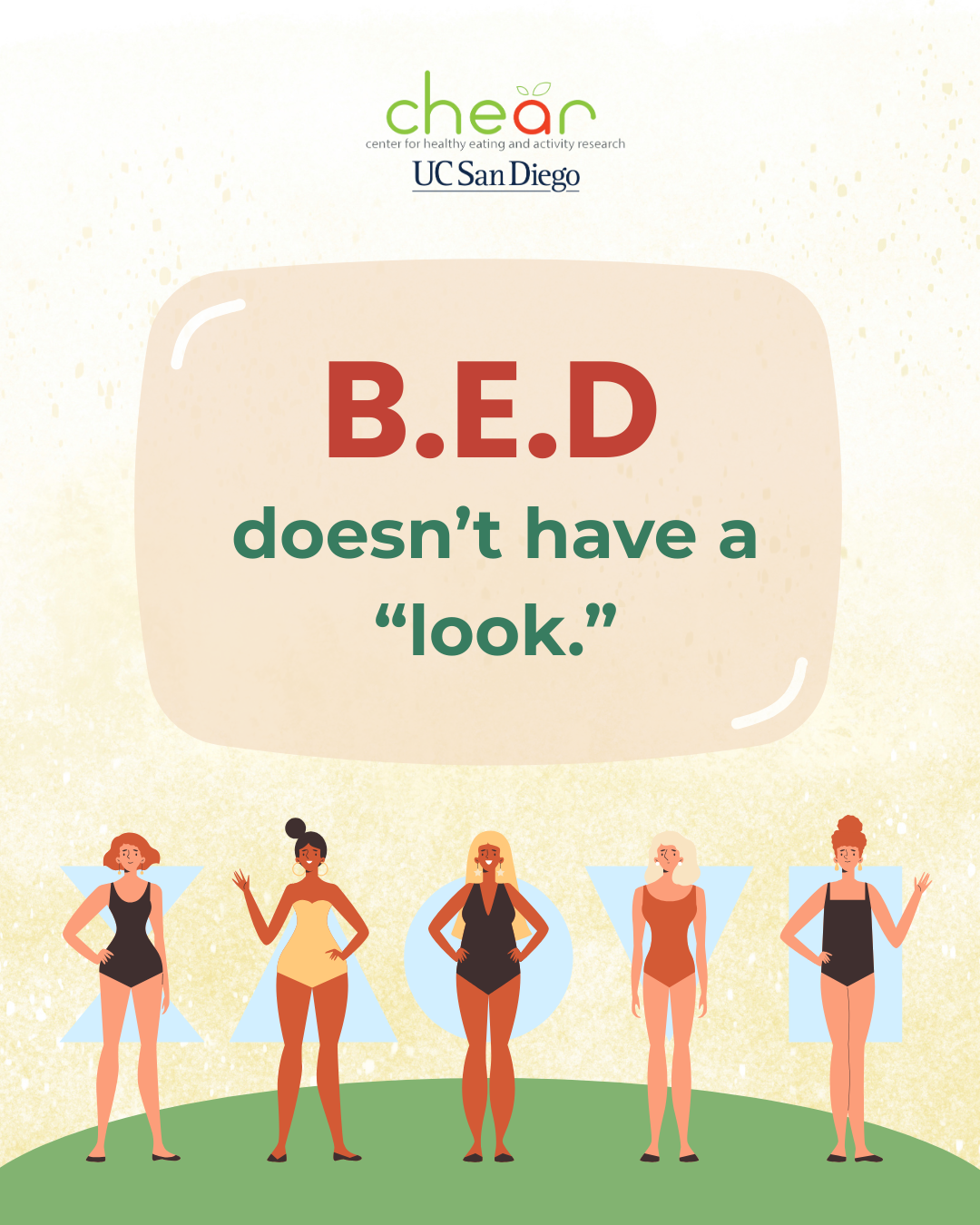
Binge eating disorder isn’t defined by willpower, food choices, or body size. It’s defined by patterns—particularly repeated episodes of eating that feel out of control, emotionally distressing, or difficult to stop once they begin.
While everyone overeats from time to time, BED involves experiences that feel different and often more overwhelming. Some of the most common signs include:
- A sense of loss of control while eating, even when not physically hungry
- Eating large amounts of food quickly or in secret, often followed by guilt, shame, or distress
- Persistent emotional discomfort around eating, including feeling upset, numb, or disconnected afterward
In our latest blog post, we walk through:
- How binge eating differs from occasional overeating
- Why BED isn’t about “lack of discipline”
- When professional support can be helpful—and what that support actually looks like
If parts of this resonate with you, it doesn’t mean something is “wrong.” It may simply mean your body and mind are asking for care, understanding, and support.
| Self-Check Corner: Gentle Awareness Techniques | |
If you’re feeling unsure about your relationship with food, this brief check-in is simply an opportunity to notice patterns with curiosity—not judgment or self-criticism.
Consider these questions over time:
- Do certain foods feel urgent or hard to pause around?
- Do I eat differently when I’m alone compared to with others?
- Do I feel connected to hunger and fullness cues—or unsure how to recognize them?
There’s no right or wrong way to respond. Awareness often begins by noticing patterns, not changing them.
If you’re curious to learn more about what these patterns can look like—and how to know when support might be helpful—our latest blog post offers a thoughtful, research-based overview.
These kinds of check-ins are part of Regulation of Cues (ROC), an approach used at CHEAR to help people respond to eating cues with less stress and more confidence. Learn more about how CHEAR can support you.
| | California Citrus & Avocado Toast | | |
Sometimes, nourishment doesn’t need to be complicated to be meaningful. This simple, California-inspired snack is designed to feel grounding, satisfying, and approachable—especially if you’re working on listening to your body with curiosity rather than rules. It’s not about eating perfectly; it’s about creating a calm moment to notice how food feels.
Simple, nourishing, and intentionally satisfying—this combination offers texture, flavor, and balance without pressure.
Ingredients
- Whole-grain toast
- Mashed avocado
- Orange or blood orange segments
- Olive oil drizzle
- Pinch of sea salt
Steps
- Toast the whole-grain bread to your preferred level of crispness.
- Mash the avocado with a pinch of sea salt.
- Spread the avocado evenly over the warm toast.
- Top with orange or blood orange segments.
- Finish with a light drizzle of olive oil.
Intentional phrase while preparing your Snack:
“I can slow down and notice without needing to change anything.”
This snack isn’t a test or a technique—it’s simply an opportunity to experience food with a little more presence. Moments like these can help build awareness over time, especially when approached with kindness and patience. Even small pauses can create space for understanding.
| | |
GET INSPIRED!
Follow Us On Social Media
| |
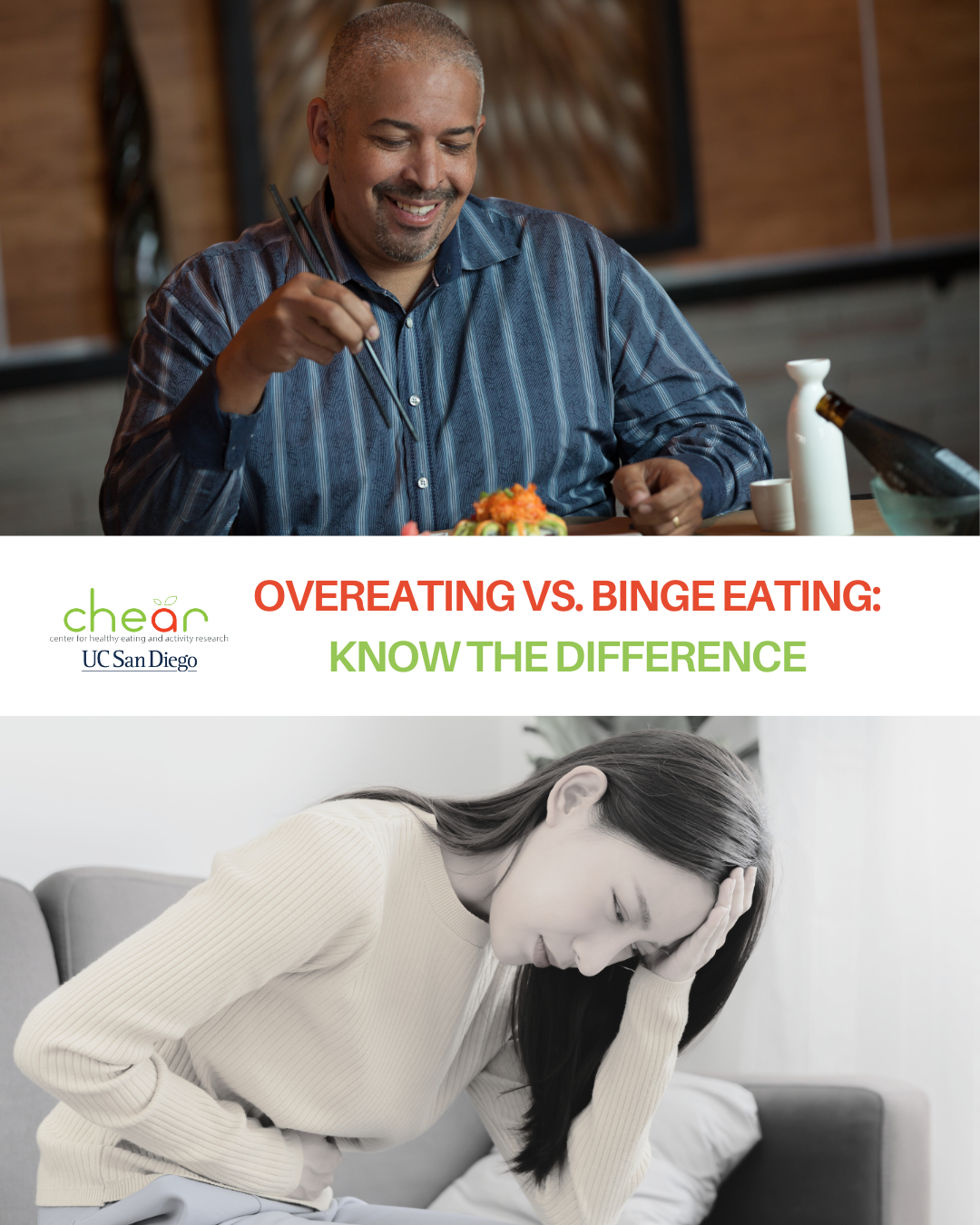
Understanding the Difference: Overeating vs. Binge Eating | |
Many people worry that any difficult moment with food means something is wrong. In reality, eating experiences exist on a spectrum, and not all challenges around food are the same. Understanding the difference between occasional overeating and binge eating disorder can help reduce self-blame and bring clarity.
Overeating often happens during social events, celebrations, or times of distraction—and while it may feel uncomfortable physically, it doesn’t typically involve a sense of loss of control or ongoing emotional distress. Binge eating disorder, on the other hand, is marked by repeated episodes of eating that feel difficult or impossible to stop, often accompanied by guilt, shame, or feeling disconnected afterward.
Learning these distinctions isn’t about labeling yourself—it’s about understanding patterns and knowing when support might be helpful. Clear information can replace uncertainty with reassurance and empower you to make informed decisions about next steps.
📖 Read our blog post at the link below to learn more about binge eating disorder and when support may be helpful.
🔘 Explore how CHEAR can support you with trusted, evidence-based care here.
📸 © Obesity Action Coalition
| | A Moment to Pause: Building Mindfulness Around Eating | |
When food feels stressful or confusing, slowing down—even briefly—can help create space between urges, emotions, and actions. Mindfulness isn’t about controlling thoughts or eating “perfectly.” It’s about noticing what’s happening in your body and mind with curiosity and compassion.
Taking small moments to check in—before, during, or after eating—can help you reconnect with internal cues like hunger, fullness, and emotions, without needing to change anything right away.
Try This Brief Pause
- Take one slow breath
- Notice one physical sensation
- Name one emotion present, without judging it
These small pauses can help build awareness over time and are often the foundation of evidence-based approaches used at CHEAR. You don’t need to practice mindfulness perfectly for it to be meaningful—showing up with curiosity is enough.
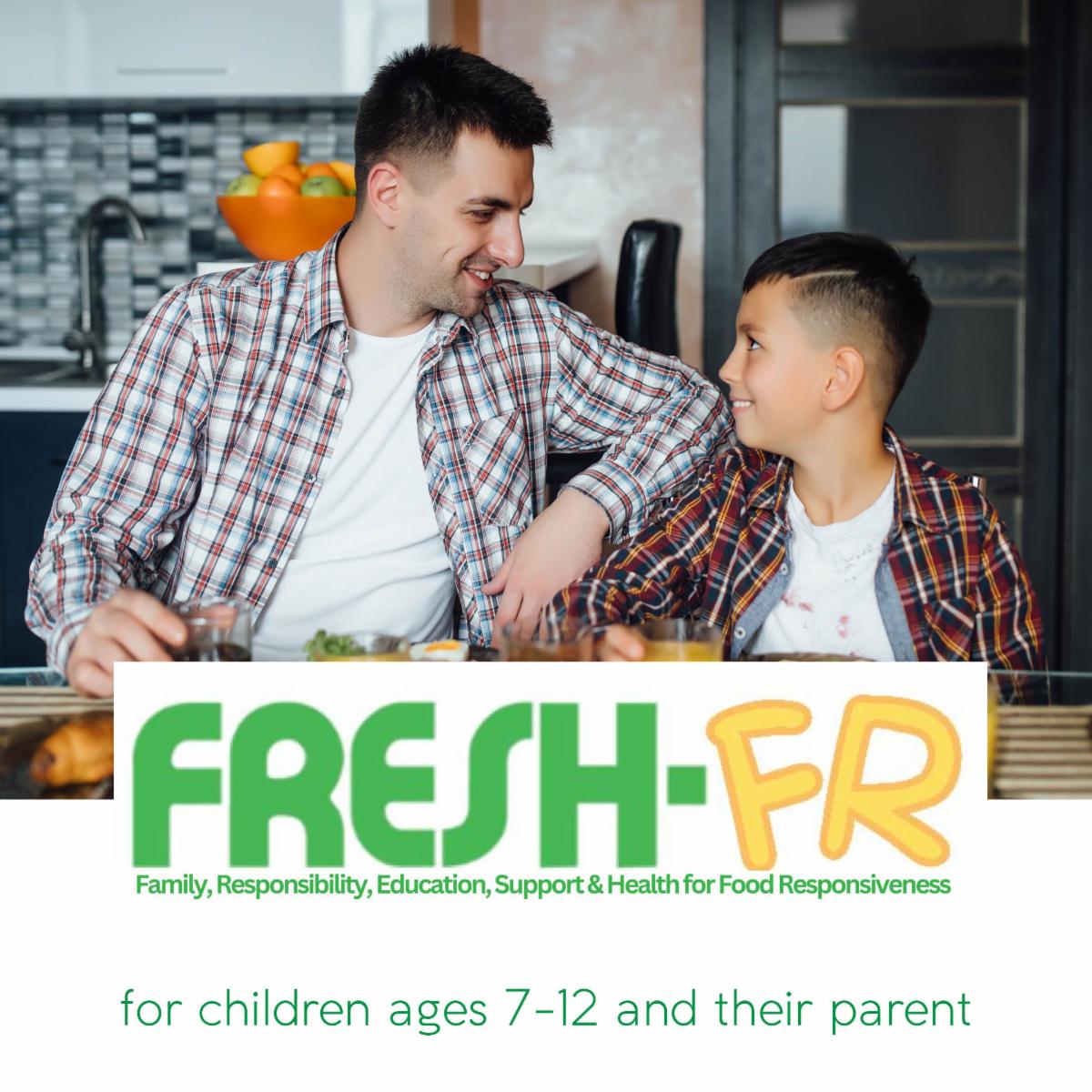
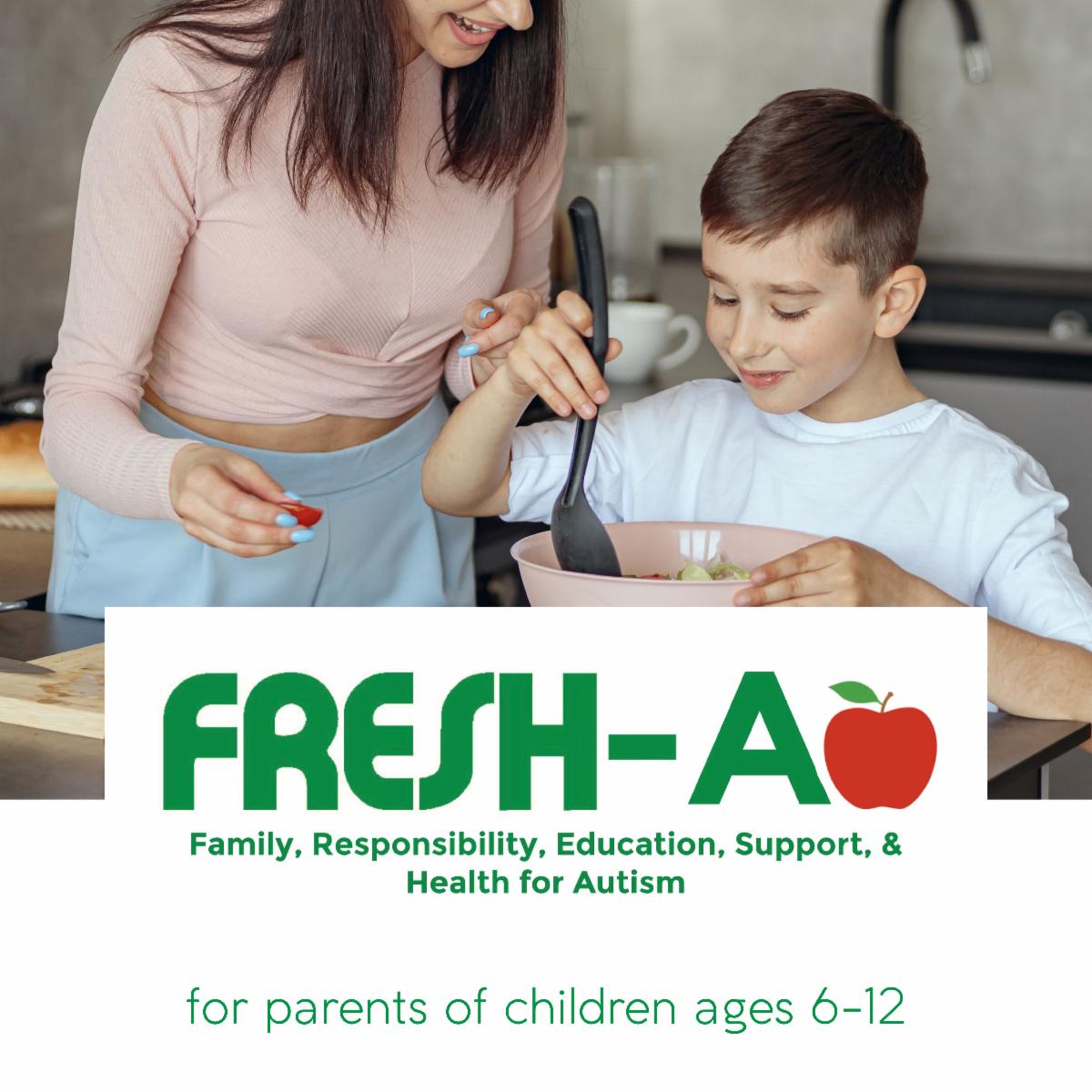
| | The FRESH-FR program is a no-cost weight loss program for children ages 7-12 with obesity & their parent who tend to think and talk about food a lot and overeat. The FRESH-FR program examines 4 different treatments that may help children reduce their overeating and lose weight. | |  | The FRESH-A study is a telehealth program for parents of children ages 6-12 with autism and overweight or obesity that focuses on developing healthier eating and activity behaviors. The no-cost treatment program is 6-months and only parents attend weekly groups. | | | | | |