|
Culture is built in the moments most people move through too quickly.
The email.
The silence.
The side-eye.
The missed repair.
The story we tell ourselves about what just happened.
That is why equity work is culture work. Because equity is not only about what we intend. It is about what people actually experience: whose needs are considered, whose stories are believed, whose communication style is trusted, whose distress is noticed, whose mistakes become data, and whose mistakes become proof.
This month’s newsletter is about the practice underneath the values: mental health and inherited stories, nervous system hijacks, D.I.V.E. as a tool for checking assumptions, coaching as support for practice, and The Work of Showing Up™, our new workshop series for when the people part gets hard.
Because our values do not become culture until we practice them.
| | |
Spaces for Learning, Growing, and Leading
We’re always creating spaces where people can grow,
reflect, and lead with purpose.
| |
New Workshop Opportunity: The Work of Showing Up™
For when the people part gets hard.
You send the email. Someone reads it as sharp.
You ask a question in a meeting. Someone hears it as challenge.
Someone goes quiet, and now the room is talking with its eyebrows.
Most of us are not only responding to what happened. We are responding to what we think it meant.
This fall, we’re offering The Work of Showing Up™, a three-part virtual workshop series for people who want better tools for communication, conflict, feedback, repair, and working across difference.
Across the series, participants will use practical tools and frameworks — including the Intercultural Conflict Style Inventory — to explore communication styles, conflict patterns, intent and impact, feedback, repair, and how to choose a next move that supports the goal, the relationship, and the work.
Because sometimes the question is not: Do I want to be right?
Sometimes the question is: Do I want to be effective?
Dates: September 22, October 6, and October 20
Time: 1:30–4:00 p.m.
Location: Virtual
| | | | |
This newsletter was supposed to go out in May, during Mental Health Awareness Month.
It is now June.
One story says we missed the mark. We were late. We should have pushed harder, planned better, gotten it done.
Another story asks different questions. What was May asking of us? What were we carrying? What did care require? What would it mean to honor both accountability and capacity?
That is where this piece begins: with the stories we inherit about mental health, responsibility, rest, strength, and what we are allowed to need.
| | |
Hijacked: When My Nervous
System Took Over
Sometimes the hard part of social justice work is staying present when our body sounds the alarm. In “Hijacked: When My Nervous System Took Over,” Julia writes about a moment in a conversation about race, belonging, and community when silence at the table suddenly felt very loud.
What follows is an honest reflection on fear, shame, support, repair, and the practice of returning when we do not show up quite the way we hoped.
| | |
We want our responses to match our goals. We want to communicate clearly, make thoughtful decisions, strengthen trust, repair when needed, and keep the work moving. But in real time, our brains move fast. You send a thoughtful email and get back two short sentences. The story starts: They don’t respect my work. They think I don’t know what I’m doing. They’re checked out. So your next response gets tighter. You over-explain. You copy someone else. You pull back. You start protecting yourself from a story you have not checked.
But what else might be true? Maybe they had 30 seconds between meetings and wanted to get you a quick answer. Maybe they are better out loud than in writing. Maybe their laptop was dying. Maybe they thought they were giving you exactly what you needed. Or maybe your first read was right.
That’s why checking matters. This month’s Tool Time introduces D.I.V.E., a simple framework for slowing down before interpretation hardens into truth. It helps us separate what we observed from what we assumed, check what else might be true, and choose a response that is more aligned with our goal.
| |
A Coach Is Not a Vibe. Choose Carefully.
Maybe you can see the challenge, but you do not know what to do next.
Maybe you know what to do next, but you do not know how to do it.
Maybe someone suggested coaching, and you are still trying to understand why.
That is enough of a place to begin.
Coaching is support for people who are practicing. A good coach can help you find the real question, notice patterns you may be too close to see, and choose what to practice next.
But a coach is not just a vibe. Fit matters. So do experience, ethics, boundaries, training, and trust.
| | |
Wait... Good News? Well, Yeah... Always!
Every month, we're going to sift through the news and spotlight stories that are full of progress, kindness, and joy.
| |
What we are reading right now
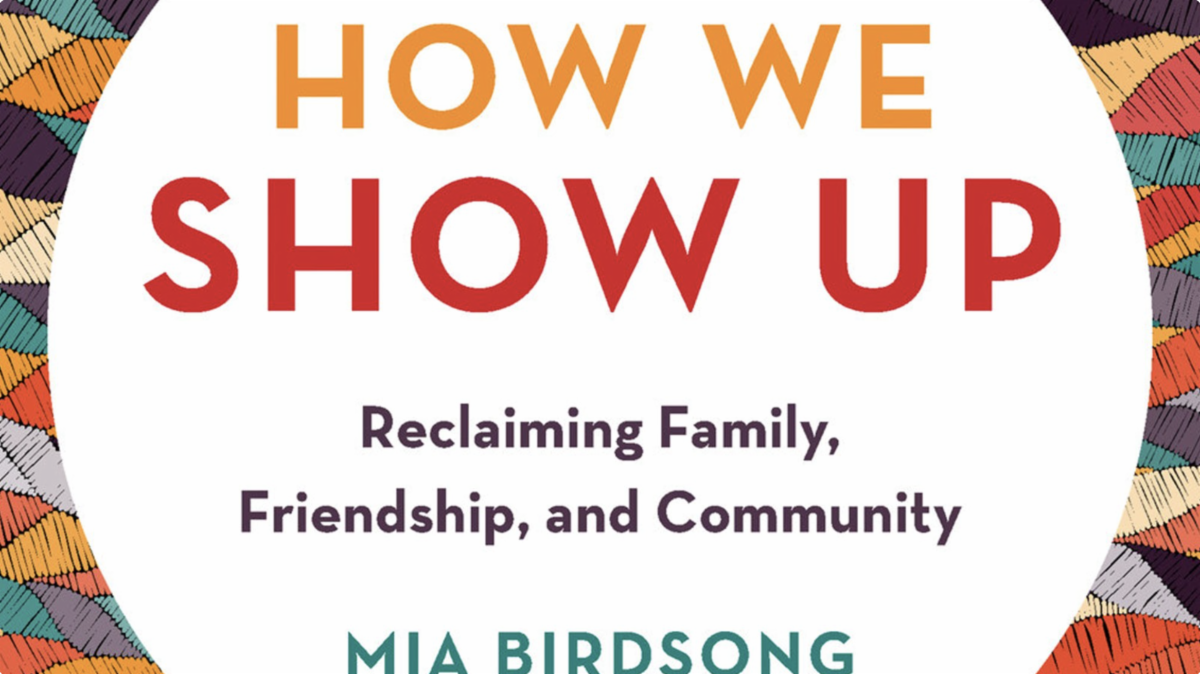
How We Show Up, Mia Birdsong
| | |
Mia Birdsong’s How We Show Up is about reclaiming family, friendship, and community in a culture that keeps teaching us to stand alone. The book challenges the myth that independence is the highest form of success and points instead toward interdependence, belonging, generosity, vulnerability, accountability, and asking for help.
Birdsong writes about the ways we build community in real life — not as an abstract ideal, but through the relationships, practices, and responsibilities that make us more whole.
What stayed with me was the part about giving and receiving.
I am very practiced at giving. I was conditioned in all kinds of ways — as a woman, as an oldest/only child, as someone shaped by a particular cultural community — to make things easier for other people. To smooth the friction. To be helpful. To not need too much.
But mutuality is not real if care only moves one way.
That was the reframe I needed. Receiving care is not outside of responsibility. It is part of it. I am not asking for help because I am needy or failing. I am participating in the circulation of care. I am letting someone else have the dignity, agency, and joy of showing up, too.
The other piece that stayed with me was simpler: invite people in.
A clean, welcoming space is a good thing. I like a clean space. I like good food. But a perfect space and an impressive meal should not be prerequisites for connection. The relationship is the main thing. The rest is hospitality logistics. That matters because loneliness, disconnection, and shame thrive when everyone is performing okay-ness. We can be technically present in all kinds of spaces — committees, boards, group chats, neighborhoods, workplaces — and still keep ourselves partially hidden.
For me, How We Show Up is a reminder that community is not just something we believe in. It is something we practice. We practice it when we give and when we receive. When we invite and when we accept the invitation. When we let what we have to offer be good enough. When we let ourselves be good enough. When we let care move both ways.
If we actually believed we were interconnected and interdependent — not as a slogan, but in our bodies — everything would have to change. Maybe this is one place to begin: letting what we have to offer be good enough, letting ourselves be good enough, and letting care move both ways.
| |
|
A Visible Reminder: You are Not Alone...
Mental health matters—this month and every month. Small signals of care can open big conversations. When we choose to show up with messages of hope and connection, we help reduce stigma and remind people that support is real and available.
Join us in making care visible. Because sometimes the simplest message—you are not alone—is the one someone needs most.
| | | | |
If you didn't get this newsletter directly, let’s fix that.
We'll send you all the good things, once a month.
| | | | |