Why It Matters:
The Skillful Teacher identifies time as one of the essential conditions for learning. The amount of meaningful learning students experience depends not simply on how much time is scheduled, but on how much time is spent actively engaged in learning. Small improvements in how instructional time is used accumulate into significant gains over the course of a school year.
Try This:
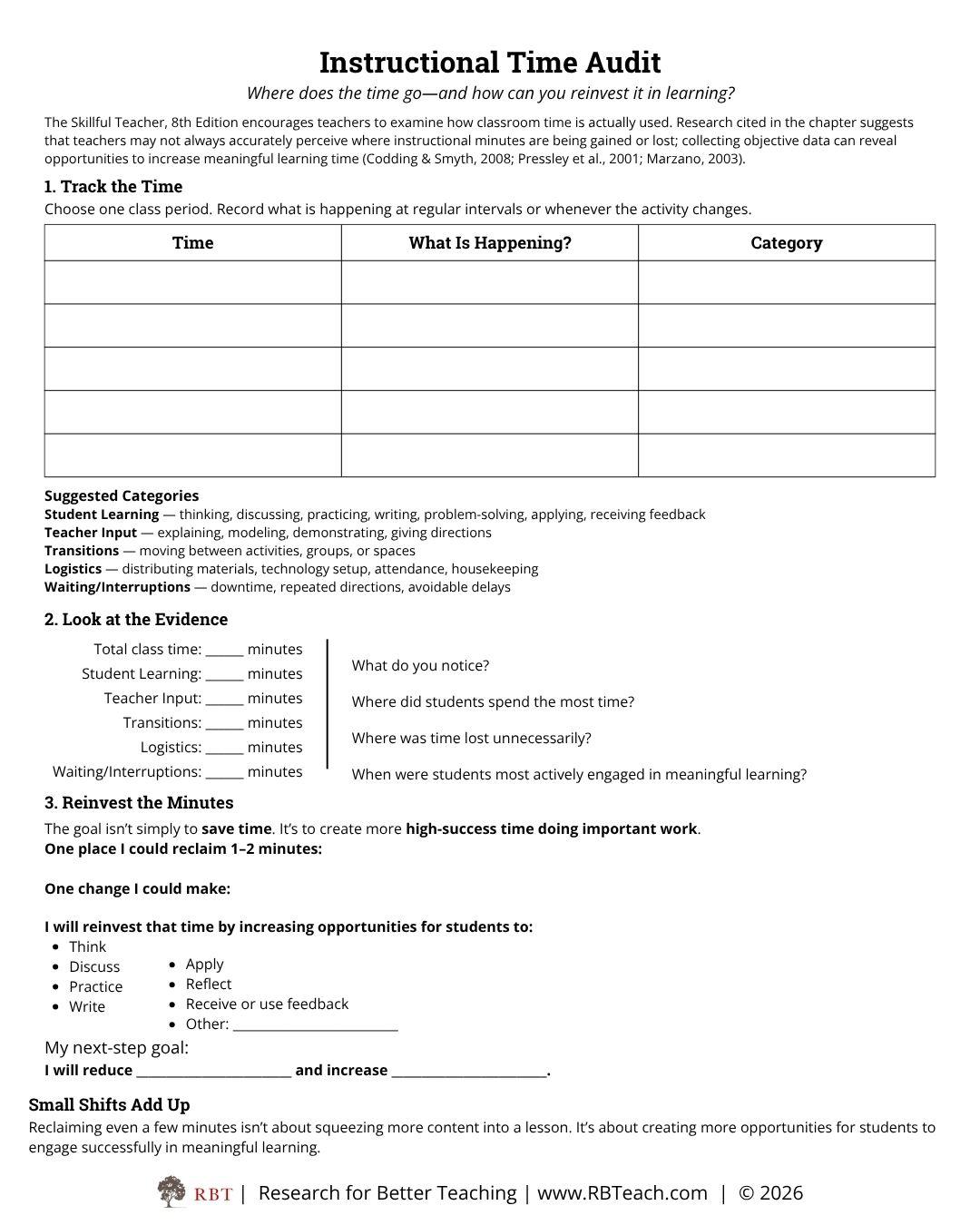
Choose one class period this week and track how instructional time is actually spent. Record approximately how many minutes were devoted to:
- Direct instruction
- Student thinking and discussion
- Transitions
- Logistics and materials
- Waiting or interruptions
Then ask yourself: If I could reclaim just two minutes from transitions, logistics, or waiting, how would I use that time to increase student thinking and learning?
Small Shifts, Big Impact:
Protect instructional time before it's lost. Give directions before students begin moving, have materials prepared in advance, and establish consistent transition routines that students can carry out independently. Saving just one or two minutes each lesson can translate into hours of additional learning over the course of a school year.
For Instructional Leaders:
During classroom visits, pay attention to how instructional time is protected—not simply how it is scheduled.
Consider discussing questions such as:
- When are students actively engaged in learning?
- Where is instructional time lost?
- Which routines consistently preserve learning time?
- What one adjustment would create more opportunities for student thinking?
Evidence-based conversations about time often lead to practical, high-impact improvements.
Research Connection:
The Skillful Teacher, 8th Edition reminds us that not all classroom time is equally valuable. Hattie's (2018) meta-analysis found a meaningful positive effect for time on task, while research on Academic Learning Time emphasizes that what matters most is the time students spend successfully engaged in important, appropriately challenging academic work. TST8 calls this "high-success time doing important work." Protecting time, then, isn't simply about efficiency—it's about creating more opportunities for students to think, discuss, practice, and succeed.
|