Prior to September 11, 2001, most Americans were well aware of terrorist acts having been committed by Muslims in other countries. Some had even drawn the inference that this meant Islam was a terrorist religion and/or that Muslims are terrorists. Muslims in the West were very conscious of this. I know this to be true from personal experience.
I had my first encounter with Islam during the 1970s when I befriended two Muslim brothers from Iran who were in the United States pursuing college degrees. Through them, I met others in the Muslim community who were also from Iran and other Middle Eastern countries. All of them seemed sympathetic to the cause of the people of Iran who were trying to overthrow their ruler, the Shah, and replace him with a religious leader.
It was a quite prevalent belief among Americans in that era that Iranian Muslims were at the center of numerous acts of terrorism being committed in various parts of the world. Politically, America was also favorable towards the Shah and opposed efforts being made to overthrow his regime and replace it with an Islamic government. Needless to say, there was considerable distrust among Americans, if not outright hatred, for Iran.
In this context, I noticed that whenever one of my Iranian friends was asked where he was from, the reply was Persia, which is where modern-day Iran is located. This answer was indicative of their fear of being "outed" as Iranians (When I why they did not identify themselves as Iranian, they candidly expressed it was from concern for their safety - better, it seemed, to be identified as Middle Eastern than Iranian).They realized that most Americans had no idea where or what Persia was and this provided them a better opportunity to avoid the issue of terrorism, or being labeled a terrorist because of their nationality, or religion.
In the early 1990s, I reconnected with some Muslims in my community and found that some twenty years later Muslims here still felt the need to try and distance themselves from being labeled terrorists. Many conversations began with their explaining Muslims are not terrorists or that Islam does not promote terrorism. Clearly, in their minds, Americans still held a false perception of Islam that needed to be corrected. As we entered a new Century, the events of September 11, 2001 again renewed, and broadened, the debate about Islam and terrorism.
In fact, after September 2001, there has been an effort to redefine the very meaning of the word Islam. It is not uncommon for Muslims in the West to promote the idea that "Islam" is the Arabic word for peace. Shortly after 9-11, President Bush even defined Islam in this manner after holding meetings with Muslim leaders. I find this interesting considering that, prior to 2001, every Muslims I ever dialogued with defined Islam as meaning "submission" or, more particularly, submission to the will of Allah. A Muslim was therefore, by definition, "one who submits."
So, what is Islam today and what does it really teach? The short answer is, Islam means many things to many people; it really depends on the Muslim with whom you are conversing - which is true of religions, in general - and, to some degree, the culture and era that has most shaped their theological understanding of Islam. A Muslim's beliefs will primarily depend upon which sect of Islam he belongs to and how knowledgeable or devout he is, to the beliefs and practices of that sect. And, while there are a number of sects in Islam, two of them, the Shi'a and the Sunni, comprise over 90% of Islam with the Sunni being the predominate of the two (some estimates place them as high as 80% of all Muslims). Today, most of the Shi'a a are found in Iran and Iraq.
These two groups developed shortly after the death of their prophet Muhammad, in 632 A.D. They essentially parted over a disagreement as to who should be Muhammad's successor in leading. The group that would become the Shi'a believed Muhammad's successor should be a descendant of Muhammad. The majority opinion was held by those who became known as the Sunni. Favoring a less restrictive criteria for their selection, they chose Muhammad's close friend, Abu Bakr, as their leader.
Each sect of Islam believes they alone represent "true" Islam. Since they developed independently of one another, each with their own leaders, they have developed divergent beliefs through the centuries. Therefore, not all Muslims fully agree on the teachings of Islam. Having said that, there are some basic beliefs and practices of Islam upon which most Muslims would agree. Before considering these, let's first get an overview of Islam as we find it in the United States.
There are no hard and fast figures as to how many Muslims there are in the United States. On the high end are those who estimate it is more than 10 million; conservative estimates are 1.5 to 3 million. Most favor a number somewhere in between 3 to 10 million (considering that estimates also indicate there are only some 3,000 Mosques, or centers of worship, in the U.S., I tend to favor the lower estimates). These numbers include both immigrants and converts.
Concerning converts, Carl Ellis and Larry Poston, in their book The Changing face of Islam in America, estimate the African-American community comprises some 40% of the converts to Islam. Many of these belong to the American Society of Muslims, a primarily African-American segment of Islam, founded by Warith Deen Muhammad, the son of Elijah Muhammad, who led the Nation of Islam until his death in 1975. (After replacing his father as the leader of the Nation of Islam, which is regarded by Muslims as a cult, W.D. Muhammad gradually moved the Nation into mainstream Islam. Eventually, it became the American Society for Muslims; however, some members did not like these changes and reconstituted the old Nation of Islam under the leadership of Louis Farrakhan.)
Muslims in the West are especially interested in engaging non-Muslims in conversation. This is often done through an open house at the Mosque (particularly during Ramadan - the Holy month of Islam) and through public presentations, generally held on a "neutral" site. This practice is known as dawah (literally, "invitation"). In a sense, it is the equivalent to what Christians would call evangelism.
The purpose of dawah in the West seems to be two-fold. First, to acquaint the non-Muslim with Islam in a way that will break down any misconceptions the person might have about Islam; particularly as relates to terrorism (In recent years, I have noticed attention also being given to address concerns that Islam denigrates women - probably brought on by the treatment of women by the Taliban in Afghanistan). Secondly, dawah is intended to be ongoing with further discussions intended to convince the person to convert to Islam.
Beliefs and Practices of Islam
The essence of Islam is found in five practices known as the Five Pillars of Islam. There may be some variation among sects as to form but, generally, most Muslims embrace these Five Pillars:
Shahada
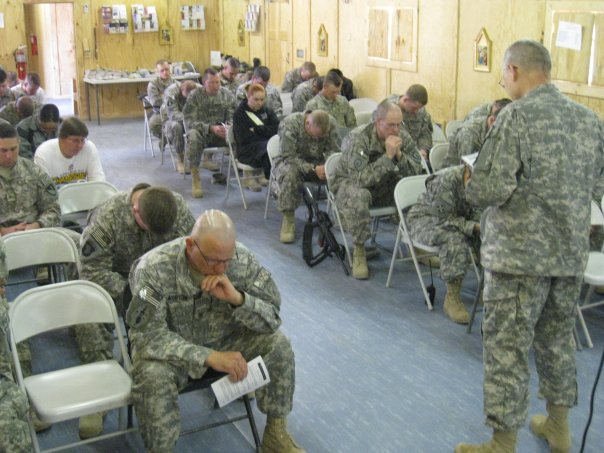
The shahada consists of an Arabic phrase that roughly translates to, "There is no God but Allah and Muhammad is His messenger". To say the shahada is equivalent to a profession of faith or belief in the truth of Islam. No one can become a Muslim without reciting this. To illustrate this, recently, I spoke with a young man who told me, that while serving in the military in the Middle East, he converted to Islam. When I asked how this conversion had occurred, he replied that Sunni Muslims, who had befriended him there, led him in reciting the shahada. He now attends a Mosque here in the States where his training in Islam continues.
Salat
Salat is the Muslim obligation to pray, at the appointed times, five times a day (Some Muslims offer more prayers): at dawn, midday, mid-afternoon, sunset, and two hours after sunset. Each of these prayers are to be completed within a set block of time and should be done with the proper preparation and form, including: facing Mecca in the right position, with ones shoes removed and having properly washed (ablutions). The prayers typically come from the Quran but may vary from Mosque to Mosque and sect to sect.
Sawm
Sawm is the fast required from sunup to sunset during each day of the month of Ramadan, the ninth month of the Islamic calendar. This most holy month for Muslims celebrates the giving of the sacred scriptures of Islam, the Quran (which translates to, "recitations") to Muhammad by the angel Gabriel. Muslims believe that over a period of many years, the angel Gabriel recited the message of the Quran to Muhammad who, in turn, recited it to his followers (Muhammad did not put the recitations into written form as he, allegedly, did not know how to read and write). It wasn't until after his death that these words were written into book form divided into chapters known as surahs.
Unlike our Western calendar, the calendar of Islam is based on a lunar calendar; therefore, the beginning of Ramadan varies from year to year. Muslims determine its starting point as the evening when the moon first enters the crescent phase during the ninth month. It seems most likely this is the reason one of the most recognizable symbols for Islam is the crescent shaped moon.
I think it important to note that there are those who point to this symbol as proof that Muhammad worshipped the moon god; however, I think this is a bit of a reach. Even were it true, I see no real value in introducing a moon-god into a discussion of Islam with a Muslim, who will never accept it as being true.
Zakat
Zakat is the responsibility of every Muslim to give alms, equal to 2.5% of their income, to the poor and needy. If a Muslim is not able to give zakat in currency, based upon his finances, he should give in some other way, as he is able. Zakat is not an obligation or tax paid to the Mosque; it is solely intended to be for the benefit of the poor.
Hajj
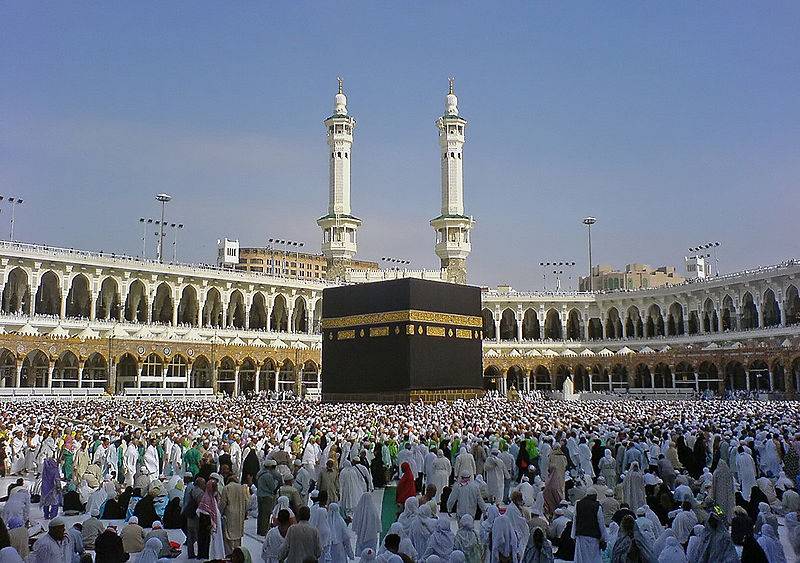
The fifth pillar of Islam is the hajj. This is the obligation of every Muslim, who is able, to make a pilgrimage to Mecca at least once in his lifetime. While some Muslims may go at other times, the hajj is officially to be made during the twelfth month of the Islamic calendar, which typically falls during the month of December; however in 2009 it falls on November 25-29.
There, dressed in the ihram (white garments), millions of Muslims (over three million in 2008) participate in the rituals associated with this week-long pilgrimage. These rituals include marching counter-clockwise around the large, black, cube-shaped structure known as the Ka'bah. This ritual predates Muhammad to a time when it was believed the Ka'bah was the home to hundreds of idols. Today it is the center to which Muslims worldwide face in prayer.
The Question of Jihad
Though not "officially" one of the Five Pillars, another important practice of Islam is jihad. The idea of jihad for most non-Muslims (Westerners, in particular) is a "holy" war. However, Muslims tend to think of jihad as having two forms - a "lesser" and a "greater". This concept is especially verbalized by Muslims in the West when explaining jihad.
They would say the greater of the two jihads is the struggle everyman must wage to bring himself into submission to Allah. The lesser then is the struggle to bring others into submission to Allah, or the teachings of Islam. Without question, it is this idea of lesser jihad that is used to fuel and justify terrorist activities related to Islam. I think it is for this reason that Muslims in the West generally steer any discussion of jihad away from the "greater" and to the "lesser"
In addition to these five common practices of Islam and jihad, there are certain beliefs that Muslims generally hold in common. Following are a few of these that can be contrasted with beliefs commonly held by Christians.
Concerning Scriptures/Authoritative Writings
While Muslims accept certain portions of the Bible as being true, they believe that overall the Bible has been abrogated - corrupted - and therefore much of it contains an inaccurate account. The writings of the Apostle Paul are particularly distasteful to and discounted by Muslims. In Islam, the only truly authoritative scripture is the Quran.
Concerning God
In Islam, there is only one God - Allah. Muslims believe that, like Jews and Christians, He is the God of Abraham. However, Muslims do not believe He is the God of Abraham, Isaac, and Jacob; but, the God of Abraham and Ishmael - a major deviation from Judaism and Christianity. While the Bible establishes God as a personal and relational being, even describing Him as a Father, the God of Islam is more akin to a task master. Muslims are quick to point out that God is not a father and does not have any sons.
Concerning Jesus
Muslims have a very high regard for Jesus, whom they know as Isa. Though not on par with Muhammad, they believe Isa was a great prophet. However, they do not believe he is God, as do Christians, nor do they believe he died on the cross. Muslims do not discount the crucifixion occurred but what happened there. As such, they find they must come up with alternatives to Jesus dying on the cross.
One popular explanation offered is the "substitution theory", in which they maintain someone other than Jesus was crucified (a widely held view is that in the confusion of the arrest, Judas was mistakenly taken and crucified). Probably even more popular is the so-called "swoon theory" in which Jesus only appeared to have died on the cross but recovered when placed in the tomb and removed the stone, overcame the guards and escaped (usually, the story goes that he ended up in Egypt).
Concerning Sin and Future Judgment
Islam does not really have a concept of sin, as understood in Judaism and Christianity. For the Muslim, the real issue is how one chooses to live their life. If one follows his own way his life will have no meaning and in the end he will have Allah's disapproval in the judgment. However, if one follows the way set by Allah, then he may, perhaps, have Allah's approval at the end of his days.
As in Judaism and Christianity, Islam teaches that the final destination of a person is either heaven or hell; the former being described as a place of unimaginable delight and the latter a place of unimaginable suffering. The determining factor as to which of these a Muslim will find himself at the end of his life, depends upon the degree to which he was submitted to Allah.
However, even if ones good deeds outweigh the bad, Allah may yet reject him. Thus, according to Islam, no matter how numerous ones good works, there is no assurance of being permitted into heaven - with the notable exception of those who die in the name of and for the cause of Islam. (This promise is one of the appeals for those who give their lives in acts of terrorism which they have been convinced are committed for the cause of Islam.)
This stands in stark contrast to the Christian message that a person's ultimate destination is not determined by how good, or bad, they are; but, whether or not they have accepted Christ's saving work on their behalf. The gospel of Jesus teaches that all have sinned - there is none that are "good" enough to earn their way into heaven, or to tip the scales in their favor through their good works. So, our hope is not placed upon what we can do but, upon what Christ has done on our behalf. He shed his blood on the cross as an atonement for our sins that we might be forgiven and enter into a restored relationship with the Father.
Now that is good news, and news worth sharing. Christians must not let their fears of terrorism, or the prejudices they hold toward Muslims, that have come about from a lack of understanding, keep them from sharing this good news with their Muslim friends and neighbors. The Christian message is one of hope; hope for the present, and hope in the future. It is a sure and certain hope.
So, go ahead - engage in dawah. Extend the "invitation" to enter into a relationship with the God who loves them through the person and work of His son, Isa.
[For general tips and ideas on sharing with Muslims, including answering their objections to the Bible and their view of the crucifixion, email us at info@crosswindsfoundation.org. Put "Tips for Sharing with Muslims" in the subject line. Please include your first and last name in the message.]