JULY 2026


What People Get Wrong

About Financial Coaching

I've been asked some version of these questions:


"How do you help people see the value in financial coaching?" OR

"Why wouldn't people just use the money to pay off their debt?"


These are fair questions and I'm going to address this below.


Before I go any further, I want to be clear about something. This isn't an advertisement for my services. It's an answer to a question I get asked regularly, and I think the answer is worth sharing openly whether you ever work with me or not. If it helps you think differently about financial coaching, great. If it simply gives you something useful to think about, that's enough.


Here's how I respond to the question. Most of the people who come to me aren't necessarily in crisis. Some are doing well on paper but feel like they could be doing better. Others have tried to get traction on their own and haven't quite gotten there yet. What they have in common is a desire to do something different and the wisdom to know that having support makes that more likely.


Most people who come to me have already been trying.


They've read the books. They've downloaded the apps, made the spreadsheets and they've told themselves that this month is going to be different.


And then it isn't.


Not because they lack intelligence or discipline, but because knowing what to do and actually doing it consistently are two very different things. What's missing isn't information. It's clarity, accountability, and celebration. It's someone in your corner who remembers what you said you wanted, celebrates the wins you've stopped noticing, and helps you set goals that are both achievable and worth reaching for.


That's what a financial coach does and that's something a budgeting app simply cannot replicate.


The numbers often speak for themselves.


I notice when clients who are carrying credit card debt are consistently executing the plan we develop for them, they pay off debt faster, sometimes significantly faster. When you do the math, the interest they save by eliminating that debt sooner often exceeds what they paid for financial coaching.


That means financial coaching isn't an expense. For many clients it's an investment with a measurable return. It could show up on their credit card statement every single month as they watch the balance go down instead of up!


The cost of doing nothing is real.


This is the part people don't always think about. Staying stuck or not doing anything different IS NOT free. Every month that passes without a plan is another month of interest accruing, another month of stress, another month of decisions made from scarcity rather than intentionality.


I've watched people spend years trying to figure this out on their own. These years cost them thousands of dollars in interest, missed opportunities, and emotional strain. When we work together, that timeline compresses. Goals that might have taken five or six years to reach on their own get accomplished in two or three, oftentimes faster.


Time is money. When it comes to debt, that is not just a figure of speech.


So, what do people get wrong about financial coaching?


They assume it's only for people who are in trouble. It isn't. It's for anyone who is ready to stop guessing and start moving with intention. Whether you're just getting started, rebuilding, or simply ready to do more with what you already have, financial coaching meets you exactly where you are.


If you've been trying on your own and haven't gotten as far as you'd like as fast as you’d like, that's not a character flaw. It's just a sign that you might be ready for a different kind of support.


THREE AUGUST BUDGET

CONSIDERATIONS

FOR COLLEGE STUDENTS AND PARENTS


1.     Dorm Room Essentials

The list your student brings home from orientation will humble you. Bedding, towels, storage, a mini fridge, a shower caddy, hangers, a fan, none of it is expensive on its own, but together it adds up to several hundred dollars before you've even left the parking lot. Build a dedicated dorm budget before you begin purchasing and set a number you both agree to stick to.


2.     First Week Food and Incidentals

Move-in weekend is basically a series of meals out, spontaneous shopping runs, and last-minute purchases that somehow didn't make the original list. This is one of the most predictable unpredictable expenses in a family's budget. Set aside a specific amount for the first week and treat it as part of the move-in cost rather than a surprise.


3.     Technology and Supplies

A new laptop, required software, headphones, a calculator, or a printer, many college programs have specific technology requirements that don't surface until orientation week. Before you finalize your move-in budget, check with your student's program to see what's required so nothing blindsides you at the last minute.


What would you add to this list? Tell me!


WHERE ARE YOU ON YOUR

FINANCIAL JOURNEY?

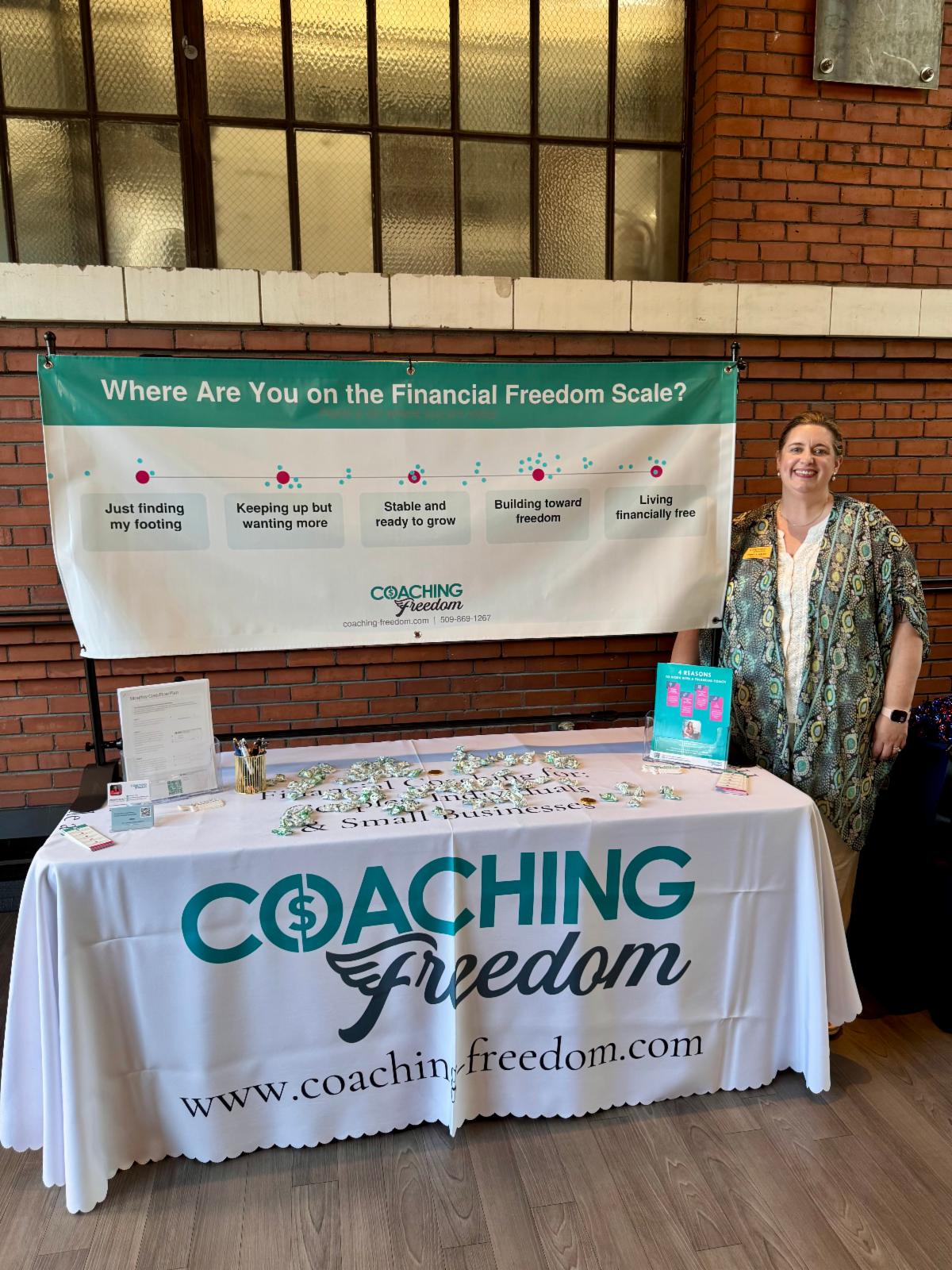
Last week I had the privilege of attending the Amplifying Women's Voices Soiree here in Spokane. It was a beautiful evening of connection, and I picked up on a deeper reminder of why this work matters so much.


I brought a simple activity. A banner with five stops along a financial journey, ranging from just finding my footing all the way to living financially free. I asked attendees to place a dot where they are today, without judgement or shame, just awareness.


Forty conversations later... Forty women willing to stop, reflect, and be honest, even with a stranger, about where they really are.

The range of outcomes was not surprising, but I heard the stories behind almost every dot placed, including:


  • Someone getting ready to head off to college.
  • Someone who is running multiple businesses.
  • Someone whose partner just got licensed for a new career.
  • Someone whose partner recently lost his job.
  • Someone in their sixties rebuilding her financial life after a divorce.
  • Someone who is retiring in January who feels financially prepared for their future.


Every single story matters. Every single dot on that banner represented a real person at a real moment in her financial life.


The surprising part? Fifty percent of the women who participated placed their dot at the beginning of the scale. Just finding their footing or ready to grow. 


That, my friends, is an invitation.


It is a reminder that financial confidence is not something we are born with. It is something we build, one conversation, one decision, and one small win at a time. And it is never too late and never too early to start.


I’m humbled by each one of the responses and cheering for you all! 

RESOURCES


UPCOMING EVENTS

Click on the blue link for more information and to register

Women Lead Summer Luncheon featuring keynote speaker, Becky Calder, the first female pilot to graduate from TOPGUN! This event will take place in person at Gonzaga University on Friday, August 7 at 11:30 a.m. Investment $55.


Nourish Conference- This in person conference takes place on Saturday, September 19 from 8 am-4 pm at MODE in Liberty Lake. This is a full-day experience designed to reconnect you with yourself, your body and with others. Early bird registration available through June 30. Early Bird investment: $150/person (Discounts available) 


Facebook  Instagram  LinkedIn
LinkedIn Share On LinkedIn