|
Stocks Up
U.S. indexes rose modestly for the second week in a row, in contrast with the rapid advances that stocks generated in the first three weeks of April. The S&P 500 and NASDAQ both added around 1% for the week, pushing their record levels higher. The Dow edged up 0.5%, finishing 1.4% below its record set nearly three months ago.
U.S. stocks rebounded in a big way from their negative first-quarter results, with two indexes posting double-digit returns in April. The NASDAQ rose 15.3% to record its biggest monthly gain since April 2020, while the S&P 500’s 10.4% rise was that index’s biggest since November 2020. The Dow advanced 7.1% for its strongest monthly result since November 2024.
Earnings season forecast rose sharply after a handful of mega-cap tech companies reported better-than-expected results. As of Friday, analysts projected that earnings for S&P 500 companies rose 27.1% in the first quarter, up from a 15.0% forecast at the end of the previous week, according to FactSet. The latest forecast was based on the 63% of S&P 500 companies that had reported results as of Friday, plus projections for those that haven’t yet released their numbers.
Oil again traded in a wide range, briefly hitting the highest level since early April before pulling back late in the week. U.S. crude was trading around $102 per barrel on Friday afternoon after ending the previous week around $95. On Thursday, oil traded as high as $110; a couple of weeks earlier, it was around $84.
Although the U.S. Federal Reserve kept its benchmark rate unchanged, its updated policy statement drew dissents from 4 of 12 members, reflecting wide-ranging views on the path forward. It was likely the final meeting led by Jerome Powell, who said he plans to remain a Fed governor after his term as chair ends this month. Kevin Warsh’s nomination to replace Powell cleared a Senate panel, setting up a confirmation vote by the full Senate.
The U.S. Federal Reserve’s preferred gauge for tracking inflation showed a sharp monthly increase as higher oil prices rippled across the broader economy. Excluding volatile energy and food costs, the core Personal Consumer Expenditures Price Index climbed to an annual rate of 3.2% in March. The reading matched most economists’ estimates and marked the highest level since November 2023.
U.S. GDP grew at a 2.0% annual rate in this year’s first quarter as the economy gained momentum after posting a 0.5% result in the preceding quarter. Despite the acceleration, the government’s initial first-quarter estimate came in slightly lower than most economists had forecast, and it marked a slowdown from the 4.4% rate recorded in last year’s third quarter.
A jobs report due out on Friday will show whether recent strengthening in the labor market extended into April. In March, the economy added an above-forecast 178,000 jobs, rebounding from a net loss of 133,000 in February. The labor market has been stuck in a zig-zag pattern over the past 10 months, posting job declines over five of those months, followed by gains in each of the subsequent months.
Source: John Hancock Investment Management
| | |
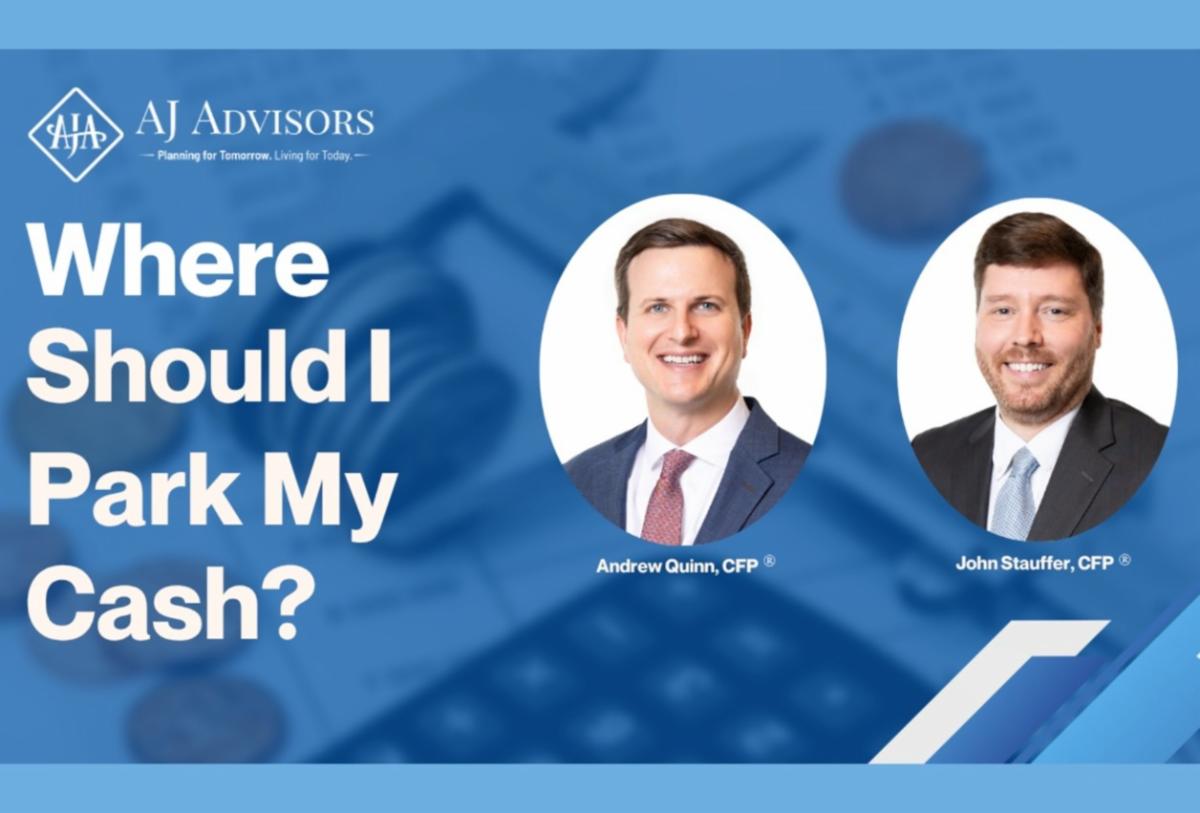
Clients often ask where the best place is to keep their cash, but the answer is rarely one-size-fits-all. It depends on several key factors, including how much cash you have, your intended use for those funds, and your tolerance for risk. In their latest video, John and Andrew explore these considerations in depth, offering practical guidance to help individuals make more informed decisions about managing their cash.
They address important questions such as how much money is appropriate to keep in checking and savings accounts, how to properly structure an emergency fund, and what to do with excess cash beyond that reserve. By breaking down these scenarios, they provide a thoughtful framework for balancing liquidity, safety, and return—helping viewers align their cash strategy with their broader financial goals.
Click here to watch the video!
| | The Bond Market Was Less Optimistic Than the Stock Market | | |
While stock markets rallied to new highs last week, the bond market moved in the other direction. In the United States, yields on Treasuries rose while prices fell. Jared Blikre of Yahoo! Finance reported:
“The U.S. 30-year Treasury yield…is back near the danger zone that has sent stocks tumbling before. That zone is roughly 5 [percent]...But this is not just a U.S. story. Global bonds have been under pressure, with yields rising across major markets as investors reassess inflation, central bank policy, and government debt supply.”
In the United States, inflation, central bank policy, and government spending were top of mind last week.
Inflation moved in the wrong direction, rising to a two-year high. In March, Americans spent significantly more on gasoline and energy, health care, cars and parts, and insurance. The personal consumption expenditures price (PCE) index, which is one of the Federal Reserve’s preferred measures of inflation, showed:
- Headline inflation rose to 3.5 percent annualized in March (from 2.8 percent annualized in February).
- Core inflation, which excludes volatile food and energy prices, rose to 3.2 percent annualized in March (from 3.0 percent annualized in February).
The Fed left rates unchanged. The Federal Open Market Committee (FOMC), which is the Federal Reserve’s (Fed’s) rate-setting body, kept the range for the federal funds rate at 3.5 percent to 3.75 percent. The accompanying statement confirmed that:
- Economic growth is steady,
- Employment gains have remained low, on average,
- Inflation remains above the Fed’s 2 percent target, and
- Conflict in the Middle East has created a high level of economic uncertainty.
There was dissent among committee members. “Four officials voted against the decision, including three who objected to language in their post-meeting statement that suggested the central bank would eventually resume cutting rates,” reported Catarina Saraiva of Bloomberg. The possibility of a rate hike surprised markets, and yields on shorter-term Treasuries increased.
Government spending lifted economic growth. Usually, consumer spending is the primary driver of economic growth in the United States. Last quarter, consumer spending cooled and economic growth was driven by business investment and government spending.
Improving economic growth is wonderful, but higher government spending, less so. Last week, Fitch Ratings warned that the U.S. deficit and debt are far larger than those of other countries with an AA rating. Fitch reported, “The fiscal position [of the United States] will deteriorate in 2026 due to tax cuts in the One Big Beautiful Bill Act (OBBBA), although tariff revenues will offset half the OBBBA’s fiscal impact.”
Taken together, last week's data painted a complex picture for investors. Rising stock markets, higher inflation, a divided Fed, and a cautious bond market serve as important reminders to stay diversified and maintain a long-term perspective in uncertain times.
| | |
AJ Advisors
www.ajadvice.com
|
|
|
Phone: (615) 709-8709
Fax: (615) 709-8709
| |
| |
John Stauffer, CFP®
Partner
| |
Andrew Quinn, CFP®
Partner
| | Past performance does not guarantee future results. Different types of investments involve varying degrees of risk, and there can be no assurance that the future performance of any specific investment, strategy, or product (including those recommended or undertaken by AJ Advisors, LLC), or any non-investment related content, made reference to directly or indirectly in this communication will be profitable, equal any indicated historical performance level(s), be suitable for your portfolio or individual circumstances, or prove successful. Due to various factors, including changing market conditions and/or applicable laws, the content may no longer be reflective of current opinions or positions. You should not assume that any discussion or information contained in this communication serves as the receipt of, or as a substitute for, personalized investment advice. To the extent that a reader has any questions regarding the applicability of any specific issue discussed above to their individual situation, they are encouraged to consult with the professional adviser of their choosing. AJ Advisors, LLC is neither a law firm nor a certified public accounting firm and no portion of the content herein should be construed as legal or accounting advice. If you are an AJ Advisors, LLC client, please remember to contact the firm, in writing, if there are any changes in your financial situation or investment objectives or if you wish to impose, add, or modify any reasonable restrictions on our investment advisory services. Until so notified, AJ Advisors, LLC will continue to rely on the most recent information provided. A copy of our current written disclosure statement discussing our advisory services and fees continues to remain available upon request. | | | | |