|
Briefing Notes: White‑Tailed Eagle Release on Exmoor
Background to the Project
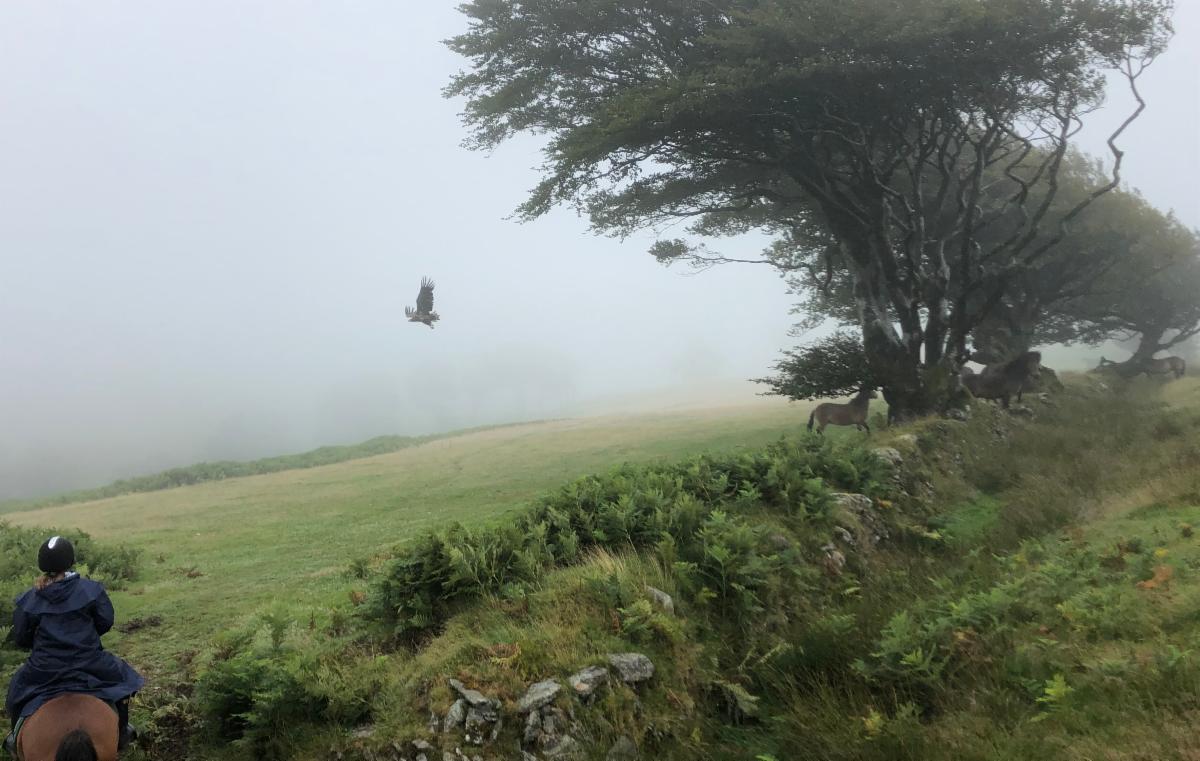
White‑tailed eagles (also known as Sea eagles) are the UK’s largest bird of prey, with wingspans up to 2.5 metres. They were once widespread across England, including Exmoor, but were persecuted to extinction by the 18th–20th centuries.
Since 2019, Forestry England (FE) and the Roy Dennis Wildlife Foundation (RDWF) have been running a licensed reintroduction programme based on the Isle of Wight. Satellite tracking has shown that Exmoor has become a regular hotspot for visiting birds.
Exmoor National Park Authority (ENPA) has been working with the partners to deliver a small release on Exmoor, supporting the small emerging population in southern England.
Why a release on Exmoor is Needed
Although juvenile eagles explore widely, they return to the place they fledged to breed. To establish breeding birds on Exmoor, a small number have to be released locally. Even to secure two breeding pairs, multiple young birds must be released due to natural mortality. Since 2019, 14 individual eagles have visited Exmoor, demonstrating that the area offers suitable coastal woodland and moorland habitat
Impacts on Livestock
White‑tailed eagles naturally favour fish - such as mullet and bass - and this preference increases with age. They also take small mammals and carrion and some birds including corvids, ducks and Canada geese. You can read more on in depth diet studies here
During the public consultation, concerns were raised by some that White-tailed Eagles may predate lambs or other livestock. We have been careful to listen to these concerns, to look at the scientific research around this issue.
The project team began reintroducing white-tailed eagles in 2019. Since that time, they have been closely monitoring and observing their diet. This evidence demonstrates how in southern England there is an abundance of the birds’ favoured food of fish, small mammals and birds.
There have been no reported conflicts with farming livestock or pets since the project began seven years ago.
This includes the 14 Satellite‑tracked white tailed eagles visiting Exmoor National Park in recent years. These birds have spent extended periods around farmland without any incidents involving livestock.
Any incident reported in the west of Scotland does not reflect experiences in England and is being viewed as predominantly due to lack of alternative wild prey in some biologically poor regions. Birds in Scotland are not satellite tagged as they are in England. NatureScot, in partnership with organisations the RSPB now has plans to tag 40 white-tailed eagles in the west of Scotland to better establish how the birds interact with lambs and sheep.
White-tailed Eagles in the Netherlands, breed in areas grazed by sheep, but there are no recorded cases of eagles taking lambs or any other livestock and no conflict with farming since there is an abundant supply of wild prey. In Ireland, where there are now ten breeding pairs of White-tailed Eagles following a reintroduction project, there have been no cases of eagle predation on lambs and most farmers are either neutral or supportive of the project, despite initial concerns.
A key responsibility of the project officer’s role for the Exmoor releases is to liaise closely with the farming community from the outset and respond to any local concerns Representatives from the farming community, as well as other key local stakeholders are members of the project’s steering group.
Any concerns can be directed to and followed up at seaeagles@roydennis.org
What Monitoring and Support Will Be in Place
Every released eagle is fitted with a satellite tag, allowing the project team to track movements in real time. The project will continue working with ENPA, local landowners, the farming community and shooting interests to share evidence, and provide guidance as the birds settle. In-person engagement has already formed a core part of the preparation.
Expected Benefits for Exmoor
Ecological Benefits
Restored apex predators strengthen natural ecosystems and have been shown to improve ecological balance. RDWF and FE emphasise that re-establishing the species has brought positive impacts to ecosystems elsewhere in the UK.
Tourism and Local Business Opportunities
Exmoor is recognised as a hotspot for eagle sightings. Wildlife tourism associated with raptors has been shown to bring economic benefit to rural communities.
Summary
No livestock conflicts have been reported in England to date.
Natural diet heavily favours fish, carrion and small mammals.
Full monitoring and rapid‑response systems are in place through satellite tracking and engagement teams.
Farmers, game managers and landowners remain central partners in how the project develops on Exmoor.
Ecological/economic benefits are expected.
You can find more FAQs here or get in touch regarding any aspect of the project here seaeagles@roydennis.org
|