|
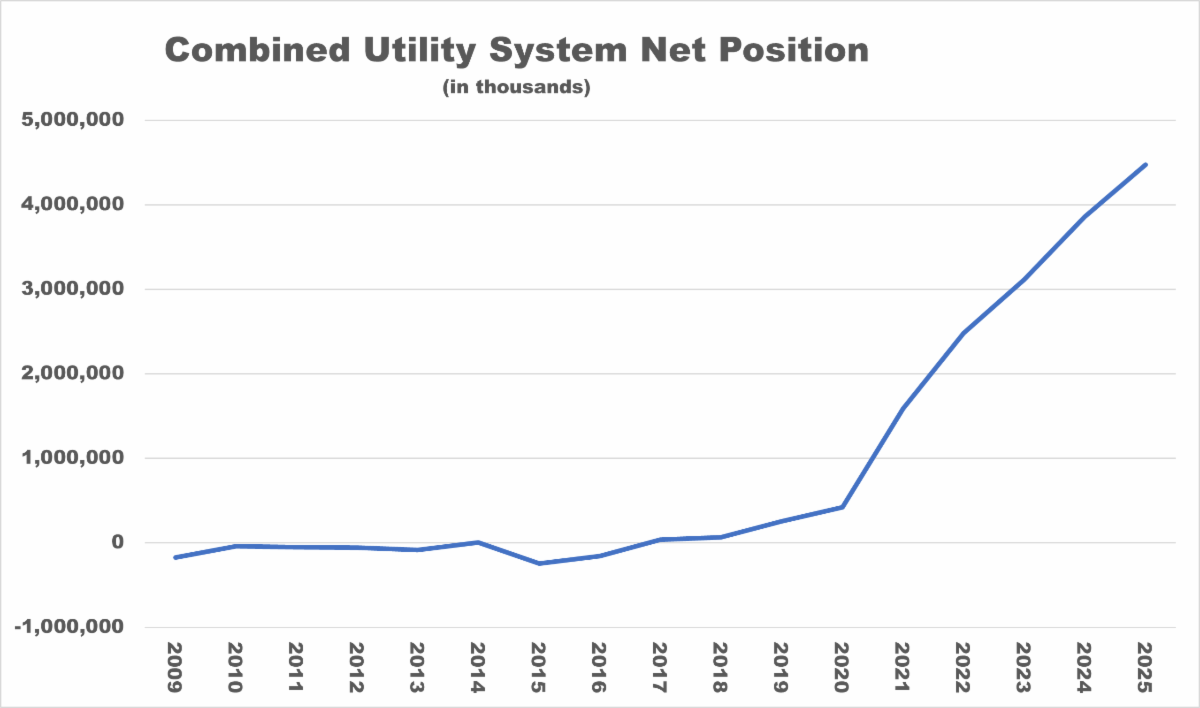
So, the CUS is flush for now. However, in the longer term, it faces significant challenges. Our wastewater system leaks like a sieve, which means we regularly dump untreated sewage into our bayous and streams. The City has been under a series of consent decrees with the EPA since the 1980s for violating the Clean Water Act. And, of course, we have all heard reports that the freshwater system loses billions of gallons each year through leaks. So, there is still a lot of work to be done. Some estimates put the amount of investment needed in the $14 billion range.
Although not officially part of this year’s budget, the Whitmire administration has signaled its intent to begin to increase the garbage fee in 2028 by $5 per year, eventually raising it to $25 per month. If that were to happen, it would take about half of the burden off the CUS.
The Whitmire administration is also promising to use the new resources to improve garbage pickup. You will have to excuse me for being skeptical. I have heard a similar promise from every mayor in my lifetime. None has succeeded.
This is primarily because the City's operations do not operate on a viable economic scale. The City picks up only a relatively small portion of the total garbage. It does not service apartments or businesses, and about a quarter of households have already fled the City’s abysmal service in favor of private haulers. I suspect that many others will follow suit as the fee begins to ramp up.
This leaves the City with a patchwork of fewer than 400,000 customers spread over 600 square miles. That means routes are impossibly long and inefficient. The only logical solution is to outsource the entire thing, which I suspect will ultimately be the case. Indeed, the imposition of the garbage fee may accelerate that day. But if the City insists on continuing to operate a fundamentally inefficient garbage model, it will ultimately need to ramp up the garbage to keep from impairing the CUS fund.
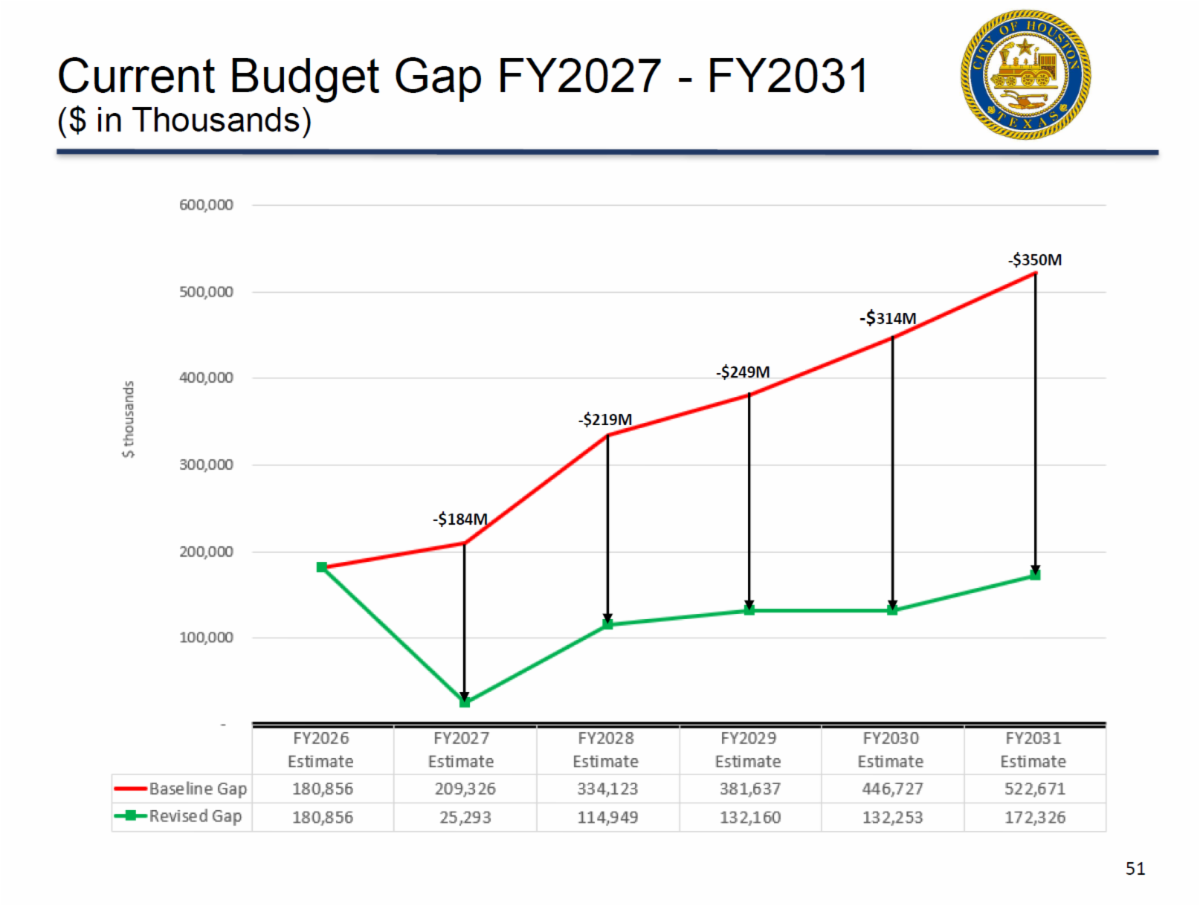
On balance, I think the proposal is a reasonable stopgap. But make no mistake, this is not a permanent solution to the City’s financial woes. And they are not problems we can tax our way out of. To cover the currently projected General Fund deficit, not to mention catching up on our woefully antiquated infrastructure, would require nearly a 60% increase in property taxes over the next five years. That would violate the city charter and state law and prompt a taxpayer revolt.
We will eventually have to face some difficult choices. I do not believe that dramatically increasing property taxes is the answer, and that it would only serve to drive more Houstonians to the suburbs.
Instead, we need to reconsider giving away half of our sales tax (~$1 billion) to a transit agency that carries fewer riders than it did in 2004 and giving away $200 million in our property taxes to TIRZs that mostly lavish projects on wealthy neighborhoods.
Whitmire should come down hard on overtime. Large recurring overtime is a management failure. Whitmire should make it clear to the managers of the departments where this has been a problem for years that their jobs are on the line if it continues.
In fact, we need to completely rethink our models for public safety. For years, we have just thrown more money at HPD and HFD, with little to show for it. Those departments are still about the same size today as they were 20 years ago. No "boots on the ground" have been added. HPD’s clearance rates remain at abysmal levels. The Ernest & Young efficiency study indicated that HPD and HFD were, by far, the most top-heavy departments in the City.
These will be the real challenges. Hopefully, the City will use the time this proposal buys to do the hard, and sometimes unpopular work, to actually address the City's long-term financial viability.
|