|
This administration is turning back the clock on advances made during the racial justice uprising that began in June 2020.
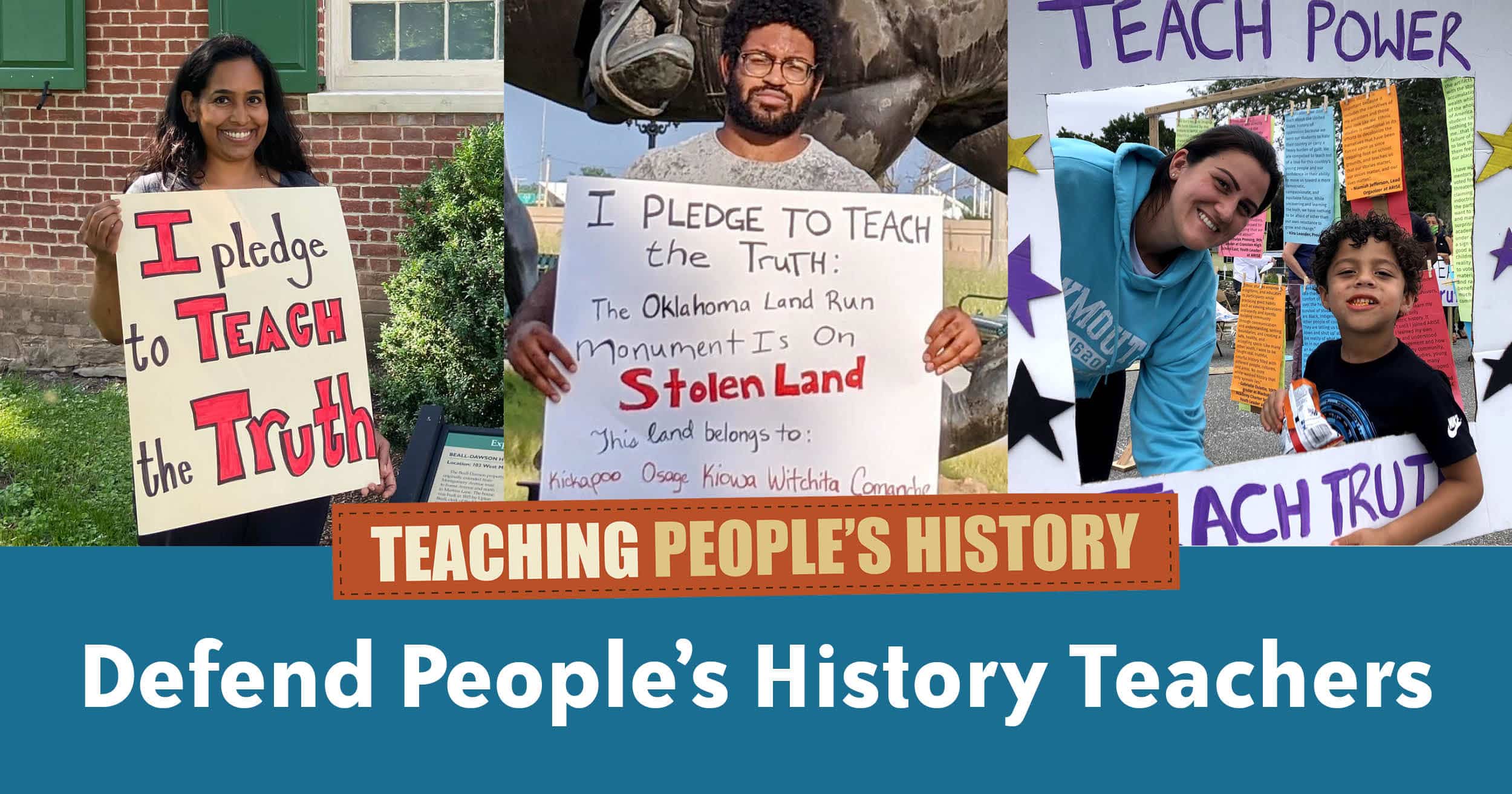
Their policies are unabashedly racist. Just like the Daughters of the Confederacy, they are plastering names and images of white supremacists everywhere — erasing alternative visions of who “we” are and could become. They are returning Confederate names to national parks, military bases, and ships — and bringing back Confederate monuments. All while censoring people’s history in schools and libraries.
| |
| Therefore, let’s invite students to consider why an accurate knowledge of history matters and help them critique and reclaim those stories. Here are resources related to public monuments and historic sites — starting with the upcoming class with award-winning writer Clint Smith. | |
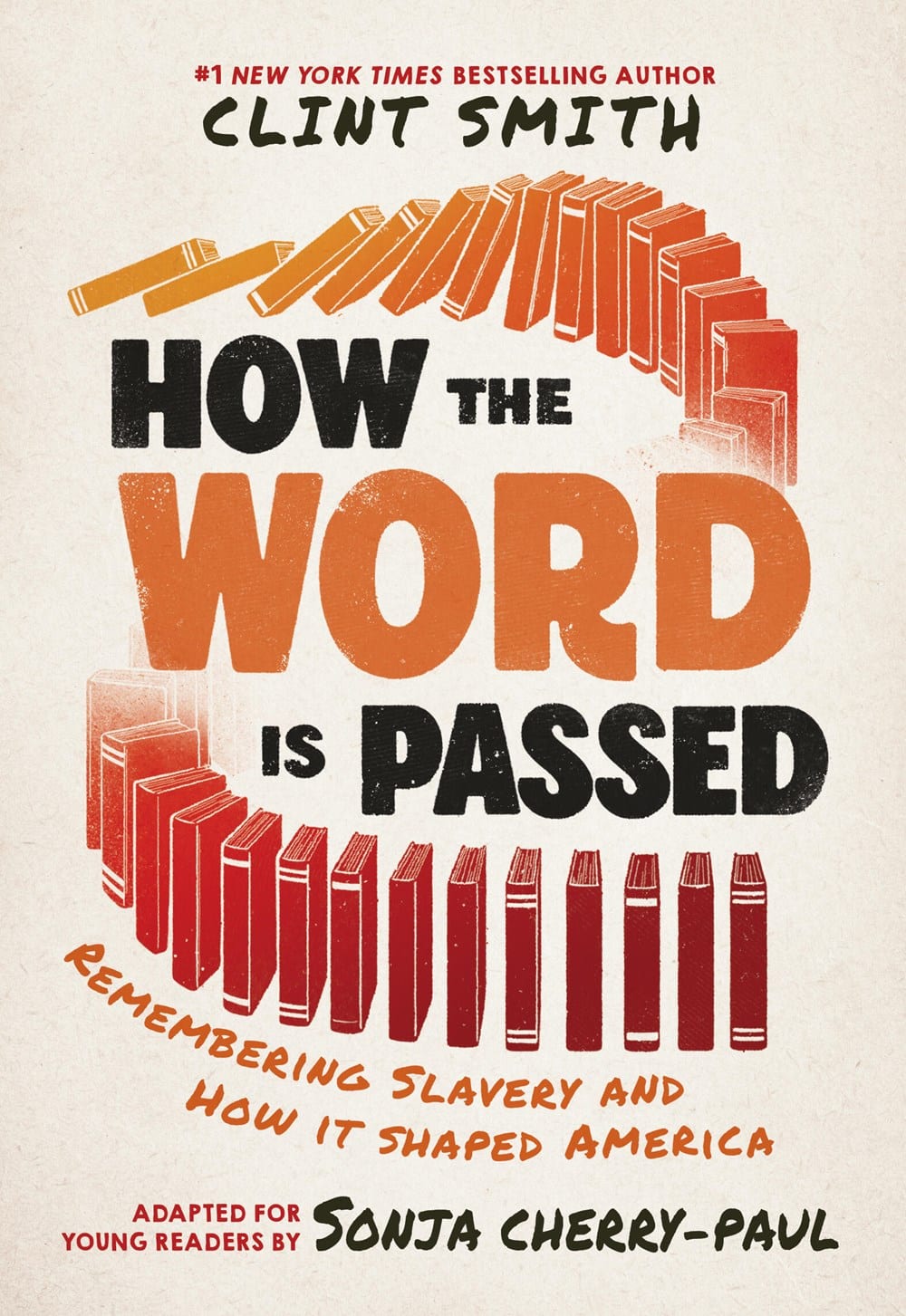
How the Word Is Passed
Don’t Miss Class with Clint Smith
| | In the Epilogue to his book How the Word Is Passed, Clint Smith writes: | | | |
The history of slavery is the history of the United States.
It was not peripheral to our founding; it was central to it. It is not irrelevant to our contemporary society; it created it.
This history is in our soil, it is in our policies, and it must, too, be in our memories.
| | | |
One of the ways this foundational history enters our memories is through the classroom. That is why we are delighted How the Word Is Passed will be available in a YA edition. Join us online for a book launch on August 25 at 7pm ET. Smith will be interviewed by Jesse Hagopian and Jessica Rucker.
All of our Teach the Black Freedom Struggle classes are free, with ASL interpretation provided and PD certificates offered. Assign this class for your high school or teacher education students.
Twenty-five attendees, randomly selected, will receive a copy of the book.
| | In “How We Remember the Struggle Over Slavery in Public Places,” students read about sites of memory in How the Word Is Passed and imagine how to commemorate what occurred there. They then compare what they create to how the respective site is currently commemorated and described by docents. | | | |
This lesson gave my students the chance to become “public historians.” What I appreciated most was how this work made space for the humanity of the enslaved — especially the children. We paired the lesson with Clint Smith’s Crash Course videos on African American history.
— Patrice McCullough, High School Social Studies Teacher, Jamaica, New York
| | | Also see the lesson, How Should Rosa Parks’ Legacy Be Memorialized? Students learn the fuller story of Rosa Parks’ life and use that information to critique her statue at the U.S. Capitol and determine how they would memorialize her legacy, | | Monument Lab conducted a national audit of more than 50,000 monuments. They found that more than 50 percent honor people who were enslavers. Only 6 percent are of women. The first monument to an individual person of color (Martin Luther King Jr.) was dedicated in 2011. In the introduction to the report, the authors note: | | | |
We understand that the more durable monuments do not best represent U.S. history, but are instead the result of the most abundant material resources and hegemony in its many forms: racial, ethnic, religious, gender-based.
We see that the monuments standing on our streets or in our parks have not stood there for time immemorial.
Our built environment is in motion; it always has been in motion. The National Monument Audit calls us all to do our part to change our commemorative landscape and to better capture the multivocality of our country in our public spaces.
| | |
|
Educator-Led Study Groups
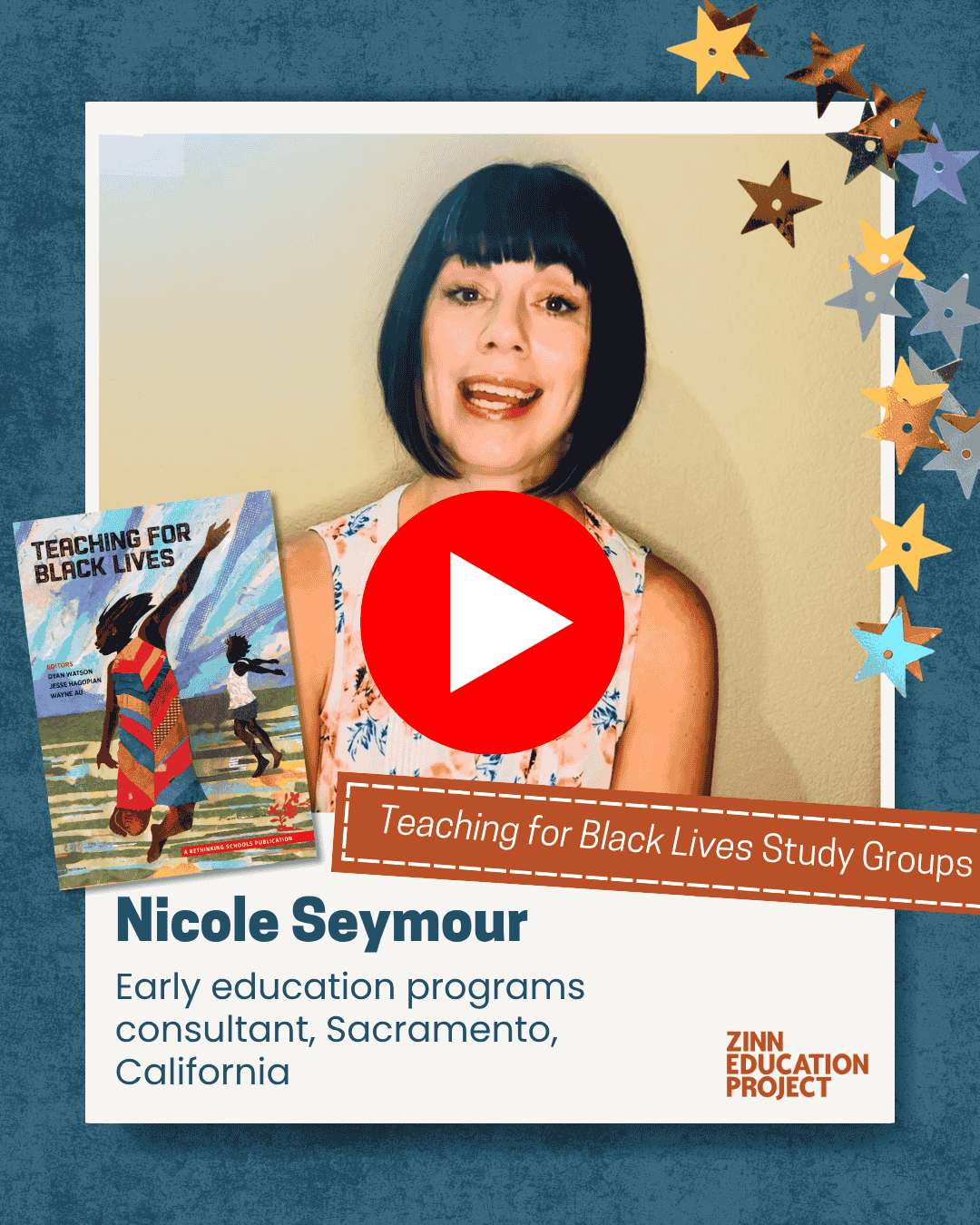
Teaching for Black Lives
| | | The Teaching for Black Lives study group is quickly going to become one of your favorite meetings of the week. — Nicole Seymour, Sacramento | | | In a time of censorship and political repression, educator-led study groups are building communities of resistance and hope. | | |
Each participant in the Zinn Education Project study groups receives a copy of Rethinking Schools’ Teaching for Black Lives, a subscription to Rethinking Schools magazine, a year-long menu of workshops and seminars to choose from, and access to a national network of social justice educators.
Watch Nicole’s video testimonial on why you should form a group at your school, district, or state!
| | | |
Native Knowledge 360° Teach-In in person, September 20, New York City
Original Sins: The (Mis)education of Black and Native Children and the Construction of American Racism with Eve L. Ewing, September 22
Bob Moses Conference virtual and in person, October 11–12, Cambridge, Massachusetts
18th Annual Northwest Teaching for Social Justice Conference in person, October 18, Portland, Oregon
King of the North: Part Two with Jeanne Theoharis, October 27
Police Against the Movement: The Sabotage of the Civil Rights Struggle and the Activists Who Fought Back with Joshua Clark Davis, November 10
105th National Council for the Social Studies Conference in person, December 5–7, Washington, D.C.
Black History Is for Everyone with Brian Jones, January 26
| | Teachers are under attack for teaching truthfully about U.S. history. Please donate so that we can continue to offer free people’s history lessons and resources, and defend teachers’ right to use them. | | | | |