Romanosky Automotive Weekly Gazette

Why Are Some Cars More Costly To Maintain Than Others?


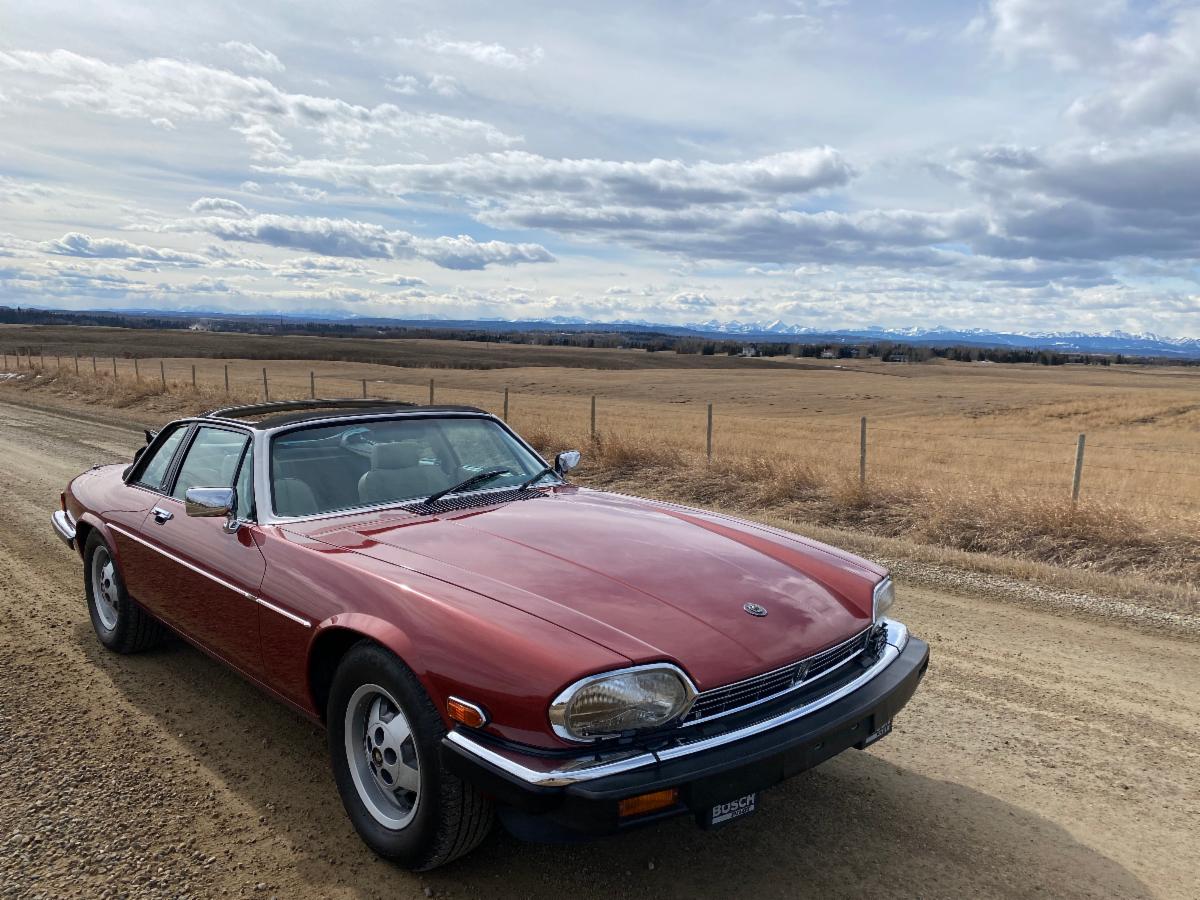
I admit to being stuck in the 1980's. I like the music. When my wife and I went to a 80's retro party I didn't need a costume - I just went into my closet and dusted off some old clothes. I have been driving 80's cars for the last 20 years; mostly Mercedes and Porsches, but lately Jaguars. These are the last cars where the enthusiastic owner can do his or her own maintenance without proprietary diagnostics and a degree in computer science. Spending quite a bit of time under the hoods (bonnets) of these cars, I've come to appreciate the differences.


I've written in this column that I consider the W126 Mercedes-Benz S Class (1979-1991) to be the best car ever made. I still think that if the criteria are build quality, longevity, structure and ease of maintenance. The car was praised in the late 1970's when it was introduced for its luxury and efficiency. In the later part of the vehicles life it was criticized for noise and suspension harshness compared to newer offerings which had computer designed multi-link suspensions that did a better job of insulating the cabin from NVH. I have to admit it isn't a particularly quiet car and it isn't particularly luxurious. It does make an excellent useable classic car though, and it has served our family well for 10 years. With only 66,000 miles in the first 33 years, the car will outlast me.


I think that the Jaguar is a better engineered car which may surprise people, especially those who have memorized all the 'Lucas Prince of Darkness' jokes. The thing about the Jaguar XJ series, for instance, is that they were designed with different objectives in mind - namely refinement and effortless performance. There is no doubt that they achieved these objectives admirably. What is not generally appreciated is that the engineering solutions required to meet these objectives result in a car that is more time consuming to maintain. Generally speaking this is not a fault of the car, but a tradeoff for the extremely low levels of NVH.


V8 vs. V12


When the metal parts of an internal combustion engine expand and contract with each heat cycle the gaskets between the parts will eventually fail and start to leak. Different engines may be prone to leak different things from different places, but they will all start leaking - usually before they are 10 years old. Gaskets are not expensive, but the labour can be, depending on how hard the access is.


I have to replace the valve cover gaskets on both the Mercedes W126 and the Jaguar XJS. I can probably do the Mercedes in 1 hour myself. My Jag mechanic says he could replace the gaskets on the XJS in 12 hours - and he's done it 500 times. Triple that time for me trying it for the first time, and that's if I don't wreck anything in the process. Reading this you might think the British don't care about maintenance or can't design a proper engine - but that isn't the case.


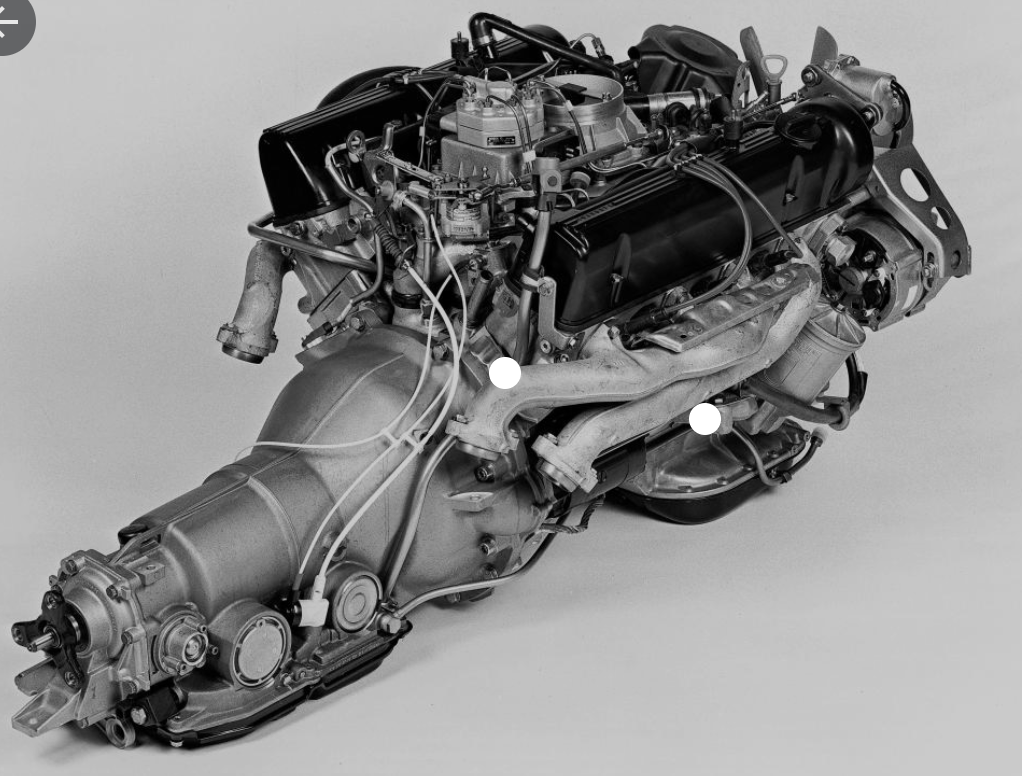
The configuration of a 4-stroke combustion engine starts with balancing the primary and secondary forces of the crankshaft and firing order of the pistons. A V8 configuration will normally have a 90 degree 'V' for the optimum smoothness, without the use of a heavy flywheel. This is a fairly wide angle which gives enough space in the centre of the V for the intake manifold and the air/fuel injection system. If you have all the intake parts in the centre of the V, the valve covers are exposed and you can change the gaskets easily.


Let's say you want a smoother engine that can provide high output - then you want a V12. It is inherently perfectly balanced, as is a straight 6. The Jaguar V12 is 'over-square' meaning the bore is wider than the stroke. This gives lots of room for big valves, and lower piston speeds which means less wear. The lighter reciprocating mass of the pistons and valves allows for higher RPM and higher specific output. From a performance and smoothness perspective it is the perfect layout - which explains why so many of the most successful racing and luxury cars use it.


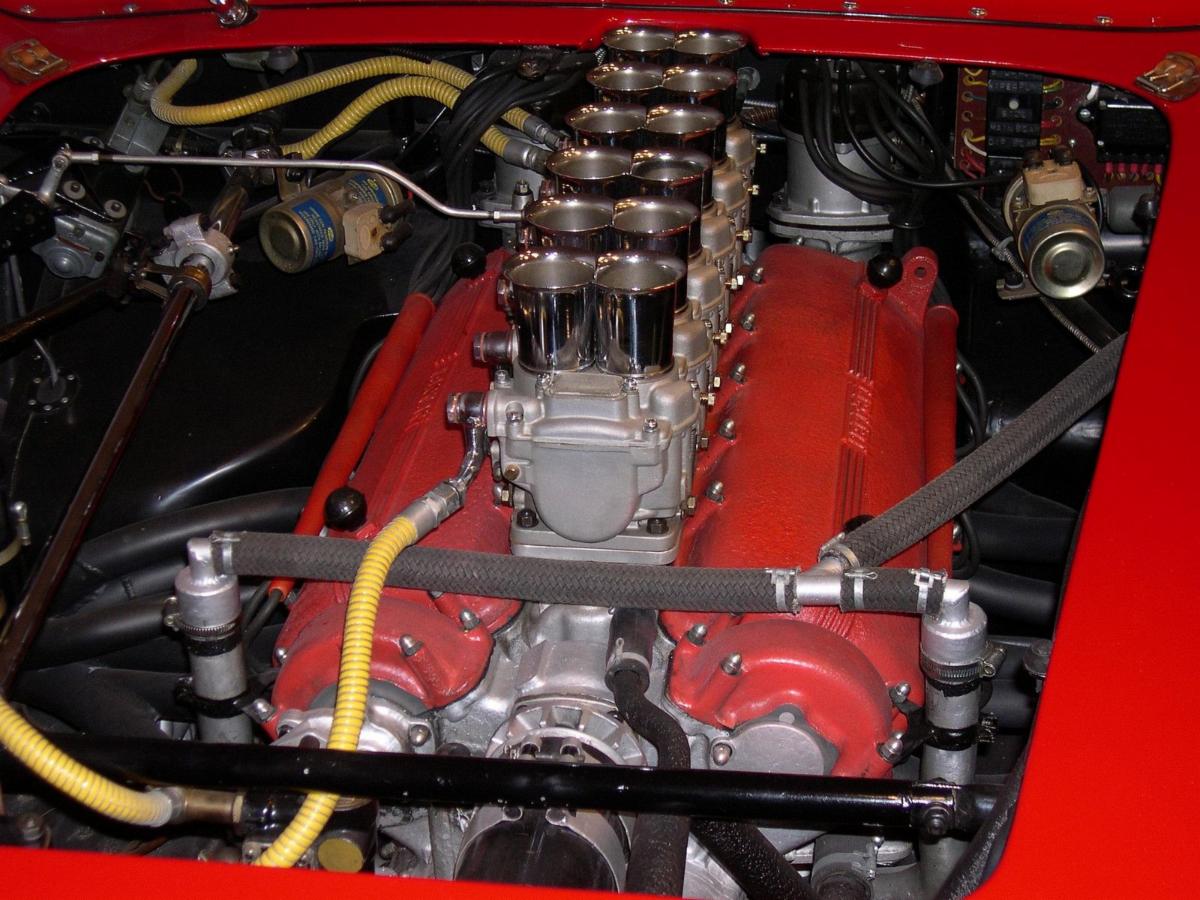
The V12 is perfectly balanced at 60 degrees. This is a fairly narrow V, and looks particularly tidy when accommodating a nice stack of Weber carburetors in the centre of the V- as done in many 50's and 60's Ferraris. This results in a tall engine and a hood scoop is generally needed to clear the air intakes -which looks fine in a pontoon fendered Testa Rossa.

 Gioacchino Colombo designed Ferrari 60 degree V12; simple packaging, but the car will need a substantial air scoop to clear the top of the Webers.

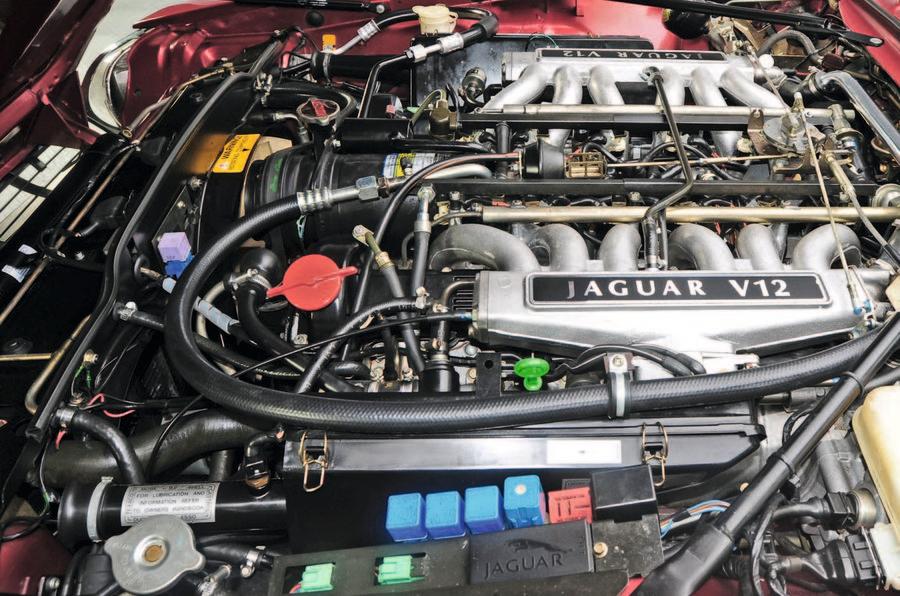
The complexity comes when you want a low bonnet line, and don't want a big air scoop on the front of your luxury car. The intake manifold and carbs or injection need to be moved to the side of the engine - over the valve covers. Now you need to take the intake equipment off to get at the valve cover gaskets, and now a 1 hour job just turned into a 12 hour job.


So the XJS's 12 hour valve cover job isn't because of poor engineering - quite the contrary - it is the price you pay for a smooth and powerful engine and a low bonnet line. Virtually all V12s fitted to production cars will have this issue.

Same 60 degree V12 configuration; this one designed by Harry Mundy and Walter Hassan for Jaguar. Low bonnet line forces the induction off to the side, above the cam covers. Emission controls, A/C and the ability to stay cool in traffic make the engine bay rather messy!

Mercedes 117 V8 used from 1971 in the 280se 3.5 Coupes and convertibles, until the last of the R107 SL series (1989) and W126 S Class (1991). 90 degree V8 with central intake manifold and injection parts makes for easy maintenance.

Inboard vs. Outboard


Automotive designers go to great lengths to reduce unsprung weight. This is the mass of the wheel/tire/hub unit that is suspended from the body. The lighter these components are, the easier time the wheel has adjusting to the road surface, and the better the handling. In addition to the overall weight savings and the unsprung weight saving, there is a saving of rotational weight which increases performance. This is why larger, heavier wheels are usually a dumb idea.


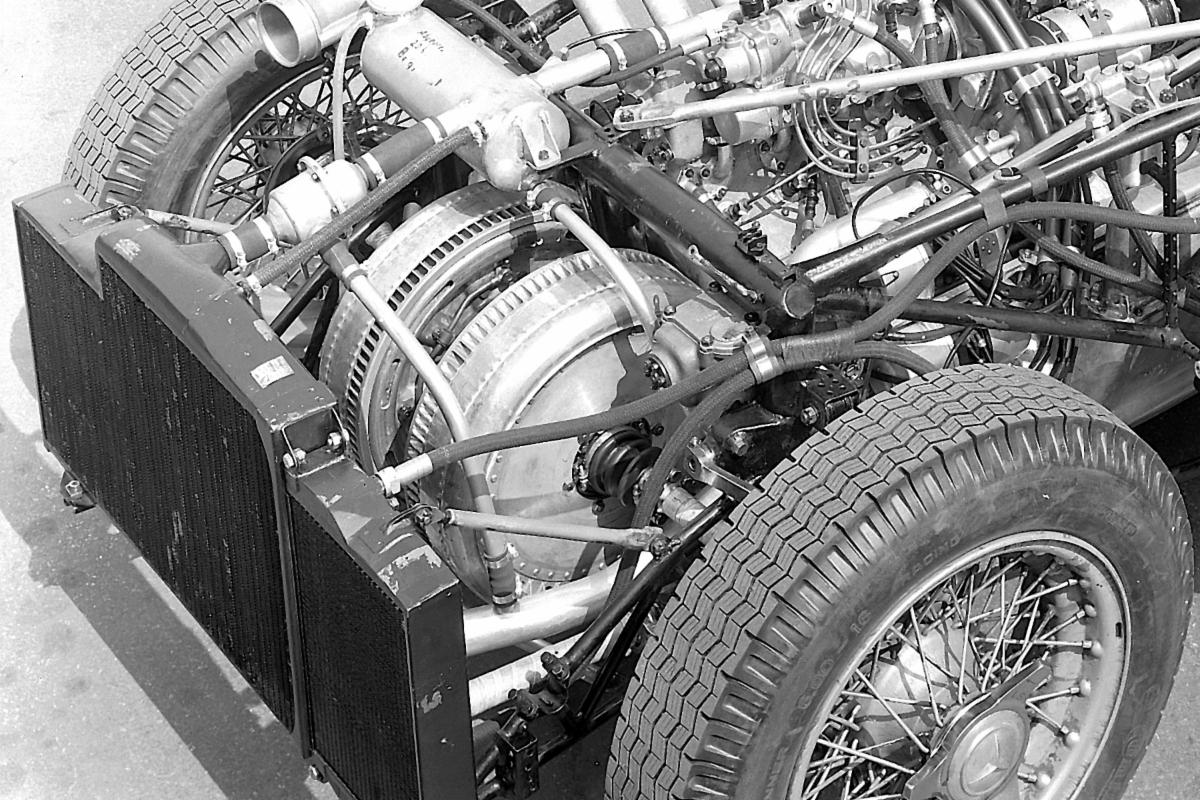
The last thing you want hanging off the end of an axle is a heavy steel brake disk. You need a big enough plate of steel to absorb the frictional heat and stop the car, but a better solution is to place the disk inboard, near the centre of the car. Then it doesn't have to move up and down. This was a solution that Mercedes used with their 1955 300 SLR (photo below) and has been used in racing cars since. Jaguar adopted this system for the rear axle of their E-Type in 1961.

1955 Mercedes-Benz 300 SLR detail. Well, one look at an inboard brake installation and you realize that changing the brake linings isn't going to be that easy. It is a more elegant engineering solution though, with the benefit that your wheels don't get covered with brake dust!


Cradles and Subframes


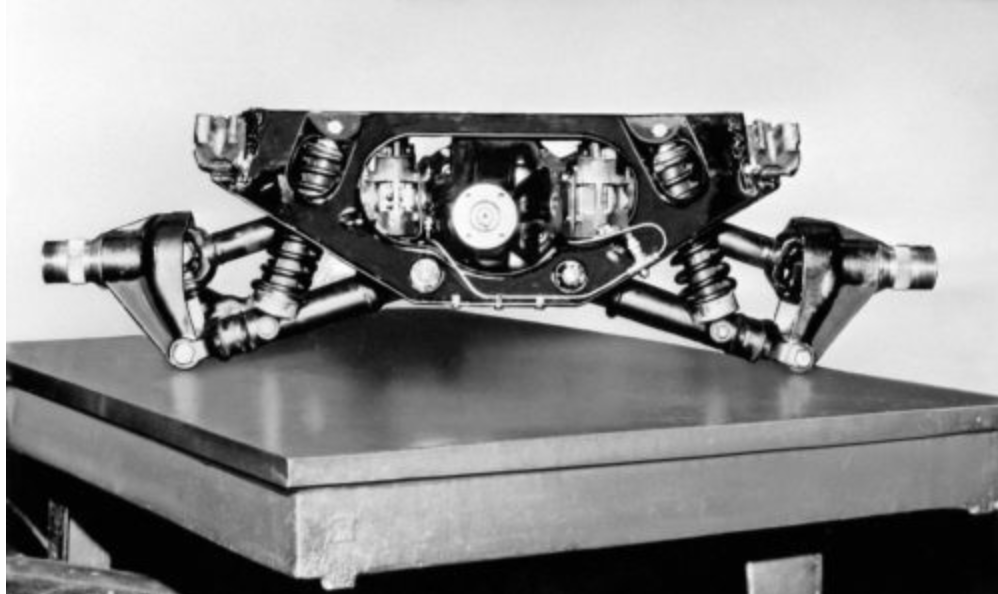
Most cars have the engine, gearbox and differential set on rubber mounts and bolted to the monocoque. This transmits NVH from the mechanical components into the cabin. If you mount these components in a cradle or subframe, you can better control unwanted resonances. In the XJS, as in the E-Type and period XJ sedans, the rear differential unit with four spring shock units and the inboard disk brakes are all housed in a subframe which is mounted to the monocoque with substantial rubber buffers. To do anything you need to disconnect the exhaust, brake lines and linkages and lower the subframe from the car. That's probably 5 hours of labour before accounting for seized fasteners and the like. The front end of the car is the same - the engine cradle with the front suspension needs to be lowered to get at the bottom of the engine. The meter starts ticking at $1k before you even start replacing anything - but the cabin is much quieter.

Elegant Jaguar rear end used in both sports cars and sedans from 1961 to the mid-1990's. This assembly was also used by hot-rodders and Cobra kit manufacturers as the assembly was easy to mount to various frames.

In fact, you could argue that Jaguar continued the British tradition of over-engineering. If a typical car used 6 bolts to attach a component, Henry Royce would use 12. Harry Ferguson pioneered an AWD performance car with anti lock brakes in the 1960's (Jensen FF), at the time when Ferdinand Piech started his first job at Porsche (and went on to design the Audi Quattro).


The W126 S Class was Mercedes top-of-the-line luxury car in the 1980's, but it isn't even in the same league as the Jaguar when it comes to refinement and performance. I still think the W126 is the best car ever made from a durability, safety and maintenance perspective, but I am convinced the 80's Jaguars were the best in terms of refinement and performance. Happily both cars were made in significant volumes (900,000 W/S126 and 115,000 XJS) so prices are reasonable and you could have very nice examples of each for less than one scruffy air cooled Porsche.


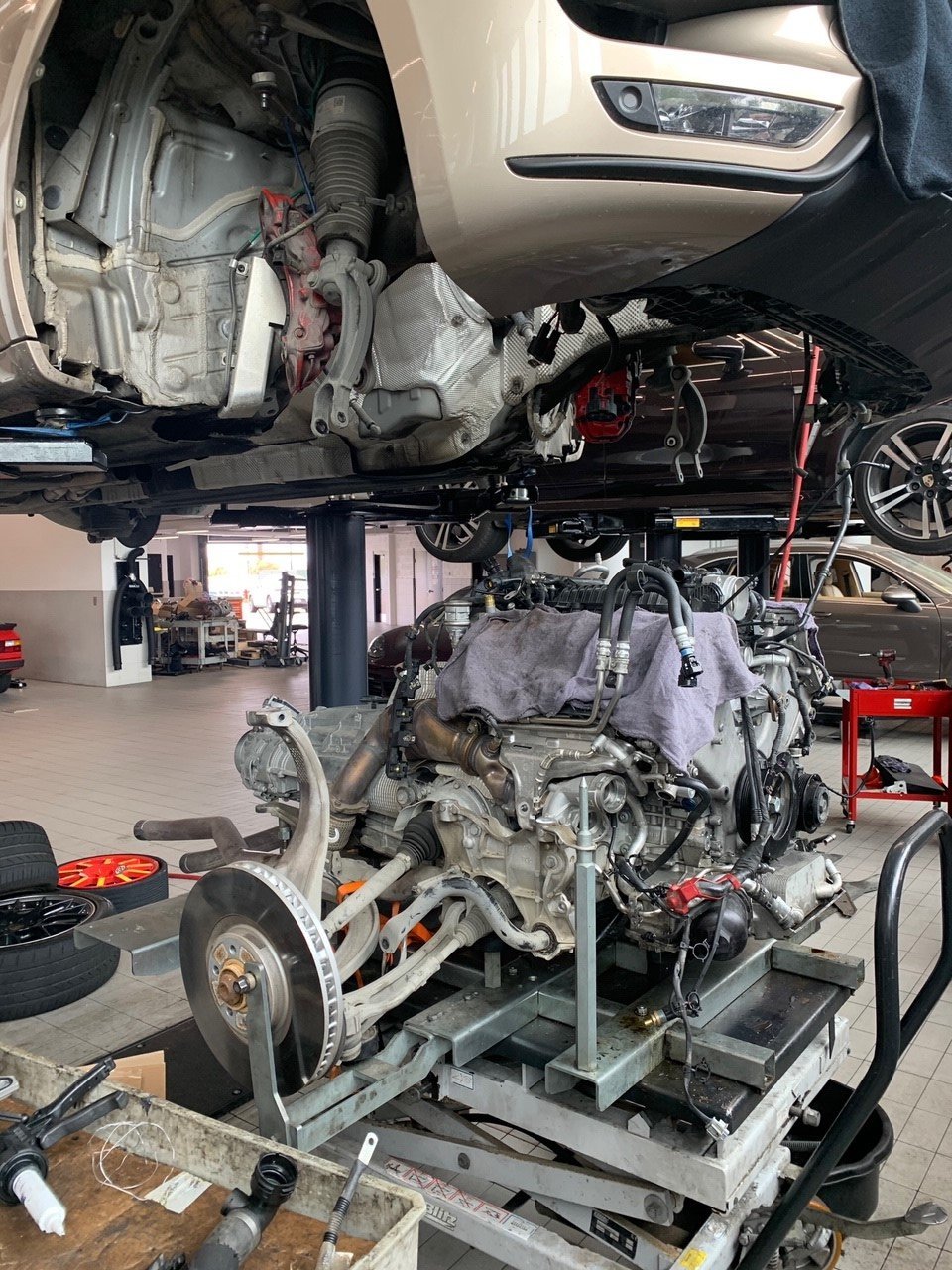
Interestingly, what was uncommon in the 1980's is commonplace today. Most of the high-end cars have their powertrains mounted on subframes. The front timing chain covers are prone to leak - when and not if - on V6 Porsche Macans for instance. Many are now out of warranty and the cost of replacing the $100 gaskets is about $8,000... Makes Jaguar V12 servicing look reasonable.

All engines will leak oil eventually - some sooner than others. This is what you need to do to change the timing case cover on a V6 Porsche Macan...

New Jaguar Videos

Understanding The Jaguar XJS

On The Road...

BAT Auction Preview

Raymond Baxter, Harry Mundy and Walter Hussan on the Jaguar V12 engine. Part 1

Raymond Baxter, Harry Mundy and Walter Hussan on the Jaguar V12 engine. Part 2

AUTOMOTIVE SERVICES OFFERED


  • Appraisals


  • Pre-Purchase Inspections


  • Pre-Sale Reconditioning


  • On-Line Auction preparation


  • Post-Sale logistics and sorting


  • Project Management


  • Servicing


  • Dent Removal Wheel Repair Wraps and Tint Paint Touch Up Detail


Email Lawrence

Lromanosky@me.com

www.lugnutz.ca

Lugnutz is open 9-5, seven days per week, and a free tour is gladly given to anybody who drops by.

Lromanosky on BAT, (1022 likes)

Scheduled on Bring-A-Trailer

1986 JAGUAR XJ-SC CABRIOLET

"One of the few Classic Car Bargains in today's heated market: 2 owner Western Canadian car, fully serviced"


Antelope Metallic (AFM) on Doeskin Leather, bought new in Winnipeg, 2 owners, 92k mileage. $11k+ in recent bills including engine-out major service ($8.5k), new V-rated Vredestein Sprint Tires ($1,800), plus cosmetics. Now everything works and nothing leaks!

Incoming:

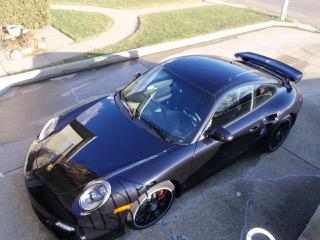
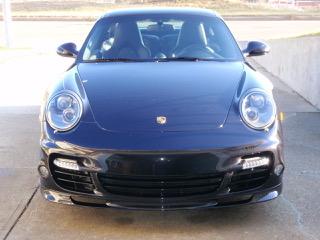
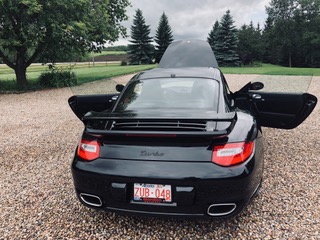
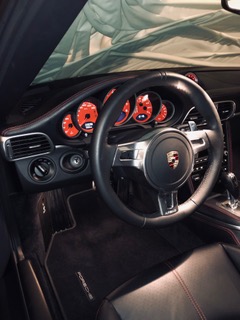
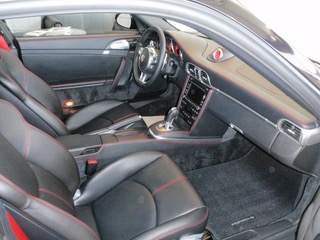
2010 Porsche 997.2 Turbo PDK


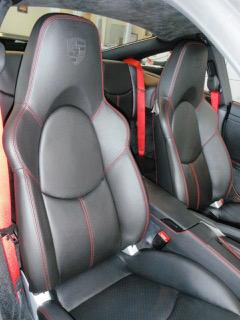
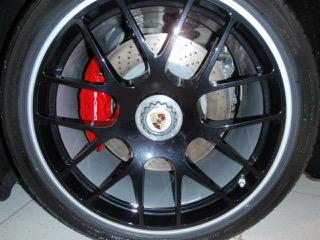
$213k MSRP, Aerokit, Center-lock wheels, contrast black/red interior. Exclusive Options.


26,000km


$inquire

1961 Land Rover S2A 88" Soft Top

Greensand on Black, Khaki canvas 'tilt', restoration to 'concours' standards. Substantial amount of NOS parts, with every mechanical component completely rebuilt.


Final Assembly in Progress.


$CDN 100,000

Past Columns From Romanosky:

Le Mans Engine In Your Road Car?


Lugnutz: A Calgary Automotive Hub


Bring-A-Trailer Marches Upmarket


A Guide To Getting Rid of Unwanted Customers


Where has the horizontal homogeneity and vertical affinity gone?


What's Undervalued In Today's Market


The Mercedes Benz Gullwing - Sports Car Of The Century


A Brand By Any Other Name


Grace, Space, Pace: Jaguar's Future


Max Hoffman: World's Best Car Salesman


2021: A Year Of Living Safely


PORSCHE DNA: More Than Just Sports Cars


Vive la Difference


The Noble Cause


Update on Electric Vehicles in Alberta


Automotive F&I - The Good, The Bad, and the Awful


Restored or Original - Which Is Better To Drive?


Romanosky on Aston Martin


The Best Car In The World


Memories Of The Alfa Romeo GTV


Concours, Resto-mod or Original


Porsche, Ludvigsen & Collier: Excellence Is Expected


Tesla & Me: From Burning Man To The School Run


DC Disappointment: The Alberta DC Charging Infrastructure


Out Of Stock: What Is Going On With Retail Automotive?


Tales Of A Car Salesman Part 2: Having A Ruf Time


Tales Of A Car Salesman: Risky Purchases, Part 1


Road & Track Magazine: The Rise And Fall Of America's Great Automotive PublicationOn-


Line Collector and Specialty Car Auctions: How BaT Changed Everything


CSI And Google Reviews: The Good, The Bad, And The Ugly


On-Line Automobile Sales - Where Does This Leave Sales Managers and Salesmen?


Porsche + Bugatti + Rimac = ?


What About Hybrids?


Telsa's Head Start


Jaguar Get's Some Love


Camping With An Electric Truck: How Far Can We Go?


1000hp Tesla Plaid: Nobody May Have Asked For It, But We're Glad It's Here


Rimac Nevera - Not A Concept Anymore


Upcoming EV's: 400V or 800V - Why Does It Matter?


Will Electric Trucks Save The Planet?


Soleil EV Weekly Gazette

RETAIN LAWRENCE FOR GUIDANCE WITH ANY AUTOMOTIVE TRANSACTION
Interested in listing your vehicle on-line?
 Comment or Question for Lawrence?  
LinkedIn Share This Email
                   WWW.SOLEILEV.COM            
Soleil EV Buyer's Guide Digital Magazine
Romanosky Automotive YouTube Channel