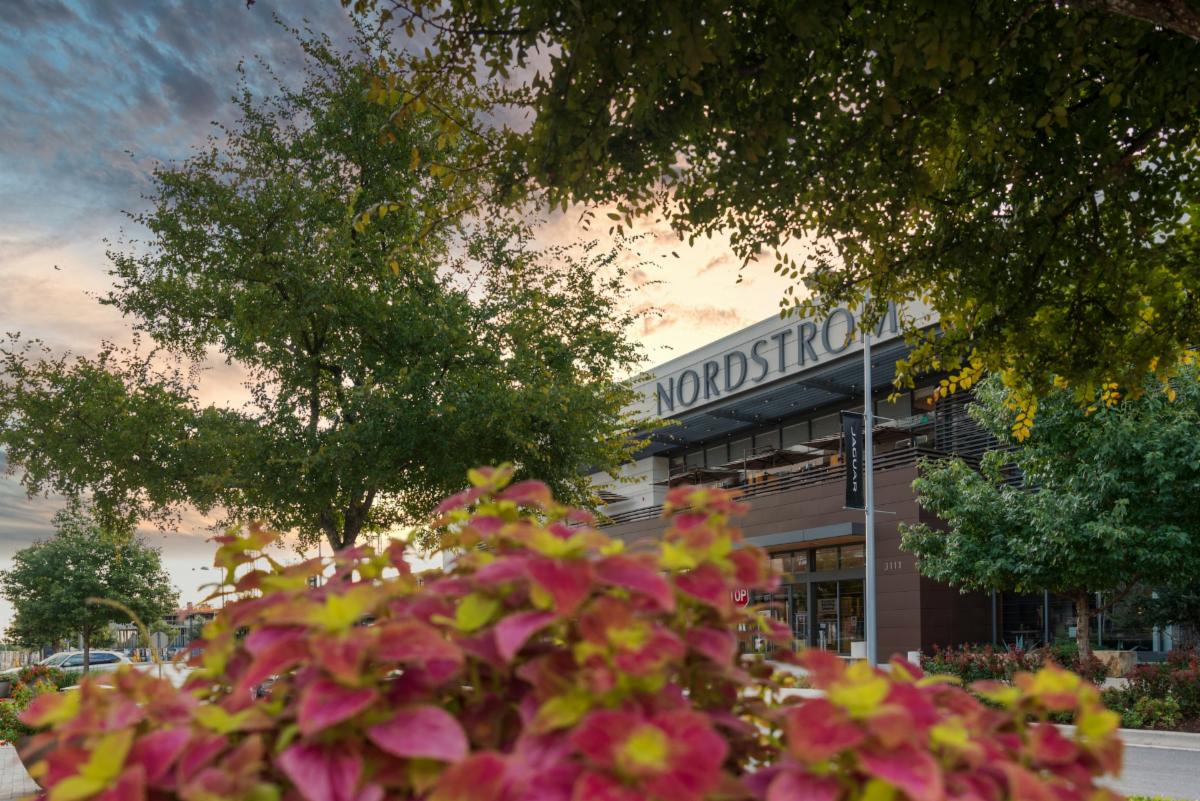
Nordstrom

“As we reflect on the legacy that our dad left behind, we’ve been reminded of his firmly held and consistent values—especially his commitment to serving our customers. Those values have been integral to Nordstrom’s growth, and they remain at the core of the decisions we make as a company,” said Pete Nordstrom.

Why Nordstrom May Be Surprise Winner From Saks-Neiman Marcus Merger

After months, even years of rumors, Saks Fifth Avenue and Neiman Marcus Group (NMG) have reached a definitive merger agreement. Saks will pay $2.65 billion to acquire NMG and its 36 department stores, two Bergdorf Goodman locations and five Last Call outlets.


Saks brings 39 stores, 95 Saks Off 5th outlets, and a separately operating Saks.com business to the party to be called Saks Global. Long-time HBC executive and current CEO of Saks, Marc Metrick, will become Saks Global’s chief executive officer.


While the combined companies will create a luxury retail powerhouse – totaling some $10 billion in sales – bigger isn’t always better in the luxury world where the personal connection between the customer and the store and its sales associates are key.


During Geoffroy van Raemdonck’s six-year tenure with NMG, including seeing it through its 2020 bankruptcy, he built a strong culture of caring among his 10,000+ strong team. This news is sure to take the wind out of their sails – pun intended – whether van Raemdonck stays or goes. Either way, things are going to change big time at Neiman Marcus.


Looking over the luxury retail landscape, Nordstrom, renowned for its customer service and carrying many of the same brands as Saks and Neiman Marcus, is ready to take care of luxury customers who may be turned off during the transition period.


These customers are the kind of folks who pay attention to details in the business world and will understand the Saks-NMG deal was made in the interest of the owners and financiers, not the customers. Their loyalty can be easily transferred, even if their accumulated loyalty points can’t.  


Nordstrom’s 93 stores can become a shining beacon for luxury shoppers looking for the personal touch that may get lost in the shuffle. And with brothers CEO Erik and president Pete Nordstrom at the helm, they carry on the family legacy of patriarch John Nordstrom from the company’s founding in 1901, something that Saks and Neiman Marcus lost along the way.


First and foremost luxury retail is a people, not a product business and Nordstrom looks to be the surprise beneficiary from the merger as luxury consumers seek to find a store that still feels like home.

READ ON

Luxury industry insiders suffer from the "Street Light Effect" cognitive bias. They are looking for innovation where its easy and where every one else is looking, instead of where real innovation is likely to be found. 

Get Ahead In The Luxury Market With The 'State of Luxury' Report

What do luxury industry insiders say about the state of the luxury business? How do they view the normalization currently underway? How can brands set strategies, including advertising and marketing, for the period ahead as some luxury companies such as Chanel, Hermès and flagship brands within LVMH blow past others?


Now in its seventh year, the State of Luxury: An Industry Insiders’ View report is one of the most reliable barometers of corporate-side attitudes to customer demand for luxury goods and services.


This year's study pulls together first-hand responses from nearly 450 executives worldwide across diverse luxury sectors to portray a picture of the opportunities and challenges luxury companies face in the rapidly evolving industry, making the report indispensable for luxury businesses.


Explored in the report are current and future business conditions in the luxury industry, including perspectives from those operating in the luxury goods and luxury services and experiences sectors.


Of special emphasis in the study are innovation and advertising and marketing strategies that work and do not work in the current market and how companies can adapt as the market normalizes after the disruptions caused by the pandemic.


The 100+ page report in easy-to-digest Powerpoint format covers:


  • State of the luxury goods sector, company growth and distribution strategies
  • How luxury services and experiences are evolving with customer expectations
  • Advertising and marketing strategies that resonate with the market, including company and agency-specific perspectives
  • Business outlook for the luxury market, both for the industry as well as the executives’ own company


It tracks trends from last year to this year and includes both data and expert analysis to make the research actionable so it isn’t just another report on the shelf but a resource to guide corporate planning and strategies.


At its core, the report is a collaborative effort for luxury industry executives to share, learn and help each other as the business environment becomes ever more complex and challenging.

AVAILABLE AT $99 PRE-PUBLICATION PRICE
“For affluent consumers, luxury is a privilege, not a right, and as they look at the challenges they and the world at large face this coming year, they are signaling a willingness to trade off excess spending on luxury. Many plan to batten down the hatches and ride out any potential economic storm, as they did in the Great Recession of 2008 and 2009,” said Chandler Mount, Affluent Consumer Research Co.
Luxury Brands Must Prepare For A Reset:
Here's The How And Why
Over the last three years, the luxury market has experienced a whirlwind of change. After rising 7 percent in 2019 before the pandemic, it suffered a steep decline in 2020, only to bounce back with spectacular growth through 2021 and 2022.

Bain-Altagamma expects the good times to keep rolling in 2023. “The personal luxury market is projected to see further growth of at least 3-8 percent next year, even given a downturn in global economic conditions,” they predict.

However, since the past is often the best predictor of the future, a different outlook is suggested based on results from the Great Recession of 2008 and 2009. Global personal goods luxury sales dropped 9 percent from 2007 to 2009, disproving the conventional wisdom that the luxury market is immune to economic downturns.

Whether the economy takes a slight tumble or a big fall in 2023, more economists are warning about an economic downfall that will impact the luxury market too. Analysts are warning of a potential "Richcession."

To prepare the Washington, DC-based Affluent Research Company has just published a new study among 2,000+ affluent consumers, called Research The Affluent Luxury Tracker. It provides a forward look at how the affluent will adapt their spending and purchase behavior if the economy falters, which they fully expect it will.

“Affluent luxury consumers are the most highly-educated and well-informed consumers, and some 69 percent see a recession coming within the next six months, if it isn’t already here,” said Chandler Mount, the study’s lead researcher.

“Anticipating the worst, the affluents aren’t waiting for the other shoe to drop. Nearly half (48 percent) surveyed said, ‘Now is a good time to limit my purchasing,’” he continued, noting that the survey sample was skewed heavily toward high-net-worth-individuals (HNWI) with $1+ million net worth (excluding their primary residence), a notoriously difficult consumer segment to survey.

Not unexpectedly, the HENRYs, with less than $1 million net worth, were more inclined to cut back (52 percent). But even 46 percent of the HNWI are lining up to reduce their purchasing. This will pose significant challenges to luxury brands that depend upon the HNWI’s greater spending power if they do pull back.
GET THE REPORT
“A groundbreaking and truly exceptional instruction manual offering a wealth of marketing insights and information, Meet the HENRYs is impressively well written, organized and presented, making it highly recommended.” writes Midwest Book Review.
Meet the HENRYs: The Millennials that Matter Most for Luxury Brands
Meet the HENRYs breaks new ground by uncovering a new target consumer--Millennials with money.

It's a segment of the largest generation of Americans with more discretionary income than the rest of the cohort today and poised to acquire more money in the future.
These are the millennials that matter most to brands today and tomorrow

For the foreseeable future, millennial HENRYs (High Earners Not Rich Yet) will be the consumers that every brand manager, marketer and retail executive will need to know well.

This subset of the largest generation of Americans, earns between $100K and $250K–the income cohort that accounts for 40 percent of all household spending. Most important, however, these are the consumers who are on track to become the ultra-affluent ($250K +) of the future.

This forward-looking book examines trends and profiles emerging disruptive brands that millennial HENRYs are drawn to, and explains how many of these innovative brands are setting themselves apart from the traditional top-tier luxury brands.

It takes you on a deep-dive into the steps the smartest of the traditional luxury brands and retailers are taking to keep up with a new generation of consumers who are anything but traditional in their approach to luxury spending.
GET YOUR COPY
Unity Marketing | 717-336-1600 or pam@unitymarketingonline.com
LinkedIn Share This Email