Why Pickleball Players Get Injured (And How to Avoid It)
Subject: Love Pickleball? Your Body Needs to Train for It Too.
A few years ago, I barely treated pickleball players.
Now?
It's one of the fastest-growing groups of patients walking through my door.
And honestly...I love it.
People are staying active, competing, and having fun.
The problem is that many people jump into pickleball without preparing their bodies for the demands of quick starts, sudden stops, lunging, twisting, and overhead shots.
Your heart might be ready.
Your joints sometimes aren't.
What the Research Says and What I'm Seeing
Pickleball injuries that I'm seeing the most involve the rotatorcuff injuries, elbow tendinitis, knee tendinitis, Achilles tendon injuries, calf tightness, and low back pain.
It's the hunched over position doing all the dinking and dunking that puts a lot of stress on the low back. But, if you don't have the ankle and hip mobility to be in that position, then your back, Achilles, and anterior pain is going to feel it more.
Research and injury surveillance continue to show that many injuries occur from overuse, rapid increases in playing time, or insufficient strength and mobility rather than traumatic accidents.
The best injury prevention strategy isn't avoiding pickleball.
It's preparing your body for pickleball.
How I Treat It
I don't tell patients to stop playing.
I want to figure out why playing hurts.
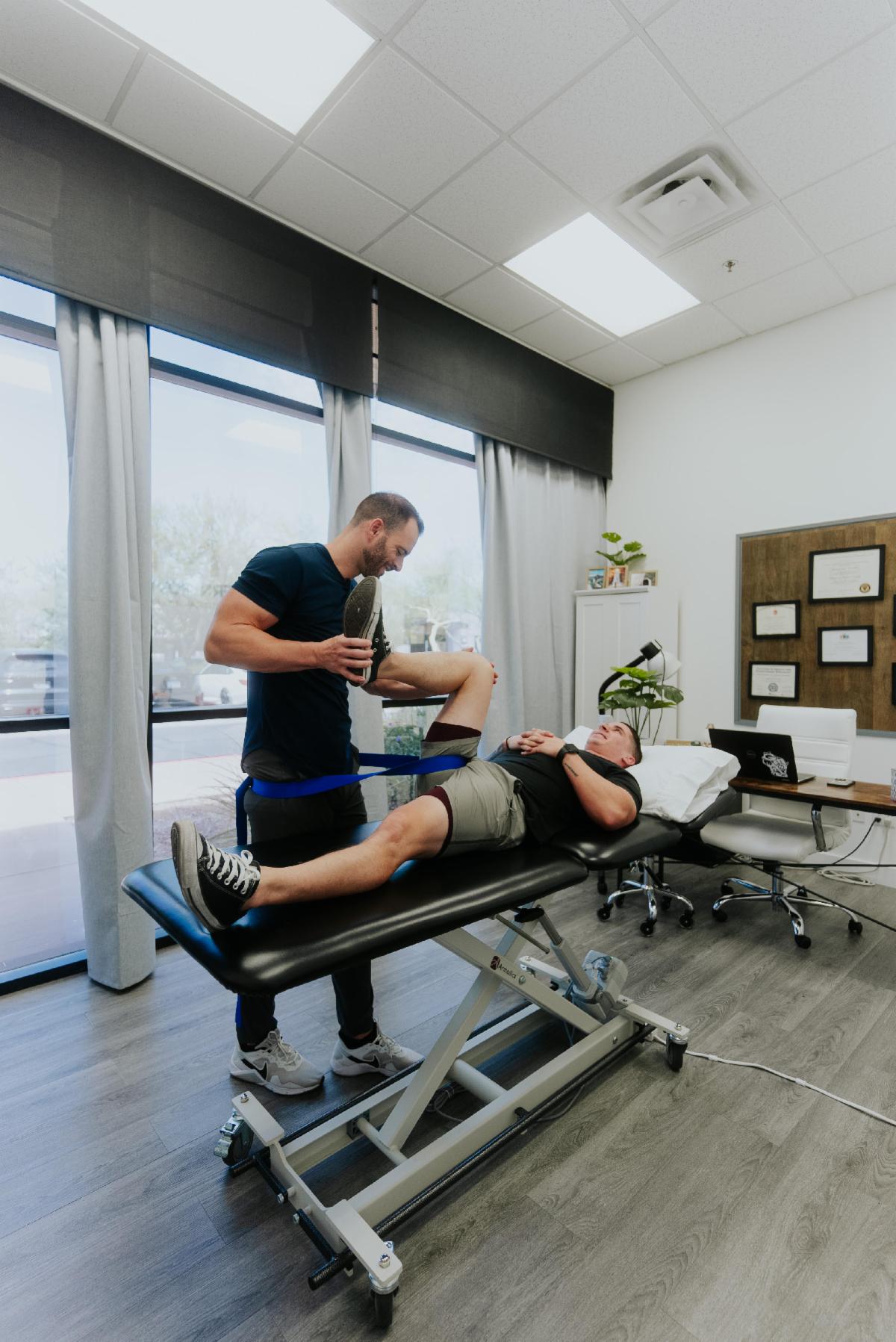
We'll look at core strength, rotator cuff strength, ankle and hip mobility, balance, movement quality, and any physical limitations that may be forcing your body to compensate during matches.
Treatment often includes strengthening, mobility, manual therapy, shockwave for chronic tendon injuries when appropriate, and a gradual return-to-play progression.
Quick Win
If you only play pickleball for exercise...You're probably asking your body to do too much, too quickly.
Strength train a couple days each week.
Your joints will thank you.
My Takeaway
You don't have to choose between playing pickleball and protecting your body.
With the right preparation, you can absolutely do both.
Thanks for reading!
My goal has always been to help people understand why they're hurting...not just temporarily feel better.
Whether you're dealing with an injury, trying to stay active, or simply have questions about what you're experiencing, I hope this gave you a better understanding of your body and your recovery.
If this sounds like something you're dealing with, I'd be happy to help.
Stay healthy, keep moving, and remember take good care of your body, it's the only one you get.
Dr. Michael Price, PT, DPT, OCS
FULL BLOG! Why Pickleball Players Get Injured (And How to Avoid It)
CLICK HERE TO SCHEDULE AN APPOINTMENT
CLICK HERE TO LEAVE A GOOGLE REVIEW
|