|
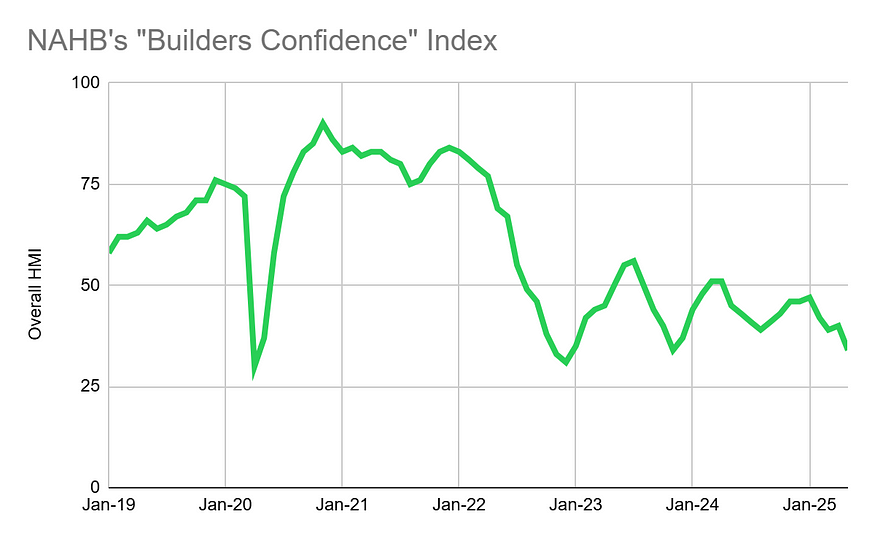
TP: Why are builders so glum? In a word, tariffs. But as the NAHB pointed out, 90% of the respondents had turned in their surveys before the 90-day tariff reprieve announced on May 12.
Housing starts subdued. In April, new permits issued fell 5% month-over-month to an annualized pace of 1.41 million homes, 65% of which were single family homes (922K annualized). Starts were a bit lower, at 1.36 million annualized; but completions were higher at 1.46 million units. Big picture: we’re still not building enough homes to match the growth in the number of households. [Census Bureau]
TP: With so much uncertainty on tariffs (and therefore the bill of materials), it’s hard for builders to pencil out their profits. According to the NAHB, 78% of builders said that they were having a difficult time pricing homes because of this.
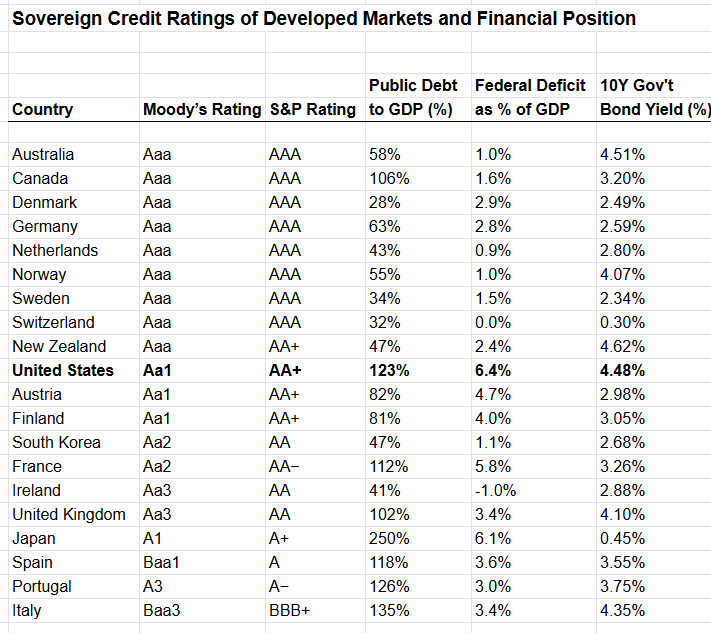
US credit rating downgraded. Moody’s Investor Services, one of the three major credit rating agencies, downgraded the sovereign debt of the USA from Aaa to Aa1 — citing rising debt levels and chronic fiscal deficits. The downgrade is both small (one notch) and significant (USA no longer has the highest available debt rating). There are now 10 countries with higher credit ratings than the USA. And to be honest, our credit rating should probably be even lower. [More on this later]
TP: Just as an individual’s credit score is an indicator of their trustworthiness as a borrower, and a company’s credit rating gauges their ability to make their interest and principal payments, sovereign credit ratings measure the financial strength of countries.
In response, US government bond yields rose. This is exactly what you would expect to happen. When a country’s credit rating is downgraded, its perceived riskiness rises, which means that investors should demand a greater return on its debt. The yield on the 10-year US Treasury bond rose as much as 12 basis points on the day (that’s 12/100 of a percent or 0.12%) to over 4.5%. [MBS Highway]
Wholesale inflation drops. The “headline” PPI (Producer Price Index = inflation for businesses) declined 0.5% month-over-month in April and the “core” PPI was 0.1% lower. That means that wholesale inflation is currently running at +2.4% annually. [BLS]
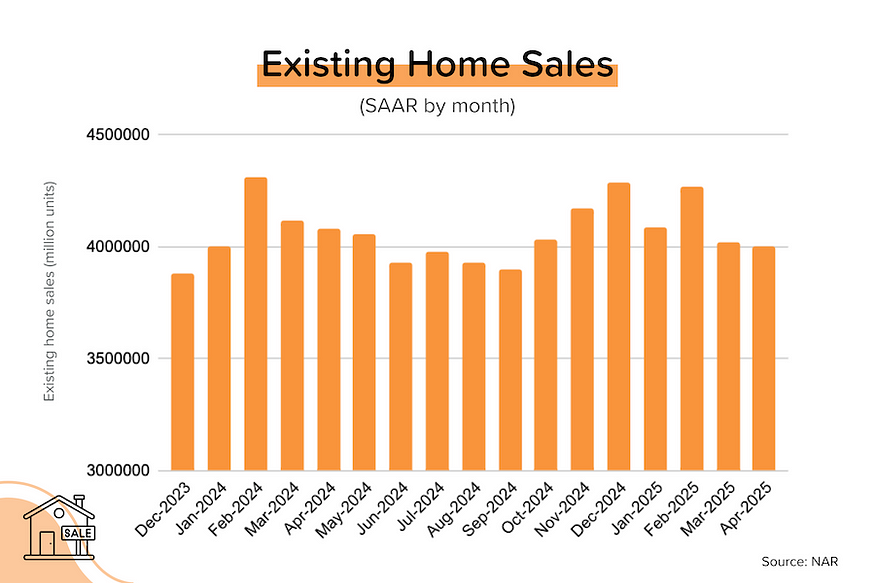
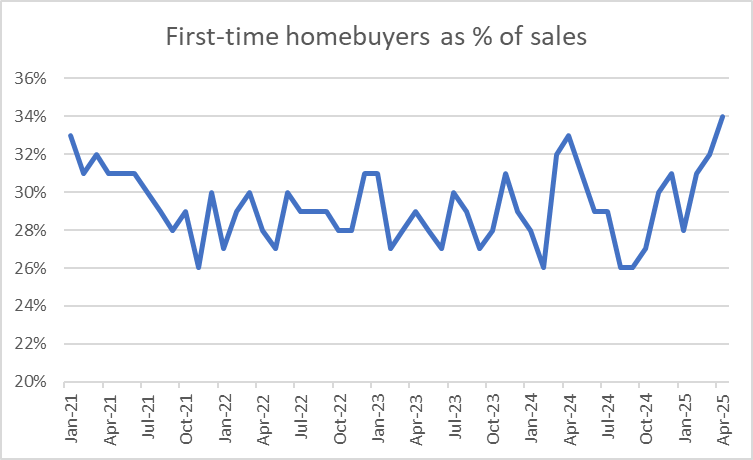
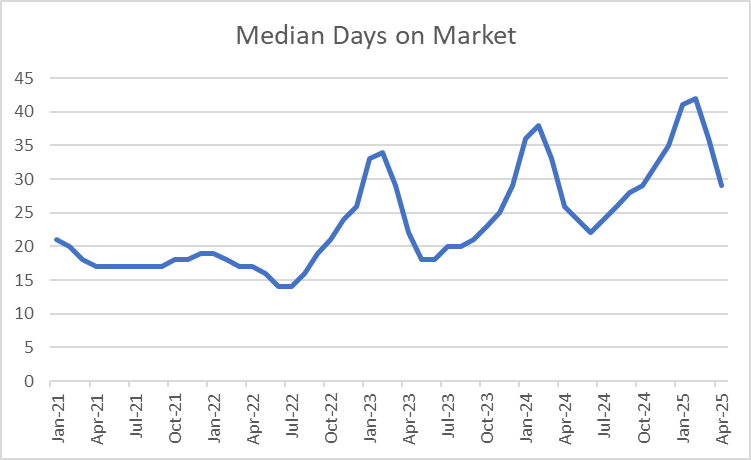
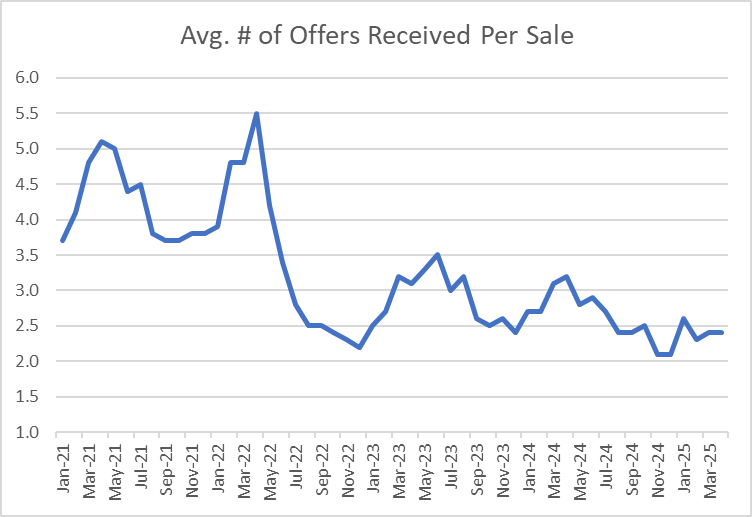
Existing home sales fell again. In April 2025, existing homes sold at an annualized pace of 4.0 million units. That’s 2% below April 2024, 5% below April 2023, and 28% below April 2022. The total inventory of homes for sale was up 21% year-over-year to 1.45 million, the highest it has been since early 2020. [NAR]
|