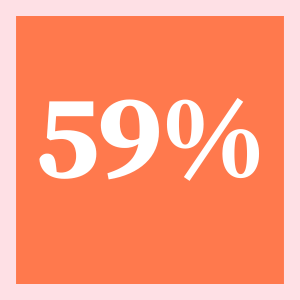
A researcher describes how even toddler-aged children can begin developing reading skills, sharing the experience of his 4-year-old and his own journey following research-based recommendations on early childhood development. | Tuned In will take a break next week and will return to your inbox on Friday, December 5. | | “Researchers describe mattering as double-edged: when we feel it, it protects our health and well-being, but when we don’t, its absence can be deeply harmful. Feeling valued as a child is a strong predictor of health and wellness as an adult, while feeling like we don’t matter is linked to increased risk of disease and dysfunction. ... The power of mattering is that it is remarkably actionable. Children feel they matter when adults listen, assign them real responsibilities, recognize their efforts, and create places and policies that make them feel included and important.” | | | | Data from the U.S. Department of Agriculture show that 59% of Americans who use Supplemental Nutrition Assistance Program (SNAP) for help buying groceries are either children or older adults. The Conversation provides commentary on how food insecurity affects children’s physical and mental health, and how recent federal actions may exacerbate food insecurity and related health outcomes. | | Montgomery County, Maryland, has announced county-level support and funding to bolster early learning. A $6 million investment to expand Early Head Start and Head Start and a $4 million loan program for child care programs are part of the county’s broader initiative to expand high-quality early learning access. | | New Hampshire is addressing its child care workforce struggles by covering tuition, fees, and books for students pursuing certificates or associate degrees in early care and education through a state-funded Early Childhood Tuition Assistance program. The program received $2.5 million from the most recent state budget and thus far has covered the cost for 1,200 courses taken by 643 students. | | Fast Company describes the growth of hybrid co-working and child care spaces to meet the needs of working families, who face rising child care costs and new norms around remote work. | | NPR reports on the financial and administrative struggles that directors are facing in both home-based and center-based child care settings, and what has led some of them to shutter their doors. | | Ohio Capital Journal has an important read about trends in health care related coverage for children in the U.S., noting a rise in the proportion of children and adolescents without any insurance coverage. In Ohio, 5.6% of children go without health insurance — a figure that is slightly below the national average (6%) but still represents more than 150,000 children. | | A study from the University of Albany examined racial and ethnic differences of students at risk for early (and continued) reading difficulties. Using a nationally representative sample from the U.S. Department of Education’s National Center for Education Statistics (2010-2016), researchers analyzed academic assessments for over 16,000 students as well as surveys from students, parents, teachers, and administrators. Some of the main data points studied were reading, math, and science achievement in kindergarten through fifth grade; executive function skills like working memory and inhibitory control; and family factors like socioeconomic status. Researchers found that in kindergarten, 15% of Black, Hispanic, and Native American students scored in the lowest 10% of reading scores compared to 6% of white and 8% of Asian American students. By fifth grade, larger percentages of Black students (18%), Hispanic students (16%), and Native American students (10%) were still struggling compared to their white and Asian American peers (5%). Another key predictor of early and continued reading struggles was family socioeconomic status. The authors note that racial gaps may be influenced by the fact that Black, Hispanic, and Native American children face barriers in receiving early reading screening, which could lead to unrecognized disabilities and lack of support throughout their schooling. They call for continued prioritization of educational and economic support for historically marginalized communities. | | The study authors further describe these findings in The Conversation and state, “Supporting these children is important. Students who wrestle with reading are more likely to later experience anxiety and depression. Adults with reading difficulties are also more likely to be incarcerated and unemployed. In one study, for example, about half of Texas prisoners were poor readers. Because our findings suggest Black, Hispanic, and Native American students are at higher risk for reading difficulties by kindergarten, students from these groups may have greater needs for early reading interventions that provide extra help with phonics, vocabulary and reading fluency. Some of these students may also have unrecognized learning disabilities.” | |
This edition was written by Jamie O’Leary and Janelle Williamson.
| | | | |