|
"A finer body of men has never been gathered by any nation than the men who have done the work of building the Panama Canal; the conditions under which they have lived and have done their work have been better than in any similar work ever undertaken in the tropics; they have all felt an eager pride in their work; and they have made not only America but the whole world their debtors by what they have accomplished." -Theodore Roosevelt
The Panama Canal has been in the news over the last several weeks due to President Trump’s concerns over China’s growing presence in the area. Last week, a bill was introduced by house Republicans to repurchase it. The bill, named the Panama Canal Repurchase Act, was introduced by Rep. Dusty Johnson, R-S.D., a member of the Select Committee on China and the House Transportation and Infrastructure Committee.
President Jimmy Carter’s recent death also brings it back into the limelight as he gave control of the Canal back to Panama with the Panama Canal Treaty. After bitter negotiations in the Senate and House, it was narrowly passed in 1979.
We’ve taken the operation “for granted” but need to be reminded how critical it is to the United States as otherwise, ships would need to round Cape Horn in South America, adding about 8k nautical miles. Ships from Asia and Europe save about 3.5k nautical miles by using the canal. From a US military standpoint, the canal is a critical “shortcut” between the Atlantic and Pacific’s oceans. The ability to move fleets rapidly provides a decisive advantage.
History:
From Britannica:
Panama Canal, lock-type canal, owned and administered by the Republic of Panama, that connects the Atlantic and Pacific oceans through the narrow Isthmus of Panama. It is about 40 miles long shoreline to shoreline.
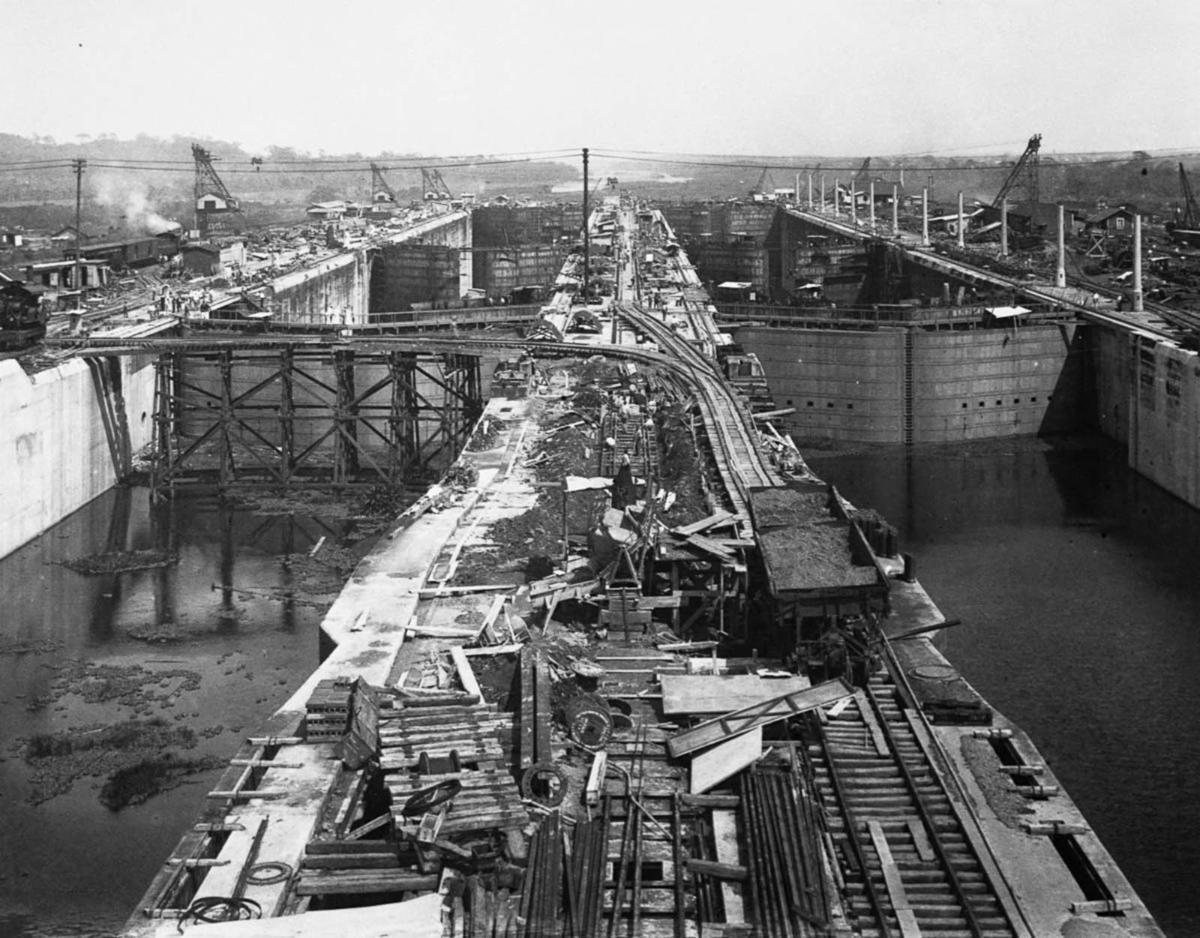
It was completed in 1914 and solely owned by the USA, who built it.
- The Panama Canal cost the United States around $375 million to build, which included $10 million paid to Panama and $40 million paid to the French company for abandoned equipment and completed work. At the time, it was the most expensive construction project in the country's history.
- After years of negotiation, agreement was reached between the two governments in 1977. The Panama Canal Treaty was signed on September 7 of that year by Gen. Omar Torrijos of Panama and Pres. Jimmy Carter of the United States. It terminated all prior treaties between the United States and Panama concerning the canal and abolished the Canal Zone. The treaty recognized Panama as territorial sovereign in the former Canal Zone, but it gave the United States the right to continue managing, operating, and maintaining the canal and to use lands and waters necessary for those purposes during a transition period of 20 years.
- The Panama Canal Authority (Spanish: Autoridad del Canal de Panamá [ACP]) took over management of the canal from the joint U.S.-Panamanian Panama Canal Commission at noon on December 31, 1999. The ACP essentially operates and maintains the canal.
What’s the concern over China?
From Atlantic Council
- Trump’s recent comments on the Panama Canal’s transit fees and Chinese influence have thrust the canal to the forefront of US strategic discourse. Chinese companies such as Landbridge Group and the Hong Kong-based CK Hutchison Holdings now operate ports at both ends of the canal. This presence raises concerns about potential dual-use infrastructure and strategic maneuvering, particularly given China’s deepening ties to Latin America.
- The United States wields significant economic leverage over Panama. As the primary user of the canal and Panama’s largest provider of foreign direct investment—$3.8 billion annually—the United States can influence Panamanian decision making.
- China’s economic control on both sides of the canal raises concerns about the potential for rapid militarization and its ability to control canal access.
- Washington cannot afford to overlook China’s growing influence, particularly given the canal’s strategic importance in the US-China competition.
- Trump’s statements likely aim to pressure Panama on transit tariffs, caution Panama on increased reliance and cooperation with China, and project US resolve.
What does Panama have to say:
From BBC;
- Panama has insisted that its sovereignty over the Panama Canal is "non-negotiable" after US President-elect Donald Trump refused to rule out military force to seize it.
- Panama's Foreign Minister Javier Martínez-Acha responded by saying that "the only hands operating the canal are Panamanian and that is how it is going to stay".
- President Mulino has in the past appeared exasperated by Trump's claims that the canal is under some sort of Chinese influence, saying "there are no Chinese soldiers in the canal, for the love of God".
Rightfully so, the US needs to counter China’s expanding presence in key international trade routes as 40% of the US’s container shipping utilizes the canal. This also aligns with the Monroe Doctrine which aims to limit external influence in the Western Hemisphere. One of the 1977 pact’s core terms was to keep the canal geopolitically neutral and US should not be complacent with China’s increased presence into the western hemisphere.
https://www.bbc.com/news/articles/c79191d9xreo
https://www.britannica.com/topic/Panama-Canal/American-intervention
https://www.atlanticcouncil.org/blogs/new-atlanticist/right-to-be-concerned-about-chinas-influence-over-the-panama-canal/
|