|
The U.S. Supreme Court is set to hear arguments Monday (October 5) in Suncor Energy v. County Commissioners of Boulder County, a case that could decide whether state and local governments may use the courts to extract damages from oil and gas producers for alleged climate harms.
As Washington Examiner reporter Callie Patteson wrote, “A ruling in favor of the fossil fuel companies would most likely halt numerous similar climate lawsuits already up for consideration across the country and make it more difficult for state governments to pressure oil and gas developers to limit their emissions.”
Boulder County sued Exxon Mobil and Suncor in 2018, claiming the companies had misled the public and that their products had contributed to local weather damage. The Colorado Supreme Court allowed the case to proceed in state court.
The companies argue that claims seeking to regulate the national and international effects of greenhouse-gas emissions are preempted by federal law, including the Clean Air Act, and that localities cannot impose a preferred energy policy beyond their borders. The Department of Justice has supported that view. Justice Samuel Alito has recused himself over energy holdings, so an evenly divided Court would leave the Colorado ruling in place.
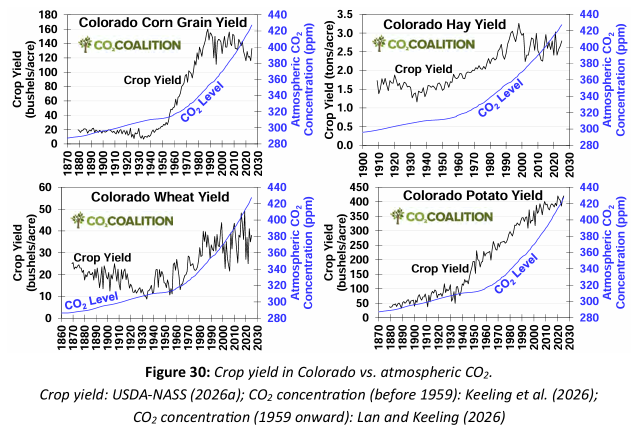
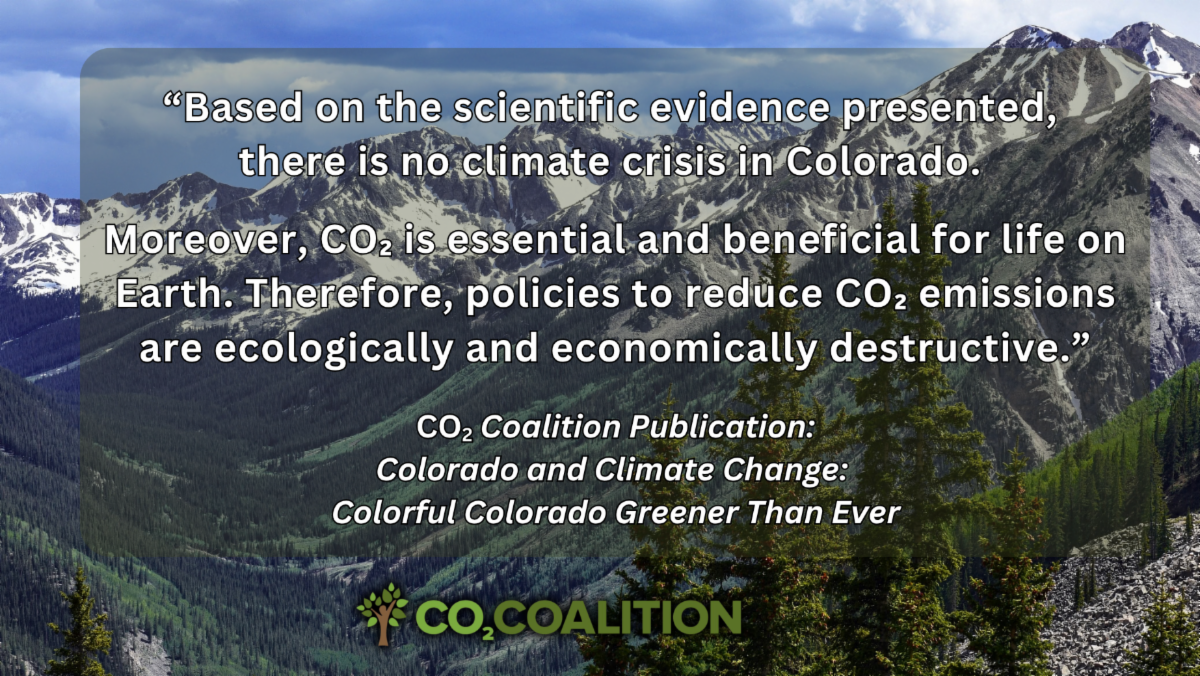
As our recent publication Colorado and Climate Change: Colorful Colorado Greener Than Ever indicates, these suits rest on a faulty premise that carbon dioxide (CO2) is a pollutant dangerously increasing global temperatures. Real-world data contradict such apocalyptic predictions and affirm CO2 as a trace gas necessary for photosynthesis and all life. The modest rise in its atmospheric concentration has coincided with greening of ecosystems, longer growing seasons, and higher crop yields. Multi-billion-dollar claims of harm from the use of fossil fuels are scientifically invalid efforts to raise the cost of reliable energy sources.
States retain ample authority to regulate activity inside their own borders. However, they lack the authority to levy nationwide court damages against energy producers for emissions that cross every boundary and that federal law has long treated as a matter for Congress and the executive branch. A decision that confirms federal preemption would not silence debate over energy. It would simply keep the matter where it belongs – in legislatures accountable to voters.
As a 501(c)(3) nonprofit, the Coalition depends on public support to research, publish, and present scientific evidence on carbon dioxide and climate to policymakers and the public. A tax-deductible gift helps keep that evidence available when courts, legislatures, and citizens need it.
|