|
1. Wikipedia is failing our children
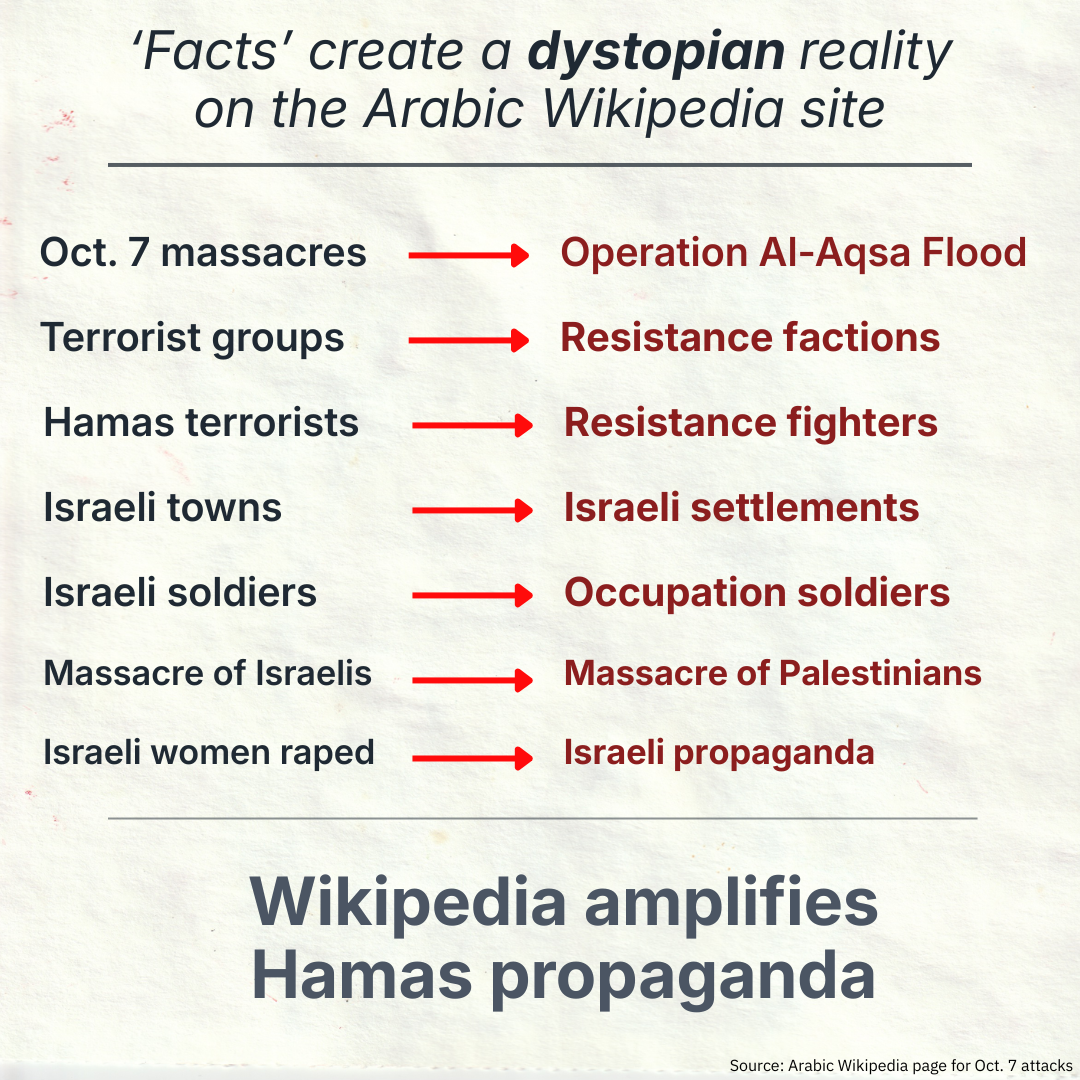
Imagine a middle school student researching the Palestinian-Israeli conflict for a social studies assignment, trusting Wikipedia – the first result in their Google search and the same source powering ChatGPT, Gemini and Claude’s answers to their questions. Behind the seemingly neutral information are coordinated editing campaigns feeding biased, distorted, antisemitic or incomplete facts. When Wikipedia gets these sensitive topics wrong, it does not just affect one homework assignment – it shapes how an entire generation understands world conflicts. Biased Wikipedia editors are spreading misinformation, disinformation and anti-Jewish narratives to millions of people who have no reason to suspect the website is anything but factual.
2. AI is amplifying Wikipedia’s distortions
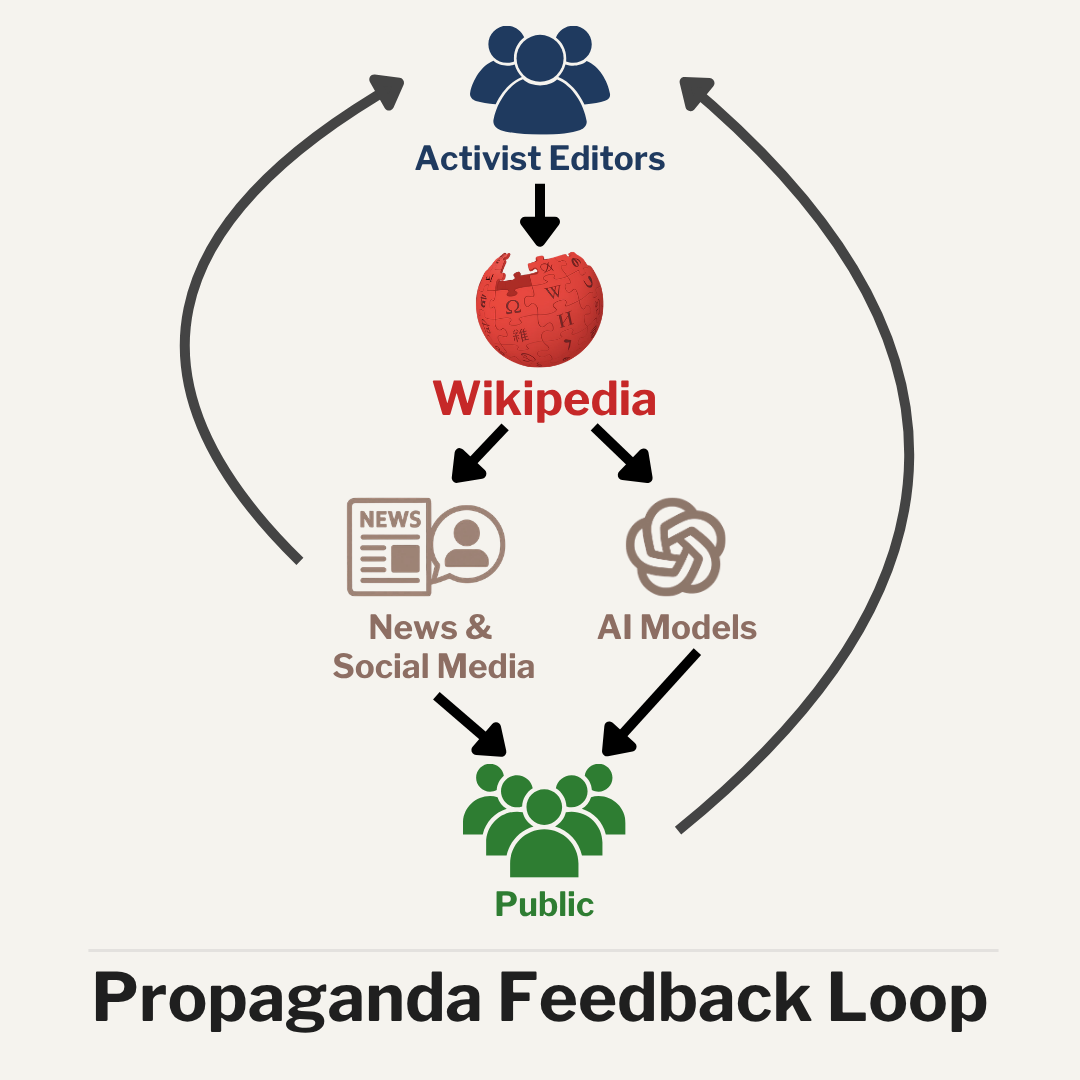
Artificial intelligence systems rely heavily on publicly available data, including Wikipedia and content shaped by it. When narratives are distorted at the source, AI does not correct them – it strengthens them. These systems summarize and present information as neutral and authoritative, often without context or competing views. As more users turn to AI for quick answers, biased or incomplete information is amplified and delivered instantly to billions.
3. Wikipedia is not a neutral information source
Wikipedia is a social platform disguised as an authoritative educational resource. There is little difference between the content quality of complex topics on Wikipedia and what appears on social media. The encyclopedia allows anonymous users to promote biased content behind the aura of respectability. That content often is as untrustworthy as what is being produced and amplified by partisan social media influencers. Wikipedia’s news-related output must be treated with the same skepticism as social media – question it, verify it and do not assume neutrality.
4. Anonymous editors shape what billions believe
A small group of highly active, anonymous editors exert super-sized influence over some of Wikipedia’s most sensitive and widely viewed pages. These contributors determine which facts are included, which sources are accepted and how topics are framed. Most readers never see the debates, reversions or edits behind the scenes – where editorial discussions often resemble political battles rather than open debate. What appears to be neutral information is often the product of sustained control by individuals operating without accountability or transparency.
5. Controlling the sources = Controlling the story
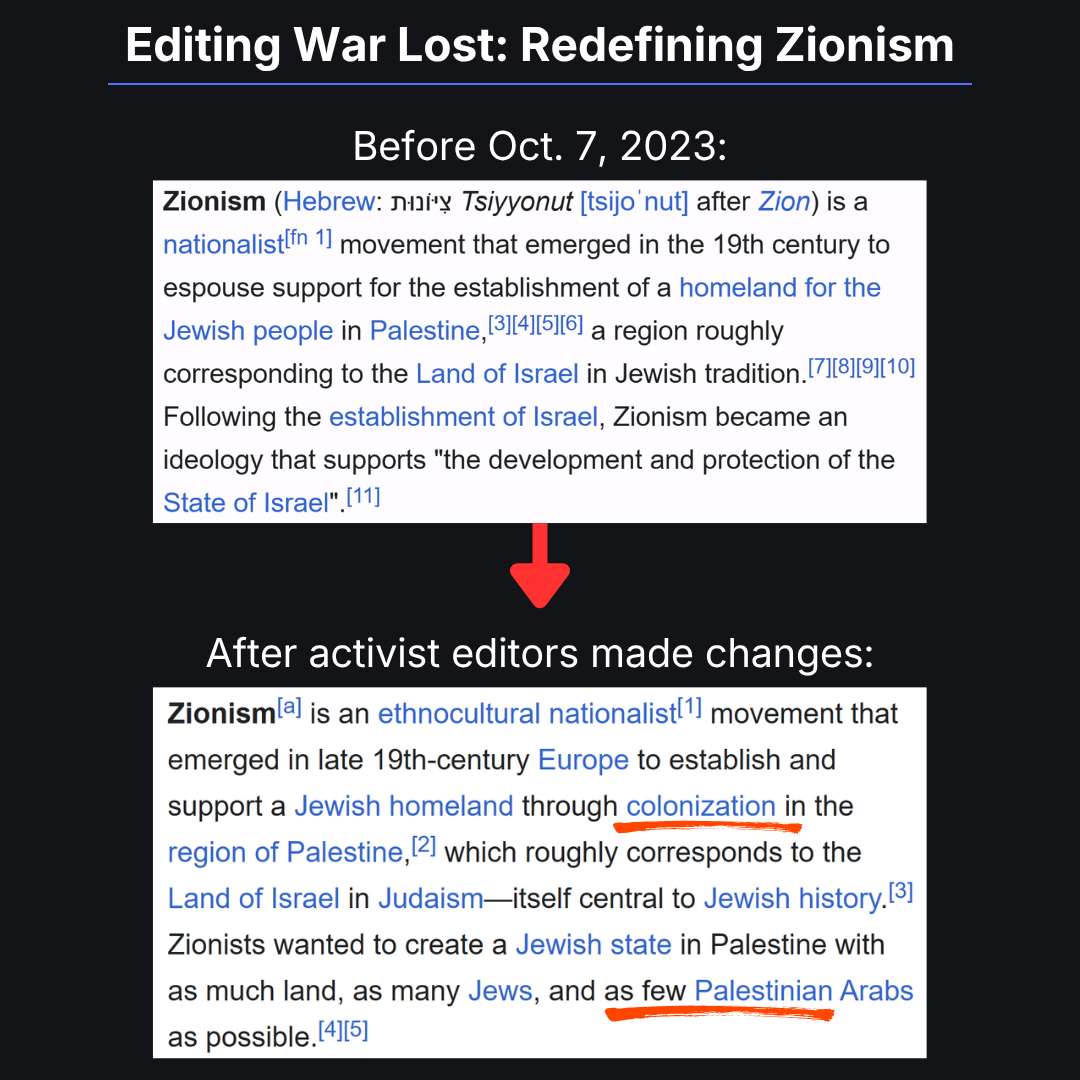
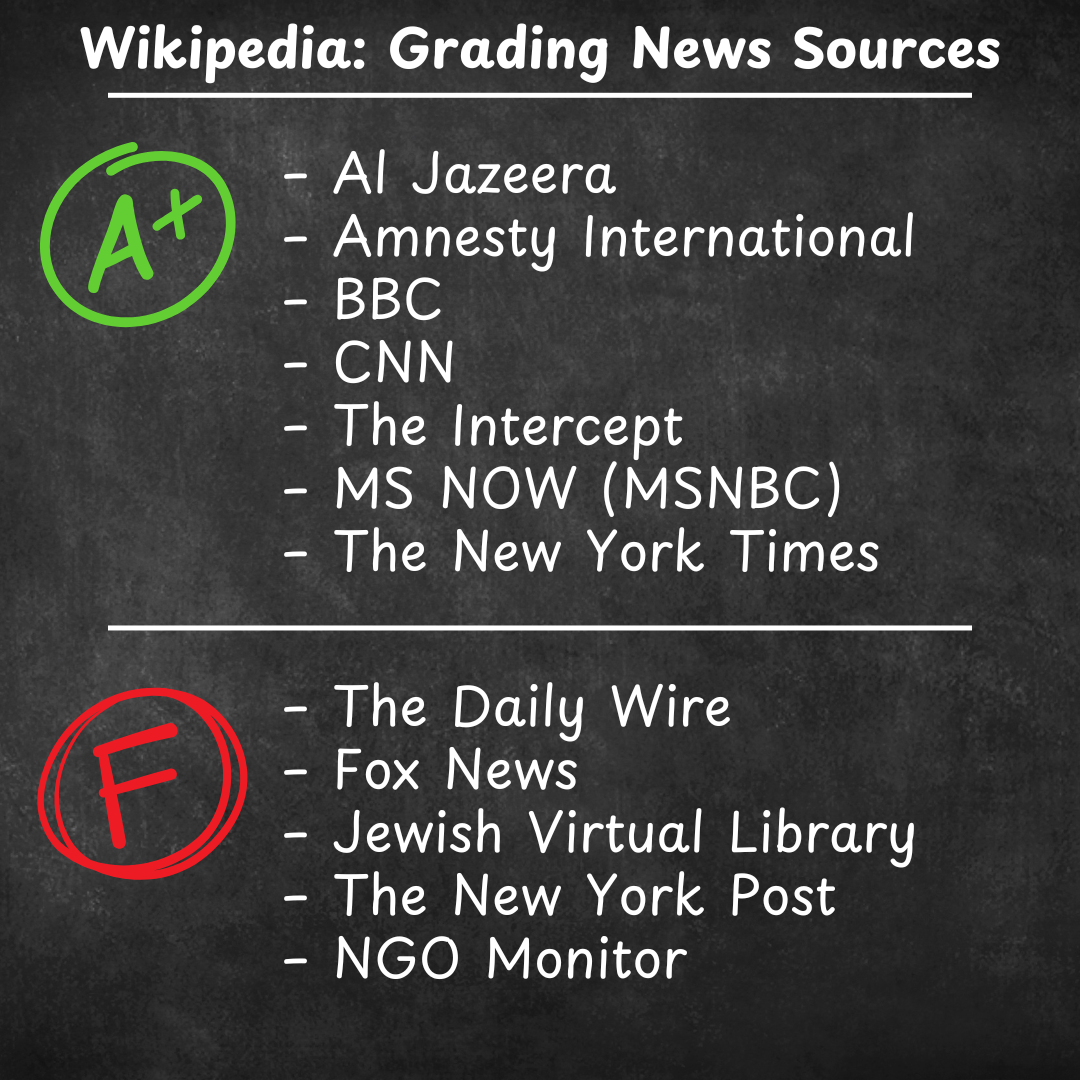
Wikipedia’s definition of “truth” depends on which sources are considered “reliable.” Editors determine which news media, academics and non-profit organizations are accepted, cited and repeated – setting the foundation for important topics before they are even written. Sources that align with preferred viewpoints are elevated, while others are dismissed. These decisions create the appearance of consensus – even when significant disagreement exists – allowing a narrow set of perspectives to dominate high-impact articles.
6. Wikipedia’s ‘consensus’ system rewards persistence – not truth
Wikipedia’s “consensus” system is often mistaken for neutrality – but it rewards dedication, not truth or even a majority vote. Editorial decisions are controlled by editors who contribute most often, dedicate hours to making edits and collaborate to manipulate outcomes. For some, it is a full-time job – many funded by malign forces. Experienced contributors dominate discussions and outlast opposition. Their preferred framing becomes embedded – not because it is correct, but because it is the version that remains.
7. Hostile countries and terror groups manipulate Wikipedia
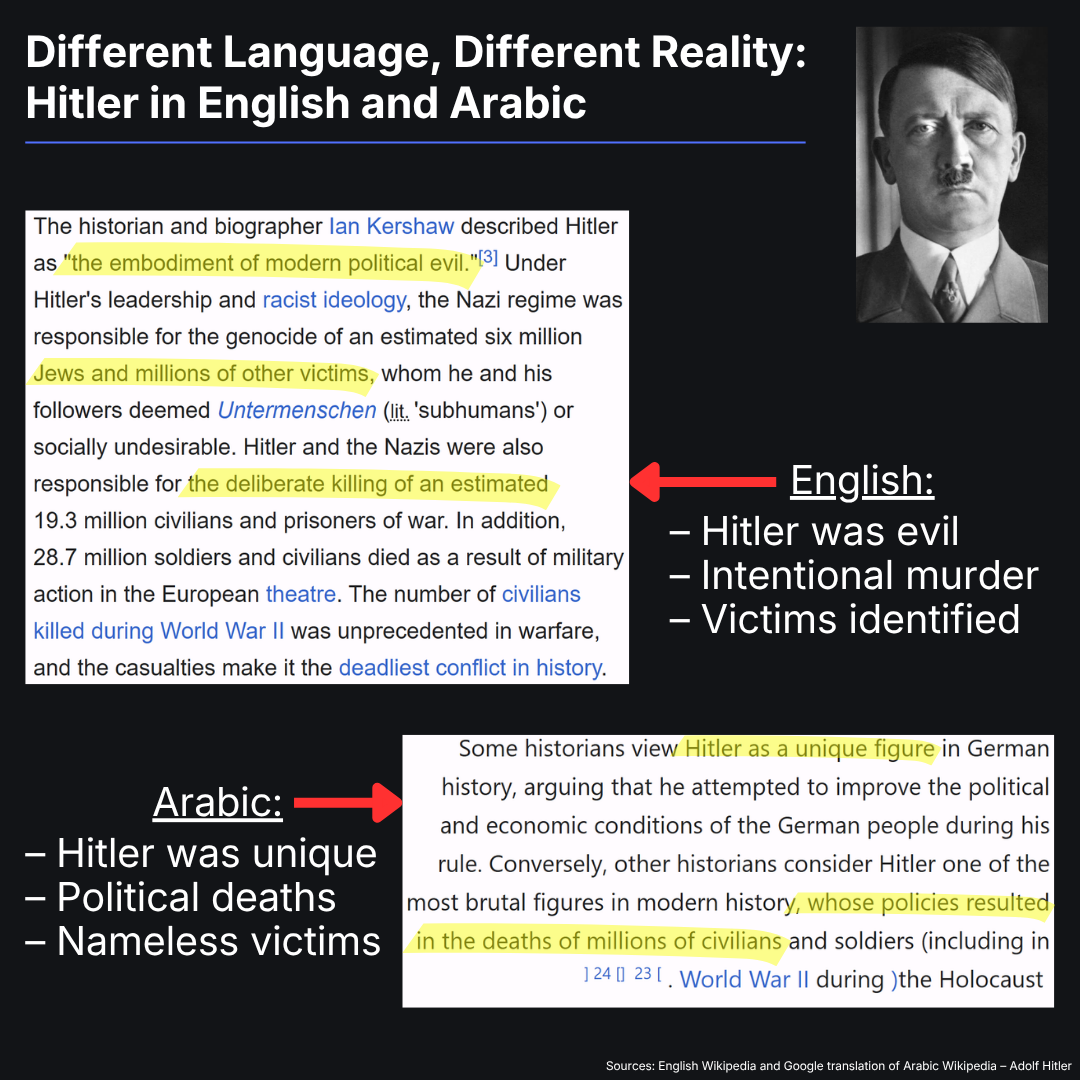
Hostile governments and organizations – including Iran, Qatar and Hamas – exploit Wikipedia to shape how global events are understood. Iranian regime-linked media – including media tied to the Islamic Revolutionary Guard Corps terrorist group – are repeatedly cited across multiple languages. These sources are treated as legitimate by biased editors, allowing state-backed narratives to enter widely read articles and influence how events are framed.
|