|
Looking Back at Wild Care in 2024, and
Celebrating Growth and Service in 2025!
| |
Looking back on all of the wildlife patients that came through our doors in 2024, it’s easy to say that it was a very busy year! Spring and Summer months can be a frenzied pace with baby season, and the impact of the increased summer population here on the Cape, Fall migration, and Winter storms bring with them no shortage of storm weary birds. We cared for more than 1,700 animals including over 360 seabirds, raptors, turtles and their eggs, frogs, and nearly 800 orphaned animals including flying squirrels, shrews, opossums, and hundreds of songbirds. Your donations truly make a difference in the lives of these animals, and the care we can provide.
We are also beyond grateful for the hard work and support of our dedicated volunteers who donated hundreds of hours of their time in 2024.
2024 was an especially exciting year for Wild Care! We celebrated the completion of construction of our new building with a ribbon cutting ceremony, and hosted our first party inside and on the new deck. We participated in more than 50 educational outreach programs at local schools, libraries, senior centers and more, and look forward to serving our community in the new year!
Here's a look back at some of Wild Care's wonderful
success stories of 2024, made possible by your support.
Wishing you a very Happy New Year!
Stephanie Ellis,
Executive Director
Photo by Kerry Reid
| |
Thank You Wild Care's 2024 Animal Ambassador Sponsors! | |
|
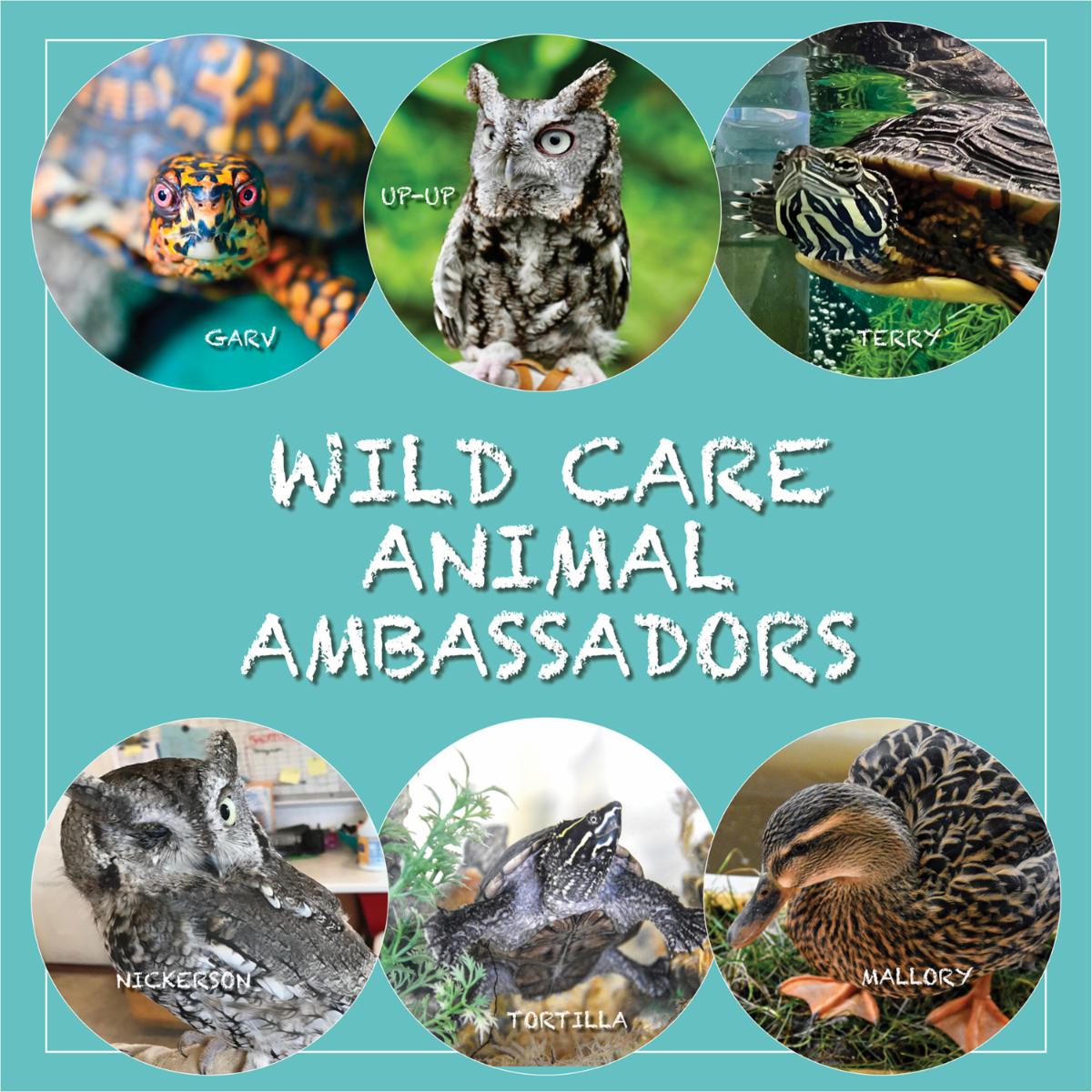
Wild Care's Educational Ambassadors play an important role in educational outreach in our community. They are all non-releasable animals that live year-round with us at the Wild Care clinic. Sponsors provide for the care, food, housing, and enrichment of their sponsored animal. We are incredibly thankful for the following 2024 sponsors:
Terry - an Eastern Painted Turtle
sponsored by Restoration 1 of Cape Cod
and Zenbusiness
Garv - An Eastern Box Turtle
sponsored by John Garvey of Garvey Communication Associates
and Tom O’Connell in loving memory of Laura Runkel
Nickerson - an Eastern Screech Owl
sponsored by Jennifer Budryk of Beach Road Muscular Therapy
and Allan and Jill MacDonald
Mallory - a Mallard Duck
sponsored by Jody Rice-Hines
Tortilla - a Musk Turtle
sponsored by the Battista, Carbonaro, Cicero and Schroder Families
in loving memory of Vincent and Danny Battista
Up Up - an Eastern Screech Owl
sponsored by Karen and Arthur Boujoukos
| |
A Look Back at Wild Care in 2024 | |
|
A Feisty Opossum Named Papa Bear Heads Home
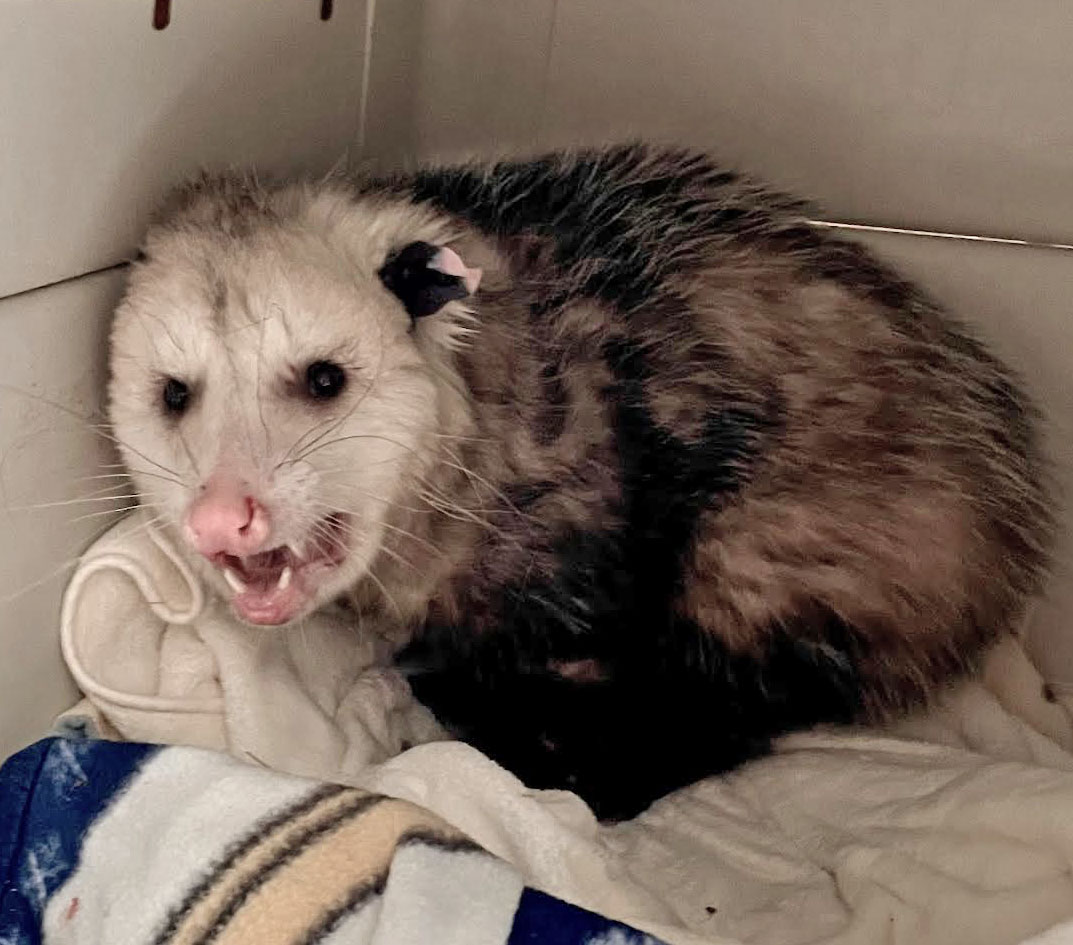
Opossum Whisperer, rehabber, and Wild Care Volunteer Peg DiMauro answered a call about an adult opossum that was hit by a car and had made its way up a tree where it remained in the pouring rain for hours. A local rehabber captured the animal and kept it overnight. The next morning the opossum was transported to Cape Cod.
Once at Wild Care it was examined by Dr. Larry Venezia. After being cleared for release the opossum was brought back to the Mansfield conservation reserve area. When they opened the crate to release it, the opossum burst out the door leaping with no hesitation. He climbed up and down a tree, jumped over a log, and left no doubt that he knew where he was going – and that was clearly back home! We saw his very stocky, muscular back side as he bounded away, a lot of white fur, legs that were propelling him like a rabbit- a beautiful alpha male who will hopefully create more alpha males, strong and beautiful.
It was an extraordinary release with extraordinary people who chose to rescue a misunderstood species late at night in the rain.
LEARN more about
Virginia Opossum
| |  |
|
Northern Gannet Injured by a Plastic Ring Around it's Wing Recovers and Flies Free
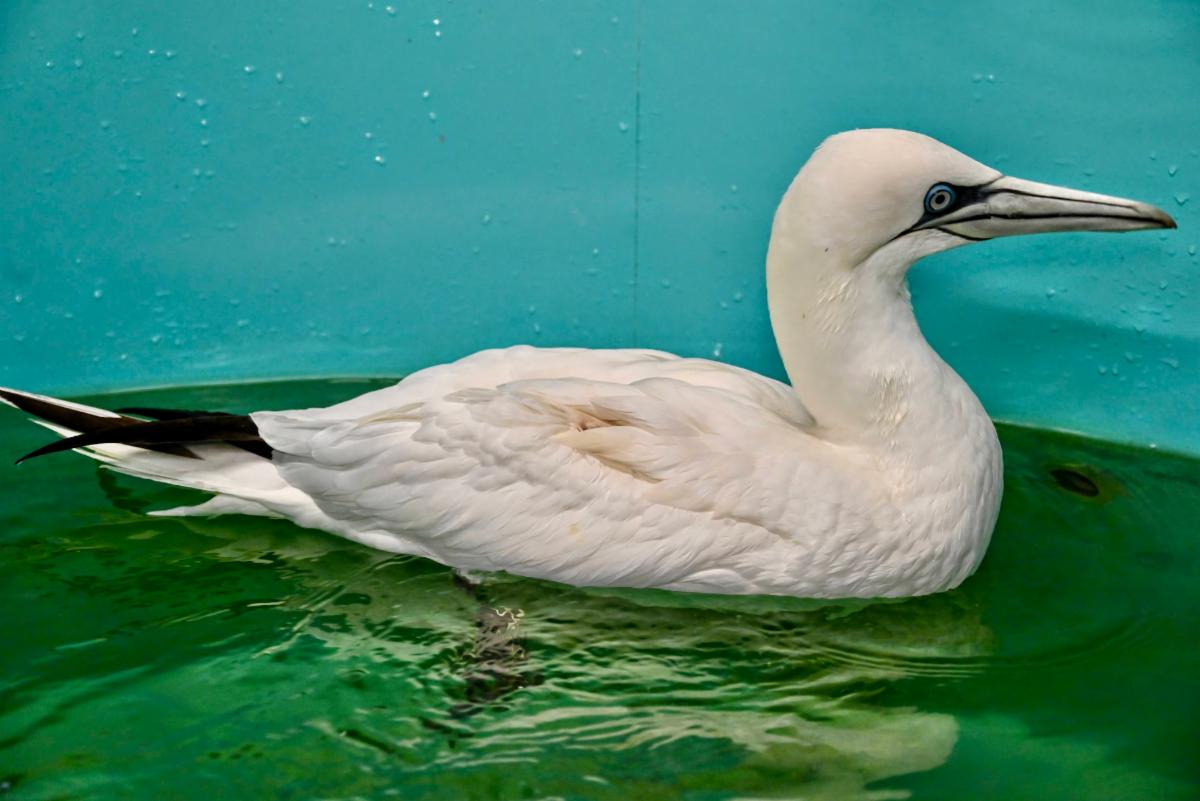
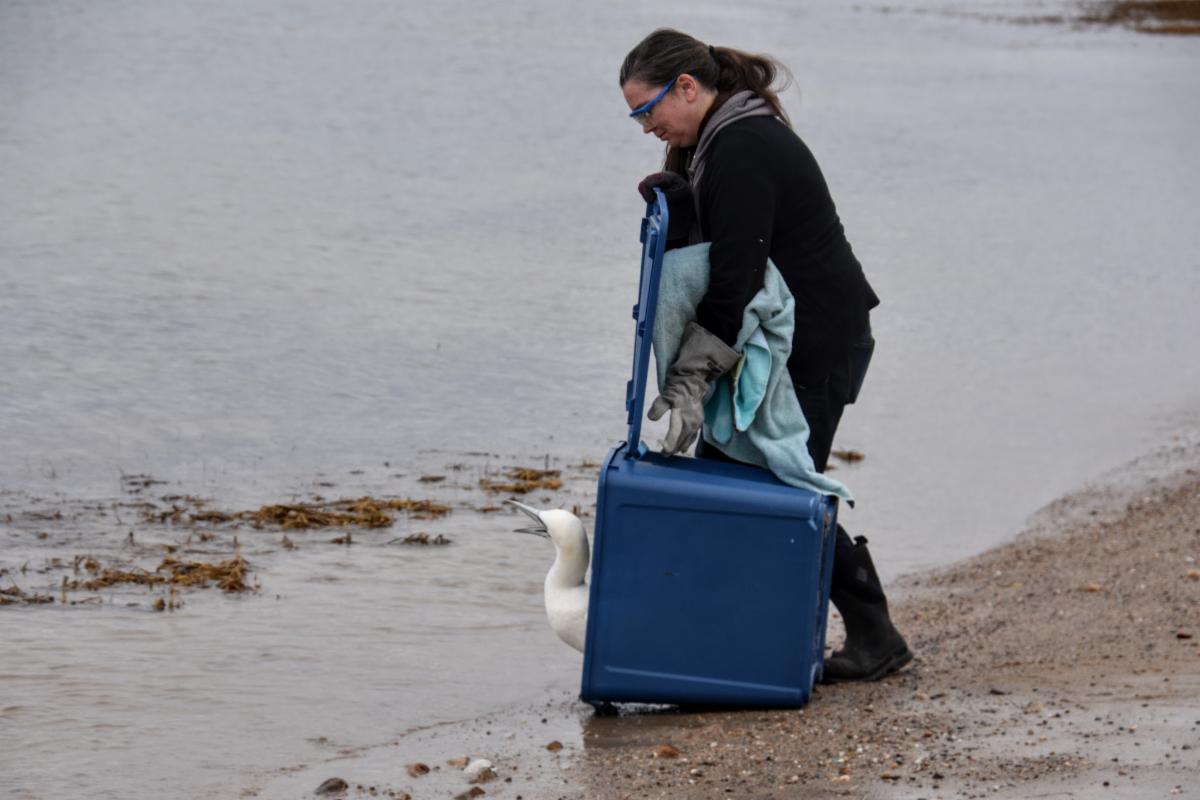
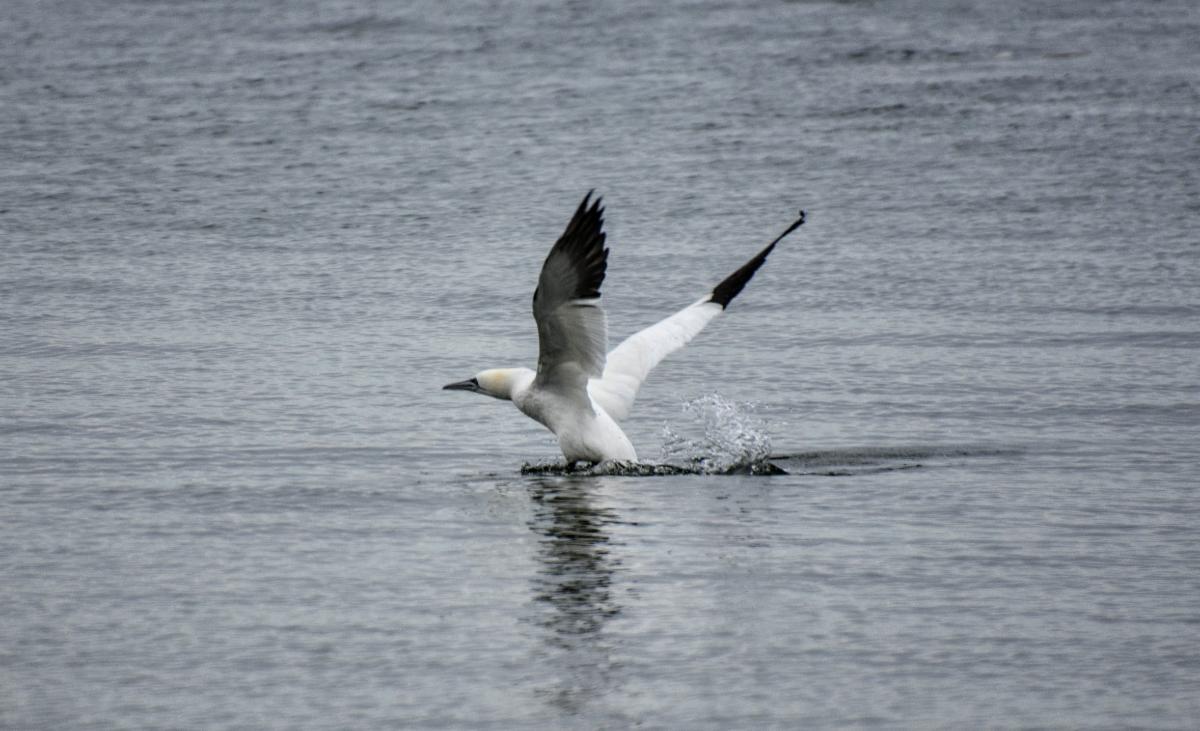
This gorgeous Northern Gannet rescued in Scituate in early January was released after nearly a month in our care. The bird had a plastic ring around it's wing that was cutting off circulation. The wing was swollen and had small wounds, but fortunately no fractures. Pain management, antibiotics, loads of Herring and swim therapy in Wild Care's saltwater pools, and this beauty is now back in the wild.
LEARN more about
Northern Gannets
READ this article with
news about phasing out
plastic six-pack rings
| | |
|
Barn Owl Makes the Long Journey Home
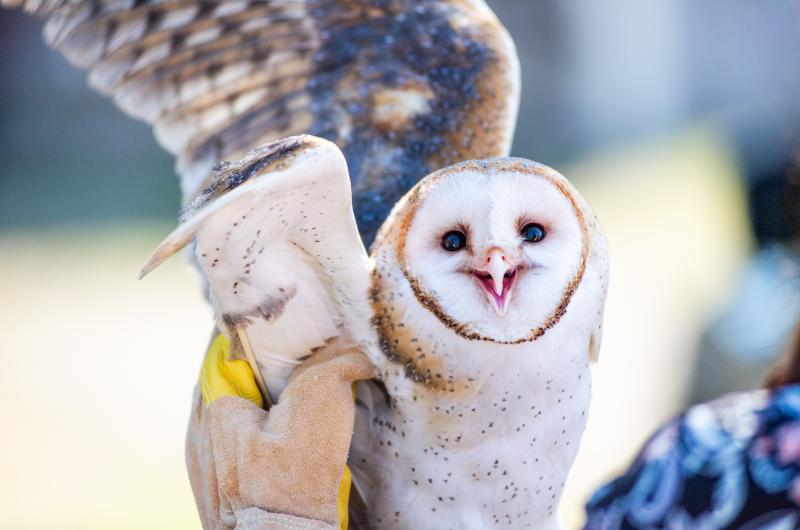
It was quite a journey for a beautiful Barn Owl from Martha’s Vineyard after a crow attack landed it at Wild Care. The bird was tested for Avian Flu, and treated with Vitamin K for possible rodenticide poisoning. The owl responded well to treatment and was moved into Wild Care’s large aviary to allow time to observe his behavior, ability to capture live prey, and monitor flight pattern closely.
After a month at Wild Care the owl was given the all clear, and headed back to Whippoorwill Farm where it was placed into it's new home high up inside a barn.
READ the Vineyard Gazette story
SEE MORE PHOTOS
Photo: Ray Ewing. The Vineyard Gazette
| | |
|
Common Loon Makes
a Full Recovery and is Released After Storm
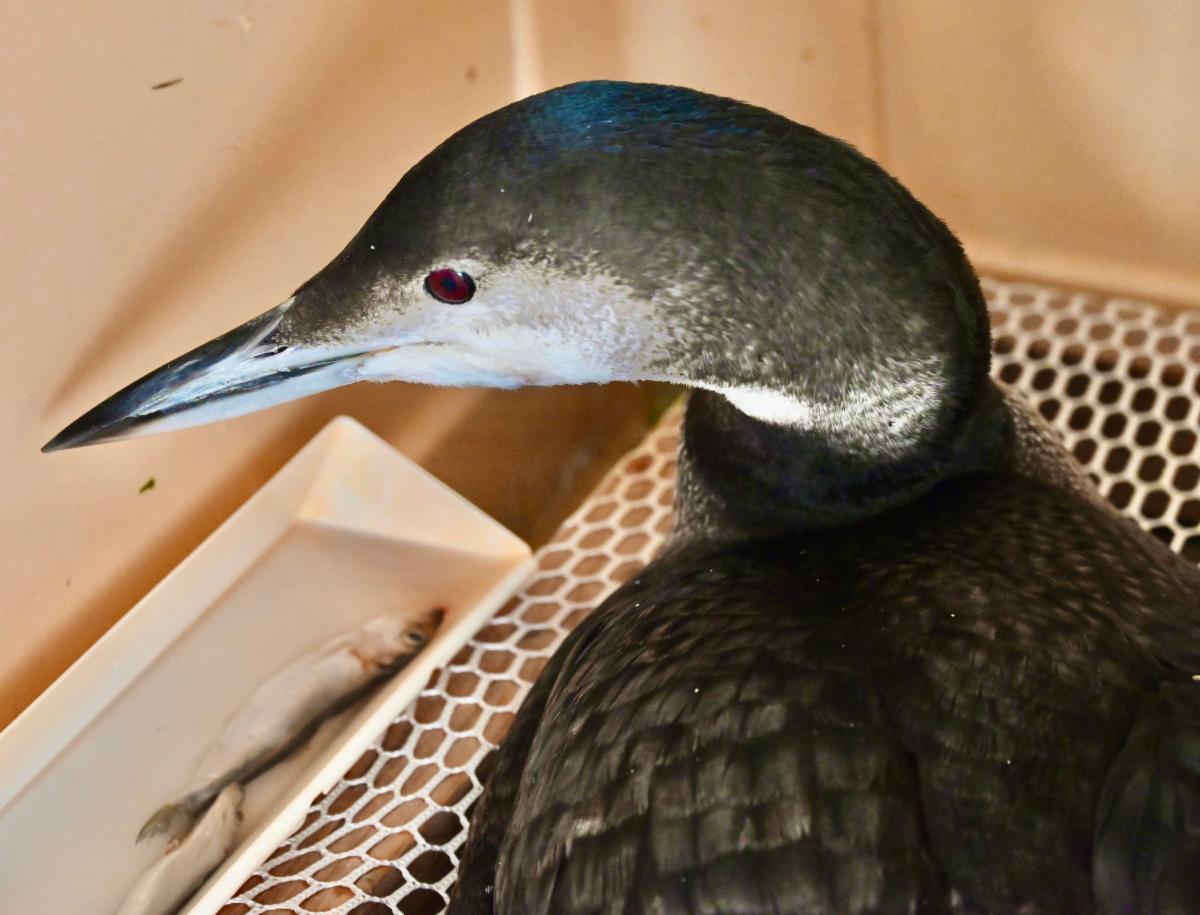
This beautiful Common Loon was found in an East Orleans garden after being blown in after a storm. Common Loons cannot walk or stand once they are on land. It made a full recovery at Wild Care and was released a few days later. We just loved the peaceful call of this beautiful bird as it made its return to the wild.
LEARN more about
Common Loons
| Video - Watch the Common Loon release | | |
|
Lucky Owlets Find
a Foster Family
in Eastham
Wild Care received a call from Maryanne Figur in Eastham concerned about the nesting screech owls by her home. One of the babies was sticking its head out of the nest box calling, and Maryanne had not seen an adult owl all day… Director Stephanie Ellis carefully checked the box and found a baby and adult female nestled in the box. The young owl was similar in age to two orphaned Eastern Screech Owls that have been our care for several weeks from Carver and Brewster. Both of our orphans lost their homes and families due to tree felling.
We brought our two screech owlets to this nest and Jennifer Taylor, our Animal Care Coordinator, placed them into the box. They are a perfect match! Screech owls can't count and will feed young that are not their own. They typically lay 1-4 eggs that hatch asynchronously - meaning that the owlets in a nest are all several days apart in age. We could not have asked for a better outcome!
LEARN more about
Eastern Screech Owls
| | |
|
The Sweetest Woodpecker
Family Reunion
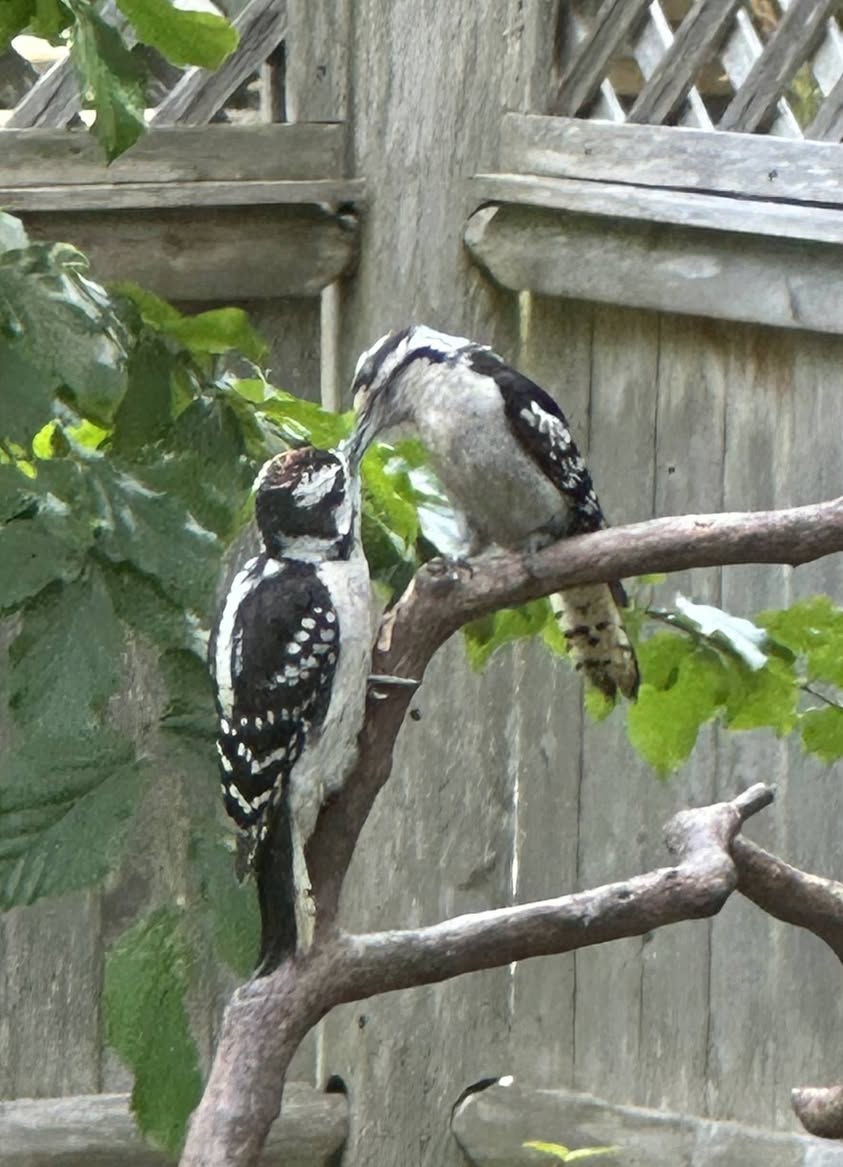
We were so excited to be part of reuniting a young Downy Woodpecker with its family in Harwich. The fledgling Downy had struck a window and was brought to Wild Care where it received care by our wonderful staff of wildlife rehabbers.
Once it was determined there was no trauma we returned to the backyard where the bird was found. When we arrived on-site to release the woodpecker, we could hear its family calling. Our bird immediately responded to them! We released him, and mom flew down almost immediately. They greeted each other and then flew off with the baby following close behind. It was a heartwarming sight to see.
Photo taken shortly after
release by Pat Watson
LEARN more about
Downy Woodpeckers
| | |
|
A Team Effort Gives Hope to an Osprey Chick in a Story with
a Few Plot Twists…
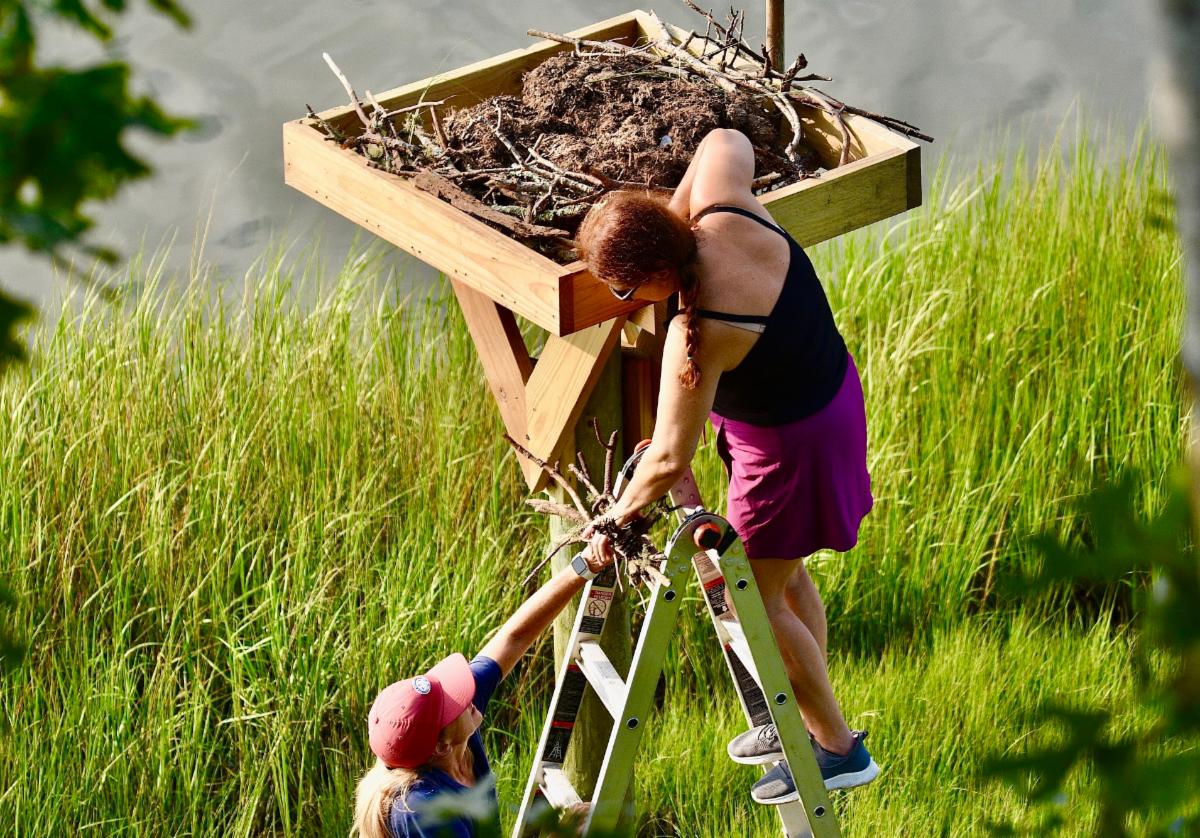
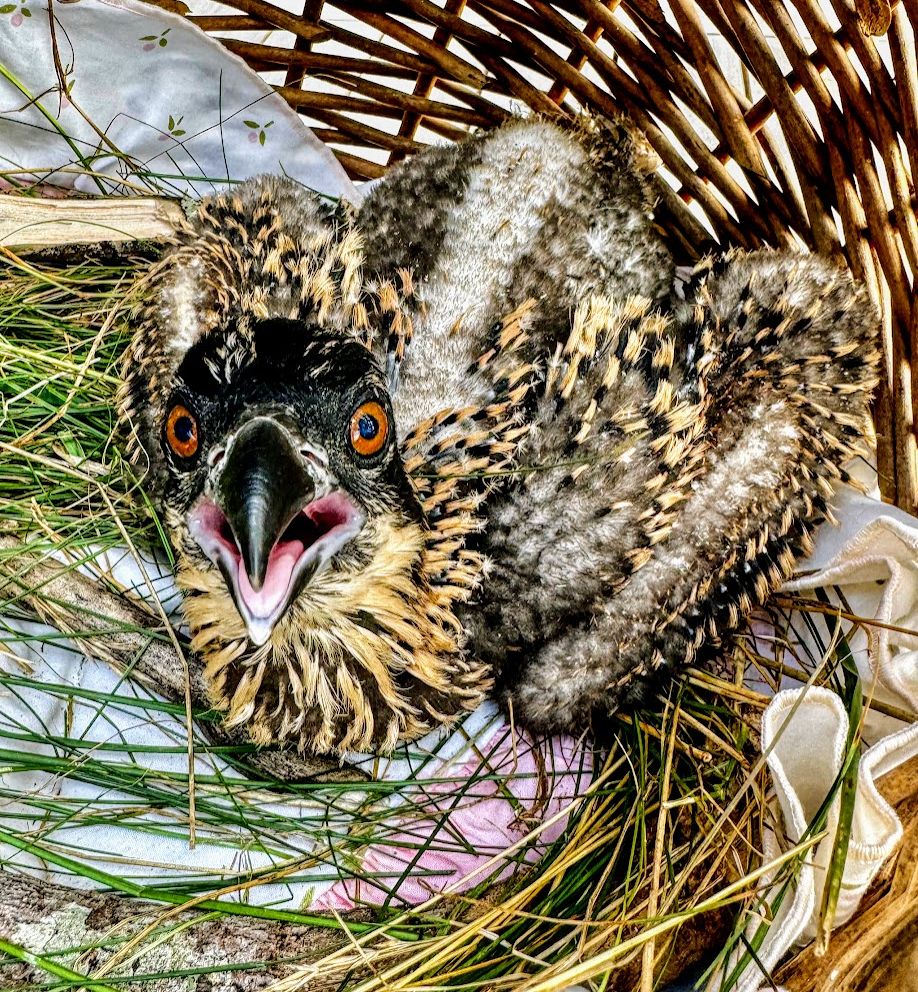
Wild Care received three Osprey eggs from USDA that were removed from a boat dock in Chatham. We drove the eggs in an incubator to the home of Julie Silva of Mashpee. At her home on the marsh, she has an Osprey platform with a female Osprey who returns every year to lay her eggs, but they never hatch. Knowing this history, we gave this Osprey the three viable eggs from Chatham. How exciting it was to receive a text message from Julie two weeks later. "We have two chicks!” The Osprey have been great parents to their foster chicks, unbeknownst to them.
Unfortunately a storm shifted the platform and the nest fell to the ground and one of the chicks did not survive. The remaining chick was brought to Wild Care where we determined it to be unharmed, miraculously.
The very next day Kevin Friel of The Osprey Project - Falmouth came out and repaired the platform and rebuilt the nest! With much hope, we filled in the empty spaces in the nest with dried sod, and placed the chick into it. What happened next was rather harrying, but has a happy ending. The parents did not return that evening, but thankfully the chick, able to thermoregulate, hunkered down in its nest for the night. We were all relieved to see the chick alive and well in the morning. Dad brought a fish, and they were one happy family once again!
| | |
|
Juvenile Great Horned Owl Trapped in Orleans Fireplace Treated
and Released
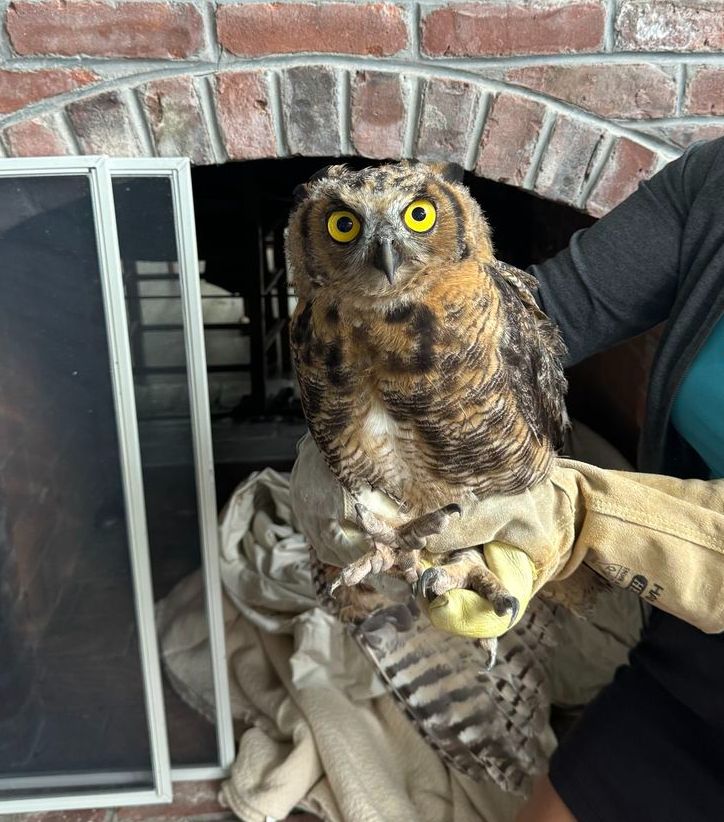
Wild Care received a call about a Great Horned Owl trapped in a fireplace in Orleans. This was one lucky owl! Bill the Property Manager had been planning to take the day off, but had a feeling he should check on the property. When he entered, debris on the floor near the fireplace made him look up into the flue. When he opened it, the owl dropped down!
Wild Care Director Stephanie Ellis arrived to retrieve the young owl from the fireplace. It clearly had been in the chimney for a couple of days. It was active, but dehydrated, thin, and had abraded eyelids. This owl was also treated for possible rodenticide exposure. The bird responded well to treatment and was released in the location where its family and sibling was last heard.
Please be sure to cap your chimney to prevent animals from becoming trapped inside. Prevention is the best way to keep them safe.
READ more about
Great Horned Owls
| WATCH the release of this beautiful owl. | | |
|
Corey's Shearwaters Found Beached Spend Time at Wild Care
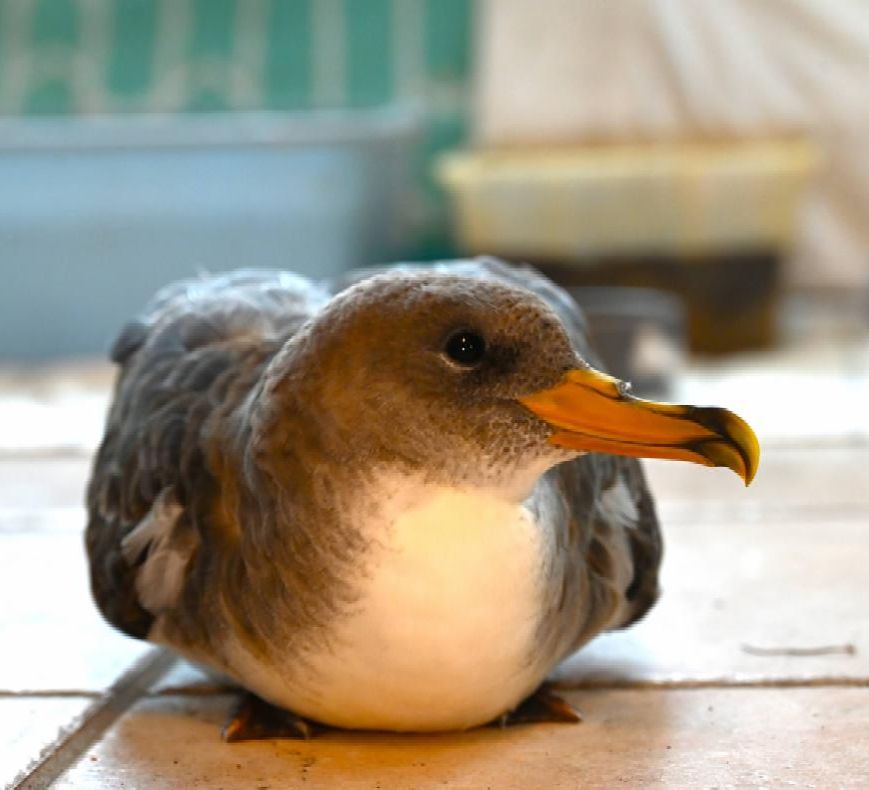
We love our Shearwaters! Our two Cory's Shearwaters are doing well. Wild Care received two Cory’s Shearwaters from separate locations, beached, weak, dehydrated and thin. We are working on getting them waterproof and conditioned for their pelagic life - back on the wing and the water.
Cory's Shearwaters are a long-distance migrant. They can be seen off the east coast now, feeding in our nutrient rich waters. They winter mainly off southern Africa. Breeding adults are generally near colonies from March to October, so birds seen off east coast of North America are typically immature, non-breeding birds. We love having these two birds in our care. They have bonded and we are hopeful they will be released together in the coming weeks.
LEARN more about
Cory's Shearwaters
| | |
|
Blue Angelfish Found by Orleans Oyster Farmers has a Permanent Home at the New England Aquarium
This gorgeous little Blue Angelfish is one of the tiniest and most unique patients we've ever had at Wild Care, and it had quite a journey and story. In fact, according to the Gulf Steam Orphan (fish) Project, it is the Northern-most angelfish ever reported!
It was brought to Wild Care by Oyster Farmers Tim Silva and Danielle Orcutt. Knowing it was a tropical saltwater fish that was way off course, our staff placed it into a bucket with heated saltwater and an aerator, when it arrived at Wild Care.
The New England Aquarium participates in The GSO Program which rescues tropicals that get swept North beyond their native range by the Gulf Stream, and within an hour arranged to pick up the fish at Wild Care in the next morning.
Video - Tim Silva
What is the Gulf Stream Orphan Project?
READ about Blue Angelfish
| | |
|
Fish Crow Released In Truro After Recovering From a Window Strike
This beautiful Fish Crow was brought to Wild Care at the end of September by a homeowner in Truro who found it on his deck as a potential window strike. At first the bird's legs were splayed and it was unable to stand. It’s feathers were in poor condition. After spending time in the clinic the birds condition improved. Wildlife Rehabilitator Kerry Reid brought him to her aviary mid-November. He was flying well immediately and eating a lot. The bird was definitely ready to be released back to Truro.
Fish Crows look almost identical to American Crows. Their unique nasal call makes them easier to identify. They can be found around bodies of water usually in flocks, sometimes with American Crows.
See how to identify a
Fish Crow compared
to similar species
| | |
|
Diamondback Terrapin Hatchlings to Spend Winter at Wild Care
Two tiny hatchling Diamondback Terrapins were found in a pool net in Plymouth. Being too late in the season to introduce them back to the wild the pair were brought to Wild Care where they will spend the winter months and be released in the spring.
Diamondback Terrapins are a threatened species, and the only true salt marsh turtle in the United States with Wellfleet being their northern most breeding location. Their Biggest threats are vehicle strikes, and habitat loss. Populations are thankfully rebounding with the help of organizations like Mass Audubon. These beautiful turtles eat a diet of Brine shrimp, Krill and worms. We are excited to help them grow big and strong before releasing them in the spring.
LEARN more about Diamondback Terrapins,
Mass Audubon’s efforts to help the species rebound,
and how you can help
this threatened species
| | |
Check out our Amazon and Chewy WISH LISTS and donate much
needed supplies to help the animals being cared for at Wild Care.
| | | | |