|
Please share this edition of Wildlife Highlights with other outdoor enthusiasts
and help our subscription list grow!
| |
RAWA Takes a Big Step Forward | |
|
Last week, the Senate Environment and Public Works Committee completed markup of the Recovering America’s Wildlife Act (RAWA). This landmark legislation successfully passed out of committee, bringing it one big step closer to floor votes in the U.S. House and Senate!
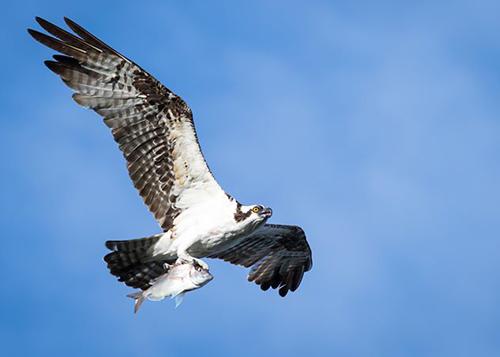
Approximately one-third of wildlife species in the United States are at risk of becoming threatened or endangered. The Recovering America's Wildlife Act (RAWA) would dedicate $1.3 billion annually to state fish and wildlife agencies to implement their science-based wildlife action plans and an additional $97.5 million for tribal fish and wildlife managers to conserve fish and wildlife on tribal lands and waters. This critical bi-partisan legislation would help protect wildlife for generations to come! Photo courtesy of Darrell Bumbala.
More on the Alliance for Fish and Wildlife . . .
| |
Burning for Wildlife - The Importance of Prescribed Fire | |
|
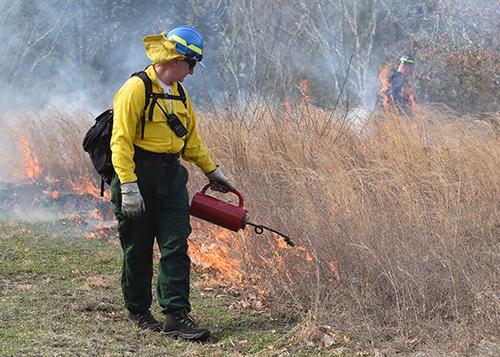
This spring, DEEP staff conducted several prescribed burns at select locations on state land. A prescribed (controlled) burn is an important management practice that can promote the growth of native warm season grasses, suppress above-ground vegetative growth (including invasive species), and ultimately help improve wildlife habitat for a variety of species that depend on grasslands and shrublands. Some of the species that benefit from prescribed burns are the eastern meadowlark, upland sandpiper, savannah sparrow, and grasshopper sparrow.
Historically, fire had a profound impact on Connecticut’s landscape. Periodic naturally-occurring wildfires were once essential to sustaining eastern grasslands, oak savannas, much of the oak forest, and pitch pine/scrub oak forests. The elimination of fire in recent times has led to instability in these ecosystems. Prescribed burns can be an effective tool in maintaining a diversity of habitats, as it immediately returns important nutrients to the soil.
Prescribed burns are planned for specific locations, at a specific time, and must meet proper environmental conditions to take place. This collaborative effort, led by the DEEP Forestry Division, with assistance by other fire-trained personnel in DEEP’s Wildlife, State Parks, and Support Services Divisions, will help maintain a diversity of ecosystems within our state.
More on prescribed burns . . .
| |
Take the Right Steps and Help Share the Shore | |
|
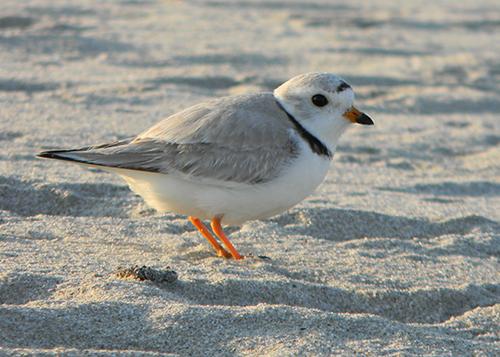
Many shorebirds, including the piping plover and American oystercatcher, have returned from their wintering grounds to Connecticut’s beaches and will soon be looking to nest. While heavy beach traffic is not typically an issue this time of year, please understand that some shoreline parks (Harkness, Rocky Neck, Silver Sands, and Sherwood Island) prohibit dogs on the beach year-round. The “no dogs on the beach” rule provides protection for beach-nesting shorebirds. Dog walkers are also reminded that even though dogs are allowed at most state parks, forests, and wildlife management areas, regulations require dogs to be on a leash no longer than 7-feet and under the control of the owner or keeper at all times. If your dog is hiking with you, keep the dog on a short leash and DO NOT let it roam free. This is for the safety of your dog, yourself, and wildlife.
More on hiking responsibly with your dog . . .
| |
Winner of the 2022 Connecticut Junior Duck Stamp Competition | |
|
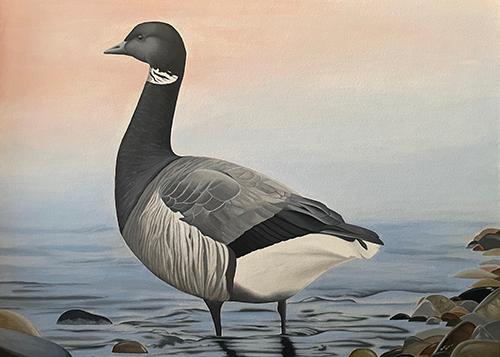
The DEEP Wildlife Division and the Connecticut Waterfowl Association (CWA) are pleased to announce the winner of the 2022 Connecticut Junior Duck Stamp Art Competition! Congratulations to Sophie Archer, age 18, of Old Lyme, CT, whose painting of an Atlantic brant on a beach coastline was selected as the "Best in Show". Sophie’s artwork will be featured on the 2023 Connecticut Migratory Bird Conservation (Duck) Stamp. This is the second year in a row that Sophie received such honors for her artwork. Her painting of a drake wood duck in flight was awarded “Best in Show” for the 2021 contest and is featured on the current 2022 Connecticut Duck Stamp.
A total of 120 entries were submitted from public school, private school, as well as home-schooled students in grades K-12, from all across the Connecticut! The participants in every age group put forth a great amount of time and effort to produce some amazing artwork (and conservation messages).
More entries and information on the Duck Stamp competition . . .
| |
A Reminder to View Wildlife Responsibly | |
|
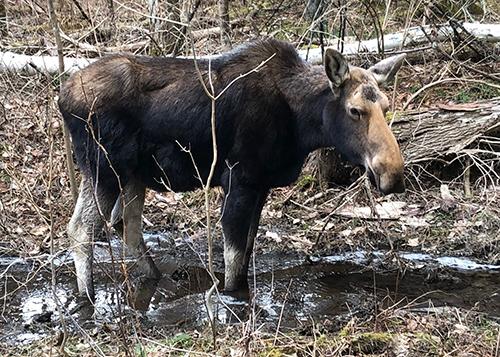
Now that spring is here, many Connecticut residents are eager to spend more time outdoors. A variety of bird species are returning to our state from their wintering grounds, reptiles and amphibians are now more active, and mammals, including bears and moose, are looking for food after a long winter. While spring is a great time to get out and see Connecticut’s wildlife, it is also important to view wildlife responsibly. Here are some important tips on how to watch wildlife in a way that is safe for them and fun for us.
- Give wildlife plenty of space with a wide escape route.
- Be alert for changes in the animal's normal behaviors. If it reacts or freezes, you are too close and should back away.
- Invest in optics, such as binoculars and spotting scopes, or upgrade your camera gear with a strong zoom lens, to view or photograph wildlife while maintaining a safe distance.
- Drones should not be used to help you get a closer look. Animals perceive them differently than we do; some species view them as predators and will drastically alter their normal behavior which can have life or death consequences. Drone use can be considered harassment of wildlife.
- Be respectful to both wildlife and people who are also wildlife watching or participating in other outdoor activities nearby.
More wildlife viewing tips . . .
| |
Understanding Connecticut's Black Bear Population | |
|
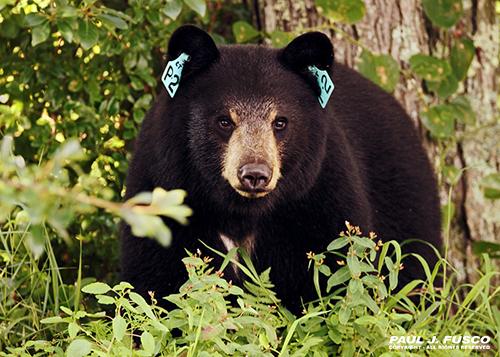
Wildlife Division biologists have been monitoring the state’s black bear population since bears began recolonizing the state in the 1980s. At first, it seemed most of the bears sighted were younger males, likely dispersing from western Massachusetts. It was not until the late 1990s that adult females (sows) with offspring were being reported from towns in the northwestern portion of Connecticut.
Determining a species’ population size can be extremely difficult, considering wildlife is nearly always trying to avoid detection. Wildlife biologists do not often attempt to estimate the size of a population, instead they develop an index composed of several other factors to see how the population is changing over time. Quantifying available habitat is one of those factors used in a population index. Most of Connecticut’s bears live in the western half of the state, the eastern half has a similar amount of suitable habitat. There is likely enough habitat statewide to support two to three times as many bears as there are in the state today.
More on black bear population monitoring . . .
| |
Spring Turkey Season Is Upon Us | |
|
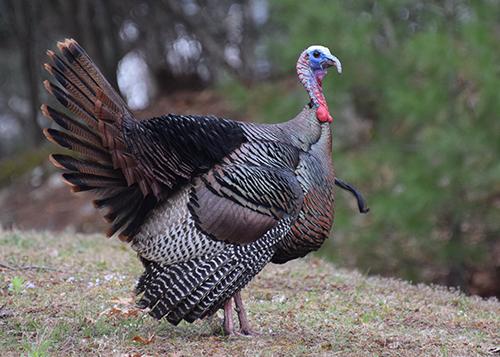
The 2022 regular Spring Turkey Hunting Season runs from Wednesday, April 27 through Saturday, May 28 (excluding Sundays). Turkey hunting requires a great deal of skill and advance planning to be safe and successful. To guarantee a memorable spring turkey hunting experience, hunters must follow all safety recommendations and hunting regulations.
Junior Hunter Training Days: Each year, Connecticut designates specific days when experienced adult hunters are encouraged to take a youth hunting, helping them learn safe and effective hunting practices, develop observational skills, and gain confidence and a comfort level needed to further their hunting skills. The 2022 Spring Turkey Junior Hunter Training Days take place Saturday, April 16 through Saturday, April 23 (excluding Sunday).
More on turkey hunting season information . . .
| |
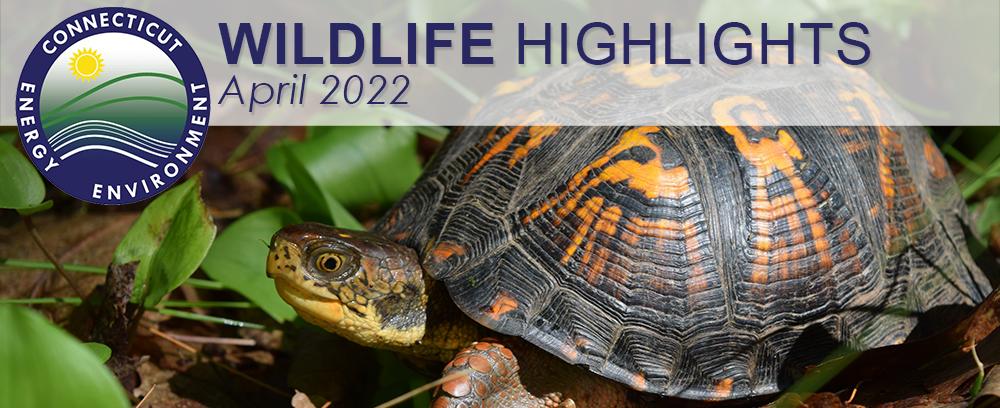
Species of the Month: Eastern Box Turtle | |
|
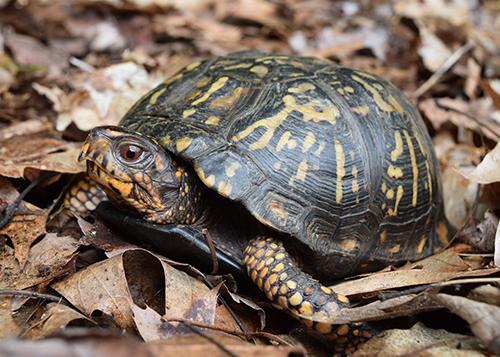
If you end up hiking in the woods this spring, there is a chance you may come across an eastern box turtle! These terrestrial turtles are emerging for the first time this year after spending the winter in shallow burrows of loose soil where they were concealed by leaf litter or small brush piles. Once they have emerged, box turtles quickly begin feeding and searching for mates. Box turtles are omnivorous and will feed on a variety of food items, including earthworms, slugs, snails, insects, frogs, toads, small snakes, carrion, leaves, grass, berries, fruits, and fungi.
Male box turtles are often more brightly colored than females and typically have bright red eyes. The breeding season begins in April and may continue through fall. Box turtles usually do not breed until they are about 10 years old. This late maturity is a result of their long lifespan, which can range up to 50 to even over 100 years of age!
Despite being a long-lived turtle, the eastern box turtle is facing many conservation challenges, including loss of habitat and illegal collection for the pet trade. You can do your part to protect wild turtles by leaving them in the wild, watching out for turtles that cross roadways (especially during May and June), and making your backyard wildlife-friendly by planting native plants. If you are fortunate enough to come across a box turtle in your outdoor travels, feel free to take photos but limit your interaction and allow the turtle to be on its way. You can also report your sighting to our Natural Diversity Data Base.
More on the eastern box turtle . . .
| |
|
Stay Connected!
Follow us on Social Media
| |
|
-- Quick Links --
Your Feedback Is Important to Us!
Send your comments or suggestions to deep.ctwildlife@ct.gov
|  | The Connecticut Department of Energy and Environmental Protection is an Affirmative Action/Equal Opportunity Employer that is committed to complying with the requirements of the Americans with Disabilities Act. If you are seeking a communication aid or service, have limited proficiency in English, wish to file an ADA or Title VI discrimination complaint, or require some other accommodation, including equipment to facilitate virtual participation, please contact the DEEP Office of Diversity and Equity at 860-418-5910 or by email at deep.accommodations@ct.gov. Any person needing an accommodation for hearing impairment may call the State of Connecticut relay number - 711. In order to facilitate efforts to provide an accommodation, please request all accommodations as soon as possible following notice of any agency hearing, meeting, program or event. | | | | |