Please share this edition of Wildlife Highlights with other outdoor enthusiasts
and help our subscription list grow!
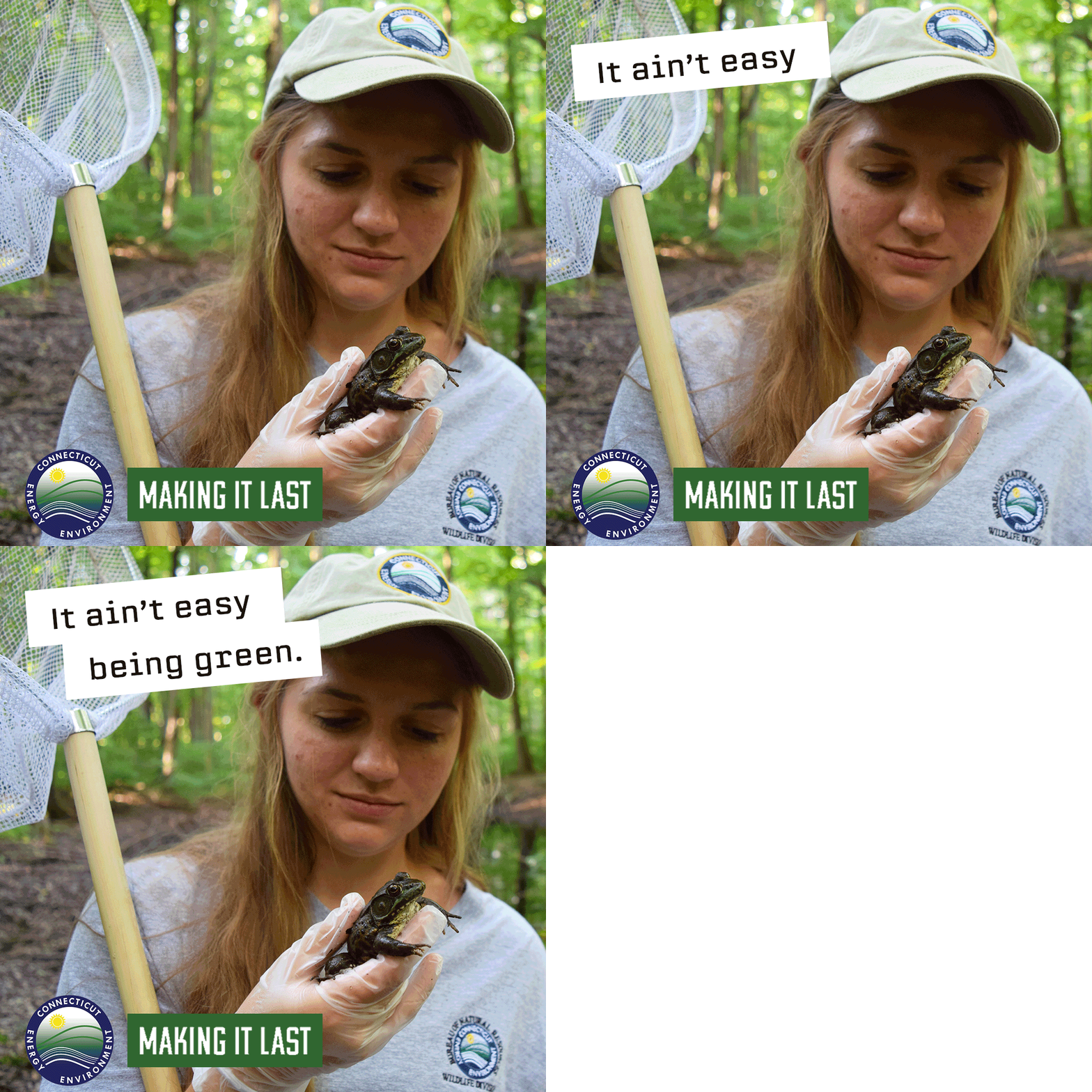
Did you know that many of Connecticut's amphibians and reptiles are at risk of disease? Thanks to State Wildlife Grant funding, our wildlife biologists are able to routinely monitor for disease threats to keep species like the green frog here for generations to come.
#MakingItLast

Hunter Safety Courses Available Now
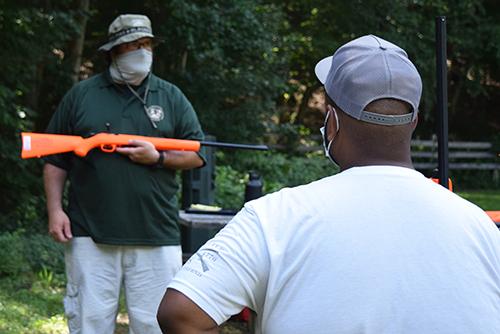
We are pleased to announce that our Conservation Education/Firearms Safety (CE/FS) hunting classes are available now in a modified format compliant with current COVID-19 guidelines. Students are required to complete all online prerequisites PRIOR to registering for a modified field day event. Please note: Students will not be allowed to participate if they do not bring and wear proper personal protective equipment (PPE) throughout the entire field day.
 
Fishing Line Recycling Receptacles
Carelessly discarded fishing line can seriously harm or kill wildlife. Animals can become entangled in, or ingest, the line, which can cause starvation, strangulation, and deep wounding. Wildlife usually cannot survive the injuries they sustain from entanglements. DEEP has installed monofilament fishing line recycling receptacles at inland and coastal sites around the state to encourage less waste line in the environment. The disposed fishing line is collected by volunteers, and then sent to a company that recycles it to make underwater habitat structures for fish. #ResponsibleRecreation

Your Wildlife Sightings Help Conservation
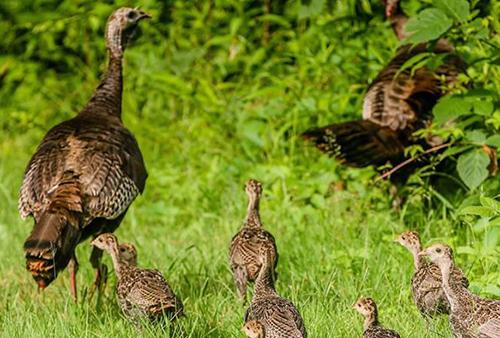
Photo courtesy of Michele Nevue Titus
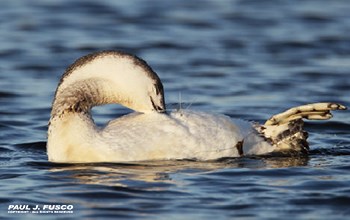
Community science efforts are becoming more and more important for collecting data about our wildlife species in Connecticut. The Wildlife Division is seeking help from nature enthusiasts across the state to document a variety of plants and animals. One on-going project is the Turkey Brood Survey, continuing until August 31. Sightings of turkey hens and poults are being recorded for the annual survey.

Following Firewood Regulations Is Another Way to Recreate Responsibly
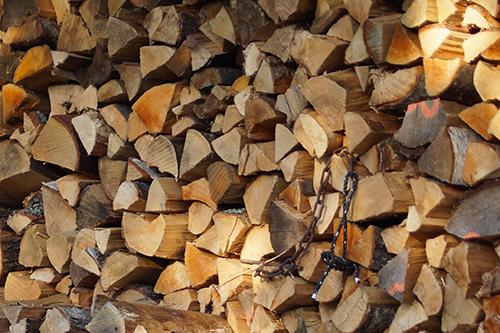
Enjoying a campfire is one of the more memorable parts of a camping trip. While planning your trip or backyard bonfire, make sure your firewood is not brought in from another state. State and federal firewood regulations help protect against the spread of invasive insect pests (including the emerald ash borer) that could devastate native trees in Connecticut. If you are travelling out of state for your camping trip, do not bring wood from your backyard. Instead, plan on purchasing wood near your destination.
#ResponsibleRecreation

American Bird Conservancy: Songbird Stamp Survey
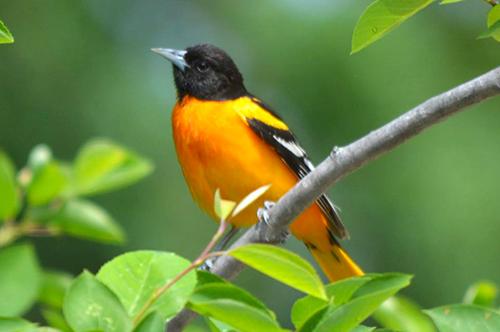
Hanna McBrearty/USFWS
How about a Songbird Stamp to boost bird conservation? A landmark study in 2019 concluded that the United States has lost 3 billion birds over the past 50 years. A bright spot in the study was that the number of migratory waterfowl has actually increased as a result of effective conservation efforts such as the Duck Stamp, which has raised over $1 billion for wetland conservation. The creation of a Songbird Stamp could establish a similar federal program to the Duck Stamp and feature different migratory songbirds on a new stamp each year. Funds from Songbird Stamp sales could be used to support migratory songbird conservation and National Wildlife Refuges. The American Bird Conservancy is requesting feedback from the conservation community to determine if there is broad support for this initiative, which would require legislation. Please take a moment and complete this short survey to provide your feedback.

Be on the Lookout for Invasive Insects
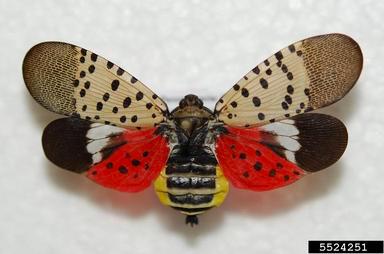
Adult Spotted Lanternfly (CAES)
Have you seen this colorful, showy insect? The spotted lanternfly is an invasive exotic insect that has the potential to be very destructive to many types of agricultural crops and trees. Although there is no known established population in Connecticut at this time, the DEEP Forestry Division would like to know if you have seen a spotted lanternfly (there was a finding in Southbury last fall). As is the case with many invasive species, early detection is critical. 

August is also the time of year to be on the lookout for the invasive Asian Longhorned Beetle (ALB). Although the ALB is not known to occur in Connecticut at this time, Forestry Division staff are always on the lookout during this time of year when the adults would be active.

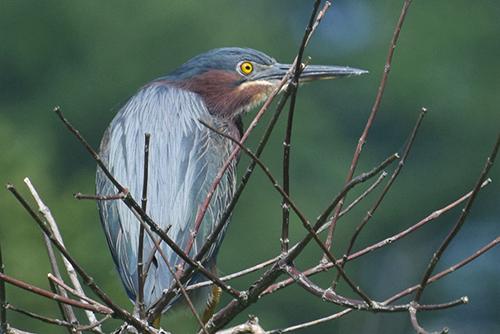
Species of the Month: Green Heron
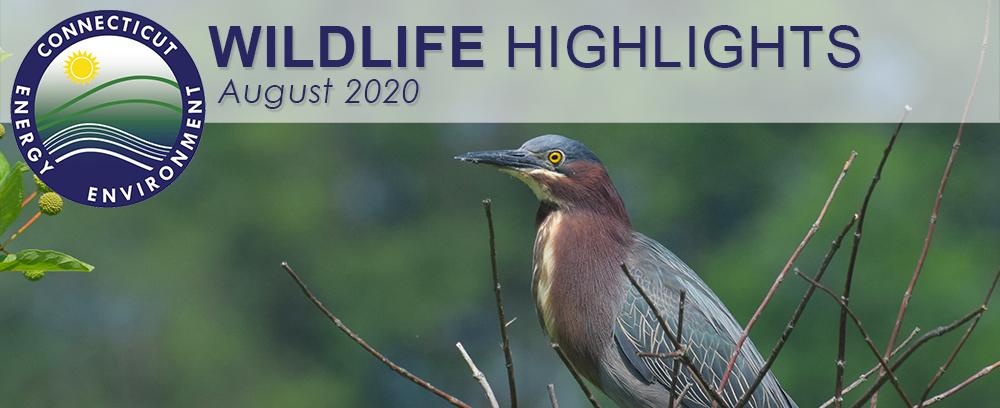
The green heron is small compared to the more commonly seen great blue heron. While larger herons and egrets are easily spotted in open parts of wetlands, the green heron prefers to be along the edge of wetlands where it can easily conceal itself among the vegetation. The green heron has a striking velvet-green back, rich chestnut body, and a dark cap often raised into a short crest. This bird is a master of catching fish with its dagger-like bill and on occasion has been known to lure in fish by using twigs or insects as bait.

-- Quick Links --
Your Feedback Is Important to Us!
Send your comments or suggestions to deep.ctwildlife@ct.gov

Hunting and fishing equipment purchases and license fees fund hunting and fishing programs and wildlife conservation.

You are making a difference and we thank you for your support!
Stay Connected!

You'll find each issue packed with information about wildlife, hunting, fishing, and natural resource-related issues in Connecticut.
The Connecticut Department of Energy and Environmental Protection is an Affirmative Action/ Equal Opportunity Employer committed to complying with the requirements of the Americans with Disabilities Act. Please contact us at 860-418-5910 or deep.accommodations@ct.gov if you: have a disability and need a communication aid or service; have limited proficiency in English and may need information in another language; or if you wish to file an ADA or Title VI discrimination complaint.