|
Please share this edition of Wildlife Highlights with other outdoor enthusiasts
and help our subscription list grow!
| |
The Benefits of Prescribed Fire | |
|
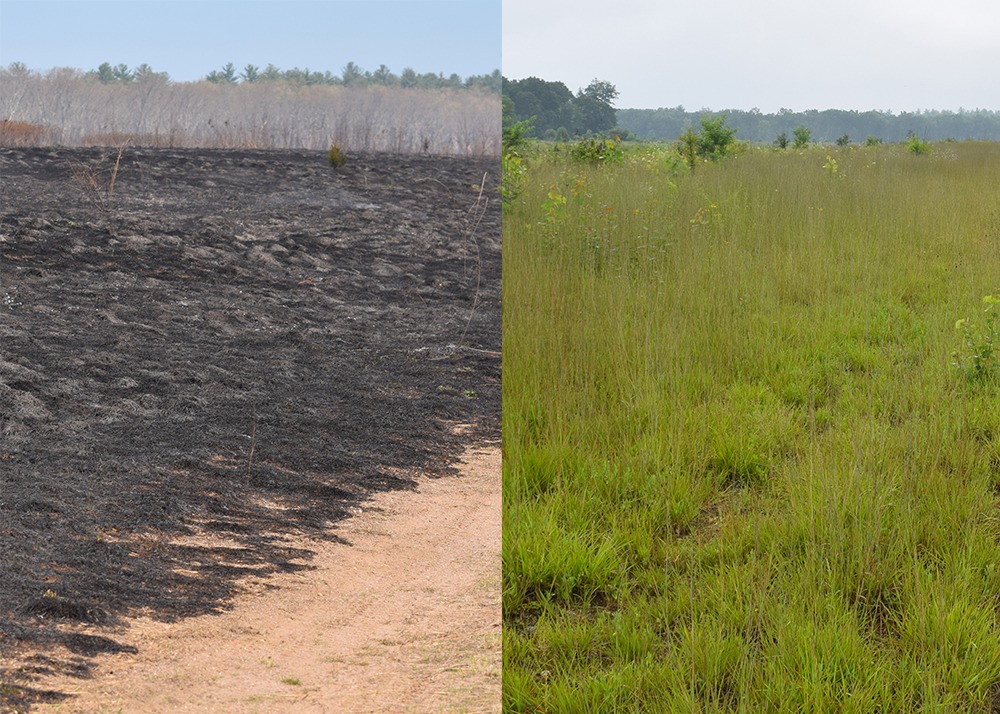
A recent visit to Suffield Wildlife Management Area (WMA) revealed a host of native wildflowers and warm season grasses. Swallows, cedar waxwings, and indigo buntings are just a few of the native birds that can be seen seen flying throughout this grassy open space. All of this activity comes a few months after when DEEP staff conducted a prescribed fire earlier this spring.
So, how does fire help native plants, pollinators, and wildlife? Prescribed fire is an effective way to sustain and enhance vital grassland habitat by suppressing invasive plant species and returning important nutrients to the soil, allowing favorable native grassland species to flourish.
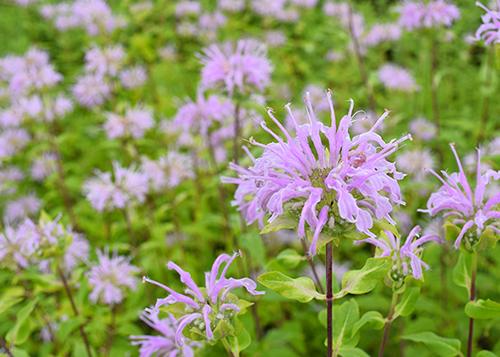
Prescribed fire is carefully controlled and can only be done under strict weather conditions and narrow seasonal timing. This activity was conducted early enough in the year before grassland bird species return to nest and is carefully monitored by experts. After the fire has taken place, it does not take long for native species, such as little and big bluestem, switchgrass, deer-tongue grass, black-eyed susan, white meadowsweet, milkweed, and wild bergamot to fill in!
| |
The Natural Diet of a Connecticut Black Bear | |
|
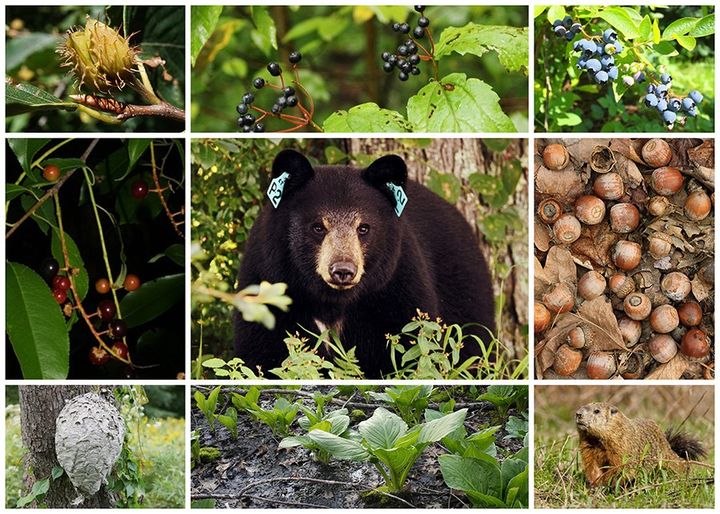
What do these pictured food items have in common? They are all part of a black bear’s natural diet. Contrary to popular belief, Connecticut’s forests have a wealth of natural foods and places for black bears to live.
As omnivores, black bears eat a combination of plant and animal matter, with a majority of their diet (at least 60%) consisting of plant matter. The time of year also dictates what bears are likely to be feeding on. For example, wetlands are particularly important in spring when emerging plants, like skunk cabbage, are one of the few available foods.
Other common diet options include grasses, forbs, leaves, nuts (i.e., beechnuts), wild blueberries, black cherries, and berries from mapleleaf viburnum. Mature forests that provide acorns are particularly beneficial in late summer and fall when bears are fattening up for the coming winter.
The carnivorous side of a black bear’s diet includes ants and bees, carrion, and (on occasion) small mammals and deer, especially deer fawns during late spring and early summer.
What isn’t part of a black bear’s natural diet? Garbage, birdseed, and livestock. #BeBearAware and make sure your yard is free of these attractants and your livestock is secured.
More on living with black bears . . .
| |
Save the Date! Bat Appreciation Day is September 17, 2023 | |
|
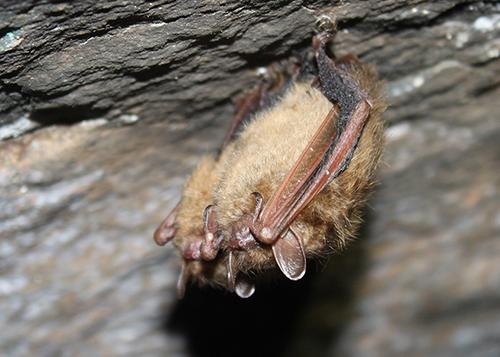
Join the DEEP Wildlife Division and Department of Economic and Community Development (DECD) for a celebration of bats during an event to be held on Saturday September 17, 2023, at the Old New-Gate Prison and Copper Mine in East Granby. Bat Appreciation Day will highlight the story of one of Connecticut’s most intriguing historical sites and its importance to the conservation of endangered species.
This event will feature bat activities for the whole family and include exhibits, bat story time, historical tales, the unique opportunity to sneak a peek at the “bat cave”.
More on Bat Appreciation Day . . .
| |
Eastern Milksnake - A Common Case of Mistaken Identity | |
|
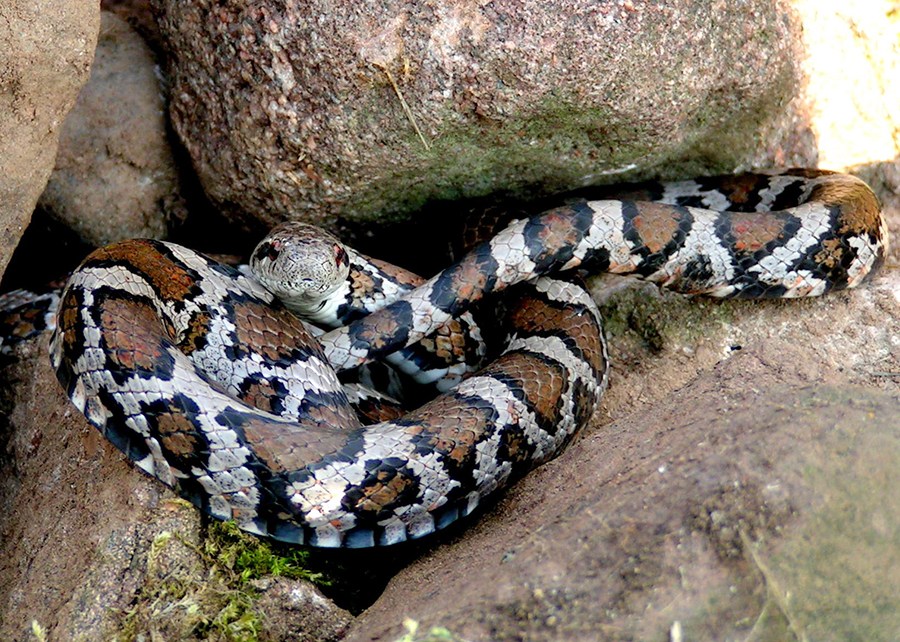
Connecticut is home to 14 species of snakes, and the one pictured here is the non-venomous eastern milksnake. This snake is commonly encountered around homes, outbuildings, and barns where it feeds on its primary food source, rodents. Unfortunately, this snake is often mistaken for the venomous copperhead and wrongfully killed.
Snakes should NEVER be killed. Each year, many snakes are needlessly killed by people because of mistaken identity, fear, and misunderstanding.
If you encounter a milksnake in your yard or while out recreating this season, there is no need to be fearful. Simply observe and enjoy the snake from a distance and allow it to go on its way. If left alone, snakes pose no threat to people. Besides, you can thank the milksnake for helping keep your property free of rodents!
Need help identifying a snake? Email us at DEEP.Wildlife@ct.gov.
More on the milksnake . . .
| |
Help Wildlife with Native Landscaping | |
|
The loss of habitat is the greatest threat to wildlife, but Connecticut homeowners have the ability to provide a haven for a host of birds, pollinators, and many other species through native landscaping.
Planting native trees and shrubs in your yard will provide vital food and shelter for many species that do not benefit from non-native greenery.
The DEEP Wildlife Division and UConn's Sustainable Landscape Program developed a comprehensive list to assist homeowners, landscapers, and conservation organizations in locating native planting stock for wildlife habitat enhancement. This document is a great place to start for someone looking to help benefit Connecticut's wildlife through native landscaping.
Native Tree and Shrub Availability List . . .
| |
Oak Apple Galls - Nature's "Christmas Tree" Ornaments | |
|
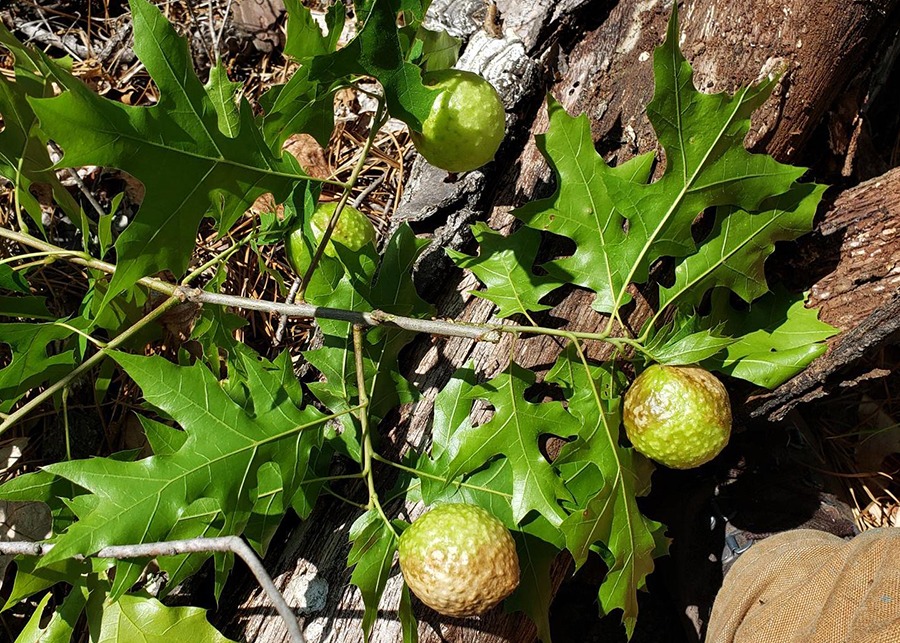
The DEEP Forestry Division frequently receives questions regarding golf ball-sized structures seen hanging from trees. These unique structures are "oak apple galls", and they are created by tiny wasps!
The galls are "custom designed" nests for tiny wasp larvae that live at the center of them. Galls provide protection and nutrition from the host plant. They are produced by a parent wasp that essentially “hijacks” leaf tissue to form a self-serving nursery.
The wasp injects a plant with gall-producing chemicals that duplicate plant hormones, along with its eggs. Once an egg hatches and the gall is developed, the chemicals continue to instruct the plant to produce nutritious tissues to feed the larvae until they are mature enough to exit the gall and fly off. At that point, you may find a discarded brown gall on the ground, with a tiny exit hole left by the adult.
These tiny wasps are harmless to humans and cause little harm to the trees. There are many other types, sizes, and shapes of galls of other insect species, but this is one of the most prominent curiosities found by hikers.
| |
2022 Connecticut Deer Program Summary Now Available | |
|
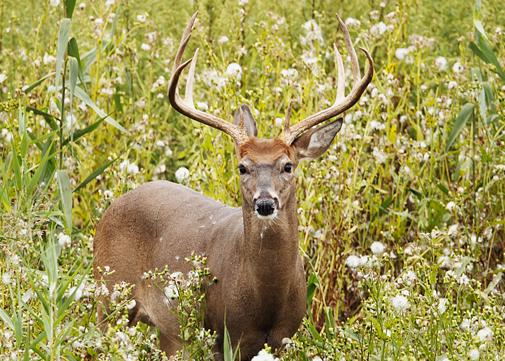
Deer hunting season is just around the corner! Get some insight on last year's deer season by checking out the 2022 Connecticut Deer Program Summary, which includes harvest statistics by season, research activities, population dynamics of Connecticut’s deer population, and more!
New to deer hunting or interested in taking up the activity again? The Deer Hunting Roadmap will help you get started!
View the 2022 summary . . .
| |
Cicada Killers - No Need to Fear | |
|
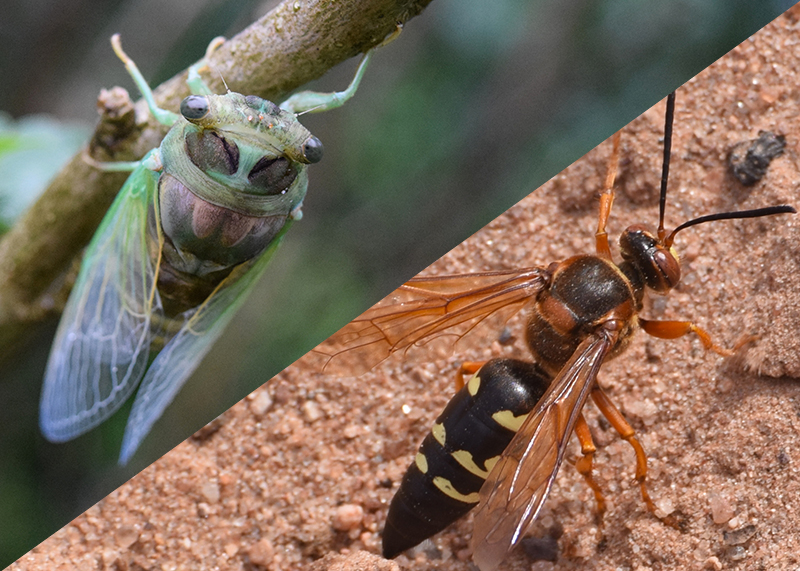
A familiar sound of summer is the call of the annual, or dog-day, cicada (top left). Despite the loud sound created by the males, the cicada’s cryptic camouflage makes them difficult to spot, especially when calling from a tree or other vegetation.
But the cicada’s camouflage is not always enough to keep it safe from predators, especially from the cicada killer (bottom right)! This large, ground-nesting wasp actively hunts cicadas and will paralyze its prey with its stinger. The cicada killer wasp then hauls the cicada back to its underground burrow where it will eventually become food for the wasp’s larvae.
Should you be concerned if you come across a cicada killer? Absolutely not. This wasp is rarely aggressive towards people and is often misidentified as the sensationalized giant Asian hornet or “murder hornet”, which is NOT found in Connecticut.
| |
Final Push for the Annual Turkey Brood Survey | |
|
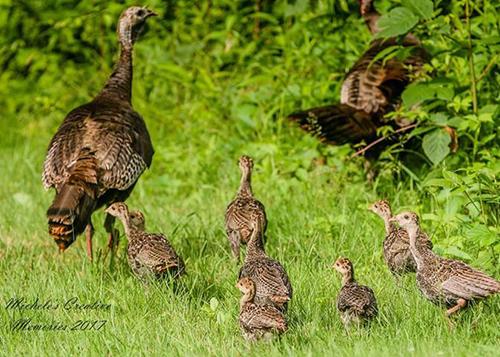
Connecticut residents still have until August 31, 2023 to keep record of their wild turkey sightings.
To submit your sightings, simply complete the online form after each turkey brood sighting (June 1 and August 31). Paper copy submissions will still be accepted at the end of the season (starting September 1). Download a Wild Turkey Observation Form to record your observations (instructions are found on the data sheet).
Completed paper Observation Forms should be returned, starting September 1, to: Will Cassidy, DEEP Wildlife Division, Franklin WMA, 391 Route 32, North Franklin, CT 06254 (860-418-5961) or email william.cassidy@ct.gov.
More on the Wild Turkey Brood Survey . . .
| |
Species Spotlight: Northern Leopard Frog | |
|
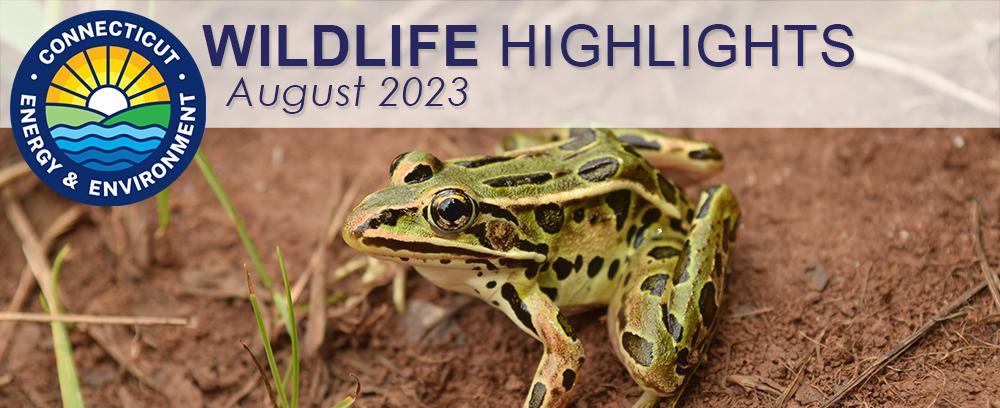
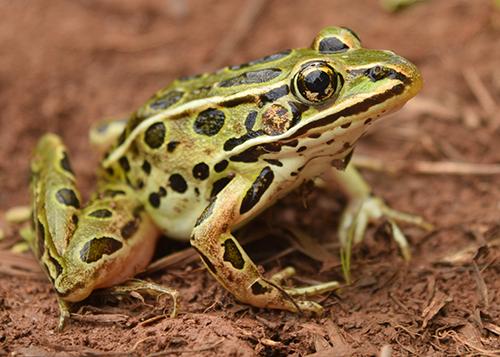
The northern leopard frog is a state species of special concern that is typically found in open, grassy, low-elevation wetlands. This incredibly agile frog is known for moving across the landscape, especially during the summer months, where it can frequently be observed in fields, lawns, and other grassland habitats.
The leopard frog is often confused with the much more common and widespread pickerel frog. Pickerel frogs have more rectangular or squarish spots with a short blunt snout, whereas the leopard frog has rounded spots with a pointed snout and is often much more green in appearance.
| |
|
Stay Connected!
Follow us on Social Media
| |
|
-- Quick Links --
Your Feedback Is Important to Us!
Send your comments or suggestions to deep.ctwildlife@ct.gov
|  | |
The Connecticut Department of Energy and Environmental Protection is an Affirmative Action/Equal Opportunity Employer that is committed to complying with the requirements of the Americans with Disabilities Act. If you are seeking a communication aid or service, have limited proficiency in English, wish to file an ADA or Title VI discrimination complaint, or require some other accommodation, including equipment to facilitate virtual participation, please contact the DEEP Office of Diversity and Equity at 860-418-5910 or by email at deep.accommodations@ct.gov. Any person needing an accommodation for hearing impairment may call the State of Connecticut relay number - 711. In order to facilitate efforts to provide an accommodation, please request all accommodations as soon as possible following notice of any agency hearing, meeting, program or event.
This program receives Federal financial assistance from the U.S. Fish and Wildlife Service.
Under Title VI of the 1964 Civil Rights Act, Section 504 of the Rehabilitation Act of 1973, Title II of the Americans with Disabilities Act of 1990, the Age Discrimination Act of 1975, and Title IX of the Education Amendments of 1972, the U.S. Department of the Interior prohibits discrimination on the basis of race, color, national origin, age, sex, or disability. If you believe that you have been discriminated against in any program, activity, or facility, or if you need more information, please write to:
Office of Diversity, Inclusion and Civil Rights
U.S. Department of the Interior 1849 C Street, NW
Washington, D.C. 20240
| | | | |