|
Please share this edition of Wildlife Highlights with other outdoor enthusiasts
and help our subscription list grow!
| |
Recovering America's Wildlife Act Gains Momentum | |
|
Last month, a major win for America’s wildlife was accomplished, renewing hope for bipartisan cooperation in the U.S. Congress. The U.S. House Committee on Natural Resources voted in favor of passing the Recovering America’s Wildlife Act (H.R.2773) out of committee to advance the bill one important step closer toward passage!
Without investing in proactive wildlife conservation, scientists estimate that one-third of wildlife species in the United States are at risk of becoming threatened or endangered. The Recovering America's Wildlife Act (RAWA) would dedicate $1.3 billion annually to state fish and wildlife agencies to implement their science-based wildlife action plans and an additional $97.5 million for tribal fish and wildlife managers to conserve fish and wildlife on tribal lands and waters.
More on this critical bi-partisan legislation . . .
| |
Inspiring Youth Conservation Awareness through the Arts | |
|
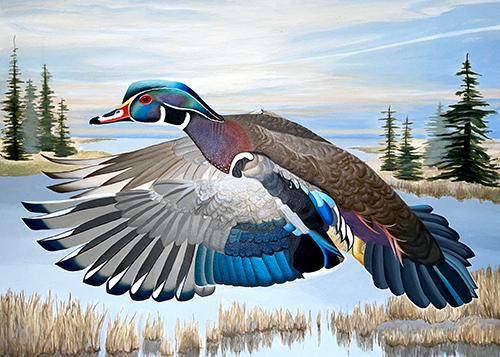
Calling all creative young artists and art educators in Connecticut! Entries are now being accepted for the 2022 Connecticut Junior Duck Stamp Art Competition, part of a U.S. Fish and Wildlife Service environmental education program administered since 1987 by the Connecticut Waterfowl Association (CWA). This contest is open to all students, kindergarten through grade 12, who are Connecticut residents. As part of a concerted effort to encourage more young people to explore the natural world and increase conservation awareness, the Connecticut Junior Duck Stamp “Best in Show” winner will be featured as the 2023 Connecticut Migratory Bird Conservation Stamp! The "Best in Show" winner will also be an entry for the Federal Junior Duck Stamp Contest.
Details on how to enter . . .
| |
Newly Conserved Property Has Ties to Martin Luther King, Jr. | |
|
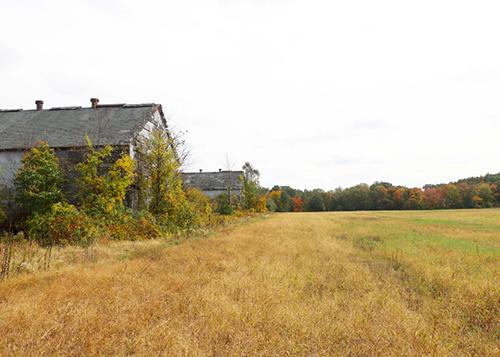
A small farm in Simsbury, Connecticut, where a young Martin Luther King, Jr., once worked, was recently purchased by the Town of Simsbury with the help of a grant from the U.S. Fish and Wildlife Service. The land, known as Meadowood, will now be conserved for future generations to enjoy. The ongoing projects here will include saving the old barns, building trails, maintaining areas of wildlife habitat, and allowing farmers to use areas of farmland. Photo credit: Tricia Andriski/USFWS
More on the historical significance of Meadowood . . .
| |
Late Winter Nesting for Connecticut's Owls | |
|
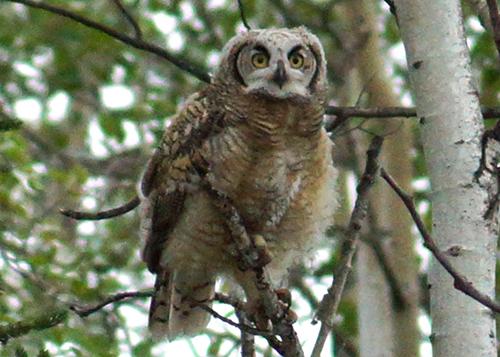
While most bird species wait until warmer weather to begin breeding and nesting, a few choose to get a head start, working through the cold to raise their young. Owls generally begin mating and nesting in mid-winter; laying and incubating their eggs months ahead of most other raptors (bald eagles also nest early). One advantage for starting so early is that young owls, like the great horned pictured here, will have more time to grow and mature into effective predators over the summer and fall before the next winter.
Nesting owls are quite vocal this time of year, as pairs frequently communicate with each other, share incubation duties, and defend their territory from other owls and potential threats.
The next time you are outside on a quiet winter night, listen for their distinctive calls. The three species most likely to be heard across Connecticut are great horned owls, barred owls, and eastern screech-owls.
| |
Upcoming Habitat Management Projects | |
|
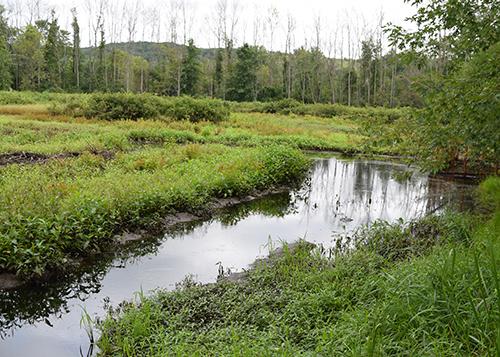
The Wildlife Division’s Habitat Program is responsible for managing a diversity of habitats for Connecticut's wildlife species on our system of 109 state-owned wildlife management areas (WMAs), as well as state forests and other state lands. Unlike state parks, wildlife management areas are managed primarily for the conservation and enhancement of fish and wildlife habitat while also providing opportunities for fish and wildlife-based recreation, such as fishing, hunting, trapping, and wildlife observation. This year, several projects are planned to greatly enhance habitat diversity.
Upcoming habitat projects . . .
| |
Food Webs Shrink During Winter | |
|
Food webs expand on the concept of a food chain to include a web of connections between organisms big and small. In general, food webs map the directions that energy flows from sun to plant, to herbivore to carnivore, to decomposition, and so on. As seasons change, so too do local food webs; think about how many birds join and then leave the local food web after spring and fall migrations. In winter, primary energy production from plants drops greatly, leading to an overall decrease in the size (fewer organisms) and complexity (less connections) of food webs.
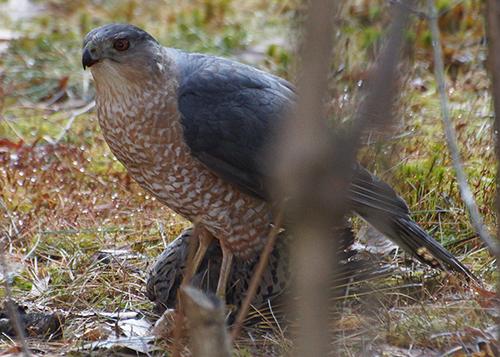
Native plant communities help provide stability to food webs all year and are especially important in winter as food webs shrink. Despite many plants going dormant in winter, they can continue to provide cover and food to wildlife through the coldest times of the year. For example, seeds produced by herbaceous native plants feed flocks of overwintering birds like dark-eyed juncos and white-throated sparrows, along with many species of small mammals. These foragers are then available for predators like Cooper’s hawks and red foxes to hunt when other prey availability is reduced in winter.
Without the presence of diverse native plant communities, local food webs can shrink or break down when seasons go through these large changes.
More on how to enhance your backyard with native plants . . .
| |
Help Save Wildlife with Your Taxes | |
|
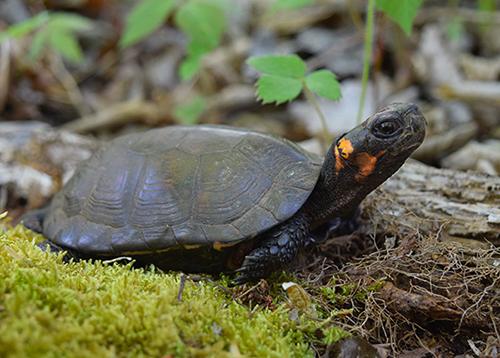
When doing your Connecticut state income taxes this year, consider making a donation to the "Endangered Species/Wildlife Income Tax Check-Off Fund". This fund was created in 1993 by the State Legislature to allow Connecticut state income taxpayers to voluntarily donate portions of their tax refund to support efforts aimed at helping Connecticut's endangered species, natural area preserves, and watchable wildlife. From acoustic bat monitoring, to tern recovery efforts, to bog turtle conservation research, multiple projects have been fully or partially funded by the Connecticut "Endangered Species/Wildlife Income Tax Check-off Fund".
More on the Wildlife Income Tax Check-Off Fund . . .
| |
Native Plants and Shrubs Provide Food for Wildlife Year-round | |
|
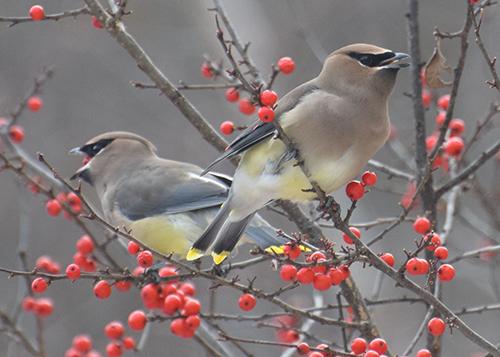
GULP! The cedar waxwing is a year-round Connecticut resident and is one of the few North American birds that specializes in eating fruit. The cedar waxwings pictured here are quickly gobbling down bright red berries produced by a winterberry shrub. You can attract cedar waxwings, eastern bluebirds, American robins, and other birds to your yard by planting native trees and shrubs that provide berries that persist through winter. Some of these species include winterberry, serviceberry, cedar, and dogwood. Many homeowners do not realize that many of the plants we add to our yards are not native to the United States and provide little to no wildlife value. Now is a great time of year to start making plans on how you can make your yard more wildlife friendly by planting native plants.
More on the importance of native landscaping . . .
| |
Join the 2022 Great Backyard Bird Count | |
|
Calling all nature enthusiasts, birders, photographers, sportsmen and women, and community scientists! This year's Great Backyard Bird Count (GBBC) is taking place on February 18-21, 2022. The Cornell Lab of Ornithology and National Audubon Society launched the GBBC in 1998, the first online community-science project to collect data on wild birds.
Today, more than 220,000 people worldwide participate in the four-day count each February to create an annual snapshot of the distribution and abundance of birds.
To participate, all you have to do is tally the numbers and kinds of birds you see and enter the data online, including from several smartphone apps. Any photos you take of birds can also be entered. This year, there will be an informational webinar for birders of all ages that will help you prepare for the big event!
More on the GBBC . . .
| |
Species of the Month: Snowshoe Hare | |
|
Lagomorphs are a taxonomic order of mammals which includes rabbits, hares, and pikas. Connecticut's native rabbit is the New England cottontail and our native hare is the snowshoe hare. The omnipresent eastern cottontail is not actually native to the state, but was introduced in the early 20th century from the southern United States.
The snowshoe hare, which is sometimes called the varying hare, is a cryptic species known for its seasonal coat color changes, varying from white in winter to brown in the spring, summer, and fall. Along the southern limits of their range, some hares can survive without turning white in winter where there is limited snow cover. Snowshoe hares have large hind feet which help it to move better in deeper snow. When the movements of other small mammal are limited with deep snow cover, the snowshoe hare can cover more area to forage and more easily evade predators.
Snowshoe hares range from Alaska east through Canada and the northern U.S. In Connecticut, hares are uncommon, but can be found in some remnant populations along the northern border towns.
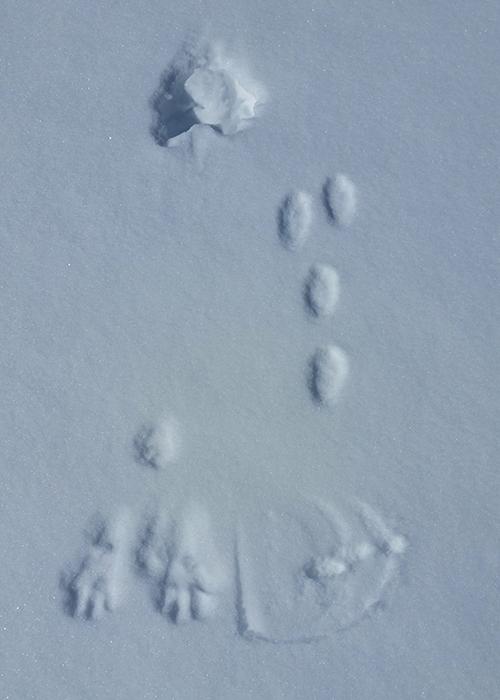
One of the easiest ways to identify snowshoe hares is through their tracks. Their large feet are substantially larger than cottontail tracks.
More on the snowshoe hare . . .
| |
|
Stay Connected!
Follow us on Social Media
| |
|
-- Quick Links --
Your Feedback Is Important to Us!
Send your comments or suggestions to deep.ctwildlife@ct.gov
|  | The Connecticut Department of Energy and Environmental Protection is an Affirmative Action/Equal Opportunity Employer that is committed to complying with the requirements of the Americans with Disabilities Act. If you are seeking a communication aid or service, have limited proficiency in English, wish to file an ADA or Title VI discrimination complaint, or require some other accommodation, including equipment to facilitate virtual participation, please contact the DEEP Office of Diversity and Equity at 860-418-5910 or by email at deep.accommodations@ct.gov. Any person needing an accommodation for hearing impairment may call the State of Connecticut relay number - 711. In order to facilitate efforts to provide an accommodation, please request all accommodations as soon as possible following notice of any agency hearing, meeting, program or event. | | | | |