|
Please share this edition of Wildlife Highlights with other outdoor enthusiasts
and help our subscription list grow!
| |
Black Bear Dens Come in All Shapes and Sizes | |
|
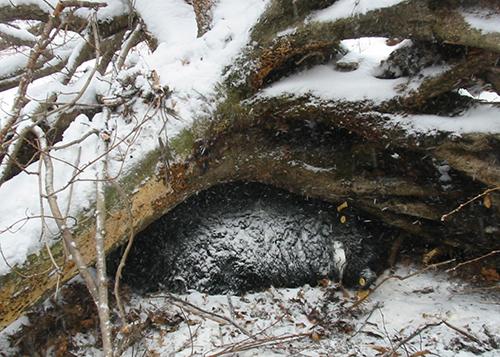
Despite the mild winter, many black bears are now denning. Bear dens come in all shapes and sizes, and some of the most common dens include brush piles, slash piles, or fallen trees. Black bears may also take advantage of rock crevasses and ledges and hollow trees as places to spend the winter. In some cases, a black bear may even decide that its “den” is simply resting at the foot of a tree. These ground nests are usually just a sparse mat of leaves and twigs and are typically located in thick vegetation, such as mountain laurel. Bears are also known to den under decks and sheds in people’s backyards.
While denning straight through most of winter is necessary for pregnant female bears, other bears can remain active, especially when temperatures are mild and food is available. Even if you do not live in an area with regular bear activity, you should "Be Bear Aware" year-round.
More on how bears spend the winter . . .
| |
Remaining Vigilant for Chronic Wasting Disease | |
|
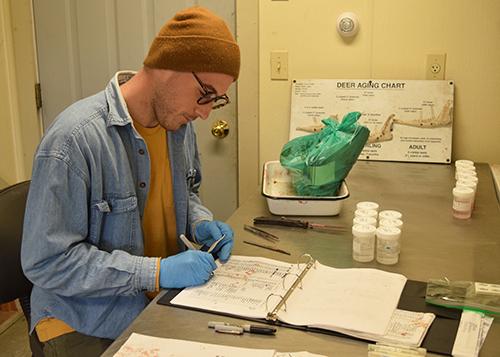
It was a very busy season for Wildlife Management Institute contractor Nathan Sajkowicz. Working with the DEEP Wildlife Division, Nate is responsible for testing white-tailed deer for chronic wasting disease (CWD) as part of the DEEP Wildlife Division’s proactive management strategy.
The exact origin of CWD is unknown. It was first recognized as a syndrome in captive mule deer held in wildlife research facilities in Colorado in the late 1960s, but it was not identified as belonging to a family of diseases known as transmissible spongiform encephalopathies (TSE) until the 1970s. CWD is a disease of the brain and nervous system that attacks the brains of deer, elk, and moose and produces small lesions that eventually result in death.
Since sampling efforts began in 2003, the Wildlife Division has tested over 9,000 deer and no cases of CWD have been detected in Connecticut, as well as in New England.
Prior to 2005, the disease had only been found in North America west of Illinois. In 2005, CWD was documented in captive and free-ranging herds in New York and in free-ranging herds in West Virginia. In 2012, CWD was documented in captive and free-ranging deer in Pennsylvania. Connecticut and all other northeastern states have taken measures to prevent the spread of CWD.
Although CWD has not been documented in Connecticut or New England, it is important to remain vigilant by regularly testing deer using random surveillance of hunter-harvested and road-killed deer, and targeted surveillance of suspect animals (exhibited some symptoms consistent with CWD).
More on CWD and other wildlife diseases . . .
| |
Enter the Connecticut Junior Duck Stamp Art Contest | |
|
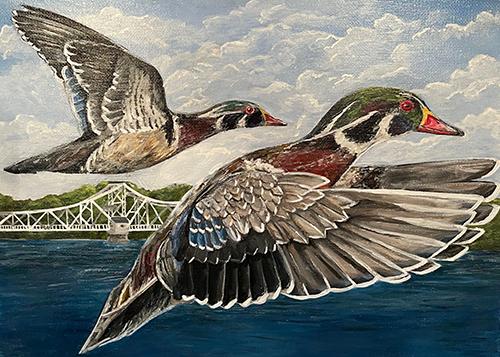
Do you know a young artist that has an interest in the outdoors? If so, encourage them to participate in the annual Connecticut Duck Stamp Art Competition. This competition is open to all students, kindergarten through grade 12, who are Connecticut residents. To enter, students create and submit a drawing or painting featuring native waterfowl (ducks or geese). The winning artwork will be featured on the 2024 Connecticut Migratory Bird Conservation Stamp. Last year, Julianna Cazassa took second place in the 10-12 grade age group with a painting of wood ducks (pictured). A major goal of this program is to encourage young people to explore the natural world and increase conservation awareness for wildlife and the natural areas Connecticut has to offer. There is no cost to participate, and submissions must be postmarked by March 15, 2023.
Contest guidelines, entry forms, and more . . .
| |
Where Do Bats Go for the Winter? | |
|
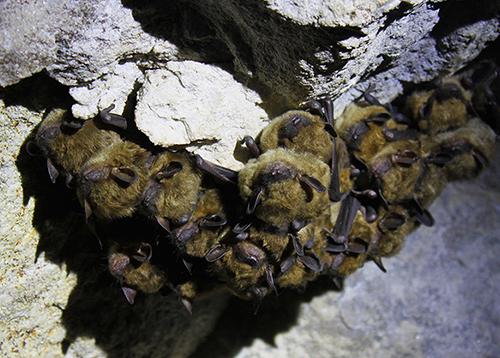
The nine species of bats in Connecticut are categorized into one of two general groups; cave bats or tree-roosting bats. Cave bats, including the big brown bat (pictured), migrate regionally to cavernous spaces, often below ground where they hibernate during the colder months of the year. These spaces often include abandoned mines, caves, and other underground structures with higher levels of humidity.
Tree-roosting bats, including the eastern red, silver-haired, and hoary bat, typically migrate to more southern latitudes to avoid colder temperatures. You can report sightings of live and dead bats seen in late December through mid-March to deep.batprogram.ct.gov.
More on bats of Connecticut . . .
| |
Highlighting Connecticut's Charter Oak | |
|
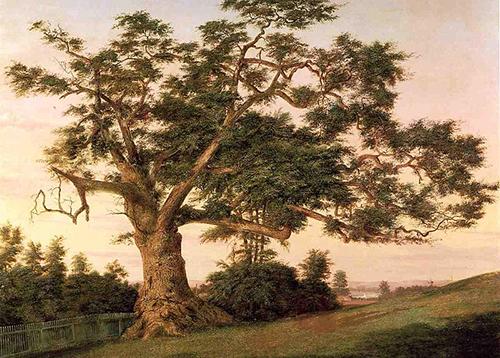
Chris Martin, Connecticut’s State Forester, recently participated in a podcast dedicated to Connecticut’s venerated Charter Oak. Produced by This Old Tree (buzzsprout.com), this podcast provides an in-depth history of when King James II of England threatened to revoke the precious Charter of Connecticut in 1687 and sent one of his men to retrieve it. That meant an end to the colony's limited democracy and independence. But before the Charter was exchanged during a key meeting, a hero slipped out of the room with it under his arm and hid it within the cavity of an old oak tree. That tree - the Charter Oak - is now a state icon.
Learn about Connecticut’s most beloved tree and how the State mourned its demise after a great storm in 1856. A pictorial history may be viewed HERE.
Listen to the podcast . . .
| |
Help Conserve Connecticut's Wildlife this Tax Season | |
|
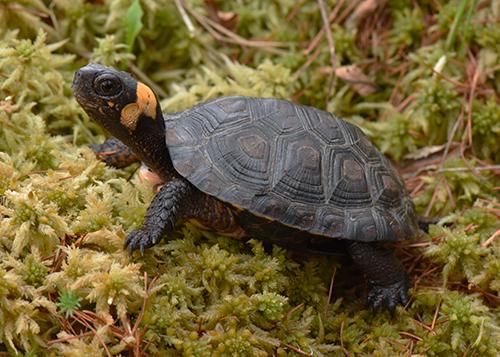
It would be "turtley" awesome of you to consider donating this tax season to the "Endangered Species/Wildlife Income Tax Check-Off Fund". This fund was created in 1993 by the State Legislature to allow Connecticut state income taxpayers to voluntarily donate portions of their tax refund to support efforts aimed at helping Connecticut's endangered species, natural area preserves, and watchable wildlife. From acoustic bat monitoring, to tern recovery efforts, to bog turtle (pictured) conservation research, multiple projects have been fully or partially funded by the Connecticut "Endangered Species/Wildlife Income Tax Check-off Fund". Photo courtesy of Dennis Quinn.
More on the Wildlife Income Tax Check-Off Fund . . .
| |
Species Spotlight: Mallard Duck | |
|
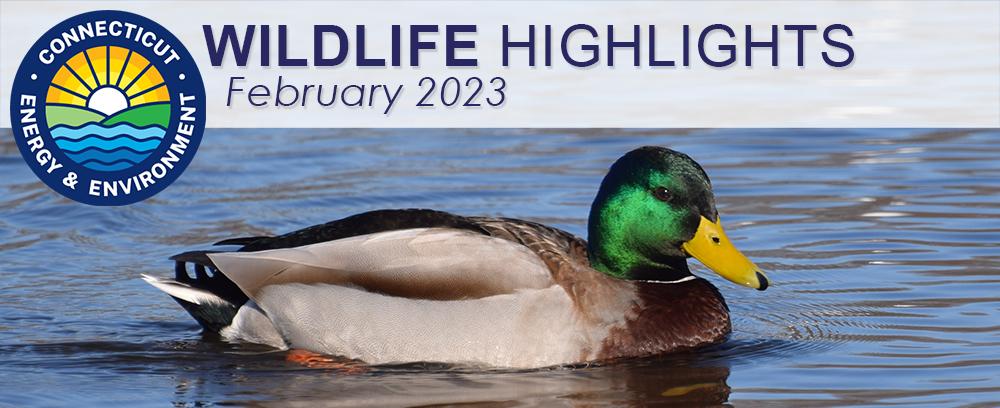
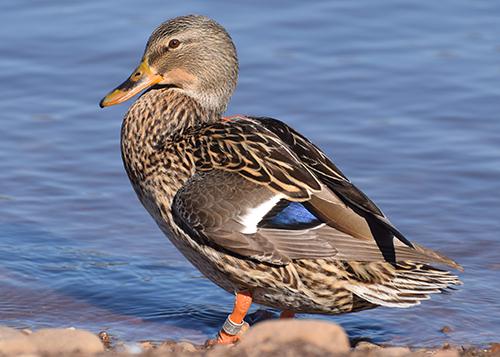
The mallard is a dabbling duck that feeds by tipping forward to submerge its head and neck in search of aquatic vegetation. Mallards are the most adaptable of Connecticut's waterfowl and can be found in both urban and rural wetland or pond habitats.
Back in 2021, DEEP Wildlife Division biologists began assessing nest habitat selection, nesting success, and brood movement of mallard ducks. This study will help evaluate the impacts of three decades of change to Connecticut’s landscape — notably increased development and loss of wetland habitat. The hen pictured is one of several that have been fitted with a very small, lightweight radio transmitter that helps biologists monitor their movements and collect data needed to understand long-term population trends. This study will help ensure that the mallards we enjoy seeing statewide are here for future generations to enjoy.
More on the mallard duck . . .
| |
|
Stay Connected!
Follow us on Social Media
| |
|
-- Quick Links --
Your Feedback Is Important to Us!
Send your comments or suggestions to deep.ctwildlife@ct.gov
|  | |
The Connecticut Department of Energy and Environmental Protection is an Affirmative Action/Equal Opportunity Employer that is committed to complying with the requirements of the Americans with Disabilities Act. If you are seeking a communication aid or service, have limited proficiency in English, wish to file an ADA or Title VI discrimination complaint, or require some other accommodation, including equipment to facilitate virtual participation, please contact the DEEP Office of Diversity and Equity at 860-418-5910 or by email at deep.accommodations@ct.gov. Any person needing an accommodation for hearing impairment may call the State of Connecticut relay number - 711. In order to facilitate efforts to provide an accommodation, please request all accommodations as soon as possible following notice of any agency hearing, meeting, program or event.
This program receives Federal financial assistance from the U.S. Fish and Wildlife Service.
Under Title VI of the 1964 Civil Rights Act, Section 504 of the Rehabilitation Act of 1973, Title II of the Americans with Disabilities Act of 1990, the Age Discrimination Act of 1975, and Title IX of the Education Amendments of 1972, the U.S. Department of the Interior prohibits discrimination on the basis of race, color, national origin, age, sex, or disability. If you believe that you have been discriminated against in any program, activity, or facility, or if you need more information, please write to:
Office of Diversity, Inclusion and Civil Rights
U.S. Department of the Interior 1849 C Street, NW
Washington, D.C. 20240
| | | | |