|
Please share this edition of Wildlife Highlights with other outdoor enthusiasts
and help our subscription list grow!
| |
Bobcat Research Project in its Final Season | |
|
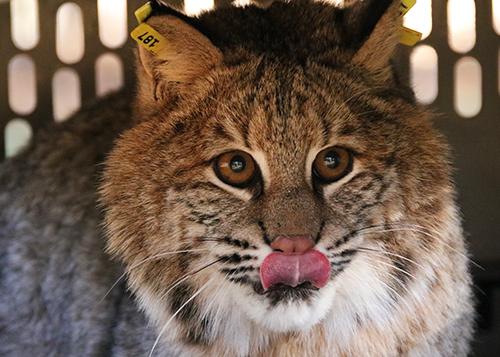
The DEEP Wildlife Division, in conjunction with UConn, is in the final season of its bobcat research project. Initiated in 2017, this study is designed to better understand bobcat habitat use in different housing densities in Connecticut. Biologists want to determine how the state's bobcats meet their needs in both rural and suburban areas, how they interact with each other, as well as how successful bobcats are at reproduction and survival.
This female bobcat was recently fitted with a lightweight GPS radio collar before being released back into the wild. The information collected from the collar will provide biologists unique insights into the world of one of Connecticut’s top predators. Fun fact: the GPS collars are programmed to automatically detach after roughly six months.
More on bobcat research . . .
| |
Connecticut Receives Grant to Restore Saltmarsh Habitat | |
|
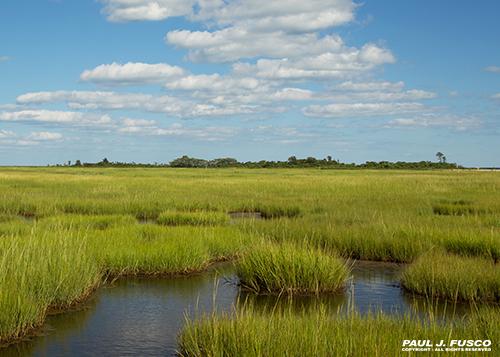
Coastal wetland habitat conservation is critical to ensure that important habitat, wildlife, and coastal communities continue to thrive for future generations. Connecticut is fortunate to be one of the states selected through the National Coastal Wetlands Grant Program. These funds will help us restore 82-acres of saltmarsh habitat in Rocky Neck State Park, East Lyme, and implement the goals of the Governor’s GC3 initiative to improve and enhance coastal saltmarsh habitat to increase resilience to climate change and sea level rise.
More on restoring saltmarsh habitat . . .
| |
How Good Are Your Wildlife Track ID Skills? | |
|
A fresh snowfall offers a great opportunity to get outside and find some wildlife tracks! Whether you are a track ID pro or just a beginner, spending time outdoors looking for tracks during winter can provide unique insights to the species of wildlife that are moving about your property. Despite the colder weather, many of Connecticut’s mammals are quite active and often travel around undetected, but a palette of fresh snow will make you realize we are much closer to nature than you think. This article from Connecticut Wildlife magazine will help hone your track identification skills!
Tracking wildlife during winter . . .
| |
Bald Eagles Are Tidying Up Their Nests | |
|
It is has been roughly 30 years since Connecticut documented its first successful pair of nesting bald eagles. From the 1950s up until 1992, bald eagles were not nesting in Connecticut due to poisoning caused by the pesticide DDT. Since DDT was banned, the recovery of bald eagles has been remarkable. In the past decade alone, the number of bald eagle nesting territories in Connecticut has more than tripled! This time of year, bald eagle pairs begin the process of fixing and enlarging their nests. Nest construction and joint defense of the nesting territory helps strengthen the pair's bond prior to egg laying.
More on bald eagles in Connecticut . . .
| |
Supplemental Feeding of Deer Does More Harm than Good | |
|
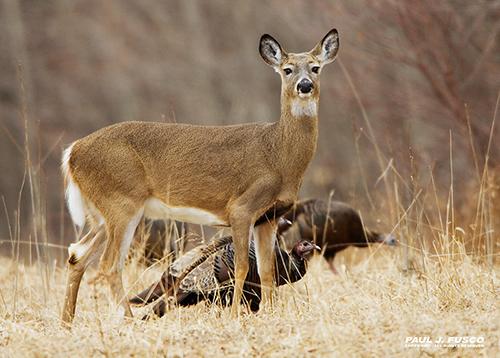
White-tailed deer have unique adaptations that allow them to survive cold winter weather. This includes developing a winter coat that features hollow guard hairs for insulation and a finer undercoat for warmth. Not only do deer have fat reserves that provide them with energy for the winter, but they also decrease their metabolic rate, significantly reducing their food requirements. On particularly cold stretches of winter weather, some people may think they are helping deer by providing food handouts such as hay or corn, but this quite often does more harm than good. Deer have specialized microbes that help digest certain natural food items, but handouts such as hay or corn are not often easily digestible, causing the potential for multiple health-related issues, some of which can be fatal. Remember, wildlife are naturally adapted to cold weather and typically do not require assistance from humans.
More on the negative impacts of supplemental feeding . . .
| |
Don't Let This Tax Season Drive You "Batty" | |
|
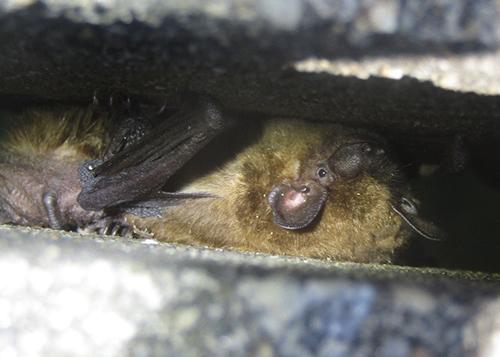
When doing your Connecticut state income taxes this year, consider making a donation to the "Endangered Species/Wildlife Income Tax Check-Off Fund". This fund was created in 1993 by the State Legislature to allow Connecticut state income taxpayers to voluntarily donate portions of their tax refund to support efforts aimed at helping Connecticut's endangered species, natural area preserves, and watchable wildlife. From acoustic bat monitoring to tern recovery efforts to bog turtle conservation research, multiple projects have been fully or partially funded by the Connecticut "Endangered Species/Wildlife Income Tax Check-off Fund".
More on the Wildlife Income Tax Check-Off . . .
| |
Reminder: Be on the Lookout for Chinese Mitten Crab | |
|
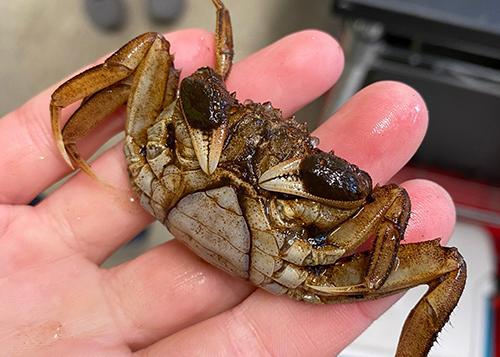
The Chinese mitten crab is an invasive species, meaning it is an animal that is not from this area but is able to live, reproduce and establish a population here. When abundant, Chinese mitten crabs can damage fishing gear, clog pumps and intake pipes, cause riverbank erosion through their burrowing activities, feed on recreational important fish species' eggs, and outcompete native species for food and habitat.
We need YOUR help! Be on the lookout for Chinese mitten crabs! These crabs have several distinct characteristics such as:
- Brownish-orange to greenish-brown color.
- Hairy, white-tipped claws (look like mittens).
- Distinct notch between the eyes.
- Four spines along each side of the shell.
- Legs are twice as long as the width of the shell.
Any crab found in freshwater should be investigated as there are no freshwater crabs in New England. If you spot a mitten crab, do not release it! Capture the crab and freeze it and report your findings to david.molnar@ct.gov or call 860-434-6043. Sightings and captures can also be reported on the link below.
Report mitten crab sightings . . .
| |
Species of the Month: Eastern Red Cedar | |
|
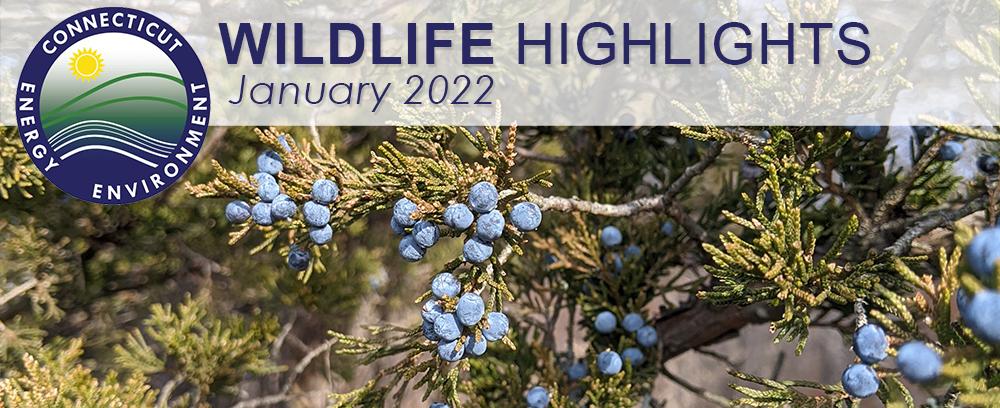
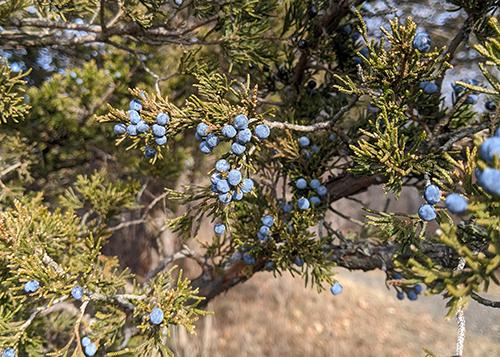
The eastern red cedar is an evergreen tree found throughout Connecticut. It is one of the first tree species to colonize after a large-scale disturbance and is considered a pioneer species. Eastern red cedar trees are highly tolerant of many growing conditions, thriving along exposed ridges and coastlines, and establishing early in abandoned farm land and old fields.
Its compact, needle-like leaves are present all year, which provide cover for wildlife throughout the winter when other broad leaf trees have dropped their leaves. This species produces bluish berries, which are actually small seed cones, and are highly valued by numerous species of birds from summer through winter. Species like American robins, cedar waxwings, and eastern bluebirds are often seen congregating around fruit laden red cedars during the colder months. Red cedars also support dozens of butterfly and moth species as a caterpillar host plant. During the growing season, these feasting caterpillars are an important food source for birds, especially nestlings.
You can find many great specimens of eastern red cedar in state parks and forests. The yellow-blazed trails in Penwood State Park in Bloomfield and neighboring Talcott Mountain State Park in Simsbury follow along the Metacomet Ridge, rewarding hikers with many red cedars and beautiful views of the valley below.
| |
|
Stay Connected!
Follow us on Social Media
| |
|
-- Quick Links --
Your Feedback Is Important to Us!
Send your comments or suggestions to deep.ctwildlife@ct.gov
|  | The Connecticut Department of Energy and Environmental Protection is an Affirmative Action/Equal Opportunity Employer that is committed to complying with the requirements of the Americans with Disabilities Act. If you are seeking a communication aid or service, have limited proficiency in English, wish to file an ADA or Title VI discrimination complaint, or require some other accommodation, including equipment to facilitate virtual participation, please contact the DEEP Office of Diversity and Equity at 860-418-5910 or by email at deep.accommodations@ct.gov. Any person needing an accommodation for hearing impairment may call the State of Connecticut relay number - 711. In order to facilitate efforts to provide an accommodation, please request all accommodations as soon as possible following notice of any agency hearing, meeting, program or event. | | | | |