|
Please share this edition of Wildlife Highlights with other outdoor enthusiasts
and help our subscription list grow!
| |
Recovering America's Wildlife Act Takes Another Step Forward | |
|
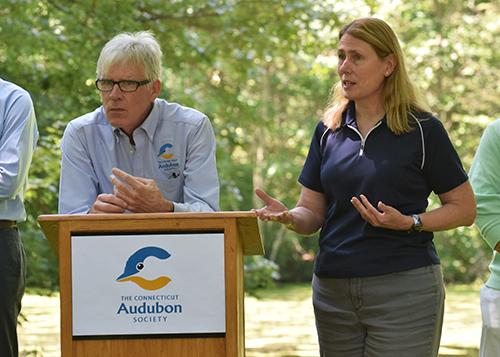
One June 14, 2022, the U.S. House of Representatives passed the Recovering America’s Wildlife Act (H.R.2773). The proposal now needs to be voted on in the Senate. DEEP Wildlife Division and Connecticut Audubon staff, along with Congressman Jim Himes (a bill co-sponsor) and local government representatives, recently held a press conference to celebrate being one step closer to passing this landmark legislation.
If passed, the Recovering America’s Wildlife Act (RAWA) would help protect thousands of at-risk species before they need the more costly and restrictive “emergency room” measures required by the federal Endangered Species Act. The current levels of funding for wildlife conservation are less than five percent of what is necessary. This is an incredible opportunity to change the way wildlife is protected in the United States and will help ensure that the amazing wildlife Connecticut has today will be here for future generations to enjoy..
More on RAWA . . .
| |
Stuck Cub Rescued By DEEP Wildlife Biologists | |
|
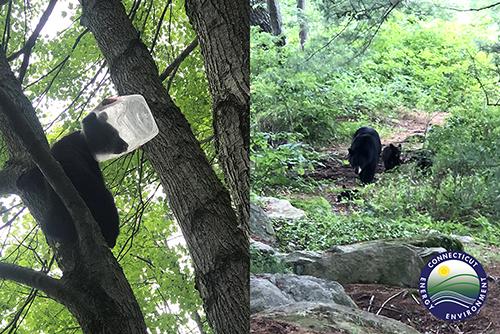
In late June, DEEP Wildlife Division biologists responded to a report of a bear cub with a plastic container stuck on its head. Given the warm weather and tight fit of the container, it was important to try and free the cub quickly. Staff biologists responded to the scene and found the cub. After waiting for the cub to come down from a tree, it was successfully tranquilized, and the clear plastic container was removed. Fortunately, the bear did not sustain any injuries from the container. Once freed, the cub quickly found its mother who was waiting nearby.
Everyone can help wildlife from getting stuck in these kinds of situations by properly securing trash and recyclables. Whether it be balloons, fishing line, or plastic containers, wildlife can often ingest or become entangled in improperly disposed or stored items.
More on living with black bears . . .
More on managing waste to protect wildlife . . .
| |
Monitoring Connecticut's Shorebirds | |
|
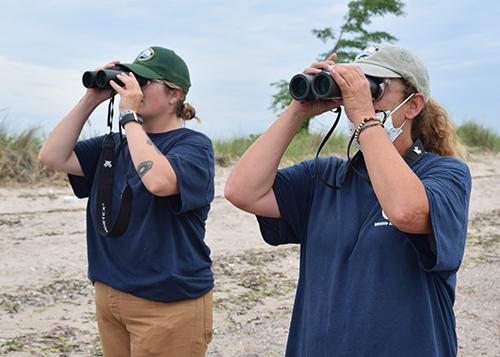
Every year, DEEP Wildlife Division biologists and other conservation partners participate in shorebird monitoring efforts across the Connecticut shoreline. Biologists keep close tabs on nesting shorebirds, including state and federally threatened piping plovers and state threatened least terns, and help protect plover nests through the use of exclusion fencing. This fencing is designed to allow plovers to freely pass in and out of the enclosure while keeping predators such as crows and raccoons out.
But it is not just predators that these birds have to worry about. Excessive human disturbance often causes birds to abandon their nest or leave chicks unattended. The solution is simple, but it takes help from everyone who visits the shoreline. Be a good egg and respect areas cordoned off for nesting shorebirds. Remember, dogs are not allowed on State Park beaches during the nesting season; this includes Sherwood Island, Silver Sands, Hammonasset Beach, and Harkness Memorial State Parks.
| |
2022-2023 Migratory Bird Hunting Guide Available Online | |
|
The 2022-2023 Connecticut Migratory Bird Hunting Guide is now available on the DEEP website. The Guide contains season dates and other important information pertaining to upcoming hunting seasons for waterfowl (including Canada geese), woodcock, snipe, rails, and crows. Please note: There are several changes to migratory bird hunting seasons this year.
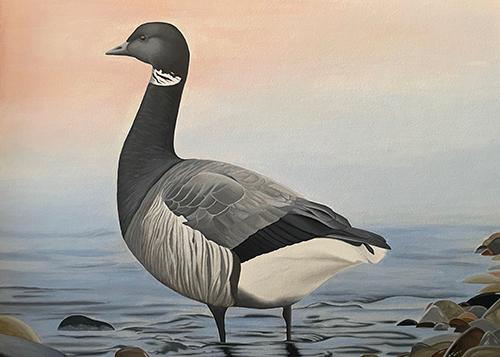
Congratulations to Sophie Archer, age 18, of Old Lyme, CT, whose painting of an Atlantic brant on a beach coastline was selected as the "Best in Show" in the 2022 Junior Duck Stamp Contest. Sophie’s artwork will be featured on the 2023 Connecticut Migratory Bird Conservation (Duck) Stamp. This is the second year in a row that Sophie received such honors for her artwork. Her painting of a drake wood duck in flight was awarded “Best in Show” for the 2021 contest and is featured on the current 2022 Connecticut Duck Stamp.
More on the new changes to migratory bird hunting seasons . . .
| |
Still Time to Participate in the Turkey Brood Survey | |
|
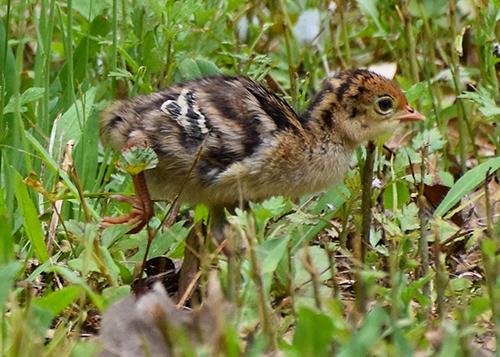
If you have seen any hens, poults, or toms (male turkeys) while out recreating or even while driving around this summer, the Wildlife Division would like to know! The annual Wild Turkey Brood Survey runs from June 1 to August 31. The information gathered from this survey helps assess annual fluctuations in the turkey population and helps staff better understand the average number of turkey poults (young-of-the-year) per hen. Observations can be reported to our online database or print our data sheet and mail in your sightings at the end of the survey period. Photo courtesy of Jim Ingrassia.
More on the Turkey Brood Survey . . .
| |
What Bees Are Visiting Your Garden? | |
|
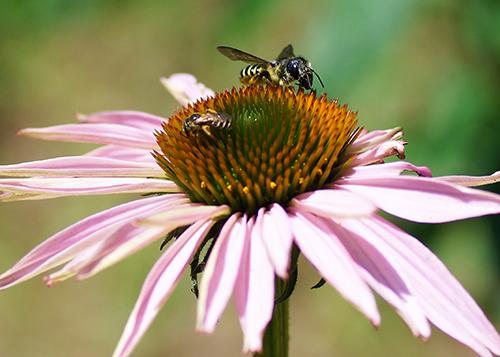
Do you have a flower or vegetable garden this year? If so, the Wildlife Division invites you to join our Backyard Bee Quest project on iNaturalist. Apps like iNaturalist have made it easier than ever to share everyday observations of plants and animals, and allow experts to provide an ID of the species. While you might have only noticed the honey bees and common bumble bees zooming around your backyard, there are likely dozens of other unique species of bees visiting your flowers. Over the last couple of years, members of the public in Connecticut have found rare species such as the black-and-gold bumble bee. By taking pictures of your backyard bees and sharing them in our iNaturalist project, you are helping to catalog Connecticut’s bees while appreciating all the different species you might not have ever noticed before.
The best way to get started is by joining iNaturalist. It’s free and all it takes to share your plant and animal observations is a smartphone and the app. Once you join, you can connect with thousands of “projects”, including our CT Backyard Bee Quest, where you can share and see other bee sightings around the state.
If you have questions about our iNaturalist projects, email us at deep.ctwildlife@ct.gov.
Join the CT Backyard Bee Quest . . .
| |
Learning to Fly - Summertime for Connecticut's Bats | |
|
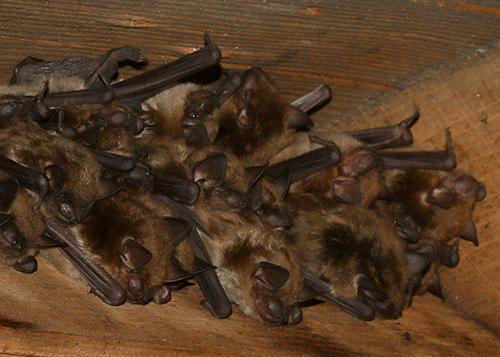
Nine species of bats occur in Connecticut. These bats can further be categorized into one of two general groups; cave roosting or tree-roosting bats. Cave roosting bats most notably include big and little brown bats, whereas tree-roosting bats include the eastern red, silver-haired, and hoary bats. Cave bats typically live more social and communal lives and are the kind of bat you are most likely to have roost in your attic or barn.
This time of year, female bats are rearing their pups, and by mid-July, the young bats will be ready to take their first flight. Learning to fly does not always come easy, and a young bat may find itself in your living space by mistake. However, there is no need to fear! A bat that enters a home can often be removed easily. Closing off doorways to the room containing the bat and opening a window will usually prompt the bat to fly outside. If you have seen a bat roosting in your house, barn, or eaves, the Wildlife Division would like to hear about it. Information gathered through the Public Bat Sighting Forms will help us understand how bats are doing in the wake of white-nose syndrome (WNS), a deadly disease that has killed several million bats since it was documented in New York in the winter of 2006-2007.
More on bats of Connecticut . . .
| |
Master Woodland Manager Program Returns Fall 2022 | |
|
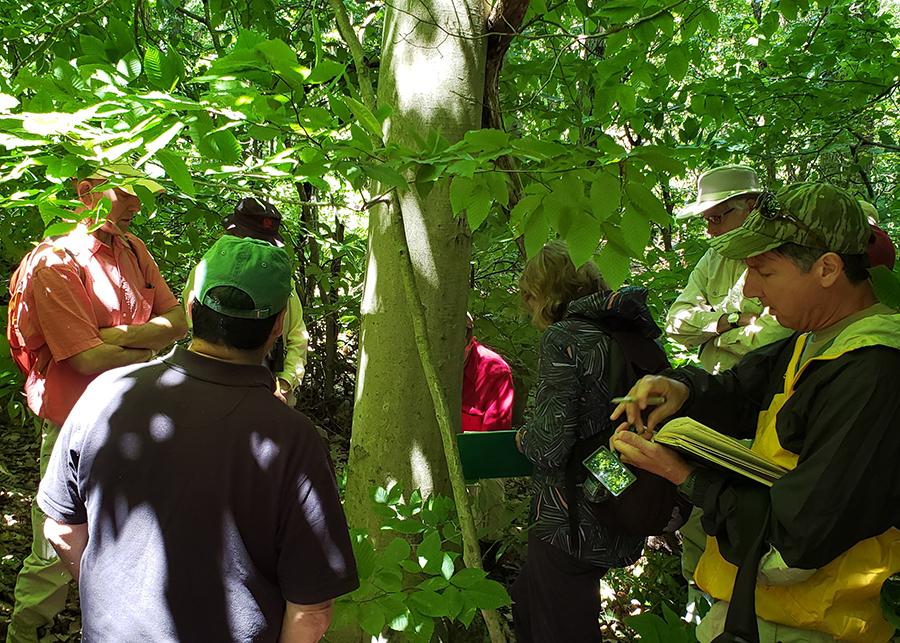
The Connecticut Forest and Park Association (CFPA) in conjunction with DEEP is excited to offer the second round of the Connecticut Master Woodland Manager (MWM) program, beginning September 2022. This year-long program provides woodland owners and managers with the knowledge and skills they need to make decisions for their woodland that can enhance their lives and benefit wildlife and the environment. If you value Connecticut's woodlands and want to help steward them for future generations, want to support wildlife and reduce the effects of climate change, or help your local forest-based economy, then this might be the program for you!
The MWM program provides a flexible, interactive experience that provides both virtual and field learning opportunities. Learn from Connecticut DEEP Foresters and Wildlife Biologists as well as forest scientists from the Connecticut Agricultural Experiment Station. Applications will be accepted until August 5, 2022.
More on how to register . . .
| |
Species of the Month: Timber Rattlesnake | |
|
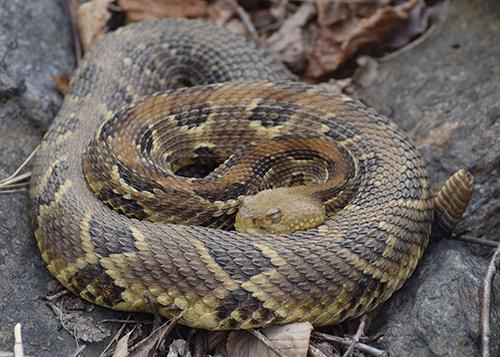
Of the 14 species of snakes found in Connecticut, only two are venomous; the timber rattlesnake and the northern copperhead. The timber rattlesnake is a beautifully patterned, thick-bodied pit viper that has unfortunately been facing human persecution and habitat loss for many years. Contrary to what some may think, timber rattlesnakes would simply prefer to be left alone and pose no threat to people when left undisturbed. Timber rattlesnakes are ambush predators, relying on their excellent camouflage and heat detecting pit organs to capture rodents that scurry by.
Only two main populations of rattlesnakes remain in the state. In the past, several Connecticut towns had bounties that encouraged people to collect and kill timber rattlesnakes, and many snake dens were repeatedly decimated. As a result of these practices, habitat loss and fragmentation, and illegal collection, the timber rattlesnake is a state endangered species.
The odds of coming across one of these striking serpents are fairly low, but should you come across a timber rattlesnake in the wild, give it plenty of space, choose an alternate route, and continue on your way. Timber rattlesnakes will often use the keratinous rattle at the end of their tail to warn someone when they are too close.
More on the timber rattlesnake . . .
| |
|
Stay Connected!
Follow us on Social Media
| |
|
-- Quick Links --
Your Feedback Is Important to Us!
Send your comments or suggestions to deep.ctwildlife@ct.gov
|  | The Connecticut Department of Energy and Environmental Protection is an Affirmative Action/Equal Opportunity Employer that is committed to complying with the requirements of the Americans with Disabilities Act. If you are seeking a communication aid or service, have limited proficiency in English, wish to file an ADA or Title VI discrimination complaint, or require some other accommodation, including equipment to facilitate virtual participation, please contact the DEEP Office of Diversity and Equity at 860-418-5910 or by email at deep.accommodations@ct.gov. Any person needing an accommodation for hearing impairment may call the State of Connecticut relay number - 711. In order to facilitate efforts to provide an accommodation, please request all accommodations as soon as possible following notice of any agency hearing, meeting, program or event. | | | | |