|
Please share this edition of Wildlife Highlights with other outdoor enthusiasts
and help our subscription list grow!
| |
Why Are Bears Commonly Seen in Residential Areas? | |
|
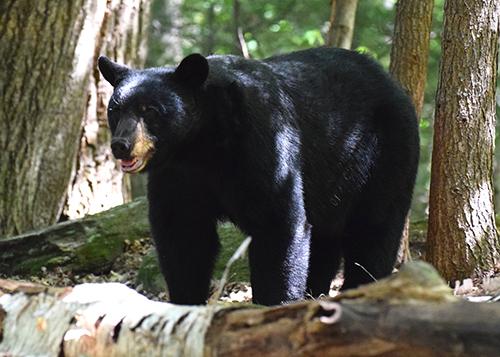
A common misconception about black bears in Connecticut is that bears are being seen more around residential areas because people have developed or altered their habitat to the point where there is nowhere else for the bears to go and not enough natural food for them to survive. Simply put, this is not the case.
In fact, Connecticut’s forests have a wealth of natural foods and places for black bears to live, and because there is plenty of suitable habitat, the black bear population is expected to continue to grow and expand.
The reason bears are often seen near homes is because they are looking for easily accessible food sources like garbage, bird feeders, and unprotected livestock, including backyard chickens. Data collected from GPS-collared female bears shows that in many instances, these bears are choosing more developed areas over more rural, forested areas because of the presence of these human-associated food sources.
Although present in the region when the colonists arrived, black bears actually disappeared (were extirpated) from Connecticut by the mid-1800s due primarily to the loss of forests to farmland. However, over time, with a change in land use and a decline in farming, our forests grew back, thus providing perfect habitat for bears to return. Seeing the bear population expand into more parts of the state is a conservation success story, not one of bears losing their homes in the 21st century.
It is important to "Be Bear Aware" and make sure your yard is free of attractants.
More on black bears . . .
| |
Migratory Bird Conservation Stamp Program Celebrates 30 Years | |
|
Since its creation in 1993, the Connecticut Migratory Bird Conservation Stamp Program, which is the only dedicated source of funding for wetland protection in Connecticut, has restored or protected over 3,800 acres of critical wetland habitat! These wetlands provide homes for over 100 of our Species of Greatest Conservation Need and for other more common wildlife, including turtles, salamanders, and birds, such as great blue herons and American black ducks. Protection and enhancement of these wetlands were only made possible by the supporters and contributors to the Connecticut Migratory Bird Conservation Stamp Program.
Over the years, the artwork of many talented artists has been featured on the Connecticut Migratory Bird Conservation Stamp. The incredible image that now graces each year’s Connecticut stamp is painted by a local kindergarten through 12th grade student that competes in the annual Connecticut Junior Duck Stamp Art Contest, where participants learn about wetlands and conservation and explore the natural world.
Connecticut Migratory Bird Conservation Stamps can be purchased by hunters, collectors, conservationists, and others for $17 each wherever hunting and fishing licenses are sold.
The Connecticut Migratory Bird Conservation Stamp Program is a great example of how conservation works -- concerned citizens paying into a program that was formed to protect and enhance vital habitat.
Those individuals who are not hunters but want to purchase a stamp using DEEP's online licensing system will first need to be registered in the system by establishing a Conservation ID#. Once you have a Conservation ID, you can obtain the stamp online through the "other" category. There is no cost to create a Conservation ID.
Stamps can also be obtained by sending your address and a check for $17 to DEEP License and Revenue, 79 Elm Street, Hartford, CT 06106. Stamps ordered through these methods will be sent through the mail. Questions on how to purchase a stamp? Contact us at deep.ctwildlife@ct.gov.
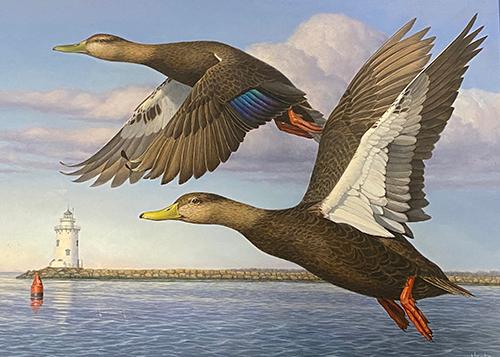
Pictured is the artwork for the first Connecticut Migratory Bird Conservation Stamp in 1993, painted by artist Thomas Hirata. Take a look at all of the stamp artwork over the past 30 years!
More on the Connecticut Migratory Bird Conservation Stamp . . .
Online Sportsmen Licensing . . .
| |
Bats Count! Live Cam Participant Training Opportunities | |
|
Last month, live cameras were officially launched at White Memorial Conservation Center in Litchfield that are providing a unique view of a big brown bat colony.
The DEEP Wildlife Division and White Memorial Conservation Center are inviting everyone to tune in and watch the livestream from the cameras and help us count the bats as they emerge from the barn each night!
While this might seem daunting at first, there will be two virtual workshops to provide information on how to participate. You only need to attend one workshop, and they are free of charge. One of the workshops will be recorded and published on White Memorial’s YouTube channel. This is a great way to help study Connecticut's bats! Register below!
Participant Workshop July 13, 11:00 a.m. Session . . .
Participant Workshop, July 13 7;00 p.m. Session . . .
More on the Bats Count project . . .
| |
Report Spotted Lanternfly Sightings | |
|
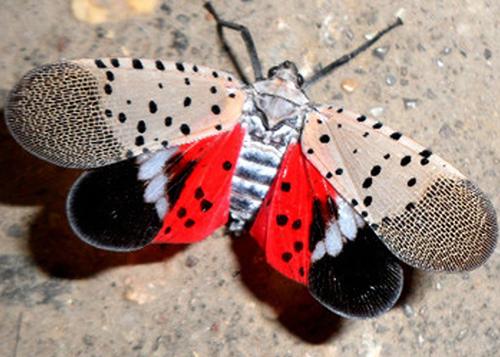
With July comes the adult flying stage of the invasive spotted lanternfly (SLF). This insect has already become established in a few parts of the state. It is potentially damaging to many forest trees and fruit crops, and it is especially threatening to grapes and vineyards.
If you see this very unique and distinct insect, please report it immediately. Do not move any wood, vegetation, or live insects from the site.
More on the spotted lanternfly . . .
| |
Still Time to Participate in Annual Turkey Brood Survey | |
|
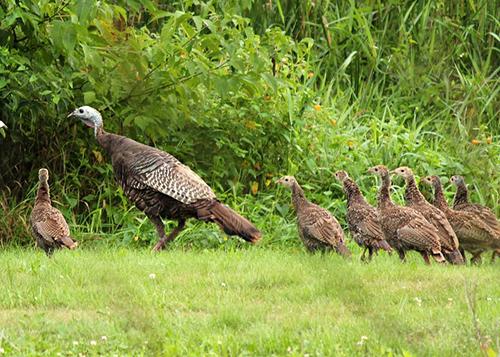
A reminder for Connecticut residents to be on the lookout for wild turkeys and to submit your sightings from now until August 31, 2023 as part of the Wildlife Division's annual Wild Turkey Brood Survey.
This survey allows biologists to estimate the average number of turkey poults per hen statewide, assess annual fluctuations in the turkey population, and calculate male-to-female ratios.
Online and paper forms are available for participants.
Submit your wild turkey sightings . . .
| |
Another Successful Year of Goose Banding | |
|
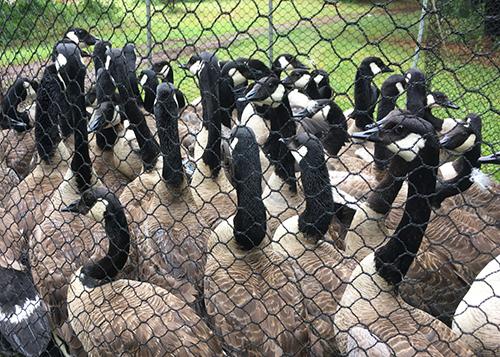
Each year, DEEP Wildlife Division waterfowl biologists travel to select locations across the state to band Canada geese with the help of many volunteers.
Affixing a uniquely numbered small metal band to each bird helps biologists learn about breeding and wintering distribution, behavior, migratory routes, survival, and reproduction. Because the geese are molting this time of year, they are fairly easy to capture. Once banded, they are released back into the wild.
Banded birds may be recaptured in the future by biologists, found dead by the general public, or, in the case of waterfowl or other game birds, are harvested by hunters who then report these bands to the U.S. Geological Survey Bird Banding Laboratory. Reporting banded birds provides information about where the bird was banded, where it was recovered, and how long it lived. This year, a total of 1,452 geese were captured, including 980 new and 472 recaptured birds!
Report banded birds . . .
| |
Report State-listed Species to the Natural Diversity Data Base | |
|
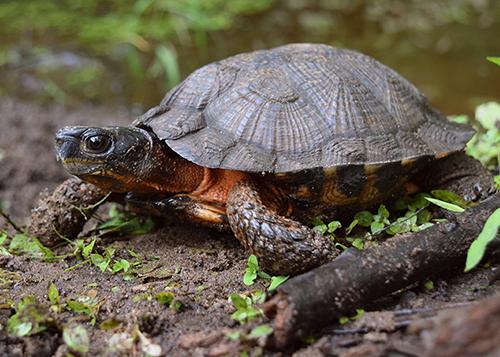
The wood turtle pictured here is best recognized by its sculpted shell and the orange coloration of its legs and neck. This state-listed species uses aquatic and terrestrial habitats at different times of the year but is most commonly encountered in and around rivers and large streams.
If you see a wood turtle or other state-listed species (plant, invertebrate, or vertebrate), please take a few moments to fill out a survey form for DEEP's Natural Diversity Data Base (NDDB). This database allows the Wildlife Division to obtain new and updated information on critical natural resources from Connecticut's citizens.
More on how to contribute data . . .
Connecticut's state-listed species . . .
| |
2023-2024 Migratory Bird Hunting Guide Available Online | |
|
The 2023-2024 Connecticut Migratory Bird Hunting Guide is now available on the DEEP website. The Guide contains season dates and other important information pertaining to upcoming hunting seasons for waterfowl (including Canada geese), woodcock, snipe, rails, and crows. Please note: There are a few changes to migratory bird hunting seasons this year. A printed version of the guide is currently being produced and should be available within the next couple of weeks.
Congratulations again to Sulan Zhang from Tolland whose painting of a long-tailed duck will be the featured artwork for the 2024 Connecticut Migratory Bird Conservation Stamp and also represented Connecticut in the Federal Junior Stamp Contest.
View the 2023-2024 guide . . .
| |
Register for the 2023 Master Woodland Manager Program | |
|
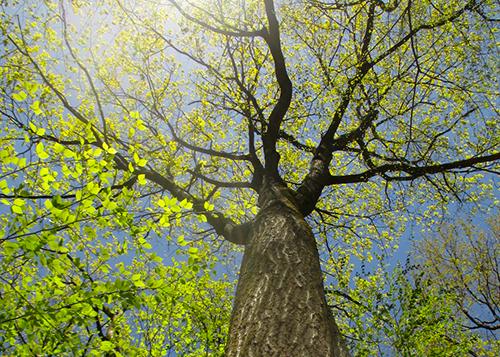
The Connecticut Forest and Park Association (CFPA) in conjunction with CT DEEP, Audubon Connecticut, UConn Cooperative Extension, Connecticut Land Conservation Council, and The Connecticut Agricultural Experiment Station, is excited to offer the Connecticut Master Woodland Manager (MWM) Program, beginning September 2023. This year-long program, funded by the U.S. Forest Service, provides woodland owners and managers with the knowledge and skills they need to make decisions for their woodland that can enhance their lives and benefit wildlife and the environment. If you value Connecticut's woodlands and want to help steward them for future generations, wish to support wildlife and reduce the effects of climate change, or help your local forest-based economy, then this might be the program for you!
The MWM Program provides a flexible, interactive experience that provides both virtual and field learning opportunities.
Applications will be accepted until July 15, 2023.
Register for the Master Woodland Program . . .
| |
Steep Rock Association: Dragonfly and Damselfly Survey Blitz | |
|
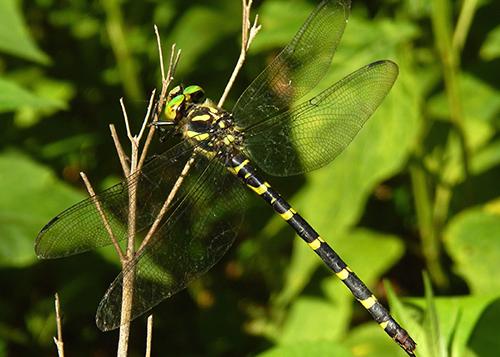
Steep Rock Association is holding a dragonfly bio blitz survey on Saturday, July 15 at Macricostas Preserve (124 Christian Street, New Preston) from 9:00 AM - 3:00 PM.
Steep Rock staff will begin the day by providing a brief overview on Odonata ecology, training on capture technique, and review of data collection before dispersing to sites in search of dragonflies and damselflies.
The information obtained will aid both local and regional Odonata conservation, and all involved will gain a greater knowledge and appreciation for these fascinating invertebrates.
Register for the bio blitz . . .
| |
Species Spotlight: Piping Plover | |
|
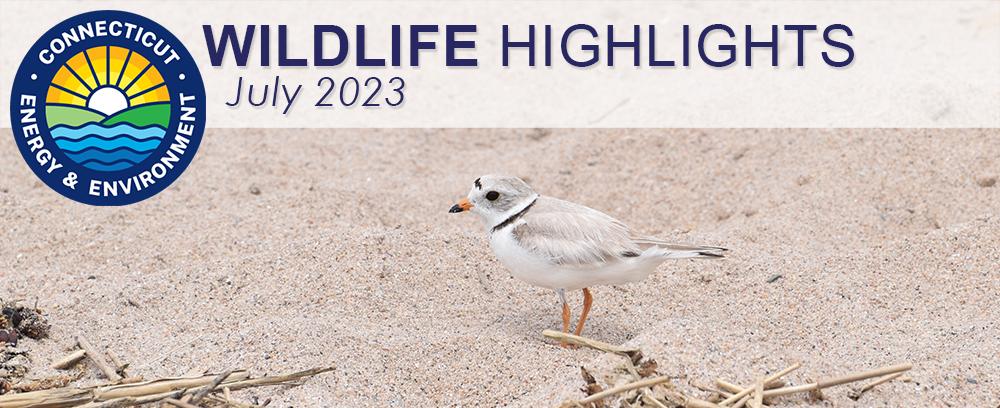
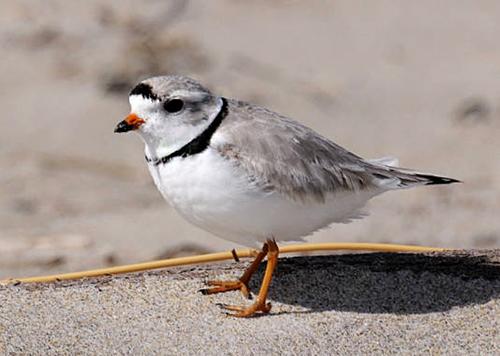
As we continue our celebration of the 50th year of the federal Endangered Species Act (ESA), we highlight the piping plover, a small sand-colored shorebird that is a threatened species under both the federal and Connecticut Endangered Species Acts.
Historically, piping plovers and other shorebirds have declined due to the loss of beach habitat to residential and recreational development.
When humans or potential predators come too close to a piping plover nest, the adults will try to distract them by flapping around like a wounded bird. This is sometimes referred to as a "broken wing" display.
To help the piping plover, Connecticut residents should respect cordoned off areas, as they indicate sensitive nesting areas for the birds. It is also very important to refrain from allowing dogs or cats to roam freely on beaches during the nesting season. Dogs and cats are frequent predators of piping plovers and least terns. Lastly, please do not leave trash, picnic leftovers, and fish scraps on a beach. They attract predators of chicks and eggs, such as skunks, raccoons, foxes, and black-backed gulls.
More on the piping plover . . .
| |
|
Stay Connected!
Follow us on Social Media
| |
|
-- Quick Links --
Your Feedback Is Important to Us!
Send your comments or suggestions to deep.ctwildlife@ct.gov
|  | |
The Connecticut Department of Energy and Environmental Protection is an Affirmative Action/Equal Opportunity Employer that is committed to complying with the requirements of the Americans with Disabilities Act. If you are seeking a communication aid or service, have limited proficiency in English, wish to file an ADA or Title VI discrimination complaint, or require some other accommodation, including equipment to facilitate virtual participation, please contact the DEEP Office of Diversity and Equity at 860-418-5910 or by email at deep.accommodations@ct.gov. Any person needing an accommodation for hearing impairment may call the State of Connecticut relay number - 711. In order to facilitate efforts to provide an accommodation, please request all accommodations as soon as possible following notice of any agency hearing, meeting, program or event.
This program receives Federal financial assistance from the U.S. Fish and Wildlife Service.
Under Title VI of the 1964 Civil Rights Act, Section 504 of the Rehabilitation Act of 1973, Title II of the Americans with Disabilities Act of 1990, the Age Discrimination Act of 1975, and Title IX of the Education Amendments of 1972, the U.S. Department of the Interior prohibits discrimination on the basis of race, color, national origin, age, sex, or disability. If you believe that you have been discriminated against in any program, activity, or facility, or if you need more information, please write to:
Office of Diversity, Inclusion and Civil Rights
U.S. Department of the Interior 1849 C Street, NW
Washington, D.C. 20240
| | | | |