|
Please share this edition of Wildlife Highlights with other outdoor enthusiasts
and help our subscription list grow!
| |
Connecticut's Snakes - No Need to Be Fearful | |
|
For many Connecticut residents, spring and early summer are spent enjoying the outdoors, and that means there is an increased chance of coming across a snake. Contrary to what some people think, snakes are not full of malice and would simply prefer to be left alone. Snakes pose no threat to humans when left undisturbed.
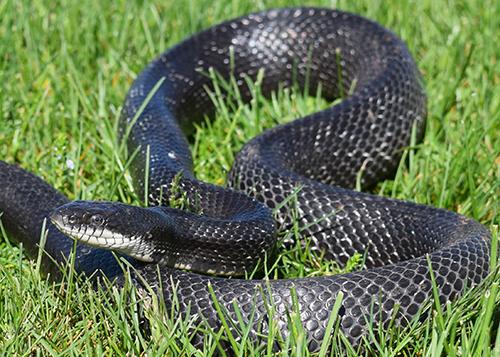
It is important to take some time to learn how to properly identify Connecticut’s snakes! There is no need to be fearful while enjoying the outdoors this season. If you unexpectedly come across a snake, simply observe and enjoy it from a distance and allow it go on its way. Snakes make up an important part of the food web, providing free rodent control and serving as prey for larger animals, including birds of prey. Pictured here is an eastern ratsnake.
Just as many nature enthusiasts enhance their backyards for birds, the Northeast Partners in Amphibian and Reptile Conservation (NEPARC) have some tips on how you can enhance your outdoor space for reptiles and amphibians!
More on Connecticut's snakes . . .
More on helping reptiles and amphibians in your backyard . . .
| |
Have You Seen Turkey Poults Lately? | |
|
You can help the DEEP Wildlife Division by participating in the Annual Wild Turkey Brood Survey. All you have to do is record all hens and poults you observe from June 1 through August 31. Observations can be reported to our online database or you can download a data sheet to record all of your observations during the survey time period. The results of this survey are used to estimate the average number of turkey poults per hen statewide and helps to assess annual fluctuations in Connecticut’s turkey population. Photo courtesy of Tommy McCarthy.
More on the Wild Turkey Brood Survey . . .
| |
Black Bear Mating Season Is Underway | |
|
For female black bears, the breeding cycle lasts around two years; from the time they mate with a male, it is typically two years until they are receptive to mating again. The year in between mating is when sows are focused on rearing their rapidly growing cubs that were born the previous winter. In other species of bears in North America (brown bears and polar bears), sows have an even longer period without mating, often taking three to four years to raise their offspring. In productive habitats like those found in Connecticut, bear cubs mature and grow quickly, freeing up sows to reproduce every other year.
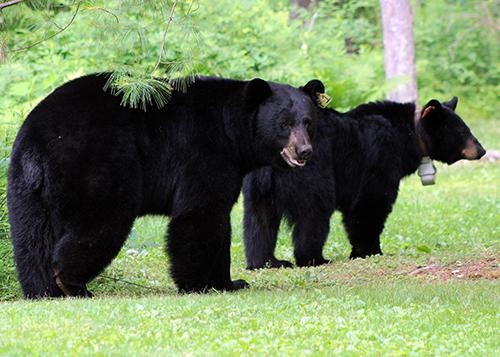
While males reach sexual maturity at around three years old, it is usually the older and larger males that assert themselves for most of the breeding opportunities. During this time from mid-May through mid-July, it isn’t unusual to see two large bears together. A male is often seen shadowing an adult female, following her around and mating when she is receptive. Males who are ready to mate may even appear to behave abnormally, like walking with an exaggerated “cowboy” walk. A breeding male will also be far more focused on his “task” than food or your attempts to haze him from your yard, especially if he has caught the scent of a nearby female in season.
If you encounter a bear while outside, do not approach it. Be vocal so it knows you are there and back away from the area. Most bear encounters end with the bear running in the opposite direction.
Tips on how to share the woods with bears . . .
Living with Black Bears . . .
| |
Housatonic Valley High Wins 2022 CT Envirothon | |
|
Congratulations to Housatonic Valley Regional High School for winning the 2022 Connecticut Envirothon! On May 19, 2022, 21 teams comprised of high school students from across the state competed in the annual Connecticut Envirothon competition, which was held at Tolland Agricultural Center in Vernon.
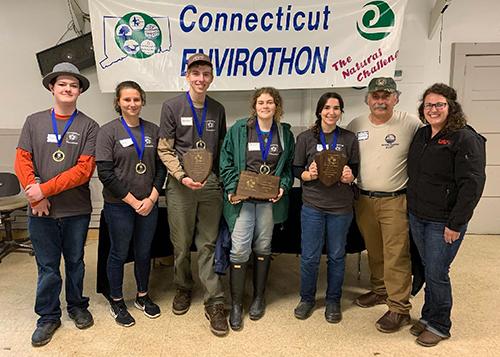
Envirothon is a natural resource-based education program that is managed by a steering committee comprised of several conservation and environmental organizations. High school students work in teams led by a teacher/advisor. During the school year, teams receive curriculum materials and are invited to a series of training workshops in the Envirothon study areas of soils, aquatics, wildlife, forestry, and a current environmental issue. In May, teams meet for an all-day field competition where they put their knowledge to the test. This year Housatonic Valley High School came in first place and will advance to the national-level competition. Pictured with the winning team is DEEP Wildlife Division Habitat Biologist and long-time wildlife station leader Pete Picone.
More on the Connecticut Envirothon . . .
| |
Connecticut's State Flower - Mountain Laurel | |
|
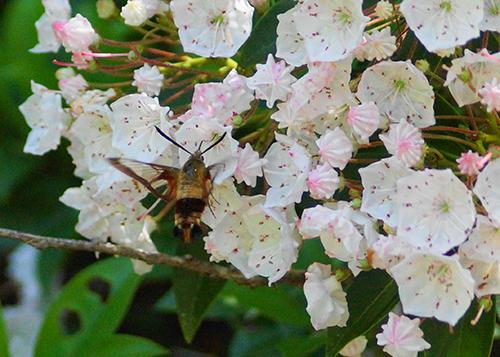
Beginning in early June, our state flower, the mountain laurel, will be blooming across backyards and woodlands. The large white flowers put on a showy display as they advertise their pollen and nectar resources for bees, butterflies, and other pollinators. The blooms themselves are just one short-lived part of this beautiful native shrub. Mountain laurel is a broadleaf evergreen shrub that serves as a larval host plant for over 30 species of caterpillar, including the laurel sphinx moth. Together, the adult and larval stages of these insects are important food sources for birds, bats, and other forest insectivores. Mountain laurel’s many stems and spreading branches create dense thickets in the forest understory. These thickets provide cover for wildlife, including black bears, who sometimes use the dense branches and leaves to den over the winter. Mountain laurel’s attractive blooms, dense branches, and evergreen leaves make it a popular ornamental tree for backyard landscapes as well.
More about mountain laurel . . .
| |
Please Respect Nesting Shorebirds | |
|
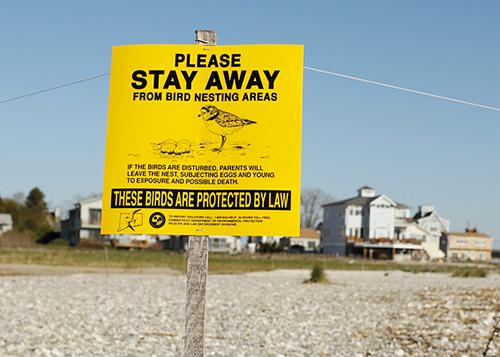
The DEEP Wildlife Division is asking beachcombers, sunbathers, boaters, and other outdoor enthusiasts along the Connecticut shoreline to respect the fencing and yellow signs warning of piping plover and least tern nesting sites. Both shorebirds are state threatened species (the plover is also federally threatened). In addition, Charles Island in Milford and Duck Island in Westbrook will be closed to the public through September 9, 2022, to prevent disturbances to nesting birds. Both islands have been designated by DEEP as Natural Area Preserves, primarily due to their importance as nesting habitats for several state-listed birds, including snowy egrets and great egrets (state threatened species), glossy ibis, and little blue herons (state special concern). Together, we can help #SharetheShore.
| |
Pollinator Week Begins June 20th! | |
|
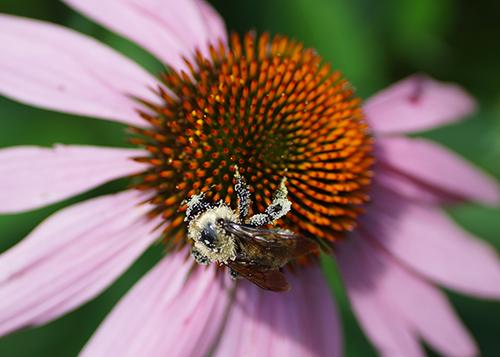
Every year, the United States and other countries across the globe recognize the essential role that pollinating animals play in our world. Fresh local strawberries, Halloween pumpkins, agave sugar and tequila, even the milk you drink, have a pollinating animal that played an irreplaceable role in the process. In fact, pollinators provide one out of every three bites of food we eat. Most of this pollination service is provided by different species of bee, including native species like the common eastern bumble bee!
Across the country, populations of native pollinating insects are imperiled and facing serious threats due to disease and human land use practices, including habitat fragmentation and conversion to lawns. Suburban lawn grass is now the largest single crop across Connecticut and does not provide sufficient habitat for pollinators. Protecting our pollinators is essential for protecting our food supply!
Fortunately, there are now many reliable resources for learning about what plants you can incorporate into your yard to benefit pollinators and, by extension, the larger food web, including bumblebeeflowerfinder.info developed by bee researchers with support from DEEP and the U.S. Fish and Wildlife Service.
| |
Species of the Month: Pink Lady's Slipper | |
|
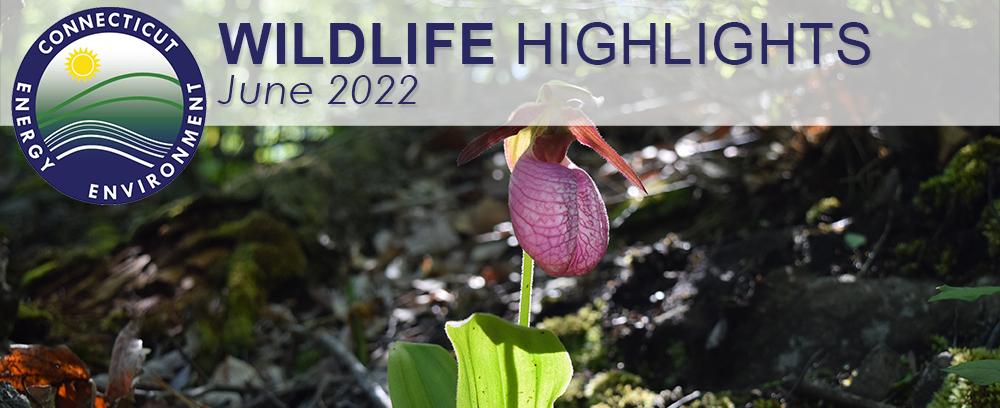
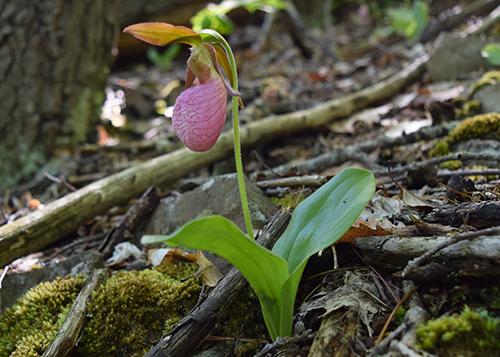
Pink lady's slipper is a perennial native wildflower that belongs to the orchid family. In order to survive and reproduce, pink lady's slipper interacts with a particular fungus found in the soil that provides nutrients to the pink lady's slipper seed. Once the orchid is mature and capable of producing most of its nutrients, the fungus will then extract nutrients from the orchid roots. This mutually beneficial relationship, known as "symbiosis", is typical of most orchid species. If you are fortunate enough to come across one, please enjoy it but do not disturb it.
| |
|
Stay Connected!
Follow us on Social Media
| |
|
-- Quick Links --
Your Feedback Is Important to Us!
Send your comments or suggestions to deep.ctwildlife@ct.gov
|  | The Connecticut Department of Energy and Environmental Protection is an Affirmative Action/Equal Opportunity Employer that is committed to complying with the requirements of the Americans with Disabilities Act. If you are seeking a communication aid or service, have limited proficiency in English, wish to file an ADA or Title VI discrimination complaint, or require some other accommodation, including equipment to facilitate virtual participation, please contact the DEEP Office of Diversity and Equity at 860-418-5910 or by email at deep.accommodations@ct.gov. Any person needing an accommodation for hearing impairment may call the State of Connecticut relay number - 711. In order to facilitate efforts to provide an accommodation, please request all accommodations as soon as possible following notice of any agency hearing, meeting, program or event. | | | | |