|
Please share this edition of Wildlife Highlights with other outdoor enthusiasts
and help our subscription list grow!
| |
Spring Amphibians Will Emerge Soon | |
|
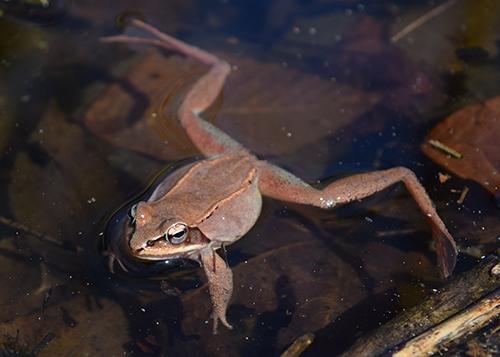
As we approach the final weeks of winter, it is only a matter of time before the warm spring rains are upon us and with that, the emergence of Connecticut’s spring amphibians! Many of the amphibian species that inhabit our state require vernal pools to breed. However, reaching these temporary bodies of water often requires amphibians, such as the spotted salamander, wood frog, and spring peeper, to cross roadways, which can be fatal. During warm, rainy spring nights, please keep your eyes on the road and look out for crossing amphibians. If you are aware of a migration hotspot, consider taking an alternate route to your destination or simply avoid traveling on smaller, wooded roads.
More on Connecticut's salamanders . . .
| |
Avian Influenza Detected in Wild Mallards | |
|
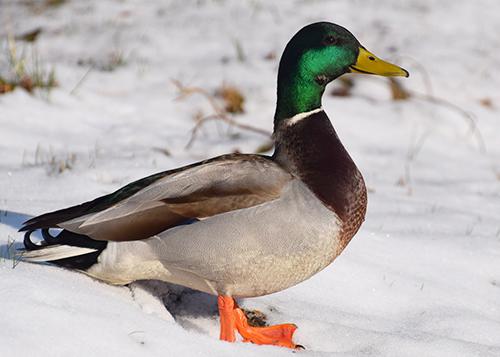
Routine surveillance by DEEP biologists and USDA staff detected the presence of highly pathogenic avian influenza in wild mallards and DEEP is working closely with DOAG, DPH, and UDSA to continue to monitor the situation. Wild birds can be infected with the virus and show no signs of illness. As birds migrate, the disease can spread to new areas. This routine wild bird surveillance program serves as an early warning system, helping us work together to reduce risks of spread to our poultry producers -- both large and small. People who own chickens or other game birds need to be aware of and report anything out of the ordinary. If you suspect poultry may have died from unknown causes, please contact the State Veterinarian at (860) 713-2505 or email ctstate.vet@ct.gov. Signs of Avian Influenza include depression, decreased feed and water consumption, decreased egg production, soft or misshapen eggs, and respiratory signs (coughing and sneezing).
More on avian influenza . . .
| |
Bird Feeding Season Winding Down | |
|
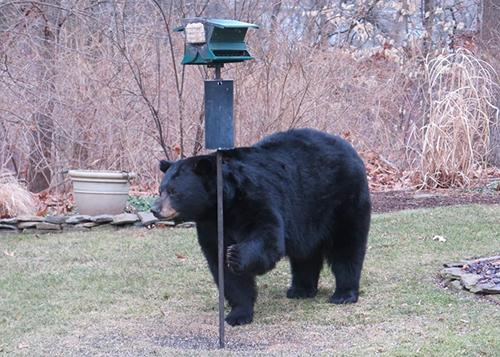
Feeding birds in winter is an enjoyable hobby for many. As temperatures become warmer and snow cover disappears, black bears will become more active. One really warm day as we head into spring may cause bears to begin to stir. While January and February are relatively quiet months for bear sightings, statewide black bear activity starts to really pick up in March as some bears spend less time in dens or stop denning for the season. The Wildlife Division advises residents to stop feeding birds by late March, but some residents may need to stop even earlier or all together if bears are active nearby. Allowing bears access to bird seed, suet, and other foods directly leads to habituation and increased activity around homes. Photo courtesy of Art Kramer.
Be Bear Aware . . .
| |
Deadline for CT Duck Stamp Art Contest Approaching | |
|
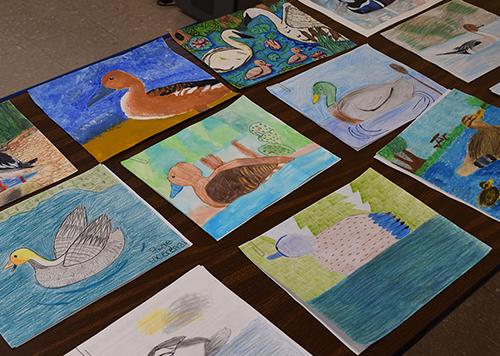
Connecticut students, kindergarten through grade 12, are encouraged to enter the 2022 Connecticut Junior Duck Stamp Art Competition. To enter, simply create and submit a drawing or painting featuring native waterfowl (ducks or geese). The winning entry will be featured as the 2023 Connecticut Migratory Bird Conservation Stamp! There is no cost, and submissions are due by March 15, 2022.
More on the CT Duck Stamp . . .
| |
Testing for COVID in Connecticut's Deer | |
|
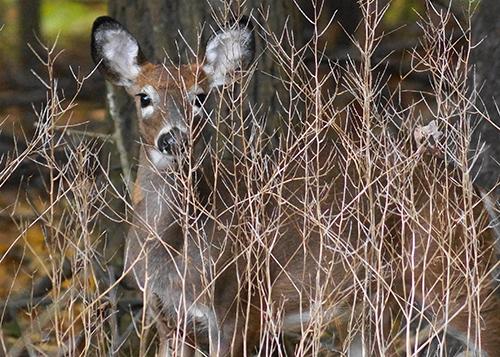
We are two years into the COVID-19 pandemic and its effects have been felt by nearly all of us. The disease has since spread beyond humans and has been detected in many other species of mammals, including white-tailed deer. Researchers throughout the United States, including Connecticut, have been monitoring deer for the Sars-CoV-2 virus. Testing shows that the disease is being detected widely in wild populations of deer. While much is still unknown about how deer are affected, studies are underway to learn more about how deer are infected, what impacts it has on them, and what this means for long-term population management. Connecticut will continue to help collect this important data and work with colleagues across the country to better understand implications for wildlife conservation.
More on wildlife diseases . . .
| |
Reminder to Submit Wildlife Sightings | |
|
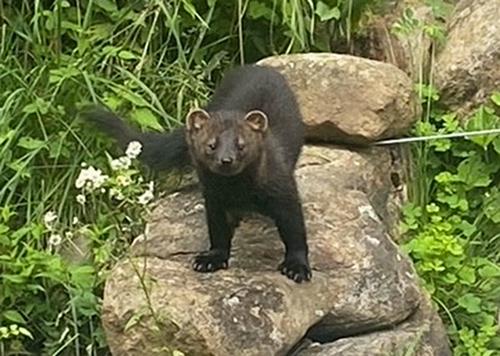
In Connecticut, residents have the opportunity to see some incredible wildlife right in their own backyards! Did you know the DEEP Wildlife Division is collecting sighting reports for several species, including fisher, moose, black bear, and bobcat? Sighting reports help biologists better understand the distribution and abundance of wildlife populations. Our Wildlife Sighting Public Viewer allows you to see sighting reports by town. You can help by reporting your observations for the wildlife species listed on our website.
Report wildlife sightings . . .
| |
Still Time to Help Wildlife with Your Taxes | |
|
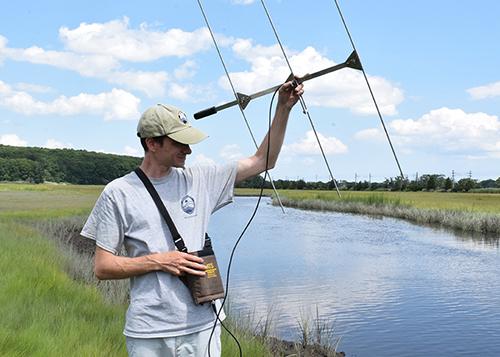
Tax season is winding down, and if you have not yet filed your Connecticut state income tax, then there is still time to help support wildlife conservation in Connecticut by making a donation to the “Endangered Species/Wildlife Income Tax Check-Off Fund". Projects such as acoustic bat monitoring, tern recovery efforts, and bog turtle conservation research have been fully or partially funded by this dedicated fund.
More on the Wildlife Income Tax Check-Off Fund . . .
| |
Species of the Month: Spotted Salamander | |
|
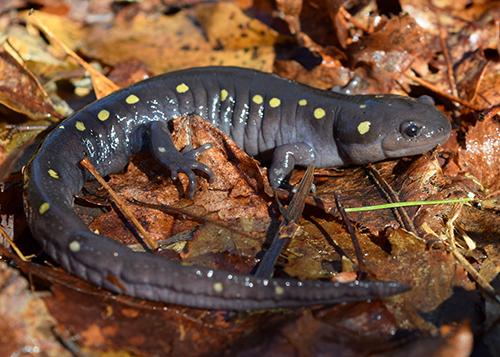
The spotted salamander is a large, stout-bodied member of the mole (Ambystomatidae) salamander family and is easily distinguished by the two irregular rows of bright yellow spots found along the back and tail. These charismatic amphibians spend their entire lives approximately 0.5 mile from the vernal pool where they were born, often hiding out of sight in burrows or under moist leaf litter and rotting logs during the non-breeding season. Even though the spotted salamander is Connecticut’s most common mole salamander, populations are undergoing a long-term decline. The preservation of vernal pool breeding habitats, and just as importantly, the surrounding forested habitat is critical for the species survival.
More on the spotted salamander . . .
| |
|
Stay Connected!
Follow us on Social Media
| |
|
-- Quick Links --
Your Feedback Is Important to Us!
Send your comments or suggestions to deep.ctwildlife@ct.gov
|  | The Connecticut Department of Energy and Environmental Protection is an Affirmative Action/Equal Opportunity Employer that is committed to complying with the requirements of the Americans with Disabilities Act. If you are seeking a communication aid or service, have limited proficiency in English, wish to file an ADA or Title VI discrimination complaint, or require some other accommodation, including equipment to facilitate virtual participation, please contact the DEEP Office of Diversity and Equity at 860-418-5910 or by email at deep.accommodations@ct.gov. Any person needing an accommodation for hearing impairment may call the State of Connecticut relay number - 711. In order to facilitate efforts to provide an accommodation, please request all accommodations as soon as possible following notice of any agency hearing, meeting, program or event. | | | | |