DEEP Releases 2024 State of the Bears Report | |
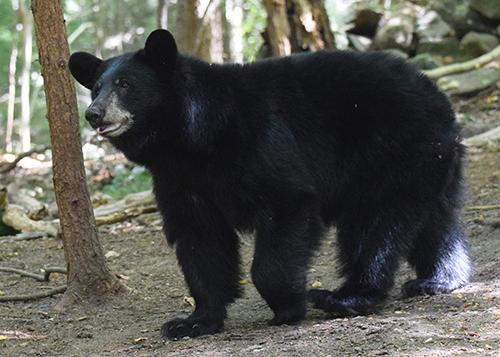
Connecticut’s black bear population continues to increase, and it is important to know how to best coexist given their continued range expansion. The State of the Bears report provides the most up-to-date information on Connecticut’s growing black bear population.
As we make the transition to spring, black bears will soon become more active. It is important to properly manage birdfeeders, garbage, and other attractants with bears in mind. Access to these attractants directly leads to bears getting comfortable around people and thinking homes and backyards are places to get food. The Wildlife Division advises residents to stop feeding birds by late March, but you may may need to stop even earlier or all together if bears are active nearby.
View the 2024 State of the Bears Report . . .
| Apply Now for the Master Wildlife Conservationist Program! | |
|
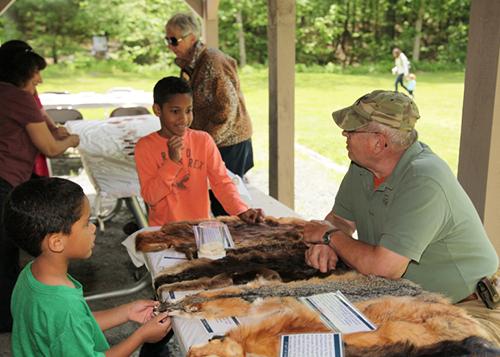
Applications are now open for the 2024 Master Wildlife Conservationist Program! This very popular volunteer program, administered by the DEEP Wildlife Division, provides adults with FREE education and training on the natural history, biology, conservation, management, and interpretation of Connecticut’s wildlife.
What is involved? Participants receive approximately 40 hours of intensive classroom and field training. After completing the course, each participant provides 40 hours of volunteer service within the first 18 months to become certified as a Master Wildlife Conservationist (MWC). Following certification, MWCs must provide 25 hours of volunteer service and attend at least one continued learning opportunity annually to remain certified. Volunteer service typically includes public outreach or assisting Wildlife Division staff with projects and fieldwork.
Each applicant must submit a completed application form and have reference forms submitted by one to two references. Forms sent via postal mail must be postmarked no later than March 29, 2024. Online forms must be submitted no later than March 31, 2024.
More on the MWC Program . . .
| |
Provide Your Input for Connecticut's State Wildlife Action Plan | |
|
Every 10 years, state fish and wildlife agencies identify their Species of Greatest Conservation Need as a first step in developing their State Wildlife Action Plan.
Connecticut's 2025 Wildlife Action Plan will set the path forward for the next decade of conservation within the state, and we would like your feedback!
Over the last six months, Connecticut’s wildlife and plant experts, with input from the public, created a draft list of Species of Greatest Conservation Need, and it is now available for public review.
Provide your input . . .
| |
Volunteers Needed for Shorebird Monitoring | |
|
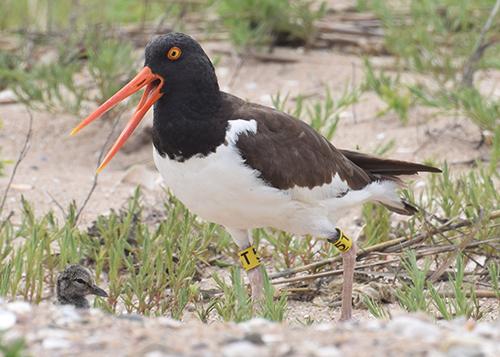
The Audubon Alliance for Coastal Waterbirds and the Wildlife Division invite you to make a difference for threatened bird species at the beach as an official summer volunteer! Volunteers will help monitor piping plovers, American oystercatchers, and least terns at beaches statewide from early April through August.
Atlantic Coast populations of beach-nesting birds return to the Connecticut coast in March from their wintering grounds, as far away as the Caribbean. The cryptic nests of these birds are extremely susceptible to human disturbance, predation, and tidal wash outs. To enhance the survival and productivity of Connecticut's beach-nesting birds, volunteers work at locations from Pleasure Beach in Bridgeport to Bluff Point in Groton to observe the shorebirds, record and report nesting data, and educate the beach-going public about actions they can take to help these birds raise their young.
More on how to get involved . . .
| |
Register for a Vernal Pool Hike at Sessions Woods WMA | |
|
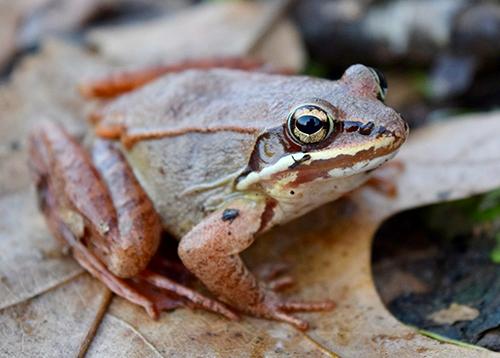
Join DEEP Outreach Biologist Paul Benjunas and Friends of Sessions Woods Naturalist Laura Rogers-Castro on Saturday, March 30, 2024, at 1:00 PM for a hike to a vernal pool at Sessions Woods Wildlife Management Area in Burlington.
Paul and Laura will talk about the dynamics of this seasonal wetland, along with the unique animals found in a vernal pool habitat. With any luck and good timing, the pool will be alive with the calls of wood frogs and potentially, jelly-like egg masses! Meet at the Gazebo in the parking lot at Sessions Woods. All are welcome for this approximately two-mile long hike, but please leave your pets at home. Registration is required.
Register for the Vernal Pool Hike . . .
| |
Providing Artificial Nest Cavities for Connecticut's Songbirds | |
|
Special thanks to the students from Coginchaug Regional High School for creating roughly 200 bluebird nest boxes for the Wildlife Division's Habitat Program.
All of the lumber provided to the high school was harvested from state forests and processed at the DEEP sawmill in Portland. The boxes will be installed in suitable habitat at wildlife management areas across the state to provide this iconic, bubbly songbird (and other native species) with artificial cavities for nesting.
| |
Fisher Research Project Update | |
|
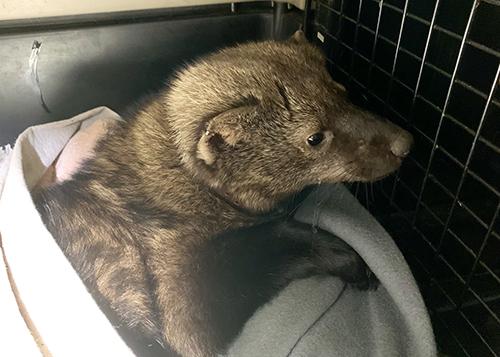
The DEEP Wildlife Division is conducting a state-wide study of Connecticut’s fisher population. Despite having very suitable habitat in Connecticut, the fisher population is gradually declining, and biologists are hoping to learn why.
So far, the project is off to a great start! Currently, 20 lightweight GPS collars have been placed on 9 males and 11 females, allowing biologists to track the fishers across the landscape. The collars are specifically designed to detach after about a year.
Information collected from the GPS collars will give biologists a much better understanding of fisher movement patterns, habitat use and preferences, den selection, reproduction rates, and mortality.
Connecticut residents are encouraged to report their fisher sighting(s).
Report fisher sightings . . .
| |
Species Spotlight: Pied-billed Grebe | |
|
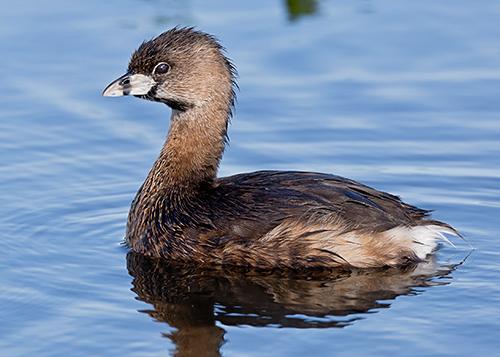
The pied-billed grebe is a very small, stocky bird that spends most of its life in the water where it primarily feeds on a variety of small fishes, including sticklebacks and silversides. Very capable divers, pied-billed grebes also feed on aquatic insects, amphibians, and soft parts of aquatic plants.
This species is declining throughout New England and is listed as “endangered” in Connecticut due to wetland degradation and loss. Despite the decline, the pied-billed grebe has greatly benefitted from the Connecticut Migratory Bird Conservation Stamp Program. Since 1993, over 3,845 acres of Connecticut wetlands have been restored or enhanced. Projects have encompassed nearly 50 sites, mostly on state-owned wildlife management areas. The projects aimed at improving or restoring wetland areas benefit not only waterfowl and the pied-billed grebe but many other species of mammals, birds, reptiles, amphibians, and invertebrates that call these areas home.
More on the CT Migratory Bird Conservation Stamp Program . . .
| |
|
Stay Connected!
Follow us on Social Media
| |
|
-- Quick Links --
Your Feedback Is Important to Us!
Send your comments or suggestions to deep.ctwildlife@ct.gov
|  | |
The Connecticut Department of Energy and Environmental Protection is an Affirmative Action/Equal Opportunity Employer that is committed to complying with the requirements of the Americans with Disabilities Act. If you are seeking a communication aid or service, have limited proficiency in English, wish to file an ADA or Title VI discrimination complaint, or require some other accommodation, including equipment to facilitate virtual participation, please contact the DEEP Office of Diversity and Equity at 860-418-5910 or by email at deep.accommodations@ct.gov. Any person needing an accommodation for hearing impairment may call the State of Connecticut relay number - 711. In order to facilitate efforts to provide an accommodation, please request all accommodations as soon as possible following notice of any agency hearing, meeting, program or event.
This program receives Federal financial assistance from the U.S. Fish and Wildlife Service.
Under Title VI of the 1964 Civil Rights Act, Section 504 of the Rehabilitation Act of 1973, Title II of the Americans with Disabilities Act of 1990, the Age Discrimination Act of 1975, and Title IX of the Education Amendments of 1972, the U.S. Department of the Interior prohibits discrimination on the basis of race, color, national origin, age, sex, or disability. If you believe that you have been discriminated against in any program, activity, or facility, or if you need more information, please write to:
Office of Diversity, Inclusion and Civil Rights
U.S. Department of the Interior 1849 C Street, NW
Washington, D.C. 20240
| | | | |