|
Please share this edition of Wildlife Highlights with other outdoor enthusiasts
and help our subscription list grow!
| |
Report Gray Fox Sightings | |
|
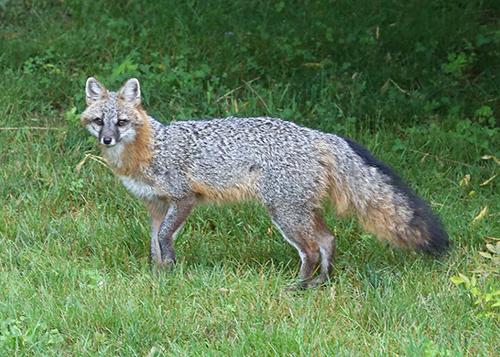
Some residents may be surprised to learn that Connecticut is home to two species of fox. While the red fox is widespread and abundant in our state, the gray fox is not as common and not often observed due to its reclusive nature and more nocturnal habits. In addition to its grizzled-gray coat, the gray fox is somewhat stout and has shorter legs than the red fox.
The DEEP Wildlife Division is increasing its monitoring efforts of gray fox to better understand the species' distribution and relative abundance throughout Connecticut.
If you have seen a gray fox, please report your sighting! Photo courtesy of Jonathan Lang.
Report gray fox sightings . . .
Gray fox fact sheet . . .
Report other wildlife sightings . . .
| |
Fall Firearms Deer Season is Underway | |
|
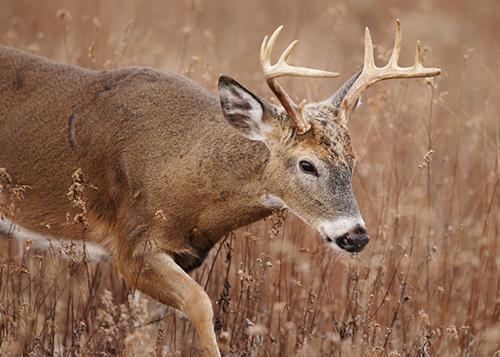
Firearms deer hunting season opened Wednesday, November 15. Everything you need to know about the season details, as well as the tagging and reporting process, is covered on our website.
A note on fluorescent orange: All hunters must wear hunter orange (fluorescent orange) from September 1 through the last day in February (with some exceptions). When fluorescent orange is required, the hunter must wear an article of clothing that has 400 square inches of fluorescent orange material visible above the waist and visible from all sides.
It is strongly recommended that all public land users wear fluorescent orange to improve their visibility to others while recreating in public hunting areas.
More on fall hunting seasons . . .
| |
Black Bears Still Packing on the Pounds through November | |
|
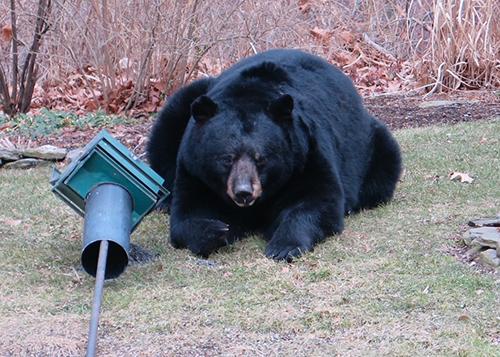
Do not let the recent frosts and chilly mornings fool you. Black bears are still active and are continuing to stock up for the coming winter. Make sure bears do not have access to food items, such as garbage and birdseed.
While there is plenty of quality habitat and natural food for bears across most of the state, the typical human-related foods that bears have become so familiar with, like birdseed and trash, are too good to pass up. It may take several hours for a bear to forage for the same number of calories that it can get at just one birdfeeder or from visiting a few trash cans in your neighborhood. As a result, bears that make a habit of visiting birdfeeders or unsecured trash bins get big calorie rewards for doing so. These rewards condition bears to spend more time in yards and can cause bears to exhibit bolder and progressively more dangerous behaviors, like entering homes, damaging structures, and altercations with people and pets.
How BearWise are you? . . .
| |
The Importance of Migratory Bird Conservation Stamps | |
|
This year marks the 30th anniversary of the Connecticut Migratory Bird Conservation Stamp Program. This program is the only dedicated source of funding for wetland protection in Connecticut, and over 3,800 acres of critical wetland habitat have been restored or enhanced by the revenue generated from the sale of Migratory Bird Conservation Stamps.
Wetlands are home for over 100 of our species of greatest conservation need, as well as for other more common wildlife, including turtles, salamanders, frogs, and birds, such as great blue herons and American black ducks.
The Connecticut Migratory Bird Conservation Stamp Program is a great example of how conservation works -- concerned citizens paying into a program that was formed to protect and enhance vital habitat.
Connecticut Migratory Bird Conservation Stamps can be purchased by hunters, collectors, conservationists, and others for $17 each wherever hunting and fishing licenses are sold.
Put your stamp on conservation . . .
| |
Coyote? Coywolf? Coydog? Please Explain! | |
|
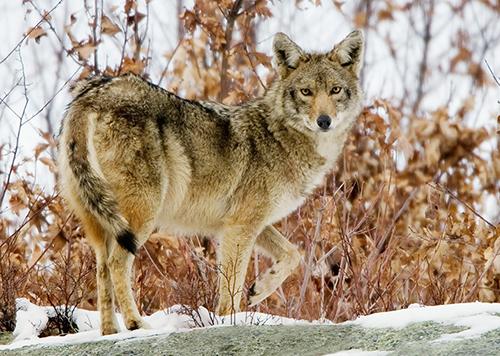
Following the extirpation (local extinction) of many of Connecticut’s apex predators, coyotes gradually expanded their range eastward into the state over the last century. During their expansion through Canada and the Great Lakes region, some coyotes bred with eastern wolves and domestic dogs. The coyotes that established in Connecticut and other parts of the Northeast have some of those mixed genetics from past hybridization, which can result in larger body sizes and unique color variations.
Despite these animals sometimes being called "coywolf" or "coydog", the terms are common misnomers. These animals are simply eastern coyotes, which now effectively fill the ecological role opened as a result of human-related changes to the landscape over the last 200 years.
More on the coyote . . .
| |
Providing Nesting Cavities for an Iconic Duck | |
|
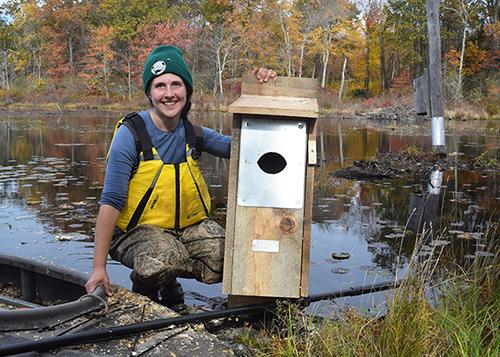
DEEP Wildlife Division waterfowl biologists are busy this time of year maintaining wood duck nest boxes across state lands. In total, biologists maintain approximately 400 boxes across state parks, state forests, and wildlife management areas.
Unlike the very familiar mallard duck, wood duck hens require some type of cavity (natural or man-made nest boxes) to lay their eggs. The nest boxes installed on state lands are built with locally harvested timber that is milled at the DEEP's own saw mill in Portland.
Special thanks to the Connecticut Waterfowl Association and Valley Shore Waterfowlers for their contributions to this effort!
More on the wood duck . . .
| |
Species Spotlight: Northern Long-eared Bat | |
|
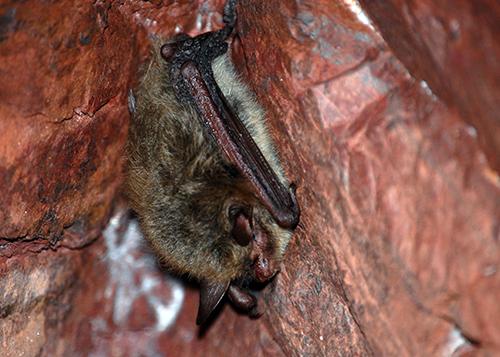
Northern long-eared bats are relatively small and, as their name suggests, have much longer ears than other species of the genus Myotis.
White-nose syndrome (WNS) is currently the highest threat in North America to any bats that hibernate in caves, like the northern long-eared bat pictured here. WNS is caused by a fungus, and is called such for the white fuzz that can grow on a bat’s nose or wing membranes. This fungus does well in cold and moist environments, and infects bats when they are hibernating in caves (passing bat-to-bat or cave-to-bat). It attacks the skin, causing bats to wake up from hibernation much more frequently and thus burning their precious fat stores much faster. The bats can die from starvation or exposure from flying out of the cave in the winter.
Because of the devastating effects of WNS on cave-dwelling bats, the Northern long-eared bat has been listed as an endangered species in Connecticut, as well as being protected by the federal Endangered Species Act (ESA). The ESA was enacted 50 years ago in 1973 to prevent the loss or harm of endangered and threatened species and to preserve the places they live. For over half a century, the ESA has proven to be one of the most effective wildlife conservation laws.
You can help by:
- Not disturbing bats in hibernation during the winter.
- Installing bat houses on your property to give northern long-eared bats (and other bats) a place to stay during the warmer months of the year. There are multiple types of bat houses and multiple installation possibilities.
- Keep cats indoors. Cats can catch bats both in flight and when they are sleeping in a day roost.
More on the northern long-eared bat . . .
More on bat houses and bat gardens . . .
| |
|
Stay Connected!
Follow us on Social Media
| |
|
-- Quick Links --
Your Feedback Is Important to Us!
Send your comments or suggestions to deep.ctwildlife@ct.gov
|  | |
The Connecticut Department of Energy and Environmental Protection is an Affirmative Action/Equal Opportunity Employer that is committed to complying with the requirements of the Americans with Disabilities Act. If you are seeking a communication aid or service, have limited proficiency in English, wish to file an ADA or Title VI discrimination complaint, or require some other accommodation, including equipment to facilitate virtual participation, please contact the DEEP Office of Diversity and Equity at 860-418-5910 or by email at deep.accommodations@ct.gov. Any person needing an accommodation for hearing impairment may call the State of Connecticut relay number - 711. In order to facilitate efforts to provide an accommodation, please request all accommodations as soon as possible following notice of any agency hearing, meeting, program or event.
This program receives Federal financial assistance from the U.S. Fish and Wildlife Service.
Under Title VI of the 1964 Civil Rights Act, Section 504 of the Rehabilitation Act of 1973, Title II of the Americans with Disabilities Act of 1990, the Age Discrimination Act of 1975, and Title IX of the Education Amendments of 1972, the U.S. Department of the Interior prohibits discrimination on the basis of race, color, national origin, age, sex, or disability. If you believe that you have been discriminated against in any program, activity, or facility, or if you need more information, please write to:
Office of Diversity, Inclusion and Civil Rights
U.S. Department of the Interior 1849 C Street, NW
Washington, D.C. 20240
| | | | |