|
Please share this edition of Wildlife Highlights with other outdoor enthusiasts
and help our subscription list grow!
| |
Bears Are Hungry - Do Not Invite Them to Dinner | |
|
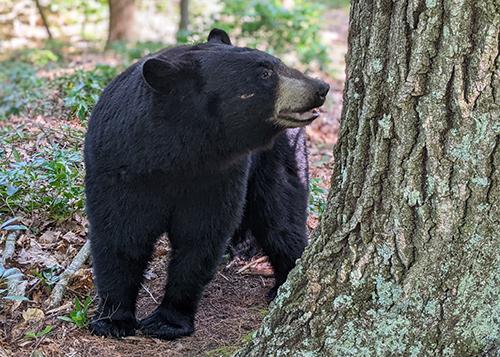
It may be a chilly start to October, but bears are awake and are now spending up to 20 hours a day looking for food! Bears are not picky eaters. They are all about finding the most calories for the least amount of work. Bears aren’t lazy. They are in a race against the hibernation clock, trying to put on as much weight as they can, and so the less energy they spend searching for food, the faster they can fatten up. Garbage, birdseed, and pet food are easy calorie jackpots for bears. Chickens are "eggstra"-appealing now. Apiaries are a candy store with a big side of protein. Fields of corn, pumpkins and fall veggies, hobby orchards, and other people-provided food are often served up in much more concentrated sources than the natural foods bears forage on in the wild.
Connecticut has an abundance of natural habitat to support our growing bear population. This fall, do your part to keep bears from accessing people-related foods, which will lead to more and more conflicts between people and bears.
Read this article from BearWise to see all the things around your home that might attract bears, and what you can do to keep bears out of your stuff and out in the wild.
More on living with black bears . . .
| |
Hemorrhagic Disease Confirmed in White-tailed Deer | |
|
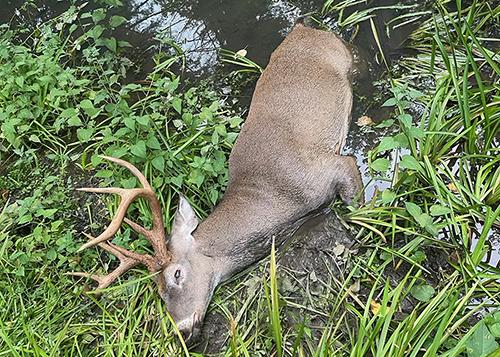
Hemorrhagic disease (HD) was recently confirmed in white-tailed deer in 3 Connecticut towns -- Goshen, Kent, and East Haddam. HD is transmitted by biting midges (commonly referred to as sand gnats, sand flies, or no-see-ums). The virus creates high fevers, leading infected deer to be found near water sources, like the deer in this photo. Outbreaks cease with the onset of a hard frost, which kills the midges carrying the virus.
HD does not infect humans, and people are not at risk by handling infected deer, eating venison from infected deer, or being bitten by infected midges. The disease rarely causes illness in domestic animals, such as cattle, sheep, goats, horses, dogs, and cats. Hunters should observe normal precautions around any sick or strangely acting animals.
More on hemorrhagic disease . . .
| |
Seaside Goldenrod Helps Guide Monarchs Down the Coast | |
|
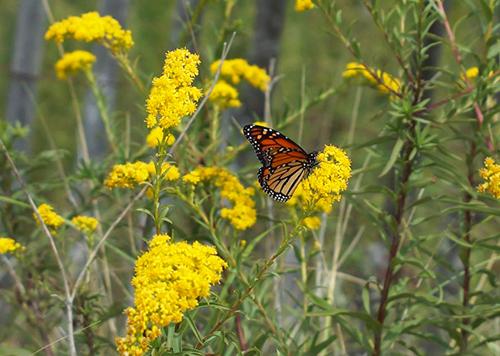
After the warm summer weather passes and crowds of beach goers have disappeared, wildlife still finds a refuge along our protected beaches and coastal areas. Patches of habitat fortified by dune fencing, which seemed unimpressive and unnoticeable during the summer, is now glowing with a unique fall flower. Seaside goldenrod, which doesn’t begin to bloom until mid-September, identifies itself with bright golden flower spikes growing in dense clumps wherever it can establish along the coast. Seaside goldenrod is unique for its somewhat waxy leaves, which help it survive the harsh, salty environments along the east coast from the Gulf of Mexico to Canada.
Seaside goldenrod’s ability to prosper where other goldenrods cannot make this species especially important to migrating monarch butterflies who follow the coastlines down to their wintering grounds in Mexico. Managing protected areas, like Sherwood Island State Park in Westport, helps ensure that monarchs and other migratory wildlife can meet their biological needs while en route to their overwintering grounds.
| |
Connecticut's Turtles - Stuck in Colder Weather | |
|
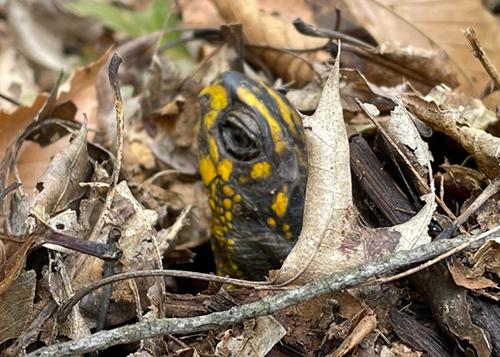
As daily temperatures continue to fall, Connecticut’s turtles prepare for the coming winter. Like all reptiles, turtles are ectotherms and must rely on their surroundings (outside heat sources) to drive their metabolism and allow other bodily processes to function normally. A turtle’s average body temperature is not that far off from the temperature of its surrounding environment. As you can imagine, this is why you aren’t likely to see a turtle moving along the forest floor in the middle of December when the temperature is 34 degrees Fahrenheit. These long-lived reptiles sense the changing seasons and have evolved some interesting adaptations that make surviving freezing cold temperatures possible. Photo courtesy of Dennis Quinn.
More on where turtles go when it gets cold . . .
| |
Let the Leaves Fall Where They Will | |
|
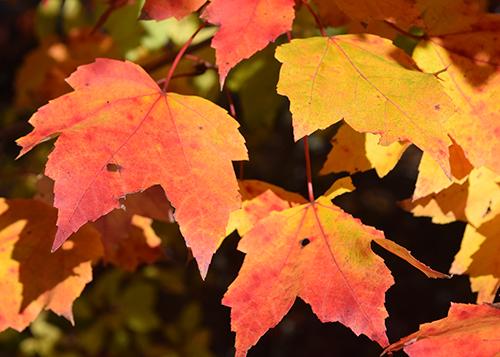
It is easy to appreciate the beauty of Connecticut’s fall foliage, but for many, this appreciation quickly dissipates once those brightly colored leaves begin to accumulate on their lawn. The natural process that trees across the landscape undergo every year is often viewed as a monumental chore for homeowners who view the leaves as an unsightly mess, and they will work diligently to have their lawn completely leaf free.
The reality is that a carpet of leaves serves as food and shelter for many insects, including moths and butterflies. Different species may spend the winter as eggs, caterpillars, or adults, and finding refuge in the leaves is often essential to their survival. Plus, more insects means more natural food sources will be available for birds throughout winter.
This fall, save yourself time, energy, and money and simply leave the leaves. Instead of spending hours of your weekend raking, bagging, mowing, and mulching, get outside and enjoy the fall landscape. And when you see leaves gently hitting the ground, try not to cringe! Remember, they serve an important purpose for many other species that call our state home.
More on the importance of leaving the leaves . . .
| |
Suffield WMA Prescribed Burn Update | |
|
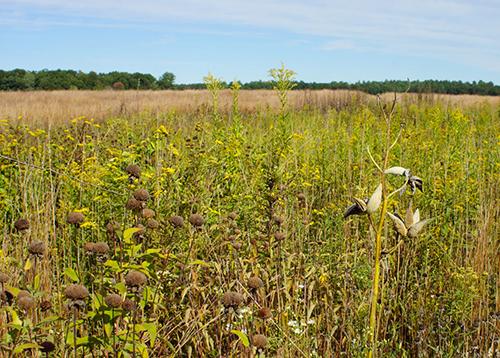
Prescribed burns are one of many tools used to manage habitats for wildlife. This past April, DEEP staff conducted a prescribed burn across 50 acres of Suffield Wildlife Management Area. This area is managed for early successional habitats that support grassland- and meadow-dependent species of birds, mammals, and insects. During the bird nesting season, grasshopper sparrows, bobolinks, eastern meadowlarks, and many other species grace this grassland, which spans about 330 total acres, extending into Massachusetts’ Southwick Wildlife Management Area.
After a fire, woody plant growth is suppressed, nutrients are returned to the soil, and new herbaceous growth rejuvenates the burned landscape. By summer, wildflowers like bee balm, yarrow, and black-eyed Susan are in bloom, hiding the blackened stems of Asiatic bittersweet. When fall arrives, most of the summer flowers and native grasses have gone to seed, providing migrating songbirds fuel for their journeys. Migrating raptors, like norther harriers, can be seen circling low over the fields, hunting for small mammals. Numerous goldenrod and aster species get their chance to bloom, as the green grassland shows bright patches of white and gold. Among the wildlife using these late-season flowers are numerous specialist bees, like cloudy-winged miner bees, as well as monarch butterflies, who depend on goldenrod and aster species to fuel them on their southerly migration through October.
Without natural or man-made disturbances like prescribed fires, these rare and important habitats would eventually succeed into forests and become unsuitable for dozens of species that are facing long-term declines associated with the loss of early successional habitats.
View our post from earlier this summer . . .
| |
Whip-poor-will Woods Forest Legacy Project Receives Award | |
|
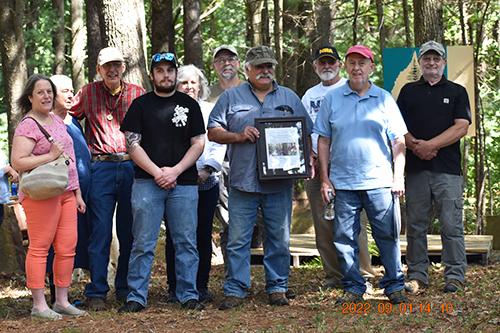
The Whip-poor-will Woods Forest Legacy Project (WPWW) recently received the 2022 Excellence in Conservation Organization Award for Outstanding Project from the Connecticut Land Conservation Council. This landscape scale conservation effort permanently protects 1,495 acres on 7 tracts owned by 6 landowners in the town of Stafford through the Forest Legacy Program.
WPWW abuts approximately 13,000 acres of protected open space and contributes to Connecticut’s target of protecting 21% of the state’s land area as open space by 2023. The project furthers one of the main goals of the Governor’s Council on Climate Change (GC3), the Policy on Resilient Forests for Connecticut’s Future (PRFCT Future), and Connecticut’s 2020 Forest Action Plan to keep forest as forest and minimize forest loss across the state.
More on this major accomplishment . . .
| |
Virtual Invasive Plant Symposium - November 3, 2022 | |
|
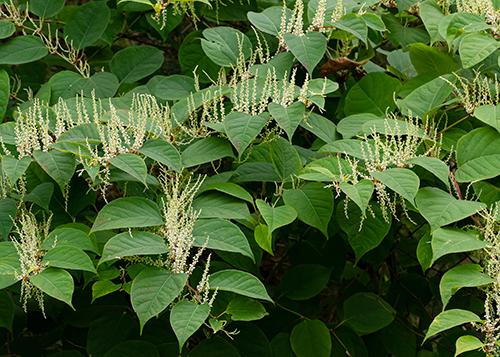
Invasive species are one of the greatest threats to our native ecosystems. Over the years, a variety of non-native plant species have been introduced to Connecticut. Non-native species are those that are alien to the ecosystem that they have been introduced into and whose introduction causes or is likely to cause harm to the environment. In the case of invasive plants, many of these non-native species exhibit an aggressive growth habit and can out-compete and displace native species. This often has a negative impact on wildlife populations. On November 3, 2022, the Connecticut Invasive Plant Working Group will be hosting their "Virtual Invasive Plant Symposium". This event will focus on strategies for managing invasive plants.
More on this year's symposium . . .
| |
Species of the Month: Wood Duck | |
|
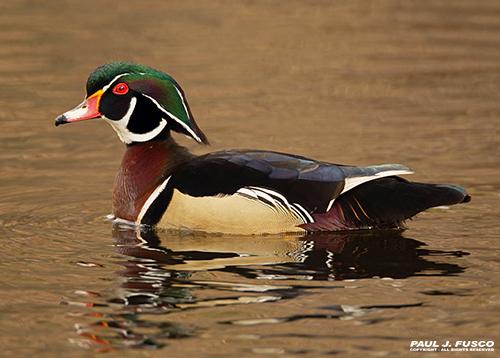
The wood duck is one of the most beautiful and iconic ducks in North America. However, market shooting and habitat loss led to the near extinction of this species by the early 1900s. With the implementation of the Migratory Bird Treaty Act in 1918 between the United States and Canada, market shooting was outlawed and judicious hunting season lengths and bag limits were instituted. These changes, together with the construction and placement of nest boxes during the last seven decades, have resulted in a dramatic comeback of wood duck populations!
Unlike North America's other iconic duck, the mallard, the wood duck is a cavity-nesting species. Hens rely on making their nests in pre-existing cavities wherever they can be found but will typically select ones located in close proximity to water.
In proportion to their wing length, wood ducks have the broadest wings of any duck. They also have the largest eyes of any of the duck species. These evolutionary adaptations likely evolved to assist the wood duck to fly through the trees and branches characteristic of the habitats they frequent.
More on the wood duck . . .
| |
|
Stay Connected!
Follow us on Social Media
| |
|
-- Quick Links --
Your Feedback Is Important to Us!
Send your comments or suggestions to deep.ctwildlife@ct.gov
|  | |
The Connecticut Department of Energy and Environmental Protection is an Affirmative Action/Equal Opportunity Employer that is committed to complying with the requirements of the Americans with Disabilities Act. If you are seeking a communication aid or service, have limited proficiency in English, wish to file an ADA or Title VI discrimination complaint, or require some other accommodation, including equipment to facilitate virtual participation, please contact the DEEP Office of Diversity and Equity at 860-418-5910 or by email at deep.accommodations@ct.gov. Any person needing an accommodation for hearing impairment may call the State of Connecticut relay number - 711. In order to facilitate efforts to provide an accommodation, please request all accommodations as soon as possible following notice of any agency hearing, meeting, program or event.
This program receives Federal financial assistance from the U.S. Fish and Wildlife Service.
Under Title VI of the 1964 Civil Rights Act, Section 504 of the Rehabilitation Act of 1973, Title II of the Americans with Disabilities Act of 1990, the Age Discrimination Act of 1975, and Title IX of the Education Amendments of 1972, the U.S. Department of the Interior prohibits discrimination on the basis of race, color, national origin, age, sex, or disability. If you believe that you have been discriminated against in any program, activity, or facility, or if you need more information, please write to:
Office of Diversity, Inclusion and Civil Rights
U.S. Department of the Interior 1849 C Street, NW
Washington, D.C. 20240
| | | | |