This fall is full of opportunities to learn and contribute to the conservation of Sonoma County's forest ecosystems. | | Forest Working Group News | | November Meeting: Join Us to Learn About Wildlife Monitoring and Broom Removal | | Join us for our monthly meetings. Our meetings are hybrid on Zoom and in-person at the Sonoma County Agricultural Preservation and Open Space District, 747 Mendocino Ave # 100, Santa Rosa, CA 95401 | | |
Pepperwood Preserve's Wildlife Monitoring Program
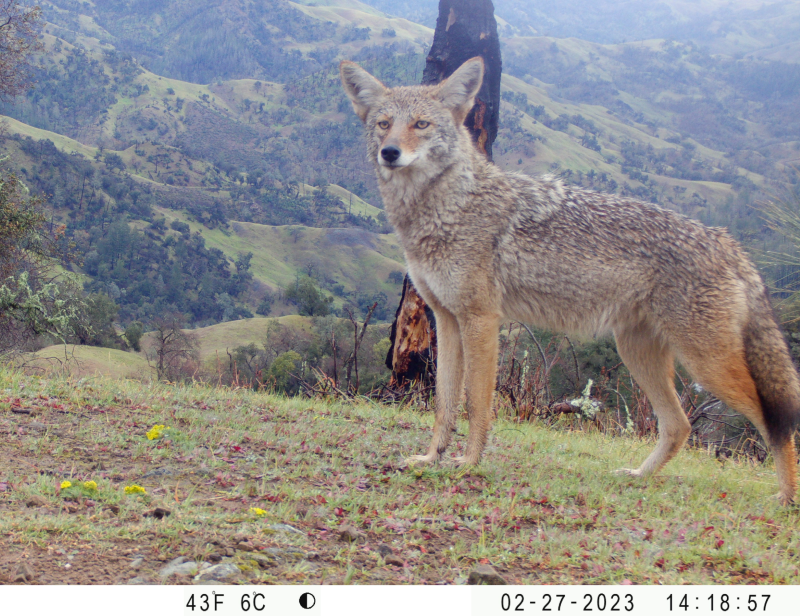
Pepperwood Preserve's Regional Climate Resilience Manager, Kai Henifin, will join us to provide an overview of the organization's wildlife monitoring program. Pepperwood uses multiple methods including wildlife cameras, surveys, and acoustic monitoring.
Broom Removal Tips & Techniques
Our November meeting will also feature a timely presentation on broom removal. Now that the rain has arrived, it's time to start pulling broom! Tune in to learn from local experts. We will have a Q&A session afterwards to answer questions about broom on your property.
Thursday, November 20, 11am-1pm
| | | Save the Date! Annual Holiday Gathering | | | | |
Save the date!
Our annual holiday gathering is 5:30-7:30pm on Thursday, December 18, 2025 at La Rosa Tequileria, 500 4th St, Santa Rosa, CA 95401.
We hope to see you there!
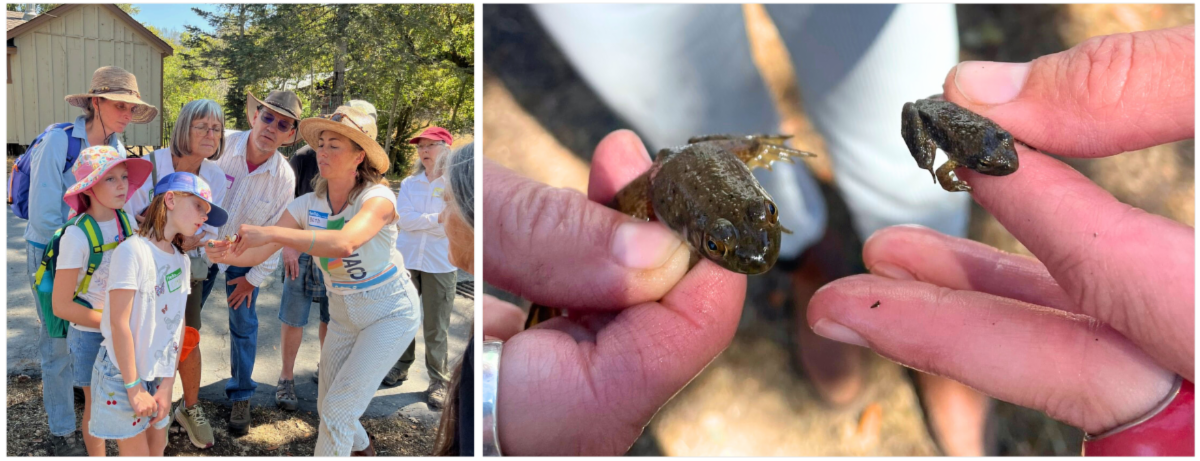
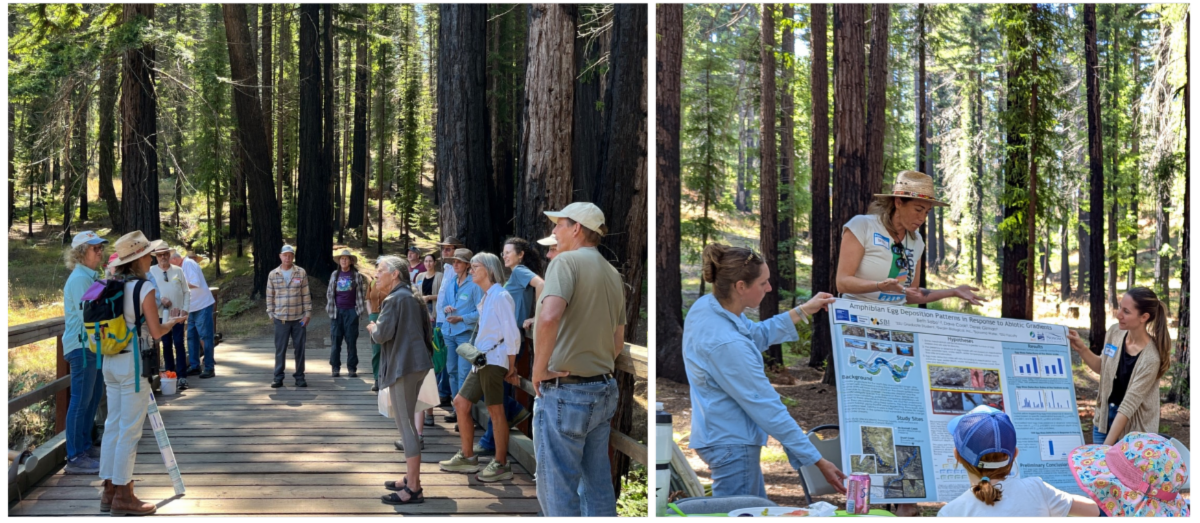
| | Reflections on Our Picnic at Rancho Mark West | | Herpetologist Beth Sabo shows examples of two different frog species. On the left is the non-native and invasive American bullfrog and on the right is the native foothill yellow-legged frog. | | |
We gathered for our annual Forest Working Group picnic under the redwoods at Rancho Mark West this September.
This was a great opportunity for working group members and neighbors of the Mark West Creek community to connect and learn together.
We had an engaging and interactive lesson on the frogs of Mark West Creek with guest speaker Beth Sabo, a local herpetologist who works at WRA. We walked along the creek together, observed different features in the water, and talked about ideal habitat for frogs and fish. Beth, an expert frog-catcher, was able to wrangle some frogs from the creek for us to observe up close. We learned how to spot the differences between the non-native invasive American bullfrog and the native foothill yellow-legged frog.
We also got a lesson on the history of Rancho Mark West from Jim Doerksen, who purchased the property in 1967. Jim talked about planting the countless redwoods trees that were now towering above us, and told us about the more recent efforts they have made to recover from the damaging effects of the 2020 Glass Fire. You can learn more about Rancho Mark West and find opportunities to visit on LandPaths' website.
Thank you to Beth Sabo, Jim Doerksen, and LandPaths for making this event possible!
| | Community Forestry: Guerneville Neighbors Unite After the Walbridge Fire | | |
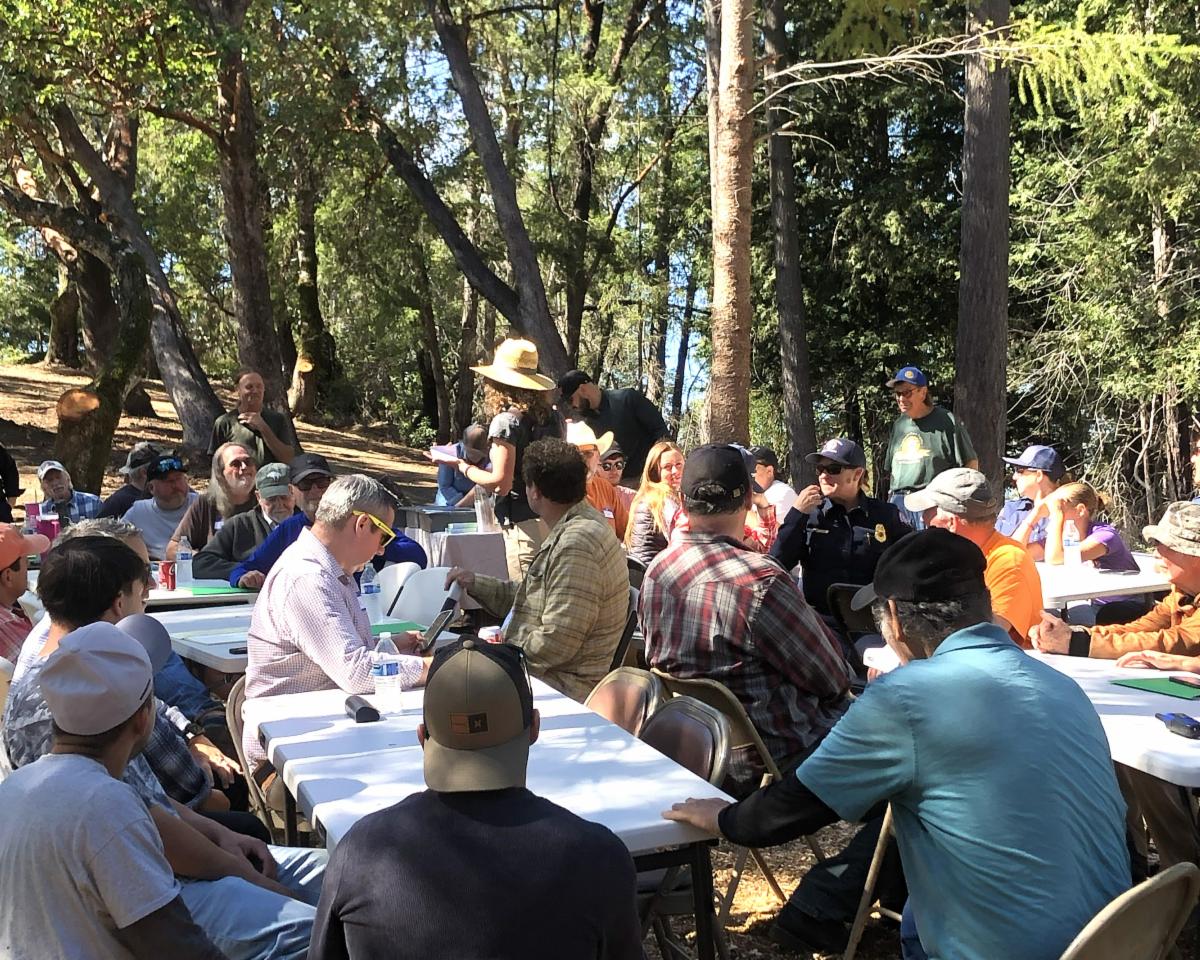
Walbridge Fire survivor and Guerneville landowner, Herman Hernandez, recently hosted a gathering for his neighbors and those who have assisted him with the many conservation projects he's completed on his land.
Herman's goal was to share conservation resources, thank the agencies that have supported his efforts, and inspire others to explore conservation programs.
Attendees also heard from CAL FIRE Battalion Chief Marshall Turbeville on wildfire mitigation and community safety in the wake of the 2020 Walbridge Fire. Then, the group took a walking tour of the property to see goats in the process of grazing to manage vegetation and reduce wildfire risk. Chase Cianfichi, owner of Chasin Goat Grazing, spoke about how to work with a contract grazer to manage fuels across grasslands, shrubland and forest understories.
Since experiencing the 2020 Walbridge Fire firsthand, Herman has become a strong advocate for conservation practices, reshaping his perspective and deepening his commitment to land stewardship. This event was a great chance for the neighborhood to gather, learn, and take their next steps towards organizing together as a community.
Are you interested in hosting a similar event in your neighborhood? Reach out to Rose@GoldRidgeRCD.org
| | Workforce Development: Ecological Principals of Fuel Treatments in Sonoma County | | |
Check out this video from the County of Sonoma that highlights a recent Workforce Development Training Workshop. This workshop was funded by a grant from the National Fish and Wildlife Foundation and the PG&E Settlement Fund.
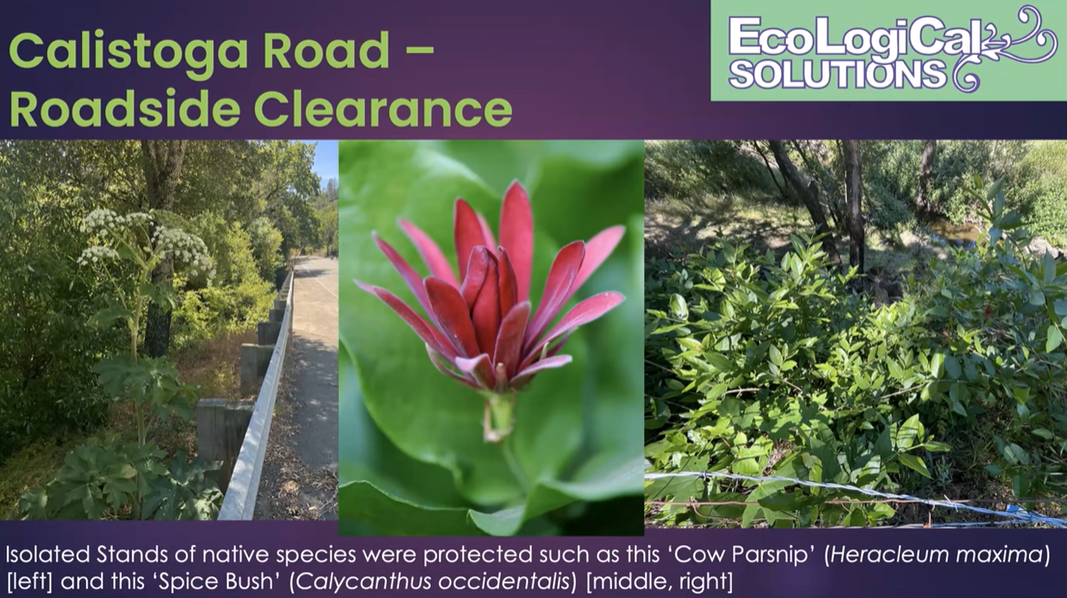
Led by Sonoma County Ag + Open Space, Ecological Solutions, Gold Ridge Resource Conservation District, Occidental Arts & Ecology Center, and Sonoma Ecology Center, crews were exposed to a wide variety of fuel treatments and the ecological perspective to understand how each treatment is used under diverse conditions. These fuel treatments included forest thinning, prescribed grazing, prescribed fire, and gully stuffing to reduce soil erosion. This was a hands-on workshop for fuels crews to learn from Sonoma County’s best vegetation management experts and explore career opportunities in this field.
| | Recent Presentation Recordings | | | | |
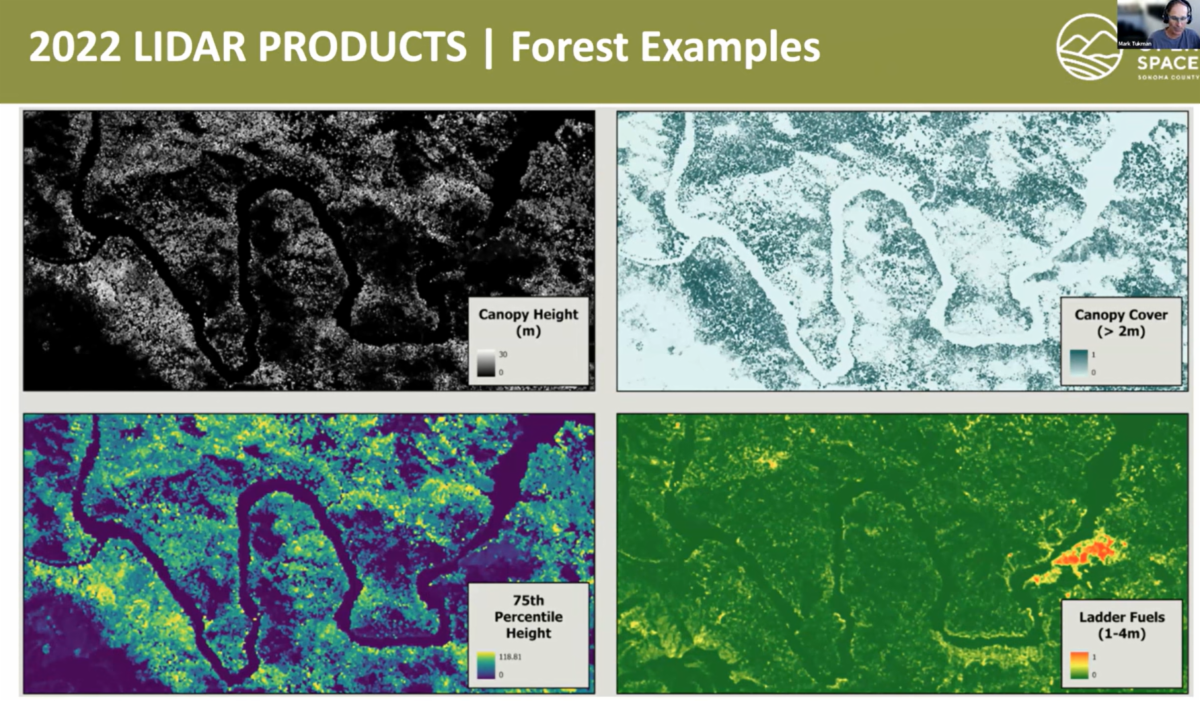
New LiDAR Layers for Sonoma County
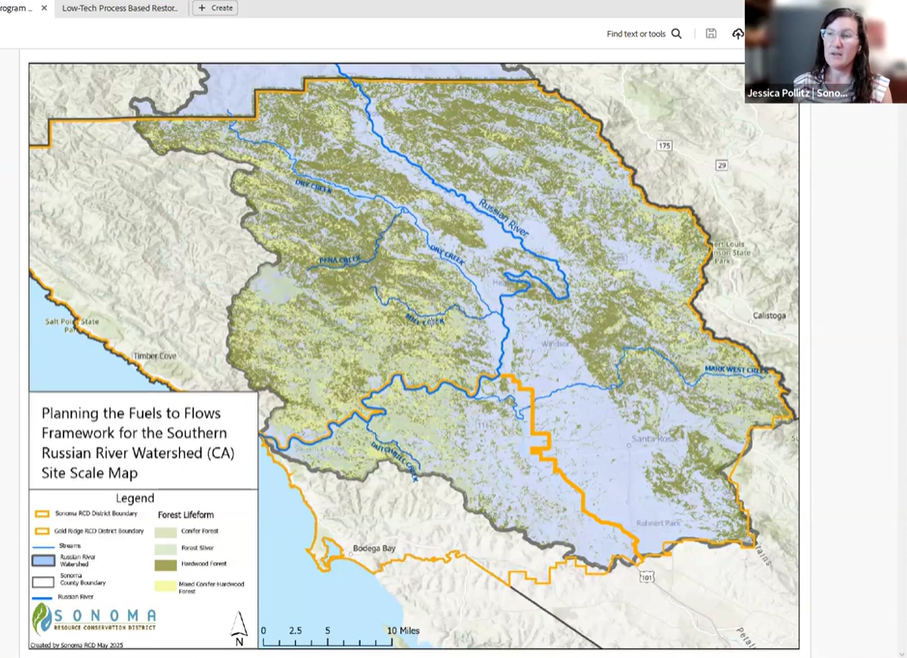
Mark Tukman, Tukman Geospatial, discusses the new LiDAR layers available for Sonoma County. These high-resolution datasets are derived from lidar acquired between September and November 2022 as part of a larger Northern California regional collaboration and are now accessible for public use.
| | | | |
Panel Discussion: Recent and Upcoming Project Proposals
During this panel discussion, we heard from multiple organizations about their projects, lessons learned from past proposals and goals for the future. Our panelists shared details about upcoming projects focused on gully stuffing, landowner education, wildfire fuel reduction, and more!
| | Financial Assistance Opportunities | | North Bay Forest Improvement Program: Next Round of Applications Opening January 2026 | | | |
This program brings critical resources to treat wildfire hazards on private properties throughout the region, with a focus on serving disadvantaged communities. The North Bay Forest Improvement Program (NBFIP) supports the planning and implementation of projects on private forested lands to reduce the risks of wildfire and promote forest health. The program provides financial incentives to landowners to conduct this critical work.
Next Application Window: January 16-30, 2025
| | Environmental Quality Incentives Program (EQIP) | | | |
The Environmental Quality Incentives Program (EQIP) is NRCS’ flagship conservation program that helps farmers, ranchers and forest landowners integrate conservation into working lands. EQIP provides technical and financial assistance to agricultural producers and forest landowners to address natural resource concerns.
Application deadline: November 21, 2025
NRCS is currently closed due to the government shutdown. Updated information from NRCS will be available once the government shutdown ends.
| | |
NCRP Request for Proposals:
Technical Assistance for Grant Development
| | | |
The North Coast Resource Partnership is pleased to offer a Request for Proposals for Technical Assistance to Tribes and economically disadvantaged communities to support grant applications for on-the-ground projects that improve forest health and increase wildfire resilience.
Proposals are reviewed and awards are considered quarterly: February 1, May 1, August 1, November 1.
| | |
Summit Saturday: Calabazas Creek Open Space Preserve
Join Sonoma Ecology Center for a guided, moderately strenuous exploration of Calabazas Creek Open Space Preserve, a 1,290-acre protected gem nestled in the Mayacamas Mountains and shaped by both time and fire. This special outing, in partnership with Sonoma County Regional Parks and the Sonoma County Agricultural Preservation and Open Space District, offers a rare chance to traverse a preserve still closed to regular public access.
Saturday November 8,
9 am - 1 pm
Calabazas Creek Open Space Preserve,
Glen Ellen
| |  |
|
Practical Solutions for
Sustainable Roads Management
This workshop focuses on sustainable road management strategies for rural communities, emphasizing practical solutions that protect forests and watersheds. Attendees will hear from local experts who will address immediate and long-term road challenges, drainage and erosion control using natural materials, and practical strategies to help maintain healthy, resilient roadways.
Sunday, November 9, 1 pm
Timber Cove Fire Station, Cazadero
| | | |
From Tree to Table: Indigenous Acorn Cooking Workshop
Join Clint McKay, Pepperwood’s Indigenous Education Coordinator, to learn first-hand about local Indigenous food traditions centered around acorns. From harvesting to preparing, storage and cooking, Clint will walk you through some of his people’s culinary practices around the bounty of acorns grown locally in the landscape.
Saturday, November 22
9 am – 3:30 pm
Pepperwood Preserve,
Santa Rosa
| | | |
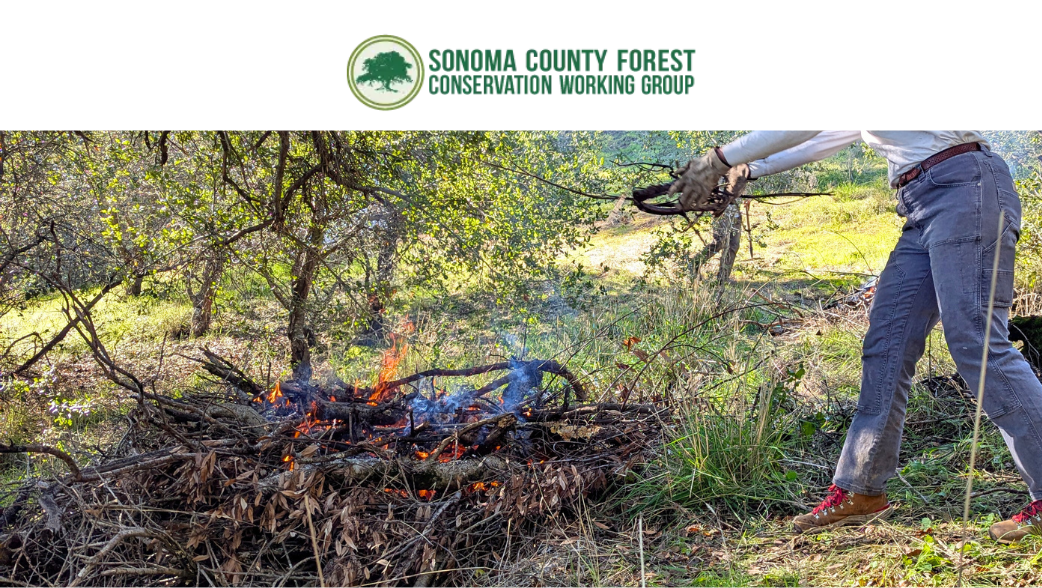
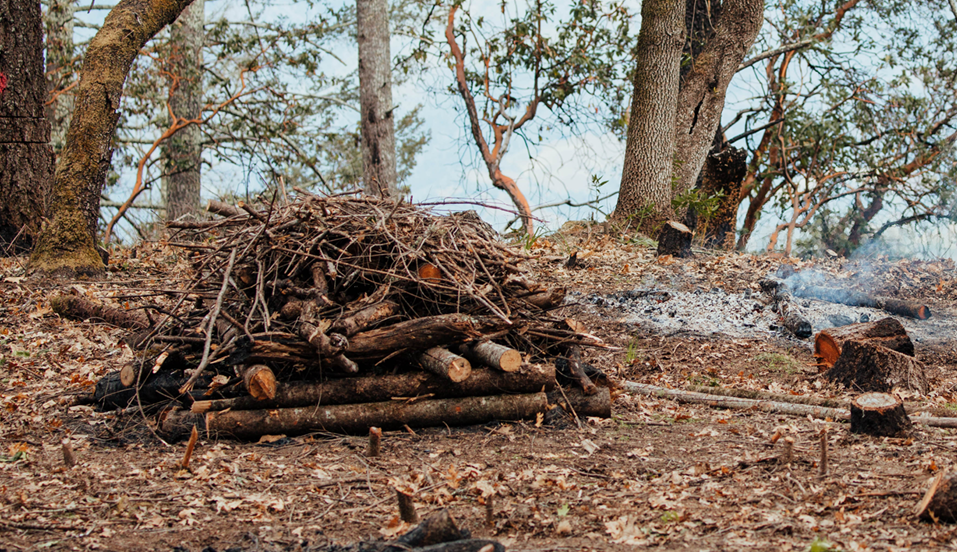
Pile Burning for Fuels Reduction Workshop
Join expert land stewards and gain hands-on experience learning:
- How to create and burn safe, clean burning brush and woody debris piles
- What precautions are needed for pile burning in a location where water is not plumbed
- What permits are needed from air quality and fire districts
- About the potential benefits of forest fuel reduction
- Ecological restoration opportunities that can be associated with pile burning
Sunday, December 14
9 am - 2 pm
Pepperwood Preserve,
Santa Rosa
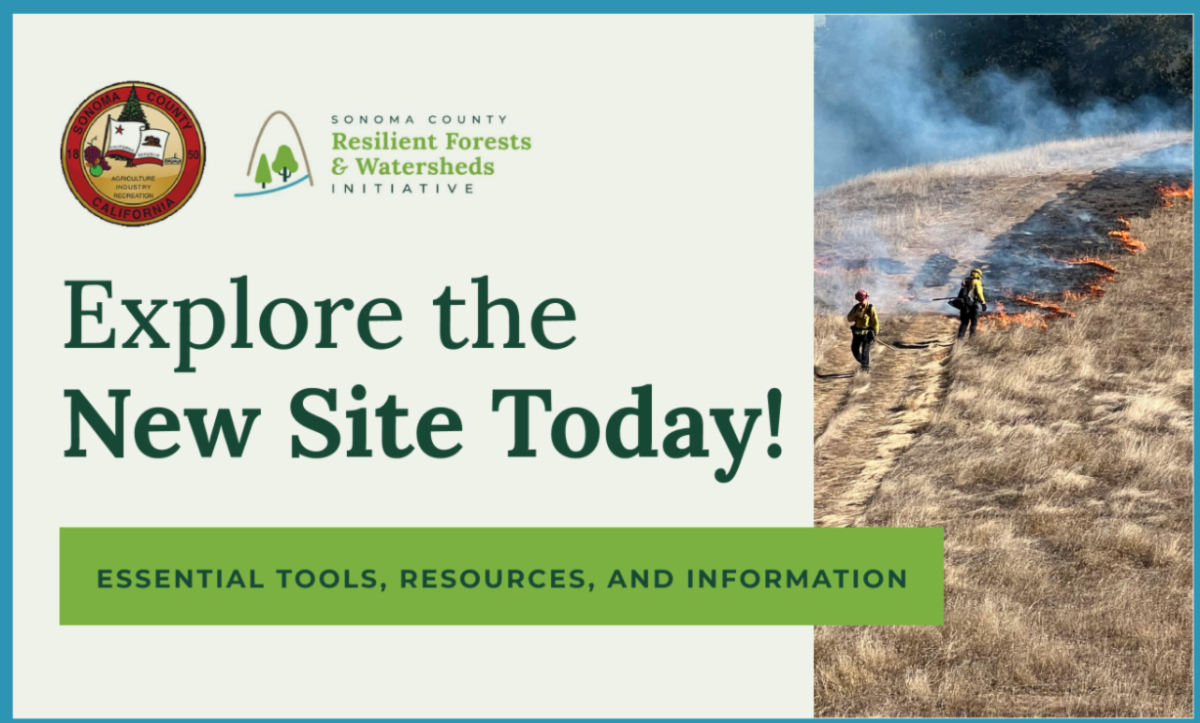
| | | New Website on Resilient Forests & Watersheds Initiative | | Sonoma County is excited to announce a new comprehensive resilience website at sonomacountyresilient.org - your one-stop resource for disaster preparedness, climate resilience tools, and community support. Bookmark this essential resource today to stay prepared and connected to recovery efforts throughout our county. | | Updated Burn Pile Guide for Sonoma County Now Available | | |
The Good Fire Alliance publishes a Burn Pile Guide every year with updated information to support Sonoma County landowners, managers, and fire practitioners.
In the guide, you'll find links for permits and phone numbers, as well as a list of best practices for building effective piles, weather markers to watch, and tips for extinguishing piles in dry weather.
| | | Your contribution means more workshops, outings and special speaker events designed to educate and connect forestland managers. | | | | | |
Sonoma County
Forest Conservation Working Group
| | | | |