Last Chance:

School Leaders and Tutoring Providers Needed for Brief, Anonymous Tutoring Survey


Billions of federal relief dollars are being invested in tutoring, creating critical questions around supporting and sustaining one of the most effective interventions. JHU has launched a research survey to gain a comprehensive understanding of how K-12 school leaders make decisions around tutoring and the barriers to scaling faced by tutoring providers.


We are inviting K-12 district and school leaders and tutoring providers to complete the short, anonymous online survey.


We encourage everyone to share the survey broadly with other leaders and providers in their networks. The findings will be shared with the tutoring community.

Begin Online Survey


About the Survey

Supporting and Sustaining Scalable, High Impact Tutoring


The Center for Research and Reform in Education (CRRE) at Johns Hopkins University, with funding from Accelerate, has launched a research initiative broadly focused on high-impact tutoring and how to improve the adoption, implementation, and scaling of highly effective tutoring models. Our objective is to understand the decision-making process used by districts and schools to select and adopt a tutoring model and to identify the barriers for providers in terms of scaling tutoring models.


WE NEED TO LEARN ABOUT THE EXPERIENCES OF SCHOOLS AND TUTORING PROVIDERS. 


Participation will require only brief surveys with the possibility of optional follow-up interviews with: (a) school and/or district administrators and (b) tutoring providers.

If you have any questions, please email Cynthia Lake, clake5@jhu.edu, or Dr. Amanda Neitzel, aneitzel@jhu.edu

But Will This Work In My School?


In our work with schools and districts on the adoption of evidence-based tutoring models, a common question we hear from school leaders is, “These models may have research behind them, but will they work in my school?”


A fair question.


How important is it for a program to have rigorous research? What does it really tell educators about how well a program will work in their classrooms?


A tutoring model proven to work in a randomized control trial (RCT) or matched study is, quite simply, the best bet. These research designs make clear whether growth in achievement is due to the intervention being tested. Programs with positive effects, if implemented the way they were researched, provide tremendous promise for dramatic gains in achievement. These rigorously evaluated programs have been tinkered with and fine-tuned along the research continuum. Their providers have expertise in how to effectively partner with schools to maximize the program's impact.


We are excited about the growing number of states, districts, and schools using evidence to vet programs and then committing to implementing the selected intervention as it was researched to achieve the intended impact on achievement. This newsletter features a success story about a California elementary school that used evidence to vet programs, selected a program with a strong evidence base, worked closely with the tutoring provider to implement the program as it was researched, and is now seeing the dramatic gains in student achievement. It is one of many, many success stories from our coalition of proven programs. 


A Dynamic Change in a California School

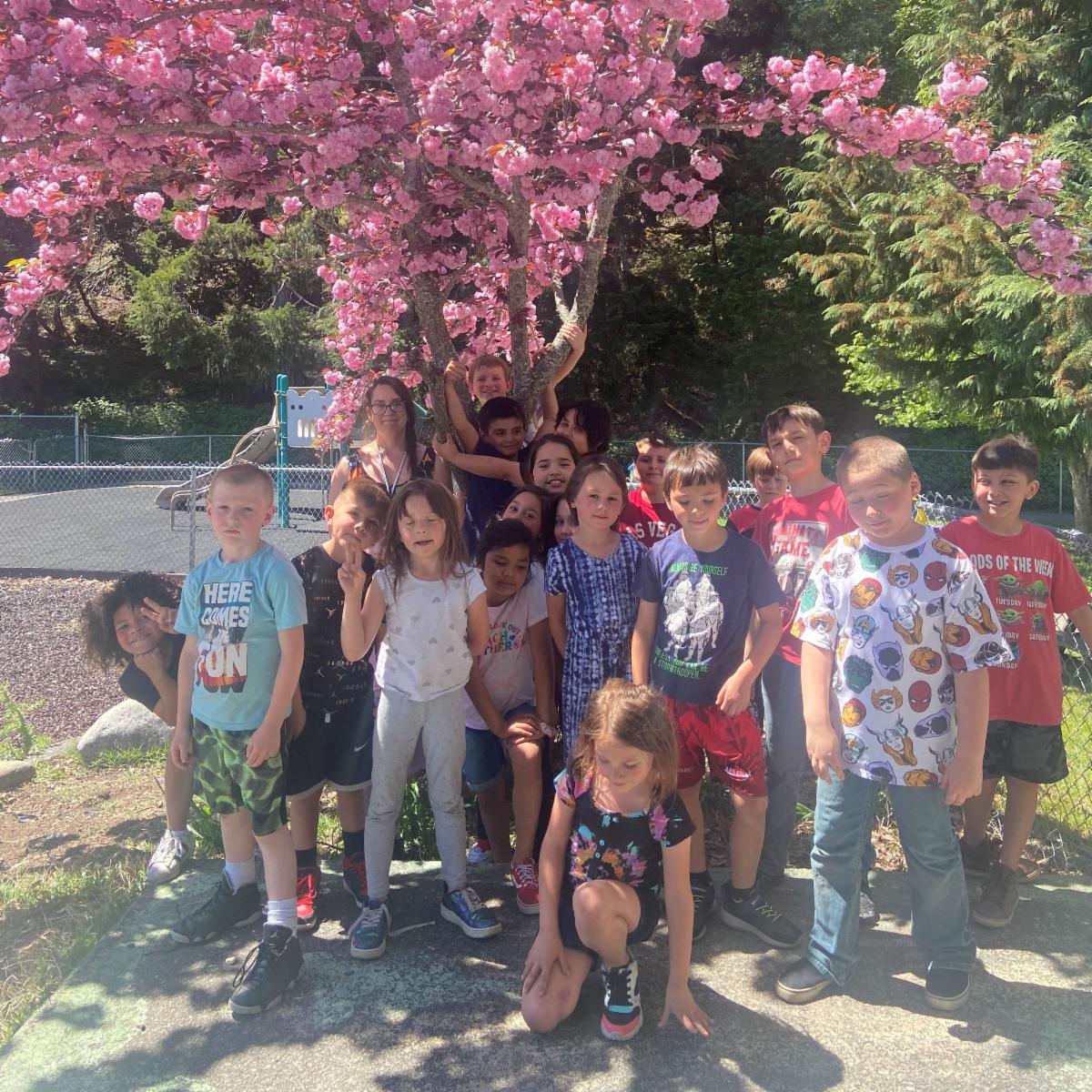
Prior to implementing SFA, Trinity Valley Elementary faced challenges in maintaining a consistent schedule and utilizing a curriculum that was over two decades old. Trinity Valley Elementary, along with other schools within their district, made a deliberate choice to adopt a research-proven program and after thorough investigation decided on SFA. As part of SFA, they began structured, intentional tutoring for students in grades 1–6, with 44 below-level readers in the tutoring program. While the transition from their previous program to SFA may have been challenging in the first year, their unwavering determination and commitment to the implementation process ultimately brought great success. Sarah Owens, the SFA facilitator at Trinity Valley mentioned that, "SFA is accessible. SFA is simple, yet focused. In every classroom, students are actively learning."

Following two years of implementing SFA, Trinity Valley Elementary has witnessed remarkable results and received positive feedback from both teachers and students. The implementation of a consistent routine has made the school day more familiar, resulting in significant growth in student learning and positive behavioral changes. In addition, students in SFA Tutoring have flourished. SFA Facilitator Sarah Owens said, "In my 28 years of teaching, there are always kids who just don't get it, and no matter what we do, they don't seem to progress. It breaks your heart to see these students struggle with reading. So, it was tremendously exciting to see specific students who had previously struggled to make progress and, after being placed in the appropriate reading level, fill in all the missing gaps they had." Two particular success stories that stand out are the stories of Roscoe and Madeline:


Roscoe's Story


Roscoe is a lively student who had a hard time when it came to reading. The school decided to put him in SFA Tutoring. In the beginning, he struggled, but when it finally clicked he was able to grow 4 months in 3 weeks.


Madeline's Story


Madeline is described as “a sweetheart” who loved vocabulary but struggled with reading. After doing SFA Tutoring for 6 months she grew 2.4 years in 6 months’ time, and her tutoring partner grew 1.4 years.

 
Facebook  Instagram  LinkedIn  Twitter