News & Updates

February 12, 2025

New Digital Story Map for Black History Month Recognizes the Village of Willard, a Once-Vibrant Black Community on the Site of Washington Dulles International Airport

SUMMARY: A new digital exhibit highlighting the rich history and legacy of the Village of Willard, a historic predominantly Black community in Loudoun County, Virginia, is now available on the Loudoun County Government’s Black history webpage. This project highlights the resilience, culture, and contributions of Willard residents, whose thriving community was displaced in 1958 to make way for the construction of Dulles International Airport.


Originally planned as a physical exhibit at the Dulles airport, the project has evolved into an accessible digital format that allows a wider audience to engage with the untold stories of Willard. The exhibit offers an in-depth look at the community’s history from approximately 1850 to 1958, featuring archival records, photographs, genealogical research, and narratives from former residents and their descendants.

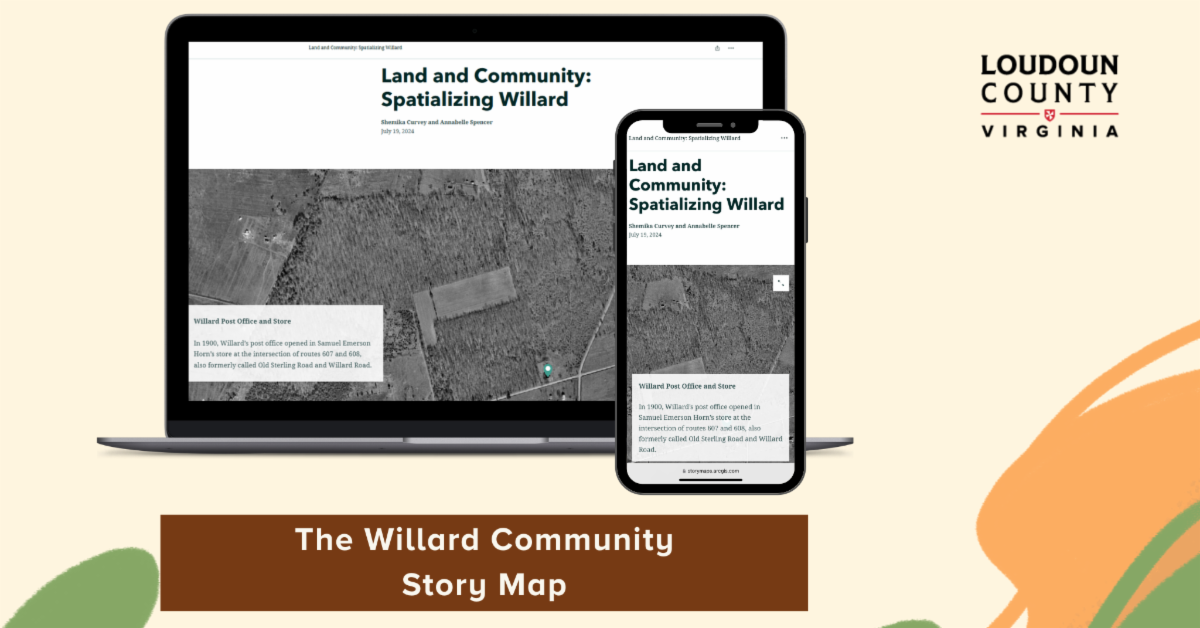
Land and Community: Spatializing Willard

What is now the site of Washington Dulles International Airport was once home to a small, thriving, and predominantly Black farming community called Willard. An online story map on the history of Willard provides well-deserved recognition to village residents and their descendants.


"There is so much rich history related to Loudoun’s African American communities that is completely unknown to lifelong Loudouners, new residents, and visitors alike,” said Sterling District Supervisor Koran T. Saines. “It’s vital that the stories, tragedies, and triumphs of communities like the Village of Willard are not lost in time.”


Formerly called Willard Crossroads, the village included a post office and the Willard Store, and was also home to Shiloh Primitive Baptist Church and Willard Colored School. Willard was settled by formerly enslaved individuals and their descendants, many of whom were subsistence farmers who grew corn and vegetables and raised chickens, hogs, and dairy cows. Other residents worked as farmhands or sharecropped at larger operations.


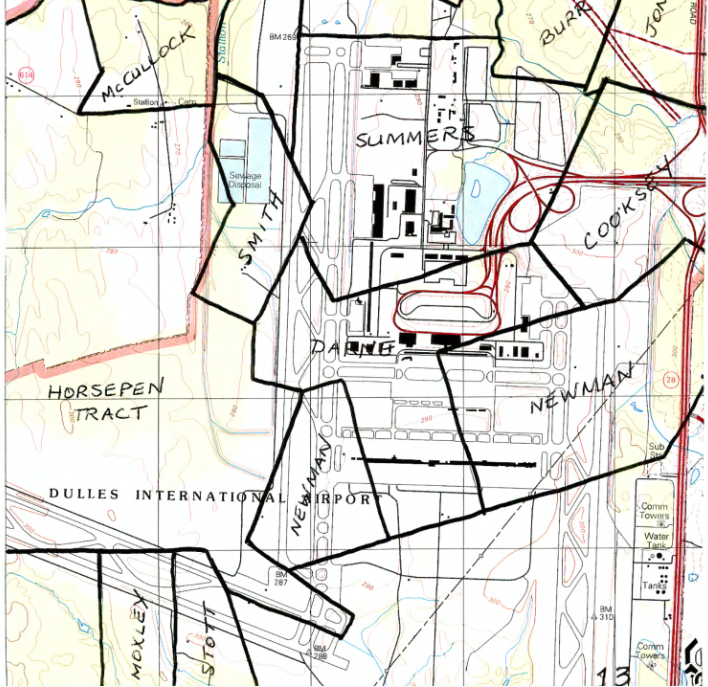
By the late 1950s, the actions of the federal government in establishing Dulles Airport would disrupt the deep connections, community, and landownership created by these families. In 1958, Chantilly was selected as the site for a second major airport in the capital region. Paying an average of $500 an acre for about 9,800 acres of land, the government sent condemnation letters to the 87 landowners in the village and surrounding countryside. In total, over 300 structures were razed.

The story map—titled “Land and Community: Spatializing Willard”—tells the story of the once vibrant Black village, serving as a testament to the enduring spirit of the residents who called the land home for generations.


The story map is part of a project called Spatializing Black Stories: Geographies of Community in Loudoun County, Virginia, which is managed through the Black History Committee of the Friends of the Thomas Balch Library (BHC). It is funded in part by the African American Community Alliance and the Van Huyck Chockley Family Foundation. The work was done by George Mason University students and faculty from the university’s Center for Mason Legacies, in partnership with the BHC.


Dr. Wendi Manuel-Scott, professor of integrative studies and history at George Mason, says the project’s essential question is, “How do we make visible the destroyed, displaced, and erased Black geographies in Northern Virginia, and what lessons might we learn from Black survivance and space-making under adverse conditions?” The story map attempts to answer this question and, as Manuel-Scott explains, "serves as an invitation to wrestle with hard histories so that we might gain a more complete understanding of our past and how it shapes the present.”


“The vision for this project is to inspire interest in untold stories, and to emphasize the importance of doing individual genealogy, research and storytelling,” says BHC Chair Donna Bohanon. “We want people to discover their connections to local community history to see similarities that will create better understanding of ourselves and each other. This is the best way to relate to our shared history.”


For more information about Black History in Loudoun County, visit loudoun.gov/BlackHistory.


For more information about the Black History Committee, visit fotblbhc.org.

Explore the Willard Story Map
Facebook  X