Windows

September 29, 2022

Word from the Pastor:

My People?


On that day Israel will be the third party with Egypt and Assyria, a blessing in the midst of the earth, whom the Lord of hosts has blessed, saying, “Blessed be Egypt my people and Assyria the work of my hands and Israel my heritage.”

—Isaiah 19:24–25


I grew up in what I have come to refer to as a “brimstone” church. Out of respect for my brothers and sisters in other denominational traditions, I’ll forgo labels. Suffice it to say that by the time the pastor was done, those who weren’t “right with God” could smell the sulfur and feel the heat. Like Martin Luther, I spent the early years of my life convinced I was a goner, tortured by the weight of God’s displeasure with me.


Of course, none of us should casually dismiss God’s judgment. We believe God is pure love, as we are told in in 1 John 4:8. However, our modern ears hear the word “love” emptied of any concept of judgment. This option doesn’t work. Is love possible without justice? To those keen on the attempt, try explaining God’s love to someone who was trafficked. Can God love them without smashing the chains of their oppressors?


Interestingly, this is exactly the sort of question with which Israel’s prophets wrestled. They knew that God had chosen them and set them apart to be both a peculiar witness to God’s steadfast love and faithfulness (Exodus 19:5–6) and a blessing to the nations (Genesis 12:3b). This identity was both a word of judgment to those who would do violence against God’s people, like their Egyptian, Assyrian, Babylonian, Greek, Seleucid, and Roman oppressors, and the call to bear witness to the Lord to the ends of the earth.


Isaiah opens his prophetic work at a time when Assyria was breathing down Israel’s neck, threatening doom, and kings like Hezekiah were looking to make a deal with their former enemy Egypt to come and save them. Is the enemy of my enemy truly my friend? Can God use even oppressive Egypt and Assyria, as well as broken and frail Israel, for God’s purposes? To what end? When will our enemies get their comeuppance?


In answer to this, Isaiah pens one of the most brilliant insights into God’s mysterious and grand purposes. Though Isaiah issues pronouncements against Egypt as a warning to Israel, verses 18 through 25 of chapter 19 testify to something beyond the presenting political struggle. When God acts, Isaiah tells us, not only will Israel be redeemed, but room also will be made for Egypt and Assyria. On that day, Isaiah tells us, there will be an altar to the Lord in both Egypt and Assyria, with a road between them—a road winding right through the heart of Israel, standing as a repairer of the breach between peoples and nations. Though Egypt will be struck, that punishment will be tempered with grace, and they, too, shall be healed (v.22). When God acts, not only will Israel be blessed, but Egypt and Assyria will also be called “my people” (v.25). 


Please don’t read my words as an invitation to any form of universalism, or cheap grace. God’s judgment is real, and it is fierce; we ought never to toy with God or mistake our purposes for His. However, there was something missing from those brimstone services of my youth that the church needs to remember: In Jesus Christ, God’s purposes of reconciliation and redemption have been accomplished, the burden of our sin and shame dealt with, and grace extended to all who will receive it (John 3:17). When Jesus cried “It is finished,” his statement wasn’t conditional (John 19:30).


What this means is that in Christ all of us have a path back. Even we who have been God’s severest enemies find the possibility of being called His people, not because we are worthy but because God’s justice is tempered by the outstretched hand of compassionate love. Or, as I like to say some Sundays, “Your Judge has, from the beginning, been your Redeemer.”


In Christ,

Pastor Sam

Worship

October 2

17th Sunday after Pentecost

World Communion Sunday


Scripture

Psalm 29:1–4

1 Corinthians 10:14–31


Sermon

“On Meat, Cups, and Conscience”

Sam Weddington


Last Sunday’s Attendance

9:00: In person: 133;

Livestream: 27; Playback: 65

11:00: In person: 106;

Livestream: 17; Playback: 42

Calendar

Sunday, October 2

9:00 a.m.

Contemporary Worship

Fellowship Hall


10:10 a.m.

Sunday School


11:00 a.m.

Traditional Worship

Fellowship Hall


Monday, October 3

10:00 a.m.

Staff Meeting

Room 123


Tuesday, October 4

7:00 p.m.

Boy Scout Troop 3

Scout Hall


Wednesday, October 5

5:30 p.m.

Fellowship Supper

Fellowship Hall


6:15 p.m.

Adult Enrichment

Student Small Groups

Wednesday Night Kids


Handbell Practice

Room 212


7:15 p.m.

Sanctuary Choir Practice

Room 202


Praise Band Practice

Fellowship Hall


Thursday, October 6

7:00 a.m.

Men’s Bible Study

Parlor


1:00 p.m.

Women’s Bible Study

Room 167


5:30 p.m.

Scout Roundtable

Fellowship Hall

Join Us for Wednesday Night Fellowship


Our Wednesday night programming continues October 5 with supper in the fellowship hall at 5:30, followed by activities for children, teens, and adults. Our Adult Enrichment program in the chapel will continue our Life Together series. Please join us!


Life Together for Home Groups

Our latest Home Group curriculum, Life Together, is about how we can be new persons and communities centered in the person and work of Jesus Christ. Access the curriculum on our website or watch for it to drop on our Home Groups Facebook site.

Give Safely

We encourage you to use text, mail, or our website to safely continue your faithful support of our ministries during the pandemic. You can give online by going to our website and clicking on “Give” in the upper right corner. You can send your pledge, offering, or special gift by texting fpcbristol to 73256, or mail your checks directly to the church.

How to Join Us Online

You can watch the livestream of our worship services and other activities at FPC Bristol on YouTube. Click on the link and hit “Subscribe” to receive notifications of new videos. To connect to our various Facebook sites, go to Facebook and type in FPC Bristol. Several accounts will show up. “Like” the page or ask to join a group.

Organist's Footnotes

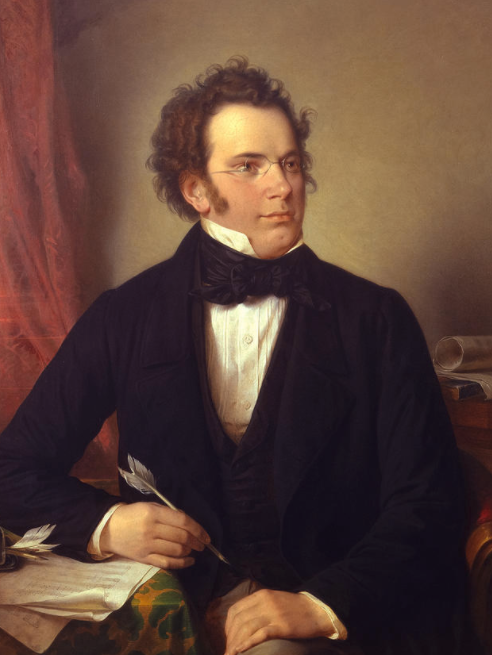
Franz Peter Schubert (b. Lichtenthal, Austria, 1797) was the son of a Moravian schoolteacher. His father began Franz’s elementary schooling when Franz was five years old and began to give him violin lessons when he was eight. Franz became a choirboy and soon received theoretical instruction from his choirmaster. His brother, Ignaz, gave him his first piano lessons. His marvelous talent for music amazed his teachers, who all frankly confessed their inability to do more than watch the unfolding of his great gift. His fine voice won him a place in the Imperial Chapel, where he received theoretical instruction under the celebrated Salieri. He began to compose before he was 13 and wrote his famous song, “The Erl-king,” when he was 18. His voice changed when he was 16, and he left the Imperial Chapel to become assistant to his father. At the age of 20, he gave up teaching school and devoted himself entirely to composition. A few devoted and discerning friends supplied his material needs. In March 1828 he gave a very successful concert of his most recent compositions. Eight months later he died of typhoid fever.


In the 18 working years of his all-too-short life, Schubert composed eight symphonies, more than a dozen operatic works, seven masses, 22 piano sonatas, innumerable smaller piano works, and more than 600 songs. His supreme melodic gift made him one of the greatest songwriters of all times.


For Sunday’s prelude, I will play Schubert’s “Impromptu in G-flat major, Op. 90, No. 3.” Despite their name, Schubert’s impromptus were not improvised, but fully composed free-flowing pieces. The “Waltz in B-flat Major” (postlude) is short and vigorous.

Pray for One Another


We want to pray for and celebrate with you! Send us your prayer requests and glad tidings.


In Our Prayers

Please also pray for the members of our community who wish to remain anonymous.


Wayne Ausmus

Bud & Marg Branscomb

Kim Bright

Bristol Tennessee City Schools

Charles Burroughs

Becky Busler

Tom & Nancy Carter

Rachel Cherry

Cole family

Bill Coleman

Russell Fogelman, Kelli Krajeck & Kendall

Lou Hebb

Charles Hoilman

Justin & Merifer

Nancy Lilly

Toni Mari

Diana Mattison

Dot Mattison

Montana Indian Ministries

National & international leadership

Pastor Bruce Plummer

Cora Lee Raccioppo

Seymour Ray

Lynn Richards

Anna Rogers

Les & Kathy Samuel

Wendy Smith

Teachers & school administrators

Scott VanNostrand

Bill & Patsy Ward

Michael Weller

Marsha Wilson

Virginia Wilson

Stevie Wintz


Our COVID Protocols

The session strongly encourages masks for those not fully vaccinated, or at higher risk of complications from COVID-19. The session encourages everyone to consult their medical professional about vaccinations and boosters.

Deadline & Subscriptions

Monday is the deadline for contributions to Windows. Subscribe to our free e-newsletter by sending your name and preferred email address to the editor.

October Birthday Prayer Fellowship

To protect your personal information, we now publish an undated list of the month’s birthdays.


Ann Abel

Cliff Bailey

Kathryn Benton

Ann Blevins

Abigail Booher

Ralph Booher

Dyan Buck

Lori Byington

Benjamin Cherry

Anna Connolly

Nancy Cook

Jim Daniel

Kathleen Dotterweich

Trent Dowdell

Sue Faucette

Rusty Felty

Ron Fox

Ben Frizzell

Alice Graham

David Hankins

Fred Harkleroad

Peggy Hill

Kristi Johnson

Martin Kent

Rachel Kent

Gwen King

Josh King

Patty King

Peggy King

Tom King

Rick Ladd

Bill Linderman

Laura Linke

Dot Mattison

Junella McClellan

Carl McGrady

Alicia Mumpower

Laura Ong

Claire Pruner

Prim Rollins

J.T. Scott

Cheryl Stone

Brandon Story

Mariel Story

Katie Sword

Lance Tudor

Flora Mae Turner

John Warner

Joan Weddington

Deborah Whitaker

Chris Winters

Elliott Yates

Joseph Zeiler

701 Florida Avenue | Bristol, TN 37620 | 423-764-7176 | fpcbristol.org