Issue 680 - August 14, 2026

IN THIS ISSUE


  • NEWS: Direct-to-Consumer Wine Sales Law Takes Effect Tomorrow
  • NEWS: State, Federal Lawmakers Focused on Improving Health Through Better Eating, Nutrition
  • ELEPHANT'S GRAVEYARD: Tax Breaks on Overtime Pay and Tips Killed by House and Senate Democrats
  • NEWS: Longest-Tenured Member of the House of Representatives Honored by Hometown

NEWS

NEWS:

Direct-to-Consumer Wine Sales Law Takes Effect Tomorrow


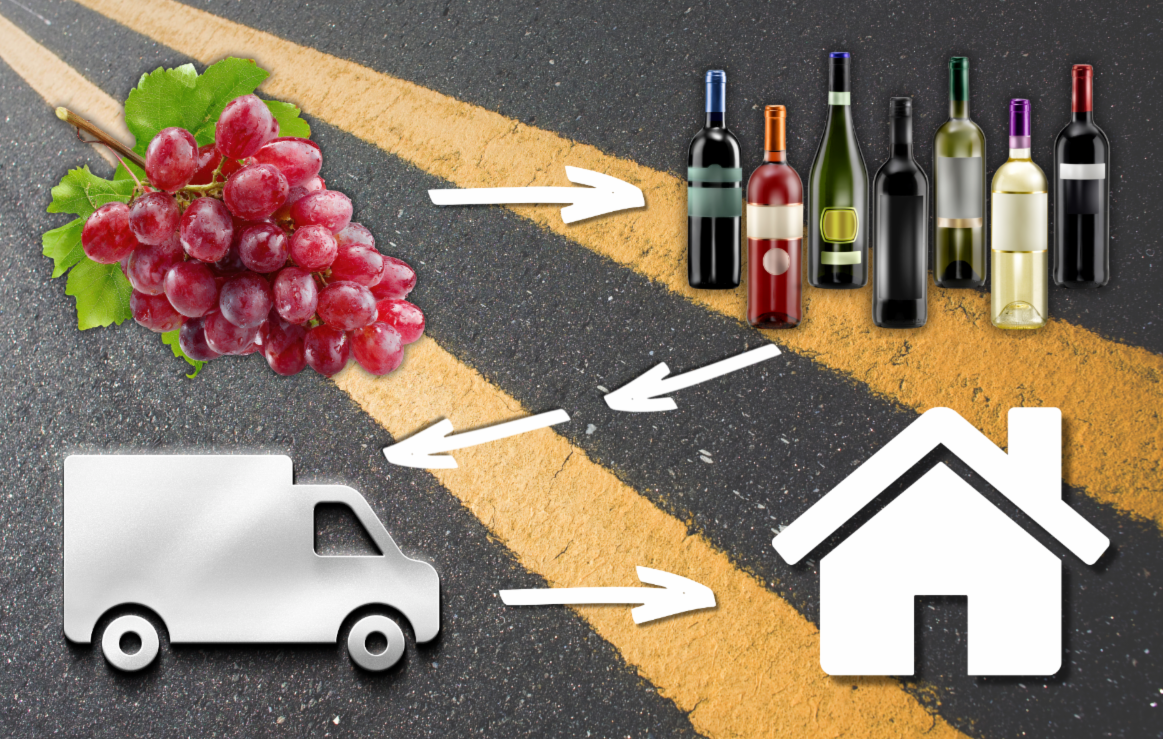
AUGUST 14, 2026 -- Tomorrow, Delaware will shed a dubious distinction as a new law takes effect, allowing some wine producers to ship their products directly to Delawareans.


Delaware had been one of only two states in the nation that entirely prohibited the practice.


House Substitute 2 for House Bill 187 (as amended) was a long time coming. Various proposals sponsored by House Republicans to legalize direct-to-consumer wine sales in the First State have been introduced in the General Assembly for over three decades, according to former State Rep. Deborah Hudson, a longtime proponent of the concept during her 24-year tenure in the legislature.


The primary impediment to shipping wine directly from vineyards to customers has been the state's traditional three-tier system of producers, distributors, and retailers--an antiquated structure dating back to the repeal of Prohibition. The organizations with a vested interest in maintaining this nearly century-old framework have vigorously lobbied against every incarnation of the direct-to-consumer wine sales bill, not the least of which is the union representing truck drivers and warehouse workers.


The law requires licensing of participating wineries, it caps the quantity of wine a homeowner can receive annually, and bars the resale of shipped products. It also requires payment of all applicable retail taxes, mandates that shipments be made in prominently labeled boxes, and stipulates that recipients must be at least 21 years old, provide proof of age, and sign for delivery.


One limiting caveat of the statute bars home delivery by any wine producer represented in Delaware by a licensed importer/wholesaler. These products will still need to be ordered through local retailers.


The law is not without its critics. The Wine Institute, a winery industry trade group, has recommended that its members not participate.


As reported by Wine Spectator, Terri Beirne, eastern counsel of the Wine Institute, called the law's limitations a “poison pill” and an unusually restrictive measure compared to others across the country. 


The same article also notes that some expressed concerns that if Delaware retail shops carry wine from a consumer’s favorite out-of-state winery, online purchases of different wines from that same winery, or participation in its wine club, are effectively nixed. 


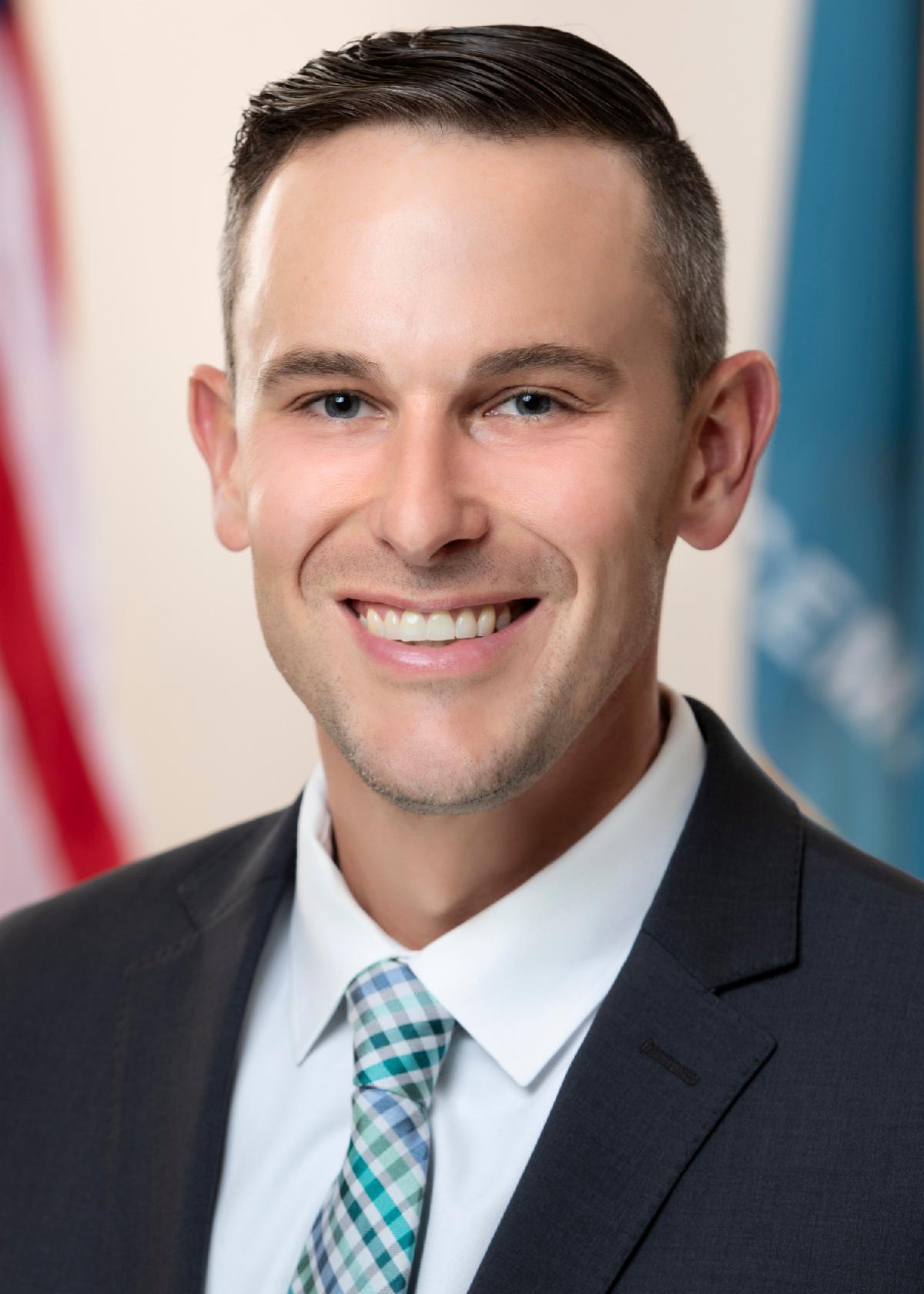
State Rep. Mike Smith (R-Pike Creek Valley), in photo, the measure's prime sponsor, conceded the law is not without its flaws. “It’s not perfect," he said. "This is very much a compromise piece of legislation that reflects the best we could do in the current climate. But everyone should understand that this statute, like many laws, is a work in progress. It's a positive step forward that will hopefully evolve into something better, as it's demonstrated that direct home wine shipping will not have a detrimental impact on local retailers or jobs."


Rep. Smith stressed that, with 48 other states having had some form of home wine shipping on the books for many years, there is a large database to draw on. In studies done in Maryland and Virginia following the enactment of their shipping laws, retail wine sales in brick-and-mortar stores increased.


"We need to achieve a comfort level here that direct-to-consumer wine sales are not the threat some people believe it to be," he said. 


The new law will expire, or "sunset," in five years unless it is reauthorized. It also mandates a study on the impact on retail sales. That report is due June 1, 2028.

NEWS

State, Federal Lawmakers Focused on Improving Health Through Better Eating, Nutrition


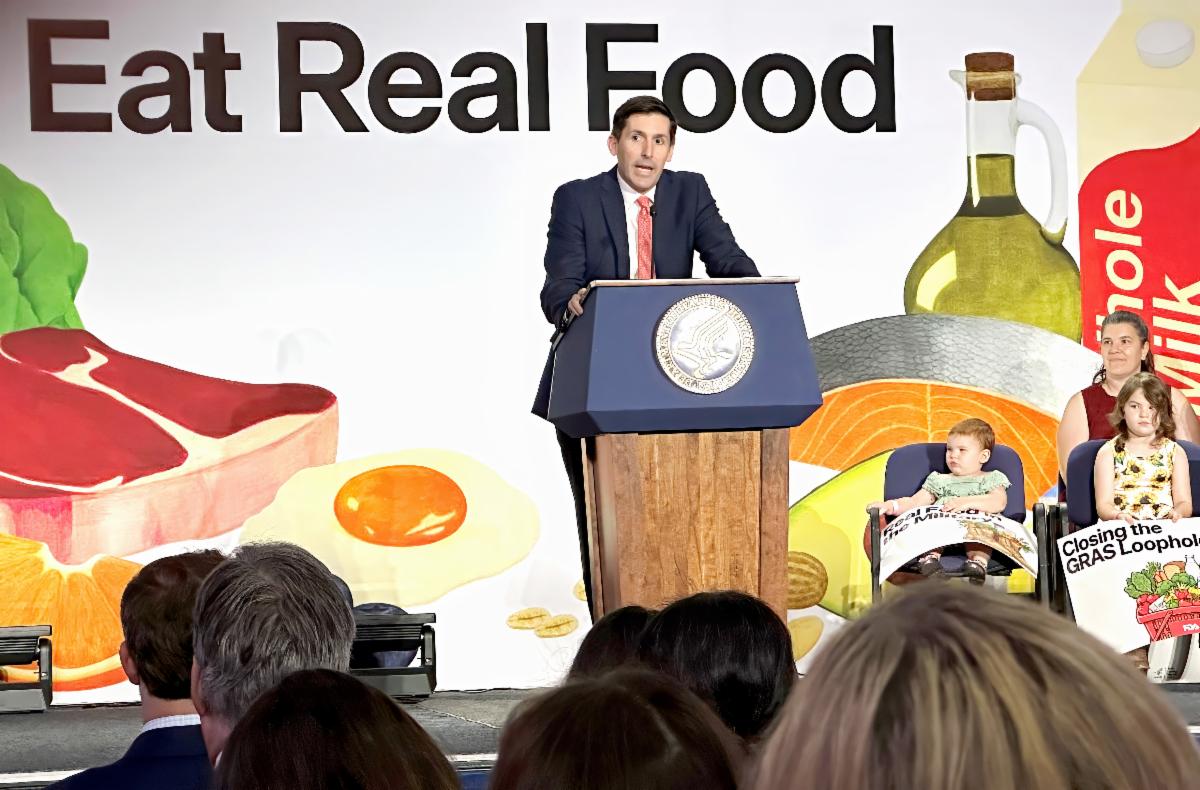
State Rep. Jeff Hilovsky (R-Long Neck, Oak Orchard) joined U.S. Health and Human Services Secretary Robert F. Kennedy Jr. and other officials and nutrition advocates in Washington, D.C., on Monday for an event announcing two food-policy initiatives.


Other participants and speakers included Acting Food and Drug Administration Commissioner Kyle Diamantas and cardiologist and Food Is Medicine Institute Director Dr. Dariush Mozaffarian.


The first development is a proposed rule on food additives termed “Generally Recognized as Safe.” The Food and Drug Administration (FDA) has proposed making such notifications mandatory. Under the system that has been in place since 1997, companies could self-determine that substances such as additives, flavors, emulsifiers, and preservatives are safe for use in human or animal food without notifying the FDA.


While the new FDA proposal would not eliminate the generally recognized as safe standard, it would reduce an information and transparency gap that has existed for decades.


Also at Monday’s event, U.S. Secretary of Agriculture Brooke Rollins disclosed that her department has submitted the federal government’s first proposed definition of ultra-processed foods (UPF) for final interagency review. While the wording of the definition has not yet been released to the public, it reportedly draws on thousands of comments from researchers, consumers, and industry executives as well as evidence linking high UPF consumption to chronic diseases such as Type 2 diabetes, heart disease, and obesity.


According to Tufts University’s Food is Medicine Institute, 85% of all health care spending is related to the management of diet-related chronic diseases. A 2024 analysis led by researchers at the Johns Hopkins Bloomberg School of Public Health found that more than half of calories consumed at home by adults in the U.S. come from ultra-processed foods.

The new ultra-processed foods definition is intended to create a standardized foundation for future research, policy, and labeling.


Rep. Hilovsky, a retired medical professional, has been an outspoken proponent of the “food as medicine” movement and serves on Delaware’s Food is Medicine Committee.

Faced with rising healthcare costs, improving public health through increased scrutiny of what and how citizens consume has been of growing interest for Delaware state government.

Last year, Delaware enacted a new bipartisan law to prohibit a potentially harmful food additive from being used in food sold or served in public schools. Authored by State Sen. Eric Buckson (R-Dover), with State Rep. Bryan Shupe (R-Milford South) and Rep. Hilovsky sponsoring the measure in the House, Senate Bill 69 bans the use of Red Dye 40 in any food or beverage served in public schools. The new law will be applied this school year.


Derived from petroleum, Red Dye 40 is widely used in dairy products, baked goods, snacks, and beverages. While the U.S. Food and Drug Administration has designated it as “generally recognized as safe,” some studies have shown a correlation between its consumption and hyperactivity, aggression, and other behavioral problems in some children.

Another nutrition-centered measure approved by the General Assembly that aims to improve public health and reduce costs in Delaware is House Bill 305.


Sponsored by Rep. Hilovsky, the legislation provides a framework for a three-year observational study to reduce the incidence of Type 2 diabetes. The pilot program will follow a representative group of diabetic patients as they undergo a new, intensive approach to reverse the progression of the disease. The program will incorporate technology, regular testing, professional management, and incentives to improve outcomes.


According to one recent study, treating people diagnosed with diabetes accounts for about 25% of all healthcare spending.


Federally funded through the Federal Rural Health Transformation Program, the initiative established by HB 305 will carry no direct cost to Delaware taxpayers. Gov. Meyer supports the initiative and is expected to sign the bill into law soon.


IN PHOTO: Calley Means, co-author of the book Good Energy.

ELEPHANT'S GRAVEYARD

A CONTINUING OPINION FEATURE LOOKING AT BILLS SUPPORTED BY HOUSE REPUBLICANS DURING THE 153RD GENERAL ASSEMBLY THAT DID NOT BECOME LAW...BUT PROBABLY SHOULD HAVE.

Bills for Tax Breaks on Overtime Pay and Tips Killed by House and Senate Democrats


Two bills aimed at helping modest-income workers died in the legislative pipeline this session after Democratic lawmakers refused to allow them to receive a vote.


TAX BREAK ON OVERTIME PAY


Sponsored by State Sen. Bryant Richardson (R-Seaford) and State Rep. Bryan Shupe (R-Milford South, Ellendale), Senate Bill 299 sought to provide tax relief to Delawareans who work overtime to support their families and communities.


The proposal would have created a Delaware personal income tax credit of up to $15,000 annually on overtime pay. The credit would have been phased out for high-income earners, with reductions starting with individuals earning more than $125,000 annually.


“This legislation would have put more money in the pockets of the people who work the hourly jobs that keep our society running — nurses pulling double shifts, factory workers staying late, and every hourly wage-earner sacrificing time with family to bring home a few extra dollars,” Rep. Shupe said. “Hard work should be rewarded, not penalized. This bill would have done that.”


No House or Senate Democrat sponsored or co-sponsored SB 299. It died in the Senate Elections & Government Affairs Committee without having received a hearing.


TAX BREAK ON TIPS


Sponsored by State Rep. Jeff Hilovsky (R-Long Neck, Oak Orchard), the Tipped Worker Tax Relief Act of 2026 would have provided targeted state income tax relief for people in occupations where tips provided a significant portion of their total compensation. 


Under the measure, service industry workers would have been able to deduct up to $15,000 of tipped income from their taxable yearly earnings. The deduction would have been gradually phased out for workers with an annual income exceeding $75,000.


Although the bill had limited bipartisan support and was released from the House Revenue & Finance Committee, it died on the House Ready List after the chamber's Democratic leadership did not move it to a House Agenda for a vote.

NEWS

Longest-Tenured Member of the House of Representatives Honored by Hometown


AUGUST 14, 2026 -- Seaford City Council Chamber was unable to accommodate the overflow crowd that came to City Hall today to pay homage to State Rep. Danny Short (R-Seaford).


Seaford Mayor Matthew MacCoy issued a proclamation declaring August 14, 2026, as "Danny Short Day" in the city in recognition of Rep. Short's decades of contributions to the Sussex County municipality.


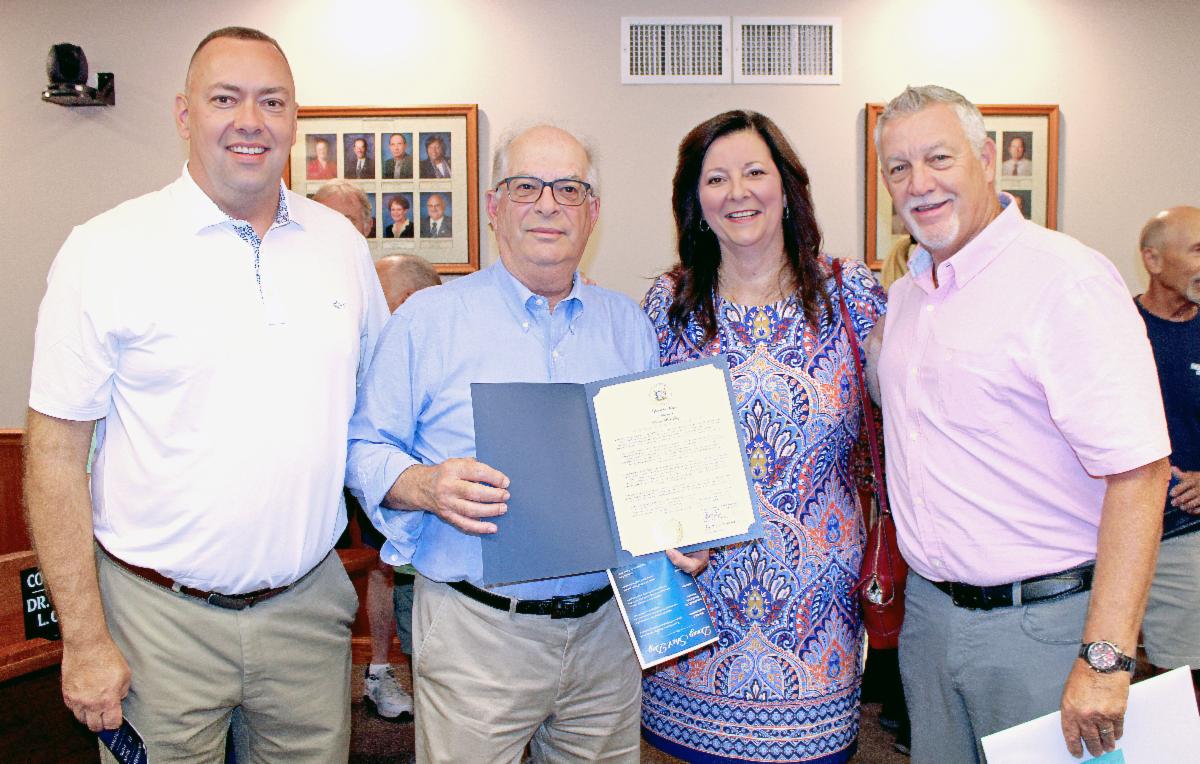
Rep. Short received a copy of the mayoral proclamation during a brief ceremony where friends and colleagues lauded him.


Danny Short is a life member of the Seaford Volunteer Fire Department, an organization with which he has a 50-year legacy, including serving as Fire Chief. In 2025, he was awarded the Distinguished Community Service Award by the Delaware Volunteer Firefighters Association (DVFA), becoming only the second recipient of that honor.


In 1995, Danny Short began a four-year tenure as a Seaford city councilman, followed by eight years as mayor.


At present, Rep. Short is the longest-tenured member of the Delaware House of Representatives, having served 20 years representing the 39th District.


IN PHOTO, FROM LEFT: State Sen. Brian Pettyjohn and State Reps. Danny Short, Valerie Jones Giltner, and Tim Dukes.