|
|
Math is sometimes called the language of the universe and for good reason. It is also a significant part of our everyday life
. For example, math is used to keep track of time in activities, appointments, and work. We utilize measurement and spatial awareness while cooking, driving, and walking. Estimated and exact sums and differences are calculated when purchasing items or balancing a checkbook.
By providing students with instruction, resources, and tools in a Universally Designed cl
assroom, we
c
an help all students achieve grade level standards, eliminate barriers for future math instruction, and foster the development of daily living skills.
|
|
|
Math Comprehension
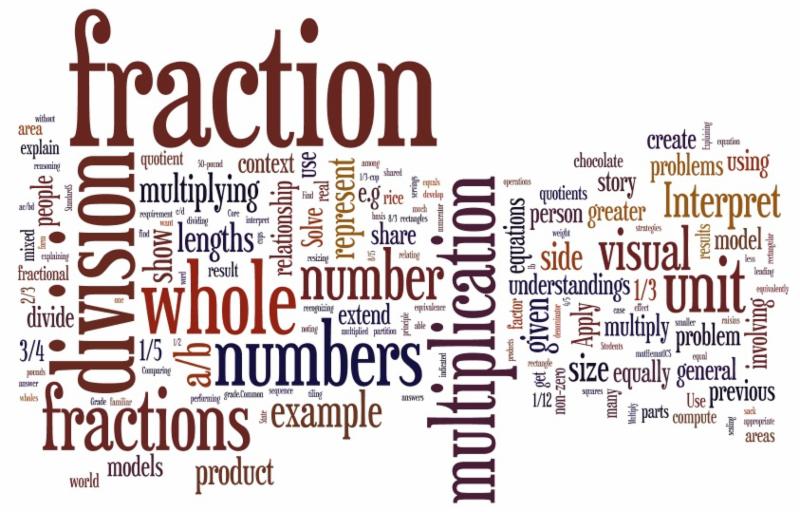
Acquiring and utilizing math vocabulary is an essential skill for students. Having a robust math vocabulary allows students to think about, talk about, and interact with their math environment. To increase math vocabulary development consider:
-
Preteaching
mathematics vocabulary.
- Modeling vocabulary when teaching new concepts.
- Using appropriate labels clearly and consistently.
- Integrating vocabulary knowledge in assessments.
- Using
graphic
rich and interactive games that reinforce or teach vocabulary.
Some examples include:
|
|
|
Concrete Math Instruction
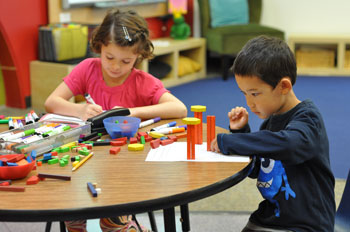
Students that lack a firm foundation built on conceptual knowledge may experience barriers to learning and assimilating new math skills. One method to increase conceptual knowledge is to use the Concrete-Representational-Abstract sequence of instruction (CRA Instruction). In this method, students begin with multiple opportunities to explore, experiment, and solve problems with concrete objects. Objects might include chips, base-ten blocks, pattern blocks, or fraction tiles. Real world objects, like M & Ms, food cartons, and floor tiles also provide opportunities for students to explore concepts such as patterns and shapes, measurement, and more. During the representational phase, students approach and solve problems through drawings, pictures, or visual maps relative to the concrete items. In the Abstract phase, students solve problems using numbers and symbols associated with the concrete items and representations.
More information and online resources:
|
|
|
Virtual Manipulatives and Simulations
Virtual
manipulatives
and simulations can provide the platform for representational instruction in a CRA sequence of instruction as well as take the place of concrete objects when materials are not readily available in a classroom, when materials are not accessible by students with disabilities, or to increase student engagement. Virtual representations and simulations are often graphic-rich and interactive resources, can be customized by the user, such as size and color and can be paired with a student's assistive technology such as alternative mouse controls.
Example Resources:
- National Library of Virtual Manipulatives - http://nlvm.usu.edu/ - Online math
manipulatives
and simulations for grades PK-12
-
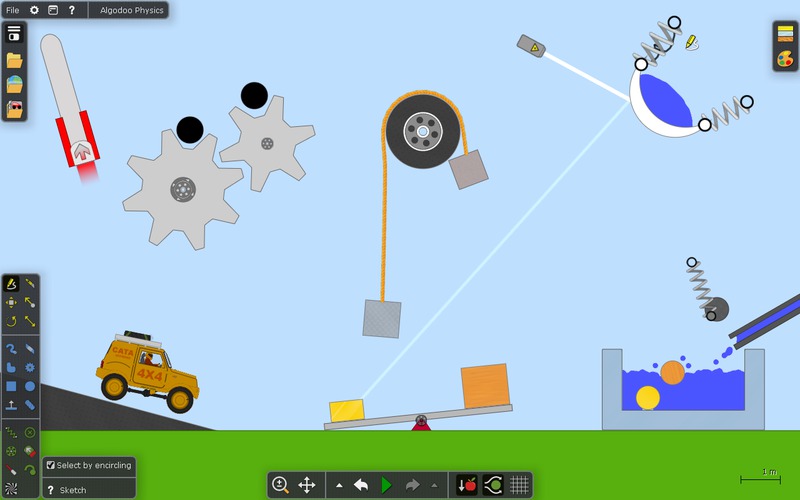
Algodoo
- http://www.algodoo.com/ - Featured in picture. Physics sandbox that allows the user to create, explore, and experiment
More resources:
|
|
|
MathTV
MathTV
is an online site that provides over 10,000 video tutorials covering topics from basic math through calculus. In each video tutorial a student or adult math teacher explains, demonstrates, or solves a specific example.
Multistep problems are written out step-by-step using traditional math logic. Most videos are a couple of minutes long and users are able to select which tutor they want for each individual lesson. Other features include:
- Multiple videos by different tutors for each example.
- Video tutorials available in closed captioning.
- Video tutorials available in Spanish.
|
|
|
Connecting the Technology and Learning
Calculators
Calculators allow students to simplify tasks and spend more time on understanding concepts and solving problems. Calculators can also increase student engagement by serving as scaffolds for lost or deficient math skills in related topics, thus allowing students to focus their time on grade-level standards. Calculators available as mobile apps, software downloads, and as online versions often have features that can eliminate barriers such as voice output, customizable layouts, size, and color.
Example calculators:
-
Alcula
- http://www.alcula.com/calculators/ - An extensive array of free online calculators for a variety of purposes, including simple mathematics, statistics, science, and more
More calculators including mobile apps and direct downloads:
|
|
|
Announcements
The Universal Design for Learning Implementation and Research Network (UDL-IRN)
March 29-31, 2017 in Orlando
For the first time, this annual conference is being held in Florida. This conference brings together practitioners to share models of best practices and implementation tools through a variety of interactive sessions, keynote addresses, and activities. Recommended for anyone looking to support all learners in a universally designed learning environment. For more information, visit
http://udl-irn.org/.
More upcoming event and conference information is available on the Technology & Learning Connections
events page.
|
|
|
This
resource
was funded through the Bureau of Exceptional Education
and
Student Services with IDEA Part B dollars. The information and
resources
are provided as a free awareness service to the
educational
community
and do not reflect any specific endorsement by any parties
involved
.
|
|
|
|
|
|