Winter 2021 Curtis Center Newsletter |
|
Reflecting on 2020 and Looking ahead to 2021 |
|
Dear colleagues:
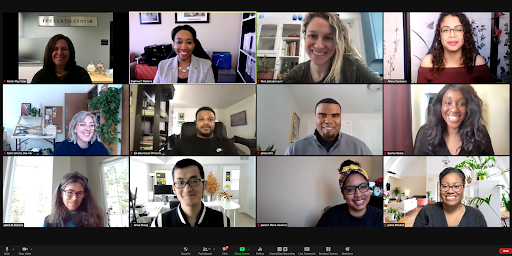
The Curtis Center faculty, staff, and students have been working remotely since March 12, 2020 as a precaution to limit the spread of COVID-19. As we approach the one-year anniversary of our remote work, we continue to reflect on what we learned in 2020 while also looking ahead toward a hopeful 2021. The health crisis from COVID-19 has underscored the importance of research on health equity, as those with preexisting conditions are more vulnerable to the virus. Communities of color continue to suffer at disproportionately higher rates of diseases such as asthma, diabetes, heart disease, and hypertension, and as we would expect, these communities experience higher rates of death and complications from COVID-19. The COVID vaccine brings hope to many, as does our continued commitment to addressing the social injustices impacting communities of color in the U.S. and across the globe. In this newsletter you will see updates from our inaugural Curtis Center Signature Programs, our ongoing projects, our recent graduates, and other announcements.
As we continue to support the efforts of equity leaders and change agents in the field, I invite you to explore the various ways you can connect with us.
Sincerely,
Daphne C. Watkins, Director
The Curtis Center
|
|
Updates on the Inaugural Signature Programs |
|
African American Chronic Care
Equity through Self-management Program
Co-Leads: Assistant Professor Jamie Mitchell, Assistant Professor Jaclynn Hawkins, Assistant Professor Lenette Jones (UM-Nursing)
|
|
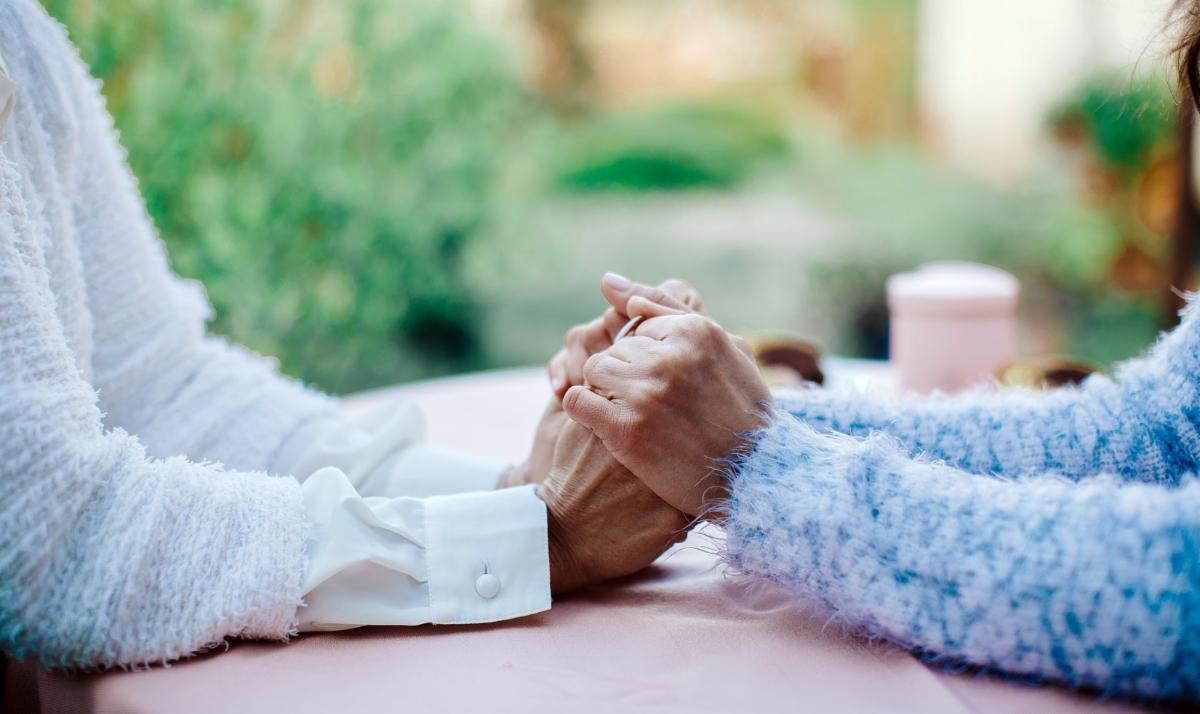
The African American Chronic Care Equity through Self-management Program addresses the development, implementation, and translation of behavioral and health services interventions, which target improvement in self-management of chronic diseases among African American adults. Specifically, via this thought-partnership between the School of Social Work and the School of Nursing, the program will a) explore the role of health information and health communication behaviors in the self-management of chronic diseases among African American adults and b) engage community stakeholders to support chronic disease self-management research. This work will culminate in evidence-based programming designed to reduce chronic disease self-management disparities for African Americans in Southeast Michigan. |
|
Developing Collaborative Research to Address
Violence Against American Indian and
Alaska Native Women in Michigan
Lead: Assistant Professor Katie Schultz
|
|
This Signature Program continues to push forward with a goal to develop an innovative program of community-led research with Uniting Three Fires Against Violence, a statewide domestic violence and sexual assault coalition serving tribes in Michigan. Dr. Schultz and the Director and staff at the coalition met regularly over the summer and into the fall to identify key stakeholders, prioritize events and meetings to attend virtually or in person when safe to do so, and begin to develop ways of soliciting information about research priorities. We are currently in the process of working with tribal victims’ advocates to be interviewed as part of an online course on intimate partner violence being developed at the University. |
|
A Psycho-Oncology Fellowship to Support Pre-Doctoral Health Disparity Research on Adolescent and Young Adult Sex and Gender Needs During Cancer
Co-Leads: Assistant Professor Anao Zhang and
Joint Doctoral Student, Nina Jackson Levin
|
|
The Curtis Center pre-doctoral fellow at Michigan Medicine’s AYA Oncology Program, Nina Jackson Levin received a prestigious National Cancer Institute T32 training grant focusing on cancer service delivery for underserved cancer patients. Dr. Zhang and Ms. Jackson Levin had two accepted conference presentations (the 2021 Society for Social Work and Research annual conference and the 2021 Conference on Adolescent Health), one published paper (Jackson Levin et al., 2020), and three peer reviewed publications currently being reviewed by Annals of LGBTQ Public & Population Health and by Critical Reviews in Oncology/Hematology, and Journal of Adolescent and Young Adult Oncology. Recently (Jan. 2021), Dr. Zhang completed a NCI-sponsored competitive workshop on Research Methods in Support Oncology hosted by Harvard University Medical School. The purpose of the workshop is to develop a research proposal in the field of psychosocial and supportive oncology. Finally, through support from the Curtis Center, Dr. Anao Zhang forged cross institutional research on AYA oncology with the University of Texas MD Anderson Cancer Center and UChicago Medicine, resulting in two R01 applications submitted to the National Cancer Institute. Notably, a pilot study evaluating AYA patients’ medical and service needs at Michigan Medicine and UChicago Medicine is currently being initiated. |
|
Customizing the Young Black Men, Masculinities, and
Mental Health (YBMen) Project with Boys and
Men of Color in the U.S. and Australia
Lead: Professor Daphne C. Watkins
|
|
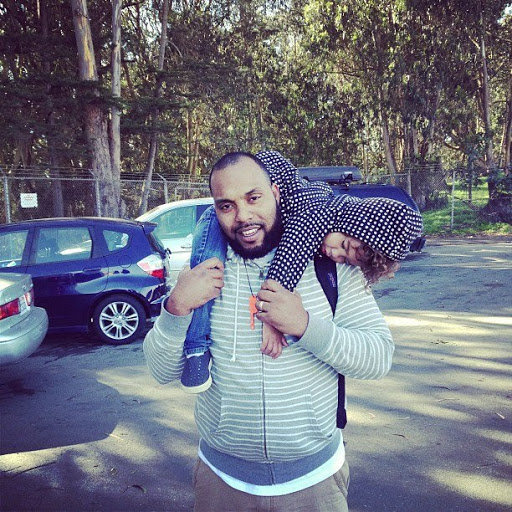
Since launching in 2014, the YBMen Project has provided mental health support for more than 500 Black college men across Michigan and Ohio. This Signature Program of the Curtis Center is now manualized, and is working across various sectors to expand. For example, in partnership with former Fulbright Scholar and Curtis Center Senior Faculty Affiliate, James Smith, the YBMen Project team has received funding to tailor a YBMen project curriculum for Indigenous and Aboriginal men in Australia. While this exciting work is happening overseas, we are also creating a tailored curriculum to be delivered in middle and high schools across the state of Michigan.
The challenges associated with the global pandemic have amplified our desire to stay connected, whether we are across the globe, across the country, or across town. Our UROP student, Ash Chandrakapure, is investigating the feasibility of a new, more customized version of the YBMen Project with Black college men at the University of Michigan. Outreach remains a core facet of the YBMen Project, so we are preparing the final reports from YBMen at Michigan State University and YBMen at Ohio State University and will disseminate these reports in the coming months.
|
|
Substance Use Disorders in the State of Michigan
Kara Zivin (PI); Daphne C. Watkins (Subaward PI)
Michigan has been impacted by the nation's opioid epidemic, experiencing a per capita opioid overdose death rate nearly 1.5 times greater than the national rate (21.2 vs. 14.9 deaths per 100,000 [age-adjusted]). The Michigan Department of Health and Human Services (MDHHS) has implemented initiatives to mitigate the crisis. However, overdose rates remain high and serious gaps in access to substance use disorder (SUD) care, including medication assisted treatment, remain.
A recent study found that only 20% of Michiganders with a SUD diagnosis received treatment. The MDHHS and its stakeholders have been developing a strategic plan to target opportunities for improvement, engaging in preliminary gap analysis activities to ascertain where access barriers and treatment and recovery services exist. The Curtis Center is involved in a project to learn more about Medicaid beneficiary demand for SUD treatment and recovery services and to identify and prioritize opportunities for improvement, particularly for Black men and women.
|
|
Recently Completed Project |
|
W. K. Kellogg Foundation Racial Equity Project
Daphne C. Watkins (PI); Sharon Norris-Shelton (Co-I)
The W. K. Kellogg Foundation supported this project to understand the vision, mission, structure and function of public health and human service (PHHS) networks, and how these networks might apply a racial equity lens to their engagement with and training of their members. We performed a field scan of PHHS networks to identify and investigate how these networks meet BIPOC scholars where they are, and support the growth of all their members. More work needs to be done by these PHHS networks to have a positive impact on the lives of the BIPOC they serve.
|
|
Congratulations to our Recent Graduates! |
|
|
|
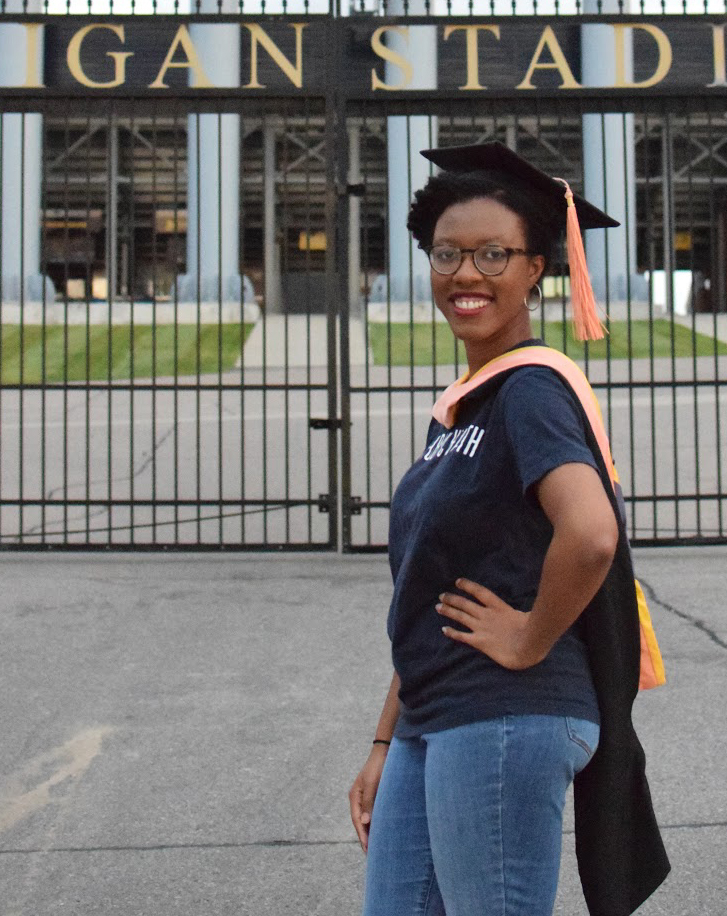
Ashley Starks, MSW,
December 2020
"Never forget the taste of a syrup sandwich. Be humble, stay grounded, invest in yourself and your community."
-Ashley Starks
|
|
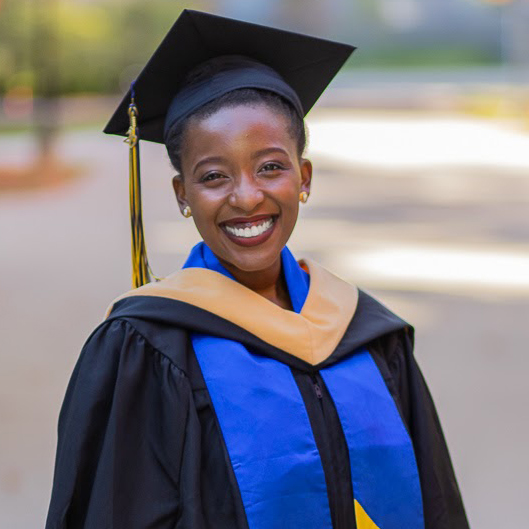
Cecelela Loyce Tomi, MSW, December 2020
"Asiyefunzwa na mamaye, hufunzwa na ulimwengu (A person who is not taught by their mother, is taught by the world)."
-Kiswahili proverb
|
|
|
|
|
Najeia Mention, MPH & MSW, December 2020
won't you celebrate with me
what i have shaped into
a kind of life? i had no model.
born in babylon
both nonwhite and woman
what did i see to be except myself?
i made it up
here on this bridge between
starshine and clay,
my one hand holding tight
my other hand; come celebrate
with me that everyday
something has tried to kill me
and has failed.
Excerpted from the poem "won't you celebrate me" by Lucille Clifton
|
|
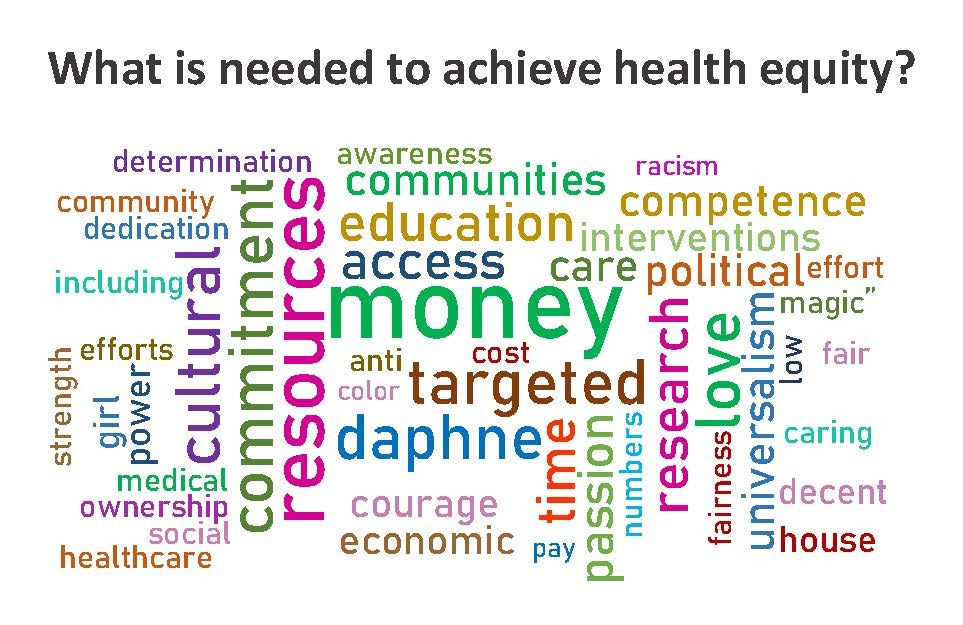
This is a word cloud created by attendees of the Curtis Center Open House, November 14, 2019
Equity: a human right. Building equity is a commitment to protect all persons from biases, harassment, and discrimination (e.g., equal opportunity policies), regardless of race, color, national origin, age, marital status, sex, sexual orientation, gender identity, gender expression, disability, religion, height, weight, veteran status, or any other social position.
Racial Equity: the absence of disparities in the opportunities and outcomes experienced by different racial groups when accessing the same resources (e.g., health, housing, education, financial, employment, etc.). Racial equity is both a framework used to achieve a goal and the goal itself.
The framework focuses on improving and sustaining institutional systems, practices, and policies so that individuals across different racial groups can flourish and reach their full potential. The goal focuses on achieving social justice and the fair inclusion of all races in societal opportunities so they can participate and prosper. Rather than provide different racial groups with the same resources, racial equity involves assessing the current state of a groups’ opportunities and outcomes and then redistributing power and resources to ensure members of that group have what they need to thrive.
Racial Healing: a process that restores individuals and communities to wholeness, repairs the damages caused by racism, and transforms societal structures into ones that affirm the inherent value of all people.
|
|
In her acknowledgement of Juneteenth 2020, Dean Lynn Videka shared the gift of artwork that Dr. James L. Curtis made to the University of Michigan’s Museum of Modern Art. “Dr. Curtis, thank you for making this beautiful gift of historical photography to the UM Museum of Art (UMMA). We [also] appreciate your generous support for the School that led to the establishment of the Curtis Center for Health Equity Research and Training.”
The Curtis Center hosted its first webinar featuring Visiting Fulbright Senior Scholar, Dr. James Smith in May 2020.
|
|
We send well-wishes to two Curtis Center Postdocs, Zachary Jackson (new Assistant Professor at Prairie View A&M University) and Lloyd Talley (new consulting firm and entrepreneurial efforts). Congratulations!
Congratulations to Assistant Professor Jamie Mitchell on her recently funded NIH R24 project: “Recruiting and Retaining Older African Americans into Research.”
Congratulations to Professor Daphne C. Watkins for being named a University Diversity and Social Transformation Professor and for her nomination for the 2020 Golden Apple Award at the University of Michigan!
Connect with us!
|
|
|
|
|
|
|