The Tangle of Science: Reliability Beyond Method, Rigour, and Objectivity
By Nancy Cartwright, Jeremy Hardie, Eleonora Montuschi, Matthew Soleiman and Ann C. Thresher* (Oxford University Press, 2023)
Science is remarkably reliable. It puts people on the moon, performs laser eye surgery, tells us about ancient civilizations and species, and predicts the future of our climate. What underwrites this reliability? This book argues that the standard answers — the scientific method, rigour, and objectivity — are insufficient for the job.

Here we propose a new model of science which places its products front and centre. In "The Tangle of Science" we show how any reliable piece of science is underpinned by a vast, diverse, and thick network of other scientific products. In doing so we bring back into focus areas of science that have been long neglected, emphasizing how every product, from the screws that hold the space shuttle together, to ways of measuring the consumer price index, to Einstein's theory of general relativity, work together to support results we can trust.


*Professor Cartwright is a faculty affiliate of the Institute for Practical Ethics, and Soleiman and Thresher '22 are past Ph.D. fellows of the institute

A postdoctoral scholar for the institute, Zinhle Mncube is a philosopher of science with a particular interest in race and medicine. Her current research concerns the epistemology and ethics of personalizing medicine.
“Regulating de-extinction is better than banning it: Biotechnology is evolving, and the case for de-extinction could change with it,” writes faculty affiliate Andy Lamey in New Republic.
Five UC San Diego graduate students join the ranks of the Bouchet Graduate Honor Society, including Jada Wiggleton-Little, a past Ph.D. fellow of the institute.
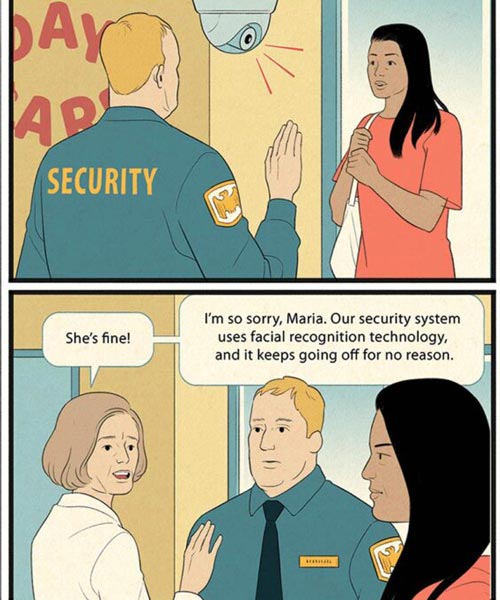
Harvard Business Review’s fictionalized case studies present problems faced by leaders in real companies. “Does Facial Recognition Tech Enhance Security?” is by Mary C. Gentile, Practical Ethics advisory board member David Danks, and Maralee Harrell of Philosophy.
“‘Security through obscurity’ is not an effective way to maintain cybersecurity in systems,” write Julia Slupska, Jeanette Lowrie, Practical Ethics and Design Lab faculty affiliate Lilly Irani, and Deian Stefan of the Crypto Security Group, Computer Science and Engineering.