|
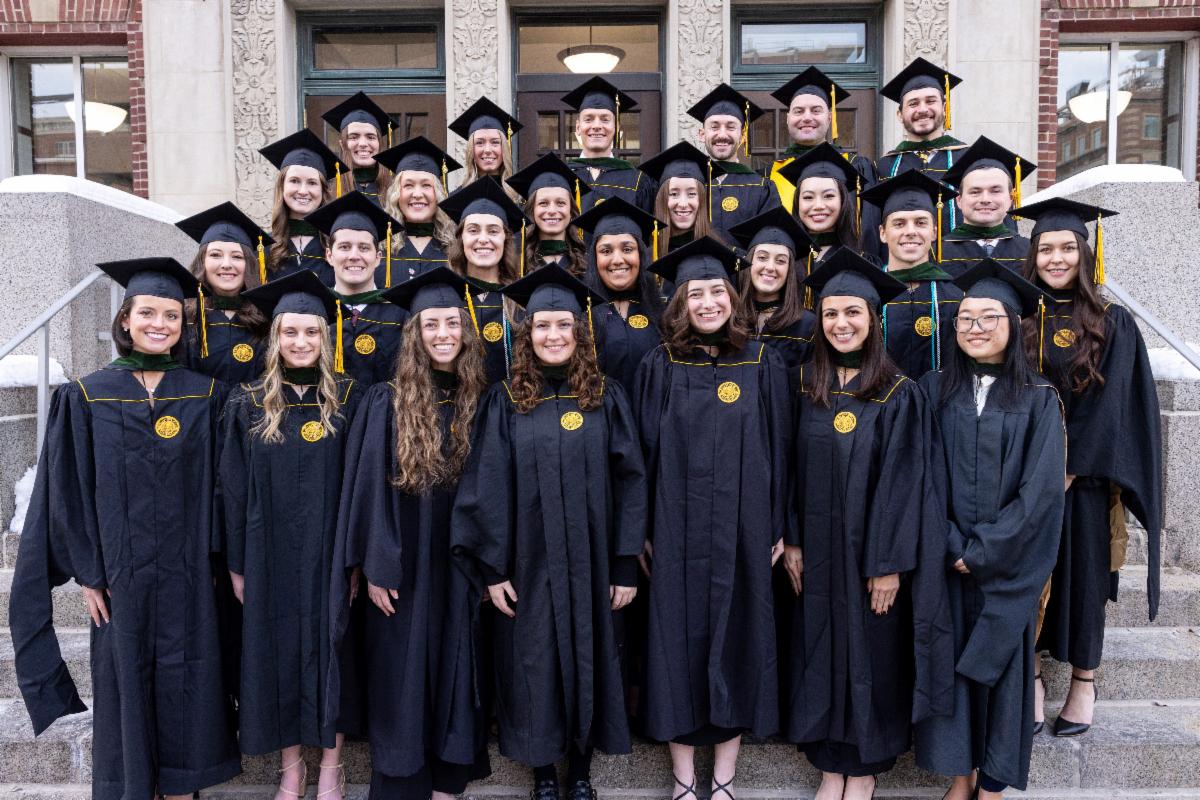
The most meaningful milestones in a PA program are rarely defined by a single day. They are defined by the accumulation of small disciplines—showing up prepared, embracing feedback, caring for patients with warmth, and learning to lead with both competence and humility. Commencement simply gives that long arc a name. This issue celebrates the University of Iowa PA Program’s 52nd graduating cohort and the strength of the community that helped carry them to the finish line.
This edition includes a letter from the President of the Class of 2025, offering a reflection on what this cohort built together—through shared standards, shared challenges, and shared pride in becoming clinicians who are ready for the work ahead. It's a reminder that professional identity is formed not only in clinics and classrooms, but also in the relationships that shape how students learn, support one another, and step into responsibility.
We also feature two graduates whose stories reflect the many paths that can lead to this profession. Clare Dunne, a Coralville native, describes a journey to graduation that included stepping away from training to survive brain cancer—and returning to complete the program with a perspective shaped by lived experience as a patient, now informing her future in oncology. Noah Vásquez shares how an unexpected early moment sparked his interest in medicine, how the University of Iowa exceeded his expectations, and how the people he met here proved just as formative as the training itself.
Finally, this issue highlights a core commitment that runs through our program: expanding access and meeting community needs with intention. We feature the work of our students in PAEA’s PA Student Success (PASS) Program, including community outreach efforts and recognition with the 2025 PAEA Brenda Jasper First-Place Award—a national recognition and affirmation of what happens when students are supported, challenged, and connected to purpose beyond campus.
Across these stories, a theme emerges: we find that we're stronger together when we learn with high standards, support one another through the hard parts, and carry that growth forward for patients and communities. Congratulations to the Class of 2025, and thank you to the faculty, staff, preceptors, alums, and community partners who continue to shape a culture of excellence, service, and belonging in Iowa.
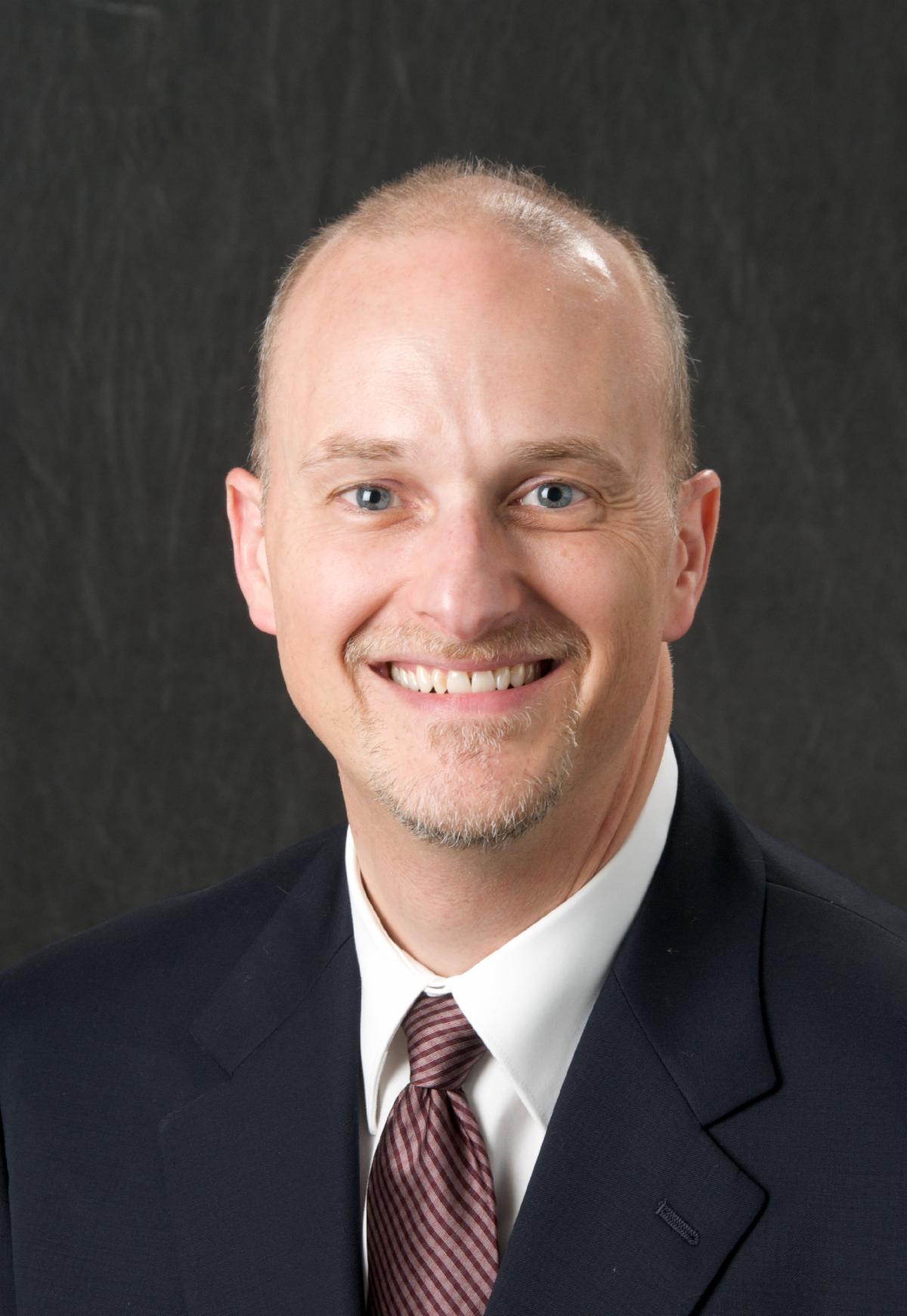
Anthony Brenneman, MPAS PA-C
Program Director and Clinical Professor
University of Iowa PA Program
| | | | |
Class of 2026
The Class of 2026 completed Mechanisms of Health and Disease IV (MOHD4), MOHD-Keystone, and other end-of-semester exams. Students completed Transitions to Clinical Medicine during the first week in January 2026—a one-week 'boot-camp'-like course that bridged them from their didactic training to their clinical year training. They have now begun their clinical rotations. In early February, they will return for a one-month Call-Back meeting, at which time they will take their first End-of-Rotation exam and meet with their Faculty Advisors.
| | | | |
Class of 2027
The Class of 2027 completed their Foundations of Cellular Life course, Mechanisms of Health and Disease I (MOHD1), Gross Anatomy, Medicine and Society I (MAS1), and Clinical and Professional Skills I (CAPS1) courses, the last of which included their first Objective Structured Clinical Examination (OSCE). Now, they are in the throes of MOHD2, MAS2, and CAPS2.
Also, the class elected its new student government officers:
President: Megan Renner
Vice-President: Alex Fouts
Secretary/Volunteer Chair: Nia Tanui
Treasurer: Giana Michels
Social Media Chairs: Grace McGhee, Nidia Villalpando
AAPA Rep: Shirin Khosravi
IPAS Rep: Isabel Ahmann
External Relations Rep: Tyler Mills
Wellness Rep: Owen Mitchell
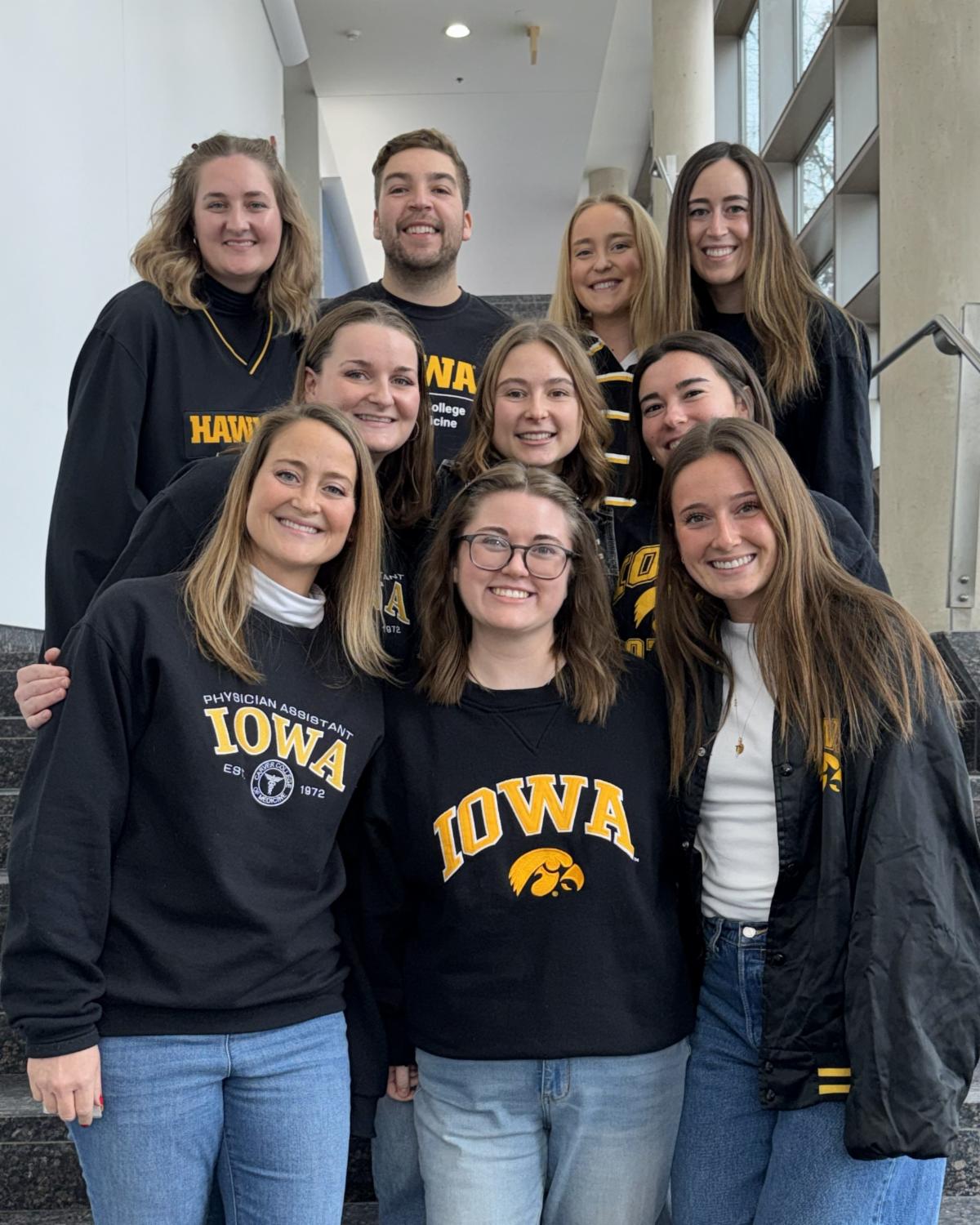
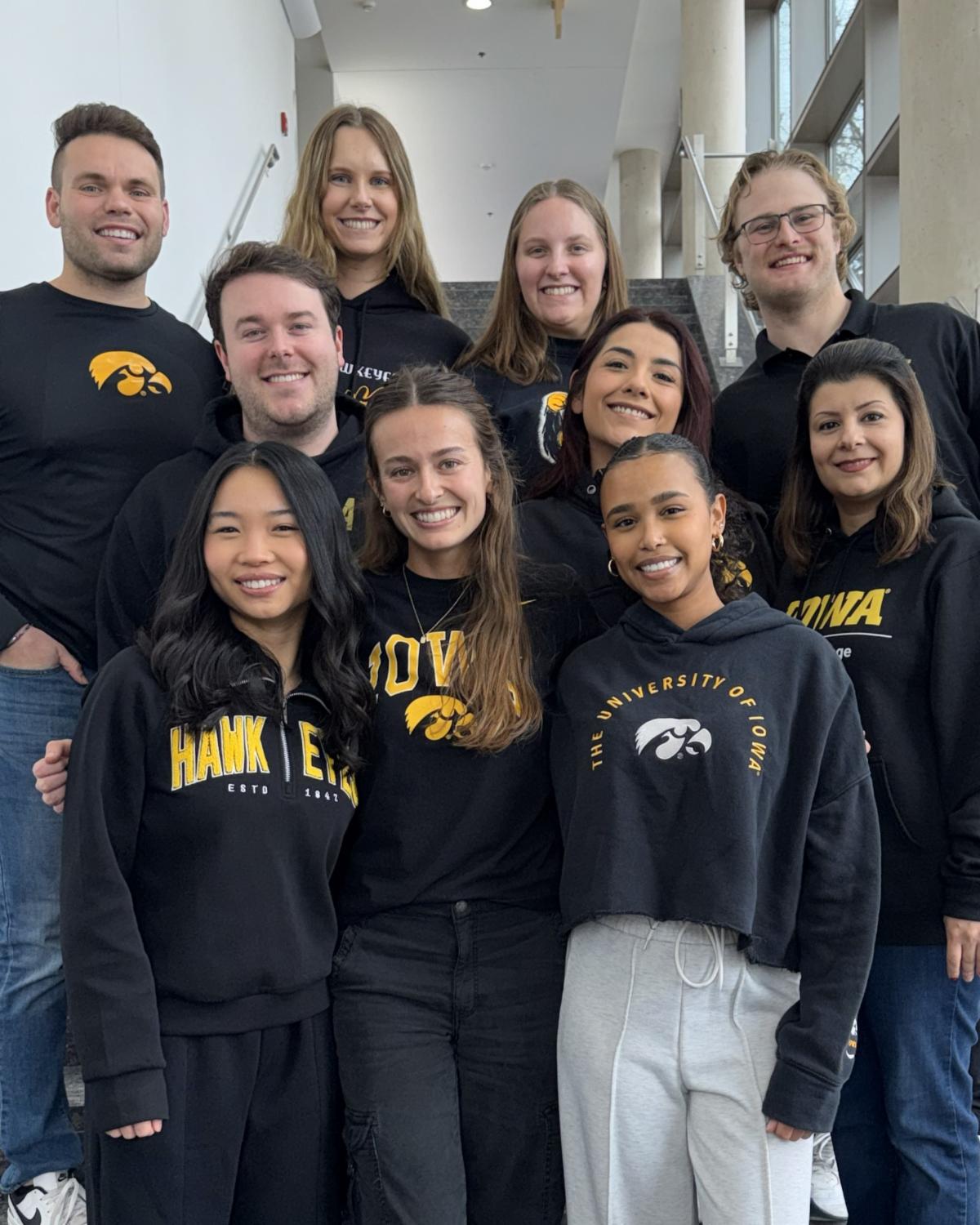
| | The PA Student Government recognized the transition of its officers from the Class of 2026 to the Class of 2027. Pictured are students Chloe Kepros, Harrison Parker, Cara Heuer, Anne Cummings, Abby Crow, Callie Haasl, Emily Mazzeo, Chelsea Francisco, Kyra McIntosh, and Annie Dotzler (top); and Alex Fouts, Megan Renner, Isabel Ahmann, Tyler Mills, Owen Mitchell, Nidia Villalpando, Shirin Khosravi, Grace McGhee, Giana Michels, and Nia Tanui (bottom). | | |
STUDENT FEATURE:
Letter to the Class of 2025
Noah Herkert
graduation year: 2025
Dear Class of 2025,
It has truly been an honor and a privilege to share this journey with all of you over the past two and a half years. We began as a group of anxious strangers, unsure of what the next chapter would hold. Little did we know that amid all the studying, review sessions in 2189, OSCEs, ECEs, pathology small groups, and anatomy labs, we would also experience some of life’s most meaningful moments together. From major milestones like engagements and weddings to simple moments—lunches in the conference room, conversations in the hallway, walks between classes—we have lived a great deal of life side by side.
| |
The growth each of you has shown during our time together has been remarkable. A class once full of strangers now leaves with a bond strong enough to carry us into the next stage of our lives and careers. The connections we formed created a community of support and acceptance, which grew into genuine friendships—dare I say lifelong ones—that will stay with us as we step into the working world.
To everyone who has supported us along the way, there are no words that can fully convey our gratitude. Parents, siblings, friends, partners, faculty, staff, and so many others—your encouragement has been the foundation beneath us. It is no exaggeration to say we could not have done this without you. A special thank you to Theresa Hegmann and Gwen Hoffman, whose guidance we were fortunate to have before celebrating their own exciting new chapters.
If I may leave you, Class of 2025, with one final message: we are about to enter a world where our decisions and actions will have real consequences for our patients. That responsibility can be daunting, and there will be moments of uncertainty or self-doubt. In those times, remember where you started—sitting in the MERF auditorium on your first day, anxiously awaiting your white coat—and reflect on the incredible growth you’ve undergone since then.
| |
You are all more capable, intelligent, and prepared than you give yourselves credit for. Take a deep breath, trust your training, and approach each challenge with the confidence and compassion I know you possess.
Congratulations to each and every one of you. I have witnessed the dedication, resilience, and hard work that brought you to this moment. Celebrate it fully and enjoy it with the people who helped you along the way.
As Christopher Robin once said, “You are braver than you believe, stronger than you seem, and smarter than you think.” I cannot wait to see all the amazing things we will accomplish.
Noah Herkert
President, Class of 2025
| |
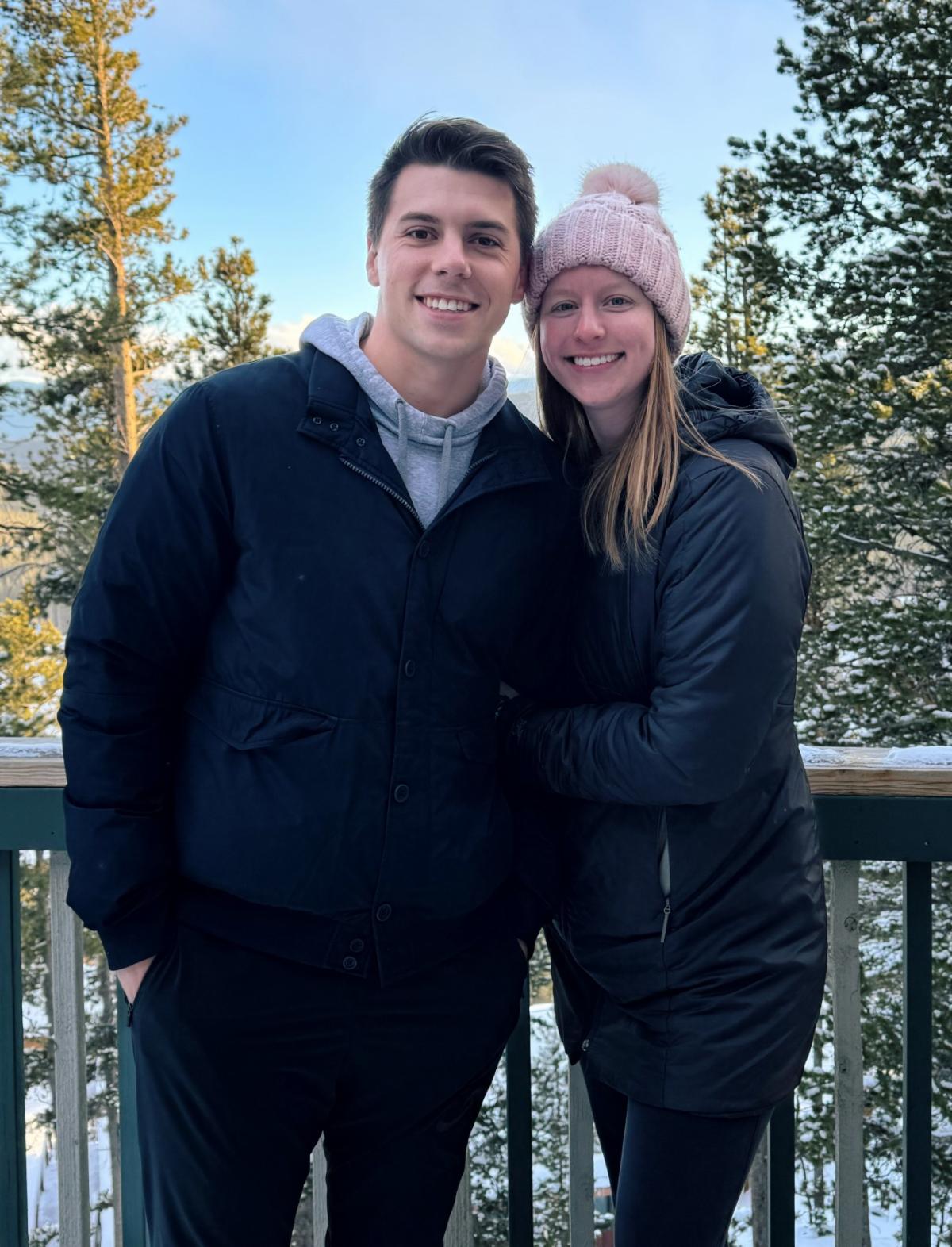
Student Noah Herkert (middle right) with his wife, Kailey.
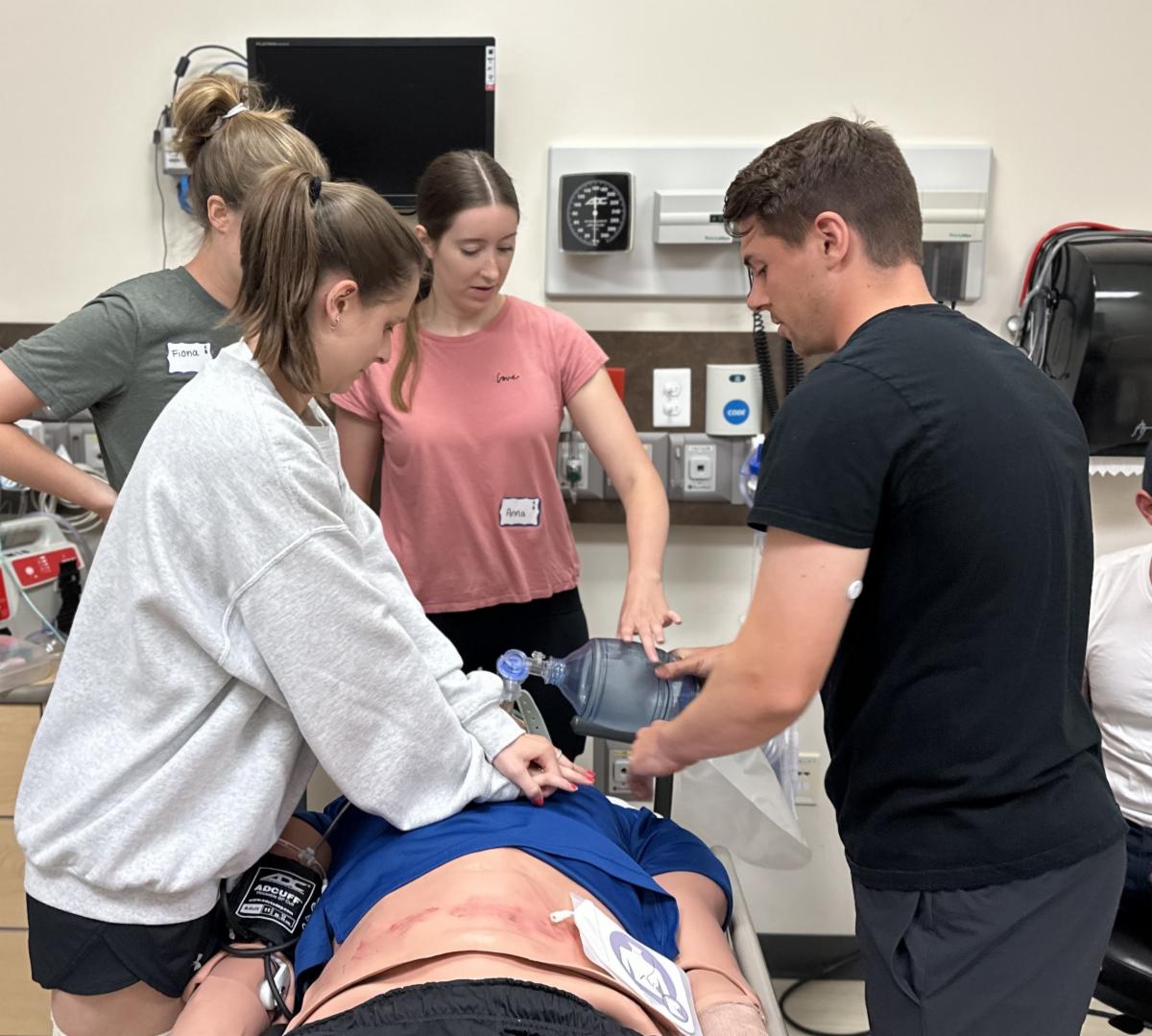
Herkert (above left) rehearses Advanced Cardiac Life Support with classmates Jen Pochyly, Fiona Roehrs, and Anna Cole.
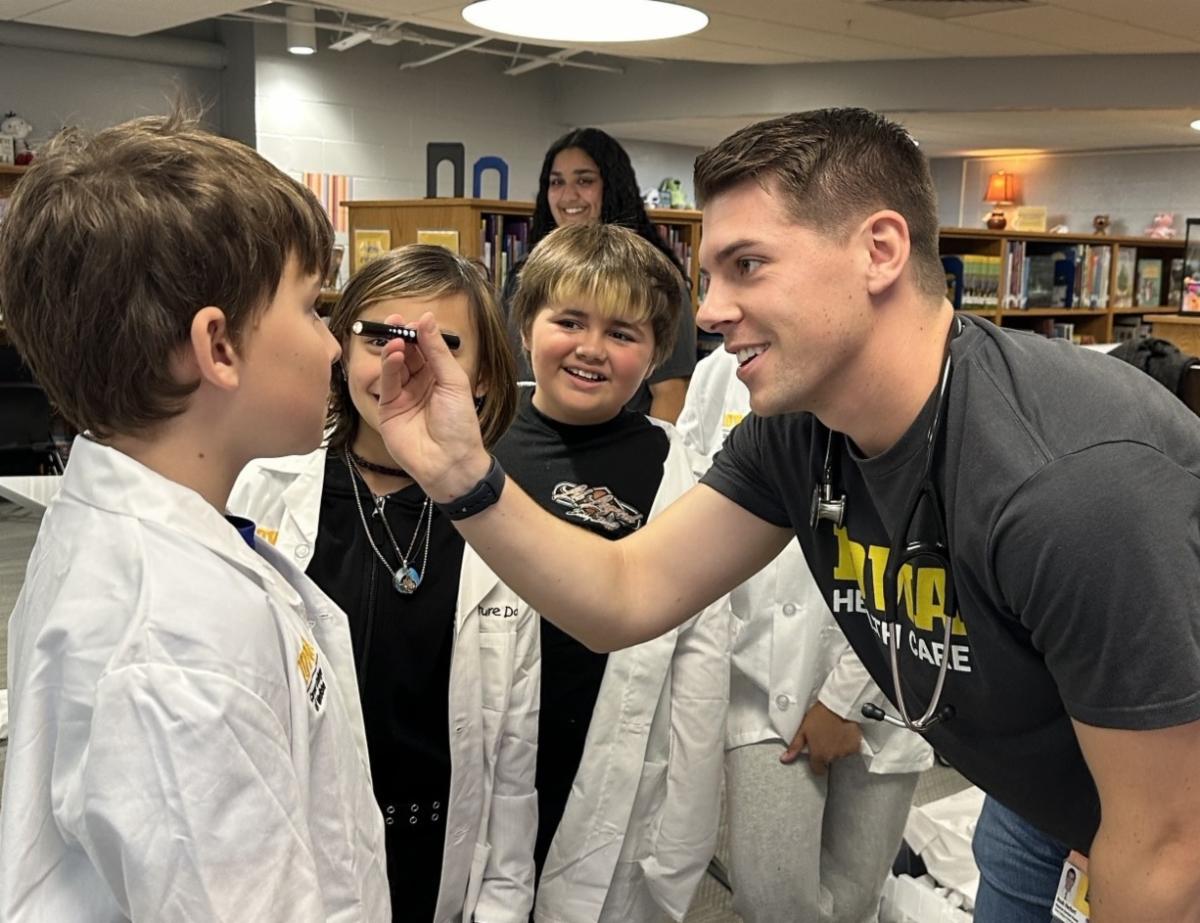
Herkert (left) demonstrates a swinging light test on a third-grader as part of the PAEA PA Student Success (PASS, formerly Project Access) program.
| |
|
GRADUATION FEATURE:
Commencement on December 5 for the Class of 2025 marks the 52nd cohort of PAs to graduate from the University of Iowa
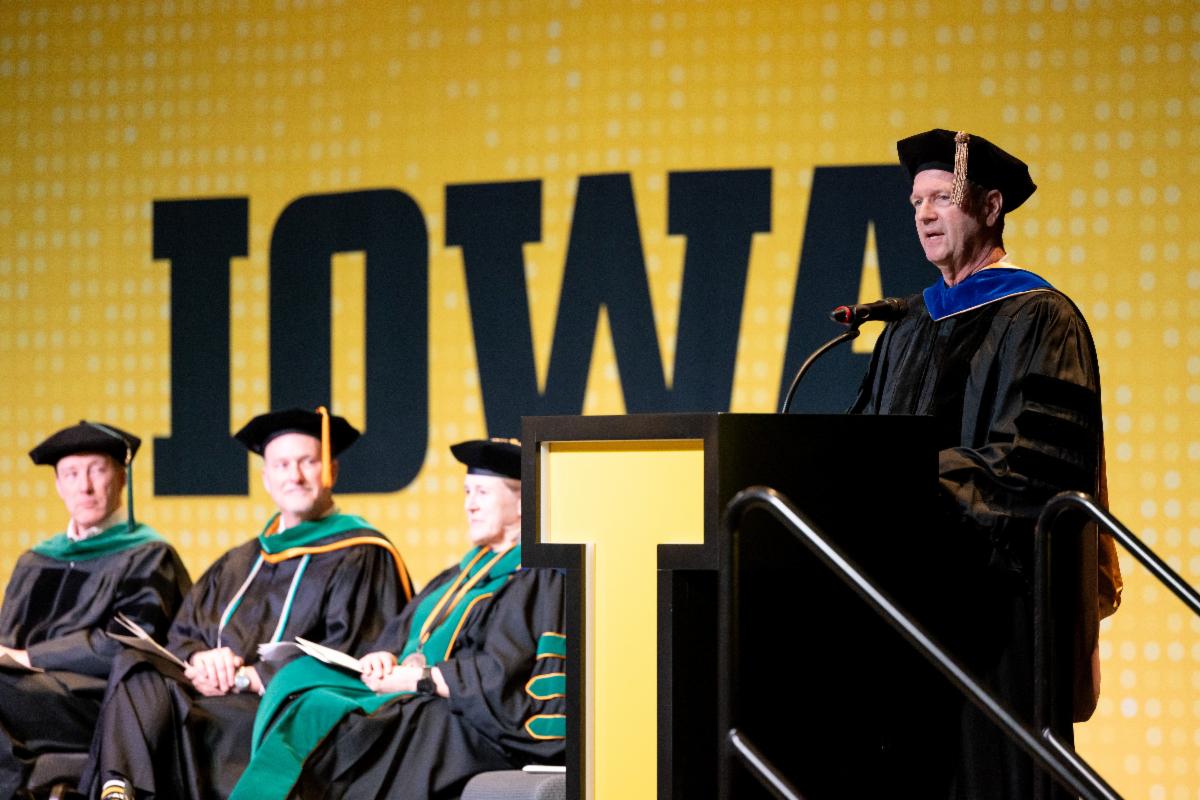
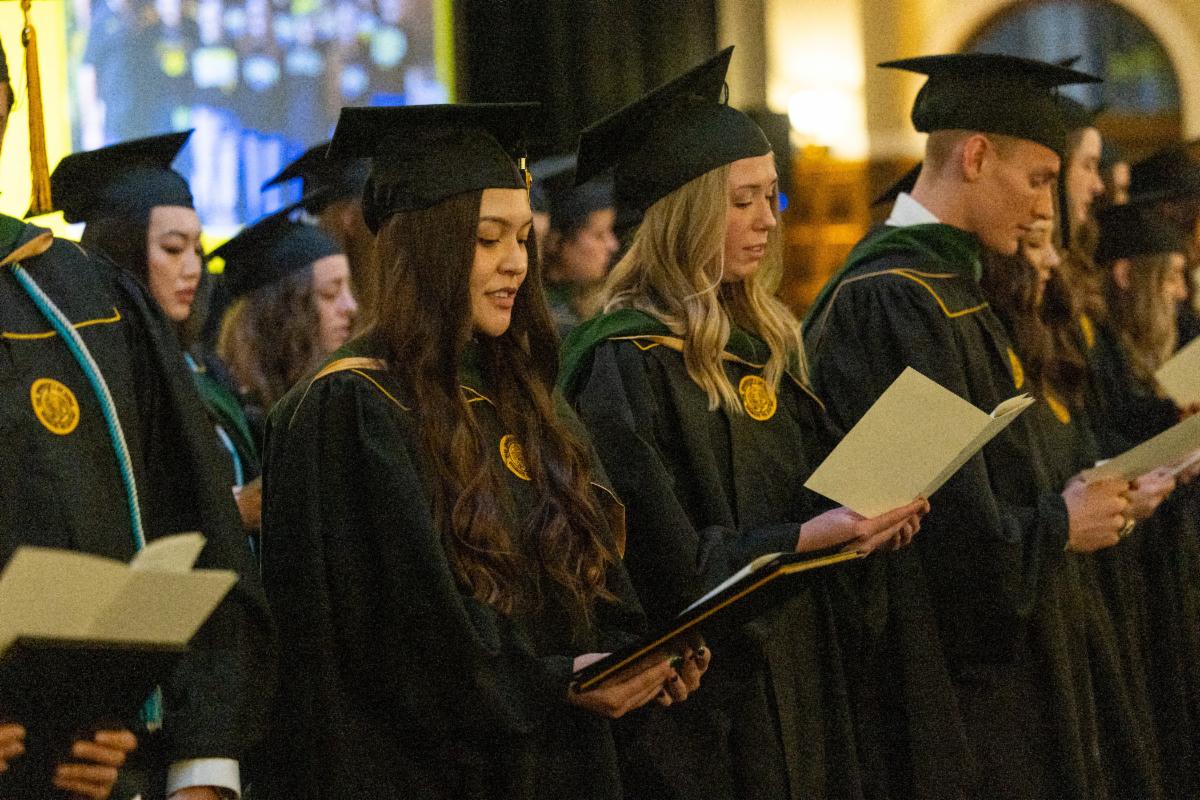
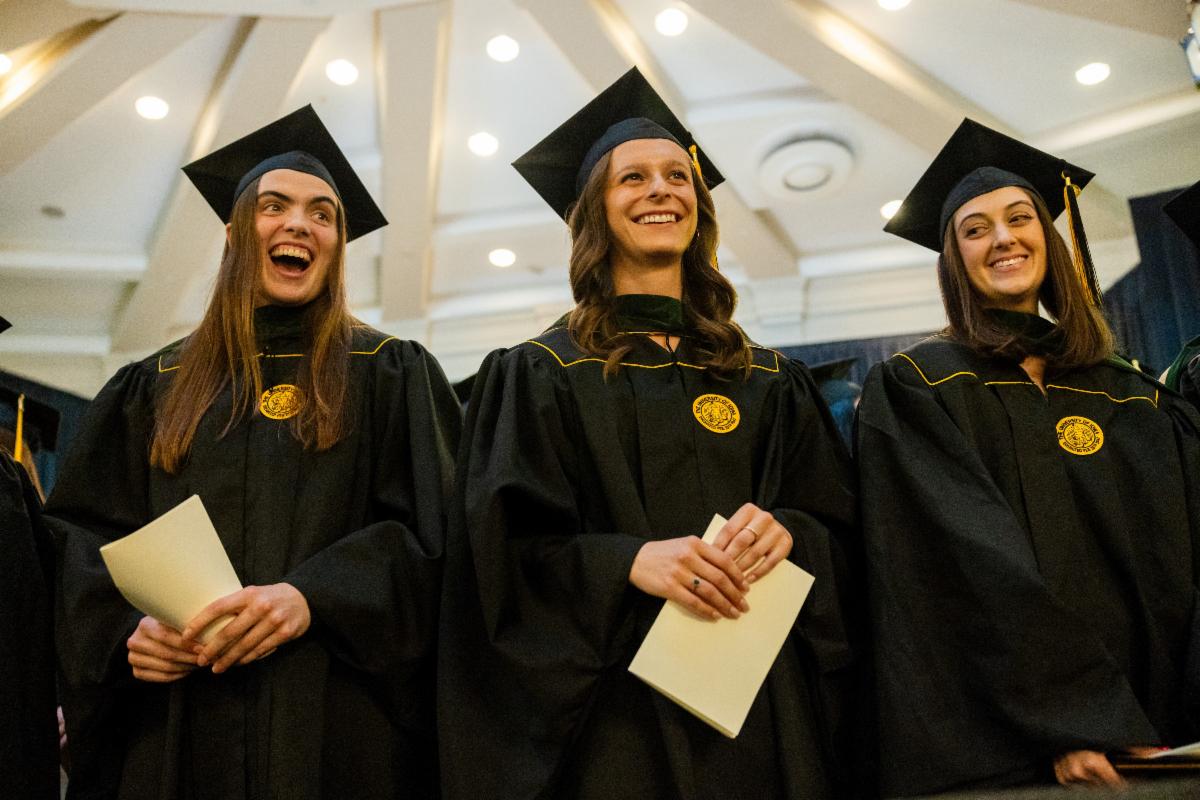
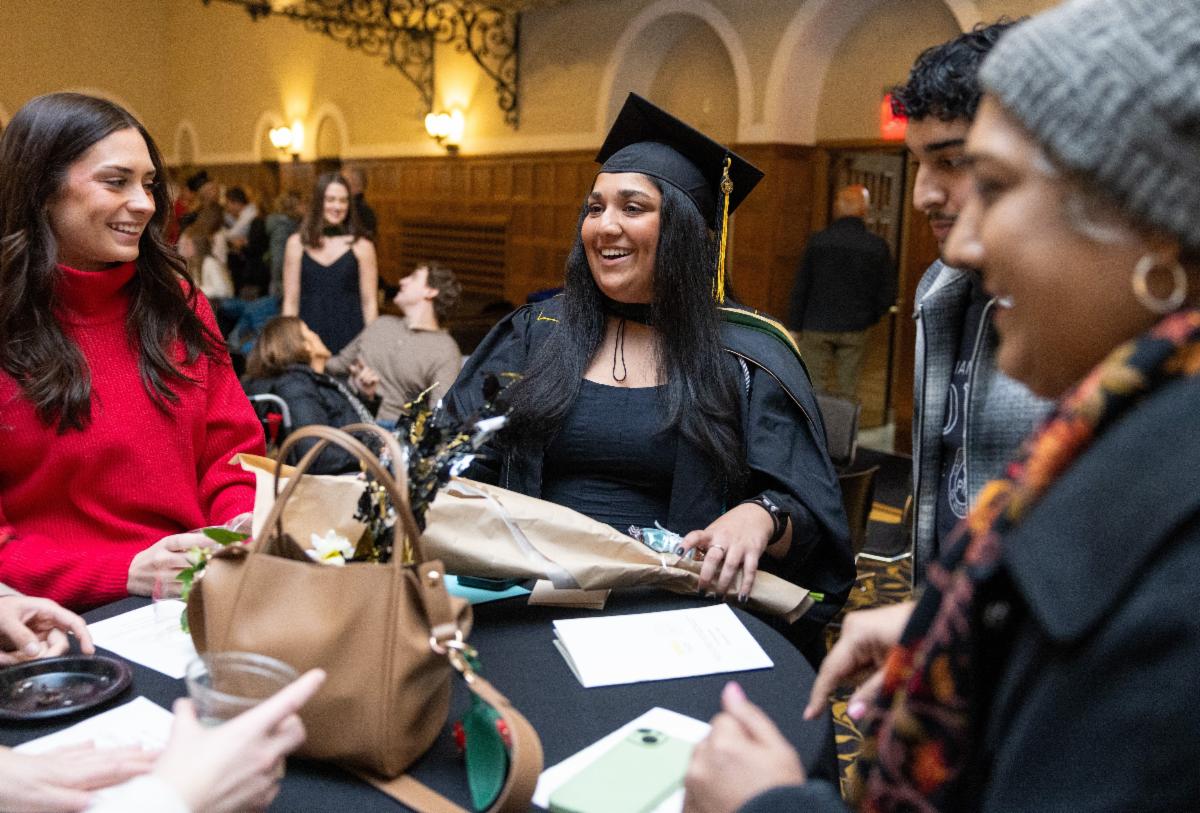
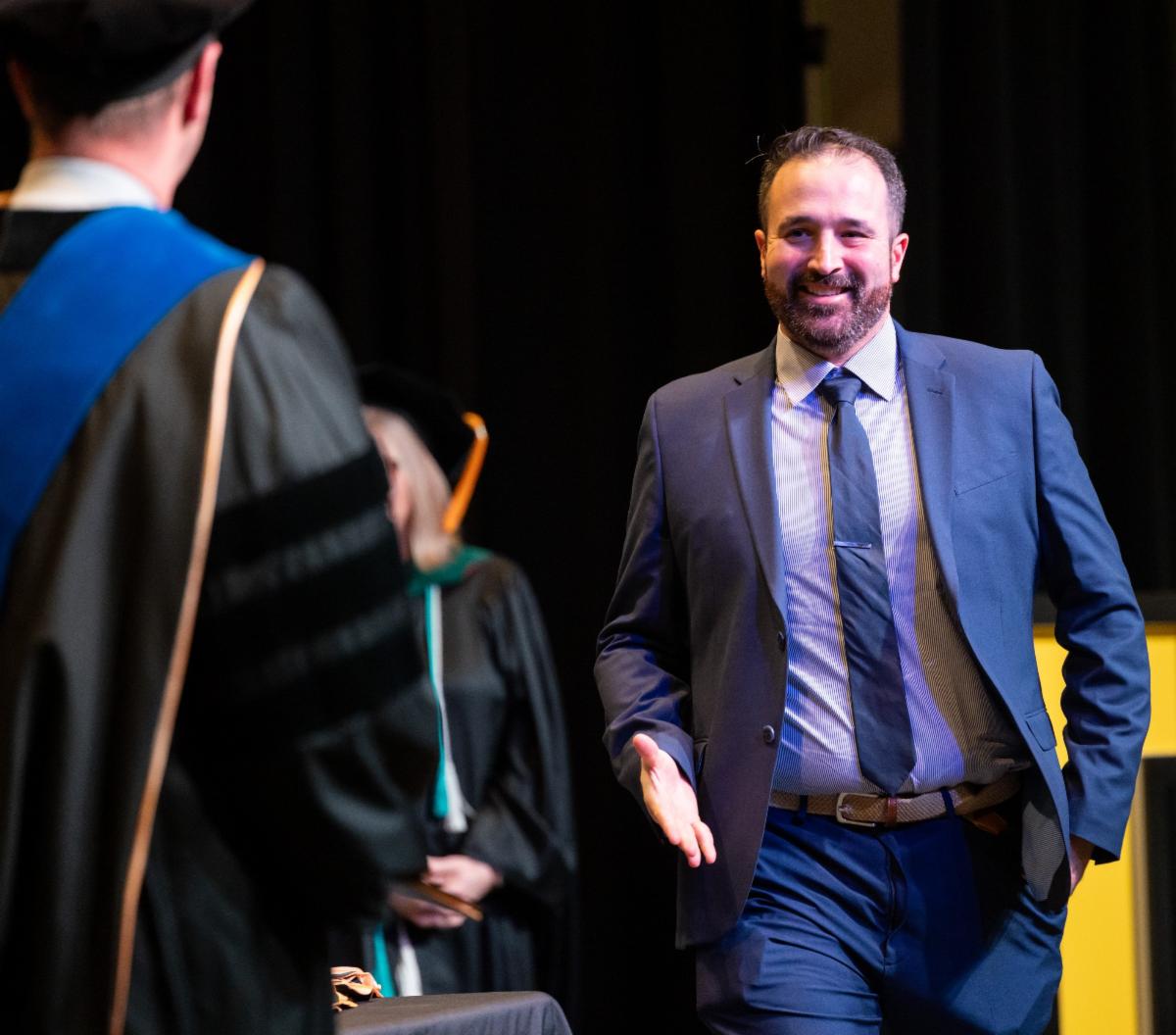
Congratulations to the 52nd graduating class of the UI PA Program. Commencement was held at the Iowa Memorial Union on December 5, 2025. Families, friends, faculty, and staff gathered to celebrate the accomplishments of these 26 new PAs. We are very proud of our new colleagues and wish them the very best in their work ahead!
| Dr. David Asprey (above) delivers the opening remarks at commencement on December 5, 2025. | | |
Class of 2024:
Isabel Aluia
Kyle Daniel Bos
Harrison Lee Cater
Karen Cheng
Kaylie Jeanette Christensen
Anna Elizabeth Cole
Margaret Clare Dougherty
Clare Ryanne Dunne
Taylor Anne Dutton
Grace Foster
Raginya Handoo
Noah Robert Herkert
Samuel Cole Kitzman
Katheryn Rose Opperman Kolker
Connor Lieser
Allie Oetinger
Jennifer Alice Pochyly
Kaia Doris Trelstad Porter
Olivia LeeMarie Quinby
Fiona Grace Roehrs
Emily Ann Sarvis
Michael Steven Sebby
Kaitlyn Nicole Severson
Kloe Yvon Thomas
Noah Daniel Vásquez
Julie Hanh Vuong
|
Awards and Scholarships:
Unity Scholarship
Noah Daniel Vásquez
Denis R. Oliver Foundation Award
Karen Cheng
Rex Montgomery PA Scholarship
Kyle Daniel Bos
Kaylie Jeanette Christensen
Noah Daniel Vásquez
Denis R. Oliver PA Scholarship
Raginya Handoo
Noah Robert Herkert
Allie Oetinger
Kaia Doris Trelstad Porter
Daniel R. & Karen Struve Kollmorgen PA Award
Anna Elizabeth Cole
Denis R. Oliver PA Student Recognition Award
Kaylie Jeanette Christensen
Raginya Handoo
Jennifer Alice Pochyly
Kaia Doris Trelstad Porter
Marty Holmes PA Memorial Award
Connor Lieser
Pi Alpha Honor Society Inductees
Thomas M. O’Shea, PhD MEd – Staff
Jami Hagemann, MPAS, PA-C – Alumna
Karen Cheng – Student
Margaret Clare Dougherty – Student
Raginya Handoo – Student
Noah Robert Herkert – Student
Noah Daniel Vásquez – Student
| | | |
COMMENCEMENT COLLAGE:
Class of 2025 commencement moments
| |
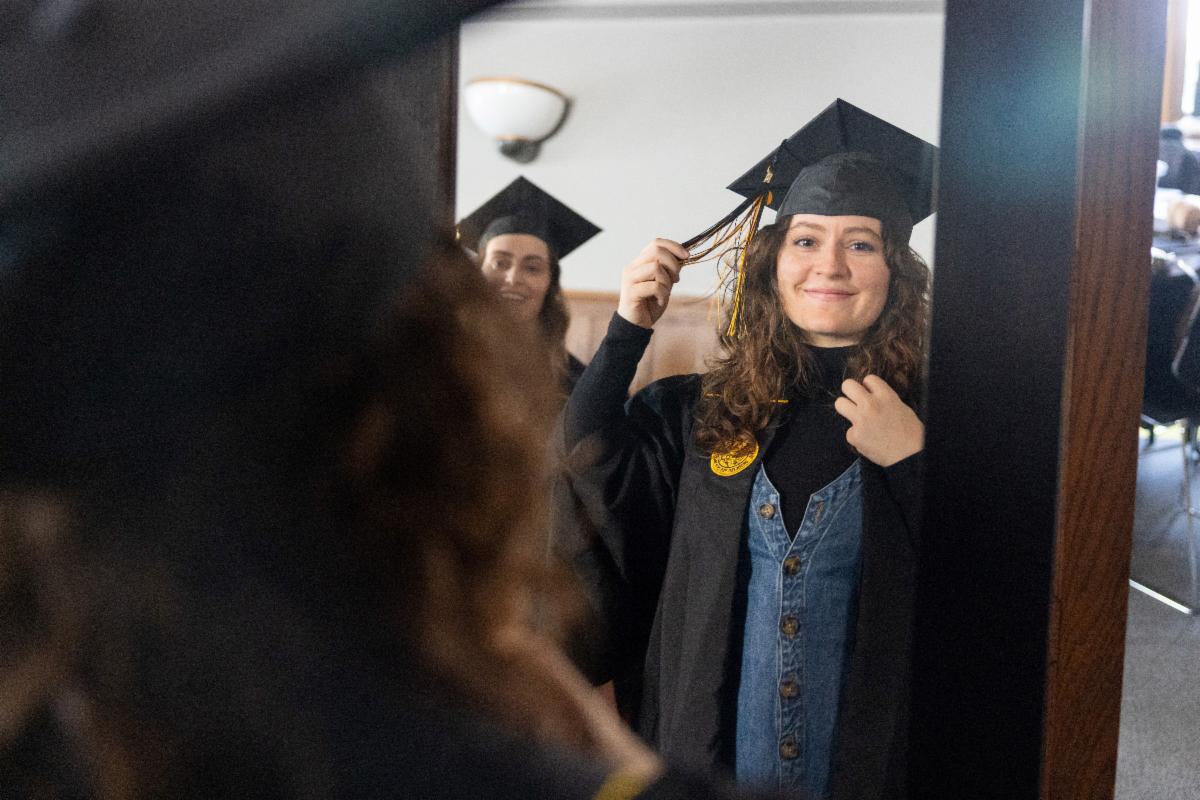
Student Taylor Dutton (above) prepares for commencement.
Students Kloe Thomas, Kaitlyn Severson, and Michael Sebby (left), and their classmates recite the Physician Assistant Oath.
Students Kaia Porter, Jen Pochyly, and Allie Oetinger (below), alongside their classmates, receive a warm applause from family and friends on their graduation.
| | |
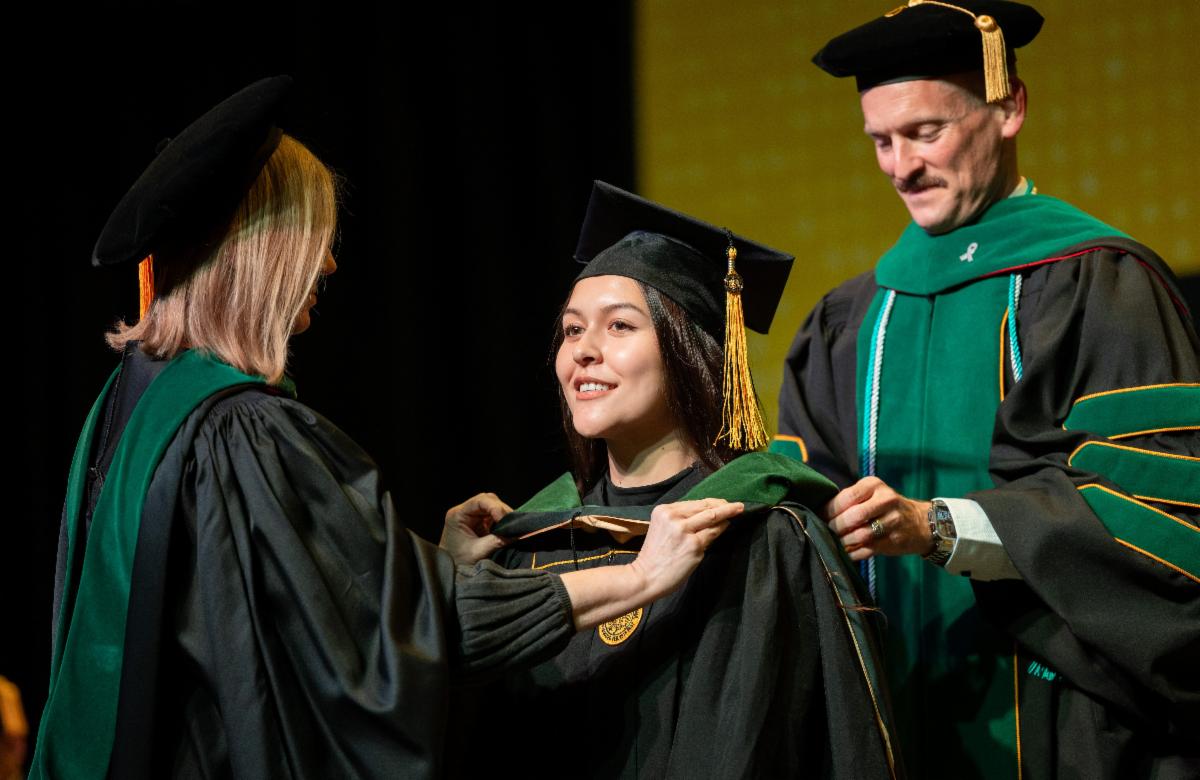
Student Kloe Thomas (above) is hooded by Professors Carol Gorney and Jeremy Nelson, the latter of whom was selected by the Class of 2025 to deliver the Commencement Address.
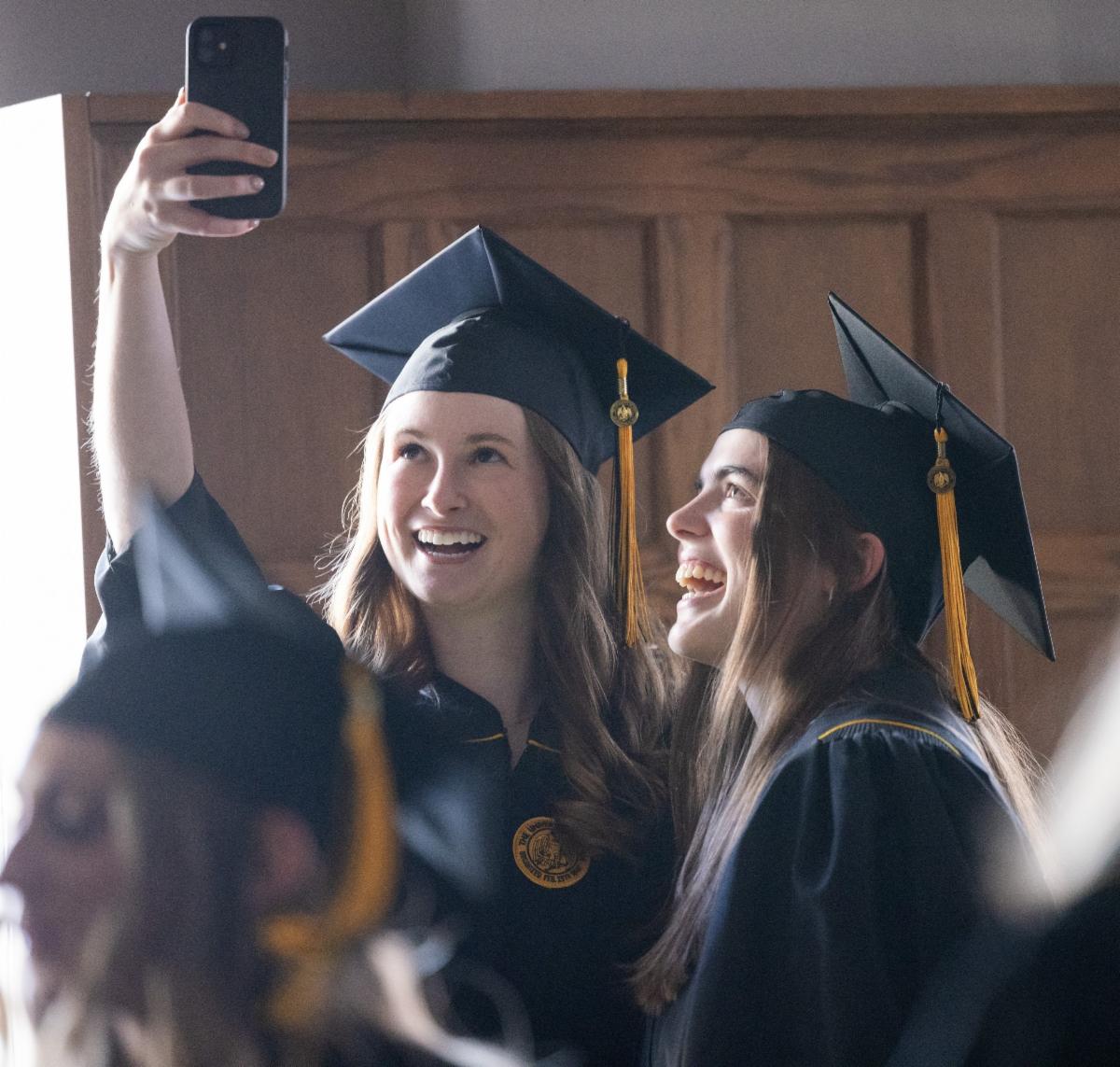
Students Fiona Roehrs and Kaia Porter (right) take a selfie to remember the special moment.
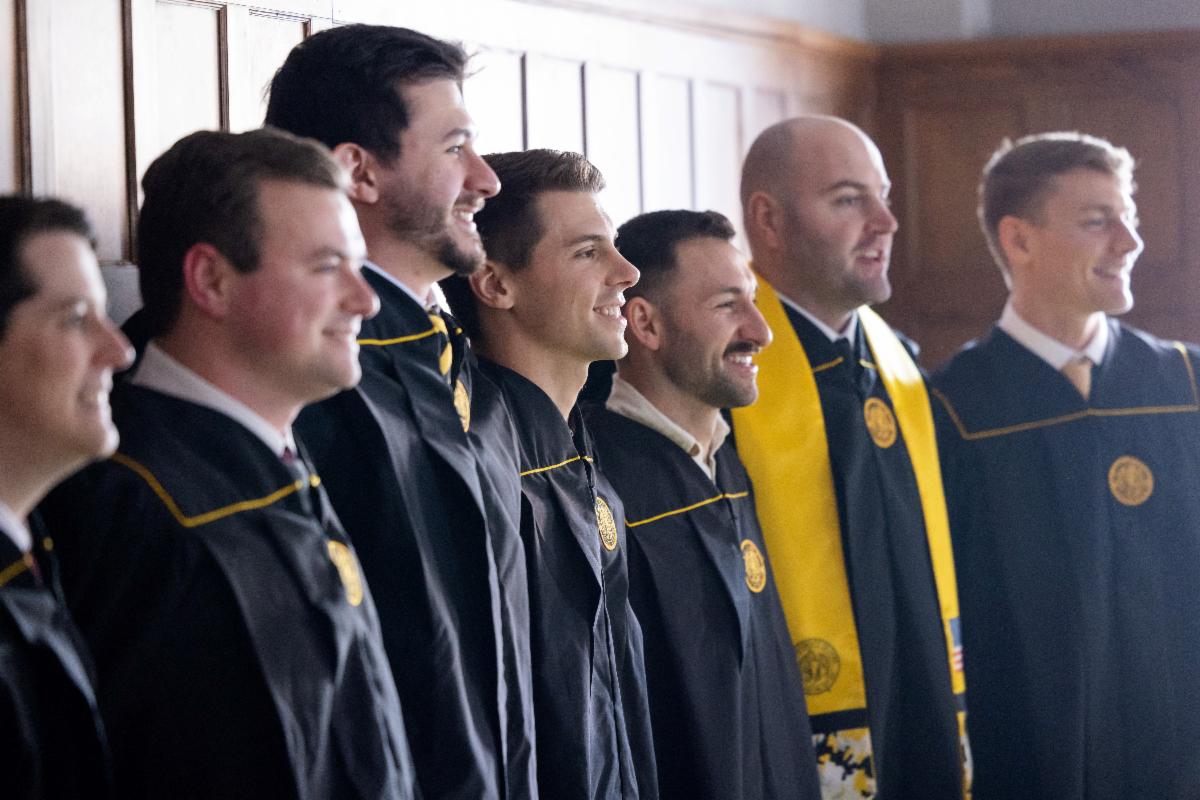
Several gentlemen in the Class of 2025 (below) celebrate commencement.
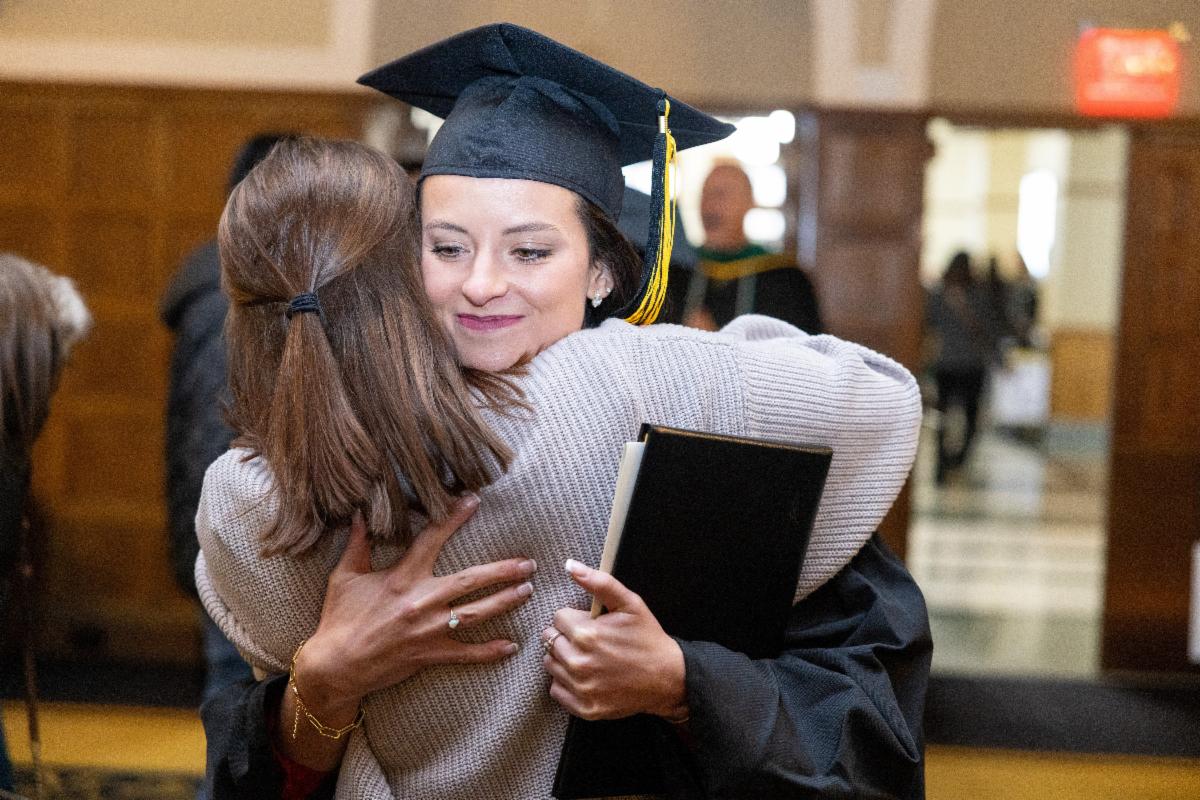
Student Raginya Handoo (bottom) celebrates with her family.
| | |
STUDENT FEATURE:
Q&A: PA student Clare Dunne on finding strength at Iowa
Clare Dunne
graduation year: 2025
Written by Amy Dykstra
For physician assistant (PA) student Clare Dunne, the path to graduation included more than lectures, labs, and clinical rotations—it included surviving brain cancer, stepping away from school for a year, and returning stronger than ever. A Coralville native and Wartburg College graduate, Clare reflects on how family, faculty, and classmates shaped her journey, and how her experience as a patient has inspired her future in oncology.
What led you to pursue a career as a PA?
I’ve always felt drawn to health care. Both my parents are dentists, and from a young age I admired the relationships they had with their patients. We’d run into patients at the grocery store who clearly trusted and appreciated them—that stuck with me. I initially went to Wartburg on a pre-med track, but my roommate was planning to become a PA, and she introduced me to the profession. I loved the idea of close patient interaction, working collaboratively with physicians, and being part of interdisciplinary teams. It felt like the right fit for the kind of clinician I wanted to be.
| |
What made you choose the University of Iowa CCOM for PA school?
Iowa is close to home, and that’s always been important to me. But the biggest draw was the program’s exceptional reputation. If it weren’t such a stellar program, I probably would have been more tempted to go out of state, especially after spending so much time close to home during COVID. But I couldn’t pass up the opportunity to train at the University of Iowa, and I’m so grateful I made that decision.
What people or experiences have shaped your PA journey the most?
So many people have had an impact, but the defining event of my experience happened at the end of my didactic year. Right after finishing my final exam, I became extremely sick—headaches, vomiting, strange neurologic symptoms. We learned I had a 4x4 cm medulloblastoma brain tumor. I needed emergent neurosurgery and had to step away from school for a year for radiation and chemotherapy. That year—and the support I received throughout it—shaped everything.
How are you doing now?
I’m doing well. I’m in remission and incredibly grateful.
How did the program support you during your diagnosis and treatment?
I truly wouldn’t be here without their support. When I was in the hospital, my mom called Carol Gorney, who leads our clinical education team, and within a day she and Jeremy Nelson were at my bedside telling me not to worry—that they would take care of everything. The faculty checked in constantly. They kept my information private until I was ready to share, and they let me decide exactly what I wanted disclosed to my classmates. Carol gave me her personal phone number and stayed in touch throughout my entire treatment. When it was time to return, she offered me the chance to audit the fall didactic semester so I could ease back in without the pressure of graded exams. The class below mine welcomed me with open arms. That transition could have been incredibly difficult, especially with my physical recovery and visible changes like losing my hair, but they made it feel natural and safe. Iowa’s PA program didn’t just support me academically—it supported me as a whole person.
What are some of your fondest memories from PA school?
My “OG class,” as I call them, will always hold a special place in my heart. My best friend and roommate, Reagan, and our friend Olivia were part of so many late-night study sessions and long walks home from campus. Those daily routines—walking, talking through stress, supporting each other—became some of my favorite memories. Our group went to Hawkeye games together and tailgated with my family, who loved meeting everyone. My best friend Reagan is getting married now, and it’s so special to celebrate these life moments with people who went through so much alongside me.
What advice would you give to incoming PA students?
-
Invest in your classmates. These will be some of your closest lifelong friendships.
-
Take it one step at a time. PA school can be intense, and in my case unpredictable. But uncertainty teaches you resilience.
-
Learn the material with future patients in mind. Everything truly comes together once you reach clinical rotations.
-
Have fun when you can. The work is rigorous, but the relationships and moments in between matter just as much.
How has being a patient shaped the way you care for patients now?
It’s changed everything. I recently worked with a patient at MD Anderson who had just learned their cancer diagnosis. Sitting in that room, I could feel exactly what each person in that family was experiencing—the fear, the waiting, the uncertainty. I’ve been in that hospital bed. I’ve watched my family react to hard news. I’ve waited anxiously for MRI results. That perspective allows me to meet patients with deeper empathy. When families sense that you truly understand their fear and pain, it makes a huge difference. Those moments of connection are why I want to work in oncology.
What’s next for you after graduation?
I’m currently at MD Anderson in Houston completing a rotation—a dream I had even before my diagnosis. It has strengthened my desire to pursue oncology. I’m applying for oncology positions and exploring opportunities at places like Mayo Clinic, MD Anderson, and other cancer centers. I’m also considering oncology-focused residencies.
Is there anything else you want people to know about your journey?
The biggest thing is gratitude. My family, my classmates, my friends, and the faculty supported me in ways I can’t fully describe. I truly believe I was meant to be here at Iowa. I received incredible neurosurgical care, compassionate providers, and a program that refused to let me give up—even when I doubted myself. Because of them, I’m graduating. I’m healthy. And I’m ready to give patients the same level of care and compassion I received.
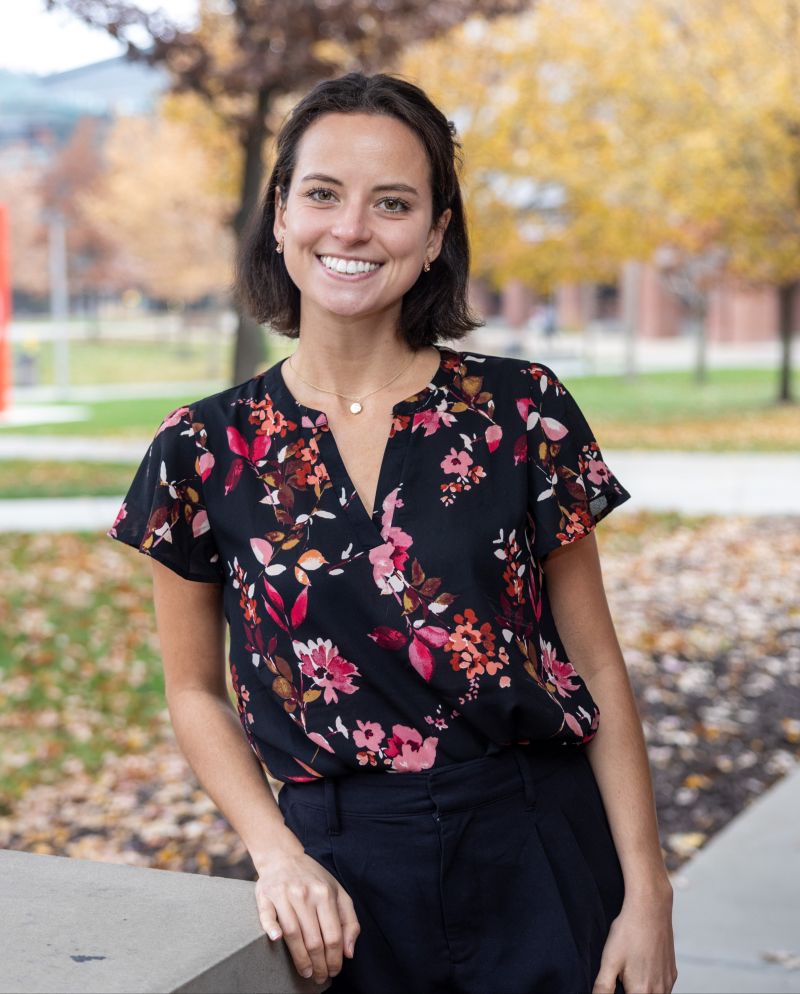
| Student Clare Dunne (above) is all smiles after commencement on December 5, 2025, celebrating a milestone moment. | | |
STUDENT FEATURE:
Q&A: PA student Noah Vásquez on finding community, confidence, and a future in medicine
Noah Vásquez
graduation year: 2025
Written by Amy Dykstra
From Arvada, Colorado, to Iowa City, physician assistant (PA) student Noah Vásquez has taken an unconventional and inspiring path into medicine. In this Q&A, he reflects how a chance encounter in high school sparked his interest, how Iowa’s PA program exceeded expectations, and why the people he met here shaped his experience as much as the training itself.
What first inspired you to pursue a career as a PA?
My interest started in high school during a routine doctor’s visit. I ended up seeing a PA instead of my usual physician, and I was intrigued by the combination of patient care, critical thinking, and hands-on science. My dad has been an educator for more than 30 years, and I grew up helping in his classroom—so I’ve always loved teaching and science. Becoming a PA blended those interests perfectly. I went on to study biomedical sciences at Northern Arizona University, minored in chemistry, and worked as a chemistry teaching assistant. After graduating during the height of COVID-19, I returned to Colorado and worked as a phlebotomist for three years. Those patient interactions and the problem-solving involved in clinical care solidified that becoming a PA was the right path.
| |
What was it about Iowa onto your list—and ultimately into your life?
Honestly, I didn’t think I’d get into Iowa. It’s the number-one program in the country. But the application process was straightforward, making it more easily accessible. When I got an invitation to interview, I reread the email several times because I didn’t believe it. My dad came with me to Iowa City, and during the interview I immediately sensed something different. The faculty were proud of the program but also humble and hungry to keep improving. That really resonated with me. The interview questions ranged from ethical scenarios to one about an alien race rebuilding its civilization—it was unexpected, but it showed how broadly the program thinks. When I got the acceptance call from Tom O’Shea, I almost drove off the road. It felt unreal.
What stood out about your experience at the University of Iowa?
“Iowa Nice” is absolutely real. I’ve lived in Arizona, Montana, Colorado and Australia, and people are kind everywhere—but Iowa is something different. People here will give you the jacket off their back or invite you in if you need a place to stay. As an out-of-state student, I felt welcomed immediately. My classmates are a huge part of that. I joke that I now have 25 siblings—everyone is supportive, extroverted, and truly invested in each other’s success. We celebrate birthdays together, study together, and lean on each other through tough moments.
Were there mentors or faculty who made a strong impression?
Absolutely. One who really impacted me is Marc Doobay, who runs our summer program. He created a series where faculty shared their personal journeys into the PA profession. Marc’s story resonated deeply with me—my dad is Hispanic and my mom is of English/Scottish descent, so growing up I often felt like I had a foot in two worlds. Marc shared a similar background, and that connection meant a lot. He also happens to look a bit like my dad, so I had to resist treating him like family!
What was the academic experience like? Any special projects or involvement?
The program is rigorous, but collaborative. I enjoyed working with medical students and learning how our professions intersect. I also helped put together study review slides before exams and did some tutoring. During my third semester, I was selected for the PAEA Future Educators Fellowship, which prepares students who may want to become PA educators. My project focused on how PA programs integrate ultrasound education—and how approaches vary based on program needs.
What are some of your favorite memories from your time at Iowa?
My class is very active. We played a lot of intramural volleyball through the Carver College of Medicine—although during a championship game I ended up tearing my ACL. One of my classmates had torn her ACL two weeks earlier, so we went through recovery together. My classmates rallied around me with advice, cards, and support. We explored Lake MacBride, attended med school tailgates, went skiing, and even went scuba diving in Missouri with my girlfriend—also a PA—and a few friends. We made the most of our free time together. I also enjoyed volunteering with Project Access, where we visited local schools to teach kids about what PAs do. Showing them ultrasounds of their own hearts or how to splint a wrist was a highlight.
What are your plans after graduation?
I’m planning to return to Arizona, where my girlfriend practices as a PA. I’m open-minded because I genuinely enjoy most areas of medicine, but I’m leaning toward outpatient work—urgent care, general medicine, procedures, pediatrics, or surgery. I like having variety and working with patients in acute but manageable settings.
What advice do you have for students considering the PA profession?
For applicants:
- Get as much exposure as possible. Shadow PAs, talk to people in different specialties, and fully explore the profession.
- Every state and practice looks different, so learn broadly.
- Build your experience and keep applying—I applied twice before getting in. Persistence matters.
For students who’ve already been accepted:
- Don’t study before the program starts. Truly—enjoy your time off. Travel, spend time with people you love, and rest.
- Iowa will prepare you. You’ll learn what you need, when you need it. I spent the summer before PA school in Indonesia, and I wouldn’t trade that break for anything.
How has becoming a PA changed you?
This experience has shaped not just how I think clinically, but how I see the world. Medicine exposes you to people from every background, and it challenges biases you didn’t even realize you had. It’s opened my eyes to the complexity and humanity of every patient. It’s the kind of growth I hoped for—and more.
| | |
SNAPSHOT:
Brenneman and Doobay honored for leadership and service
|
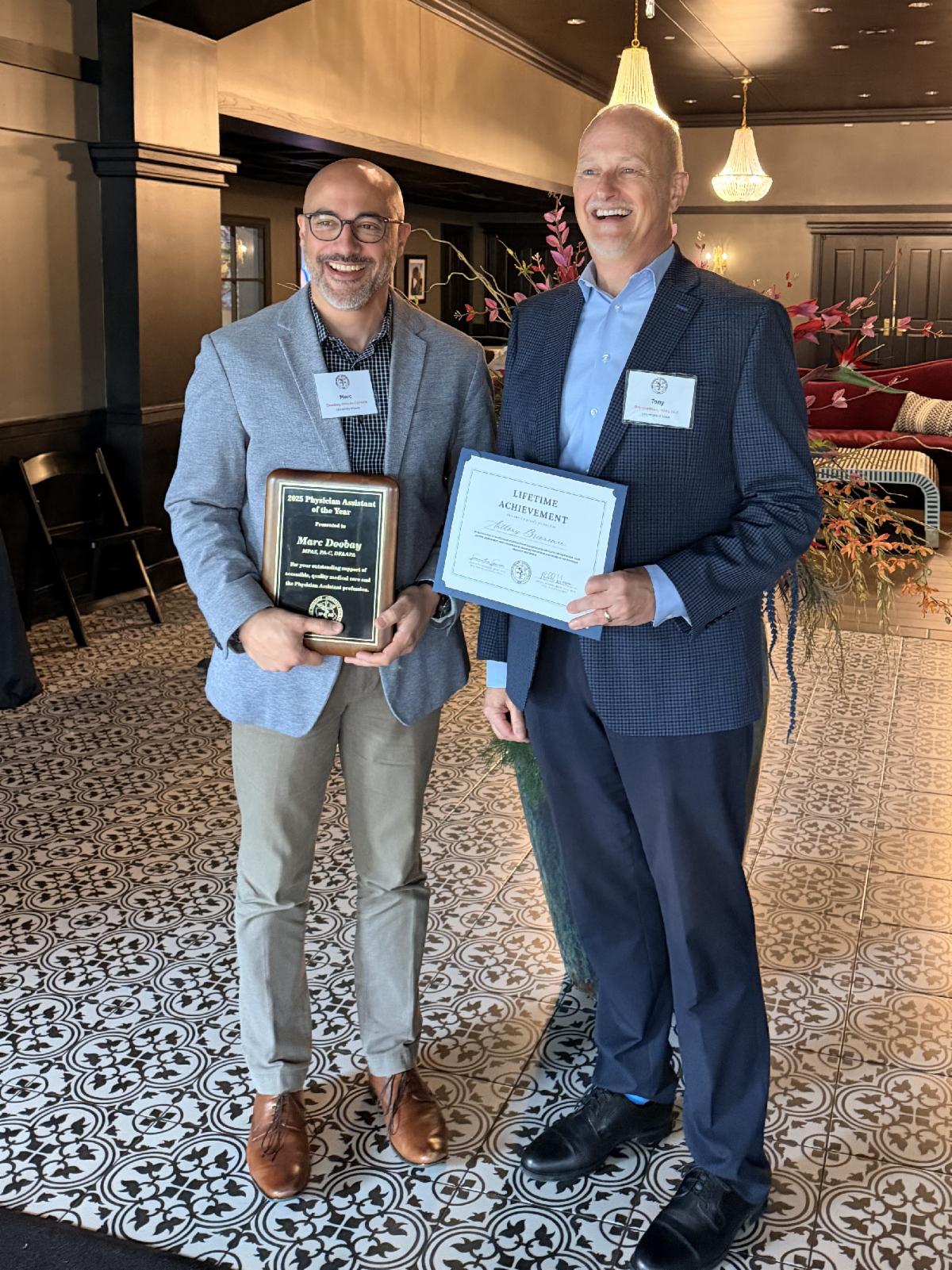
 | | At the Iowa PA Society (IPAS) meeting on October 21, 2025, Professors Anthony Brenneman and Marc Doobay (right) received awards recognizing their contributions to the PA profession in Iowa. Brenneman received the Lifetime Achievement Award, and Doobay received the 2025 Iowa PA of the Year Award. The awards were presented at the society’s annual meeting in Iowa City, Iowa. Brenneman’s Lifetime Achievement Award honors a career spanning clinical innovation, PA program leadership, and sustained service to the profession—locally and nationally—including work to expand PA practice policies within UI Health Care and long-standing leadership in PA education and advocacy. Doobay’s PA of the Year Award recognizes contributions across clinical practice, education, and IPAS leadership, including advocacy efforts related to the PA Compact and expanded student engagement through the PA Student Symposium and the Heartland Knowledge Bowl. The University of Iowa congratulates both award recipients and recognizes the value of their continued contributions to students, colleagues, and the PA profession in Iowa.
| |
PRECEPTOR FEATURE:
2025 Preceptor of the Year: Nicholas Mancuso, MD
We’re proud to recognize Dr. Nicholas Mancuso as our 2025 Preceptor of the Year—a clinician-educator who consistently turns an everyday clinic into a high-yield, confidence-building classroom. Dr. Mancuso is an internal medicine physician in Des Moines, board-certified in Internal Medicine, with training that includes medical school at Creighton University School of Medicine and residency at the University of Iowa Health Care.
What stands out most is the learning environment he creates: structured, supportive, and focused on helping students become thoughtful, independent clinicians. Student nominators repeatedly highlighted how he balances autonomy with coaching—inviting learners to reason out loud, commit to a plan, and then refine it through targeted feedback, and see how it lands with the patient. One student wrote that he “provided excellent student autonomy,” and that he “challenged me on my plans and made me defend them,” offering one-on-one instruction that sharpened clinical thinking and communication.
| |
Others described the way Dr. Mancuso makes clinical reasoning feel accessible and energizing. As one nominator put it, “Dr. Mancuso is everything I hope to be in a provider one day.” Whether coaching note-writing or walking learners through complex concepts with patience, he consistently closes the gap between “where I am” and “where I want to be.” Another student summed it up simply and powerfully: “I looked forward to coming to this rotation every day.”
Beyond teaching medicine, Dr. Mancuso invests in students as future colleagues—offering practical guidance for new grads navigating applications and interviews, and modeling professionalism through kindness and respect for every member of the care team.
Dr. Mancuso’s mentorship is a reminder of what’s possible when clinicians invite students into real-world practice—supporting growth, instilling confidence, sharpening clinical reasoning, and building the competence needed to thrive as new graduates.
This is exactly why precepting matters—and why we’re always eager to welcome more clinicians into this role. If you’re interested in learning more about precepting, we’d love to partner with you; please contact Nate Kramer, Coordinator of Clinical Outreach & Development, at nathan-kramer@uiowa.edu.
Dr. Mancuso, thank you for your extraordinary mentorship, your flexibility when we’ve needed you most, and the lasting impact you’ve had on our students’ growth and confidence.
Dr. Nicholas Mancuso (above) receives the 2025 Preceptor of the Year Award from Dr. David Asprey at the commencement ceremony on December 5, 2025.
| |
|
STUDENT FEATURE:
Building early belonging: Iowa’s PASS student-led outreach to future PAs
PAEA’s PA Student Success (PASS) (formerly Project Access) is a student-led outreach and recruitment initiative that introduces K–12 learners to the PA profession—especially students who may not otherwise see healthcare careers as visible or attainable. At the University of Iowa, PASS is grounded in a clear purpose: educating and empowering local youth from underrepresented in medicine groups to pursue careers in the PA profession.
This year’s PASS team was led by PA Student Team-Leader Gabbi Bullard, whose motivation is rooted in lived experience: “I didn’t know that I wanted to be a PA until I was older. And being a first-generation college student, earlier exposure to this career path would’ve been really helpful for me—and others in my shoes.” She framed PASS as a way to offer younger learners what she wishes had been made available to her: “I saw an opportunity to give others what I missed out on as a kid—early insight into the PA profession.”
| |
At the University of Iowa, PASS is not a one-off presentation—it is programming designed with intention, built to be developmentally appropriate, measurable, and sustainable. During PA Week in October, the team planned visits to three Iowa City Community School District elementary schools—Coralville Central, Alexander, and Kirkwood—reaching both third-grade and fifth-grade classrooms at each site. Word-of-mouth news spread, and soon, Faith Academy in Iowa City reached out to ask the students to visit their school, too. The design followed a simple arc: spark curiosity, clarify the PA role, and then create opportunities for students to experience the identity of a PA in a way that feels real, safe, and fun.
PASS at the University of Iowa is powered by partnership. School principals served as key liaisons, and each school identified a teacher point-person to streamline communication and align the visit with classroom priorities—support that made the programming feasible inside real school-day constraints. On campus, collaboration with University of Iowa STEM Education helped the team connect with classrooms, secure materials, and strengthen a model designed to grow through shared ownership.
| |
Programming was structured in three parts. First, students received a brief pre-visit introduction to prime interest and normalize the idea that careers in healthcare are within reach. Teachers then administered an anonymous pre-visit survey to assess baseline familiarity with PAs, interest in health careers, and confidence related to STEM and future planning. Second, UI PA students delivered a short, interactive classroom session introducing PASS and the PA profession—what PAs do, how they work in teams, and why communities need them. Third, the bulk of the sessions: hands-on, case-based procedural skills workshop with rotating stations. This approach made the profession tangible—not abstract—by pairing age-appropriate clinical challenges with activities that reflect how PAs think and work.
| |
Just as important, PASS is designed to extend beyond the classroom visit. This year, the team included take-home resources that connect families to local healthcare and STEM opportunities and support ongoing curiosity after the event ends. The program also emphasized follow-through—using post-visit surveys and reflections to measure impact, refine teaching methods, and strengthen the next cycle of delivery. That feedback loop—plan, implement, evaluate, improve—is part of what makes the UI model replicable and durable.
PASS also develops leadership within the PA student team. The work requires project management, communication across school partners, teaching across developmental levels, and the humility to iterate when something doesn’t land. The result is a quiet but powerful thread: future clinicians practicing community engagement and professional identity formation while they serve.
| |
Mentorship empowered student leadership. Bullard credited the mentorship from Professor Marc Doobay with helping her translate ideas into action: “Marc’s guidance in the proposal and how to communicate with everyone involved was second to none.” That support mattered because Bullard was not simply participating—she was learning to lead her team through real-world community outreach. What made the mentorship feel formative, Bullard said, was that it left space for her to grow into the role: “I feel that he really let me run in whatever direction I wanted, which I really appreciated,” and “It allowed me to take a lot more ownership in it.” Bullard said she felt seen and strengthened: “It's like he reinforced the skills I didn't know I already had in me.” Looking forward, Bullard framed this experience as a template for how she hopes to mentor others: “I think I want to be a mentor who also encourages individuality while continuing to keep them on the right track.”
| |
The UI PASS team’s work has been recognized beyond campus, reflecting both the quality of their design and the clarity of their mission. Among 34 participating programs nationwide, the UI PASS team earned first place in PAEA’s PASS competition and received the 2025 Brenda Jasper PASS Award in recognition of their student-led innovation and community impact.
Looking forward, the program is well-positioned to deepen its community relationships, strengthen longitudinal outreach, and continue building a pipeline where more young learners can imagine themselves in healthcare—early enough for that imagination to shape course choices, confidence, and possibility.
| | |
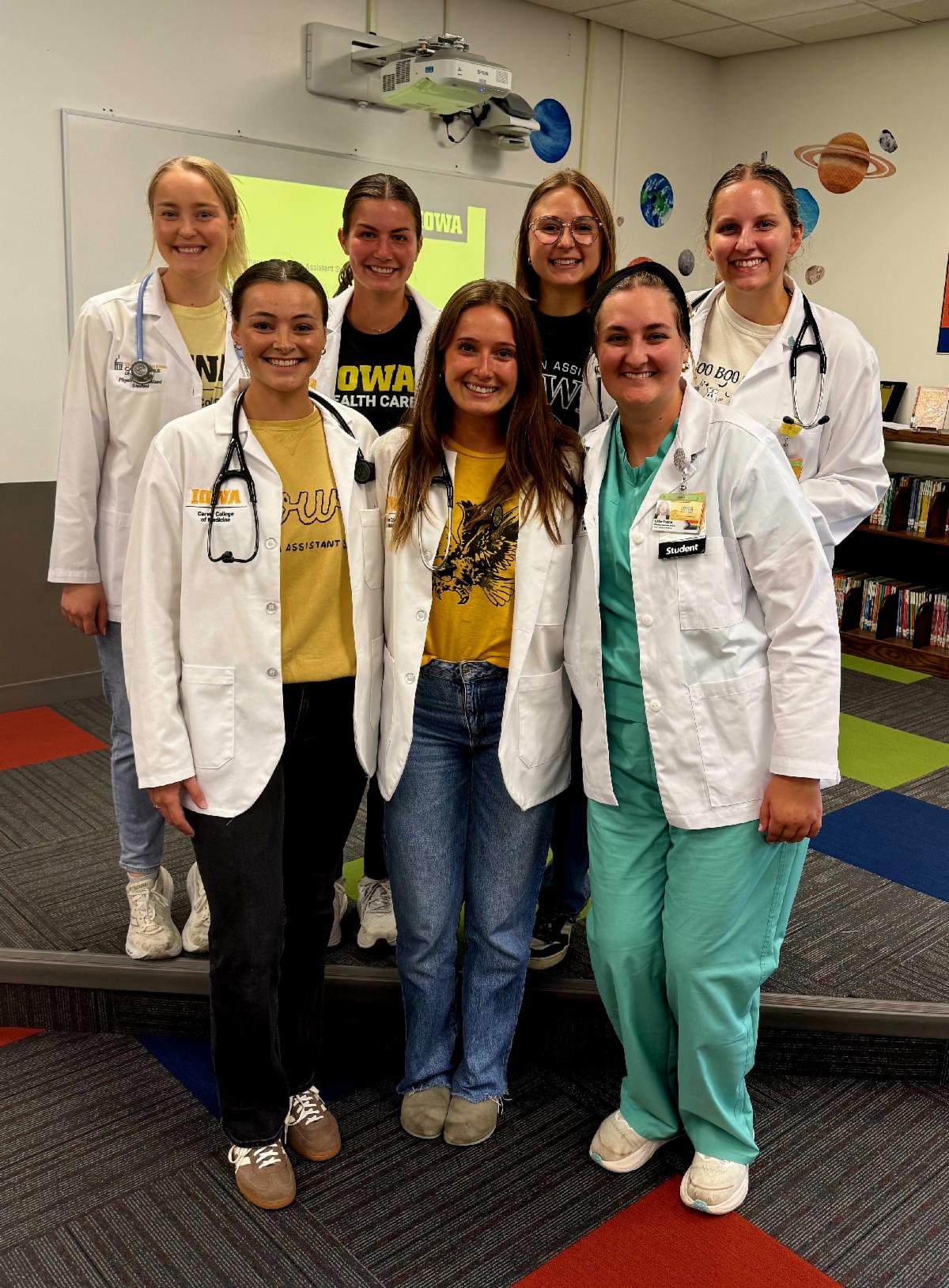
Students on the PAEA PA Student Success (PASS) team (top right) smile for a group photo. Pictured are Cara Heuer, Lily Schwen, Callie Haasl, Isabel Ahmann, Gabbi Bullard, Annie Dotzler, and Chloe Kepros; not pictured are Anne Cummings, Chelsea Francisco, Cole Reese, Edwin Royas, Jayla Jones, Justin Yem, Kyra McIntosh, and Noah Valin.
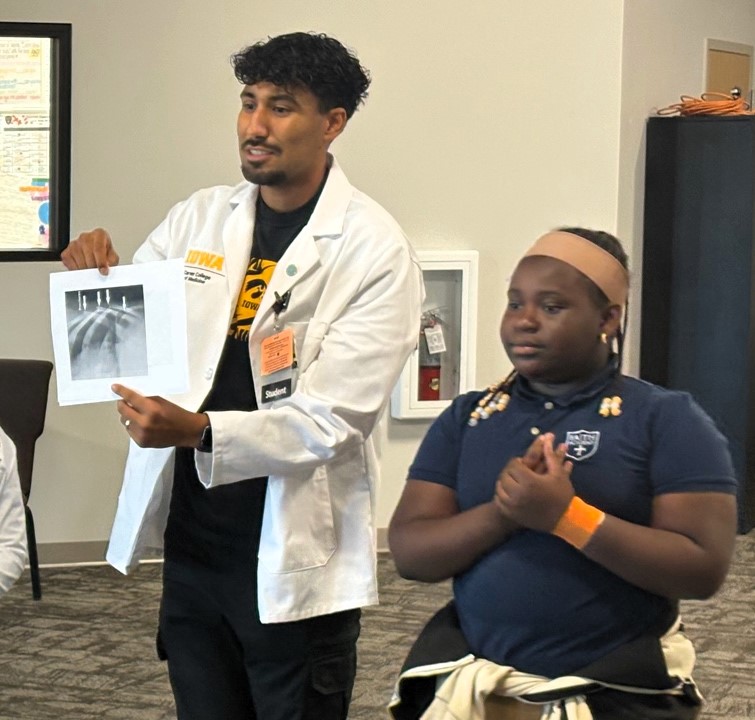
Rojas (middle left), alongside a student from Iowa Faith Academy, shares an image of a radiograph with a group of children.
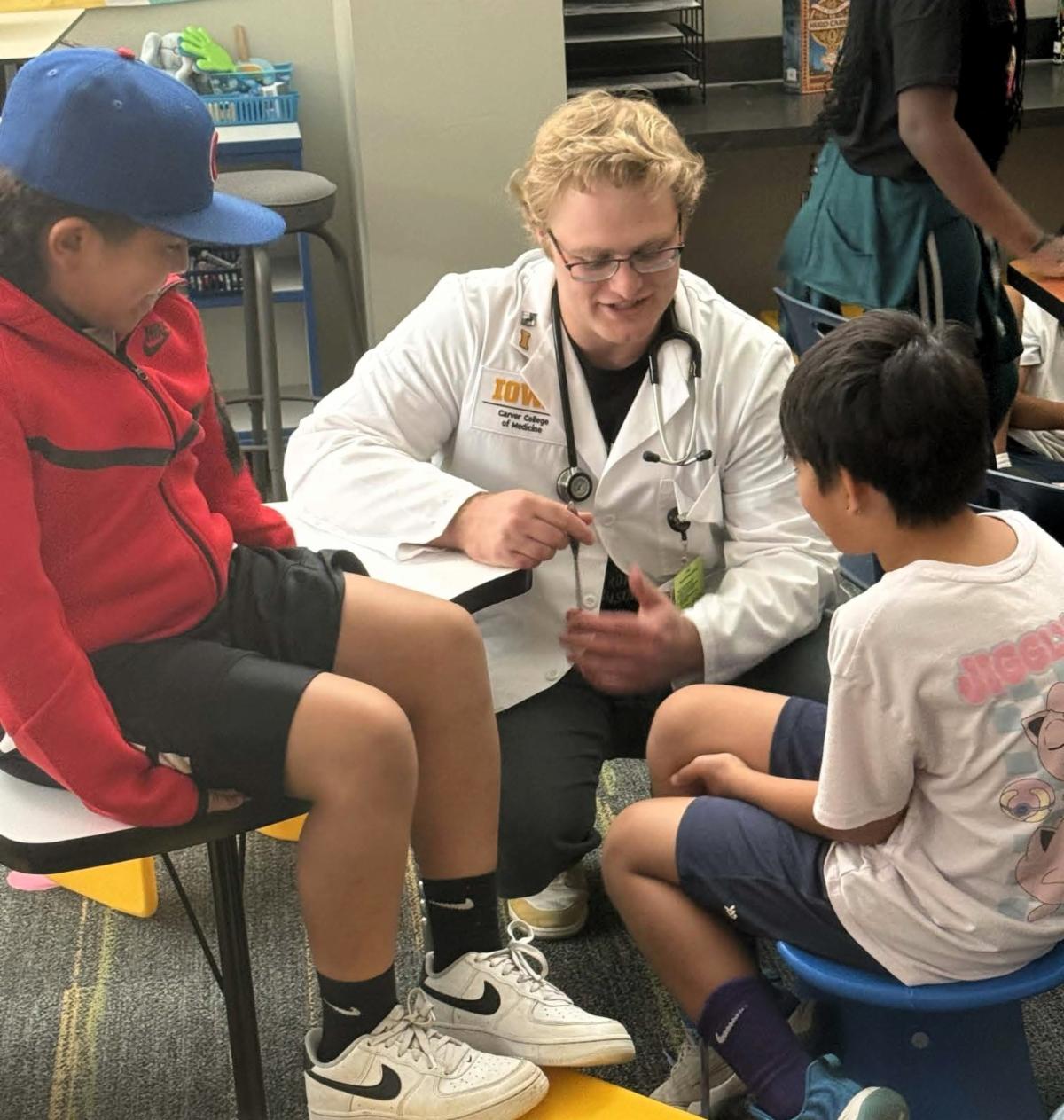
Student Tyler Mills (middle right) explains the patellar tendon reflex to a group of children.
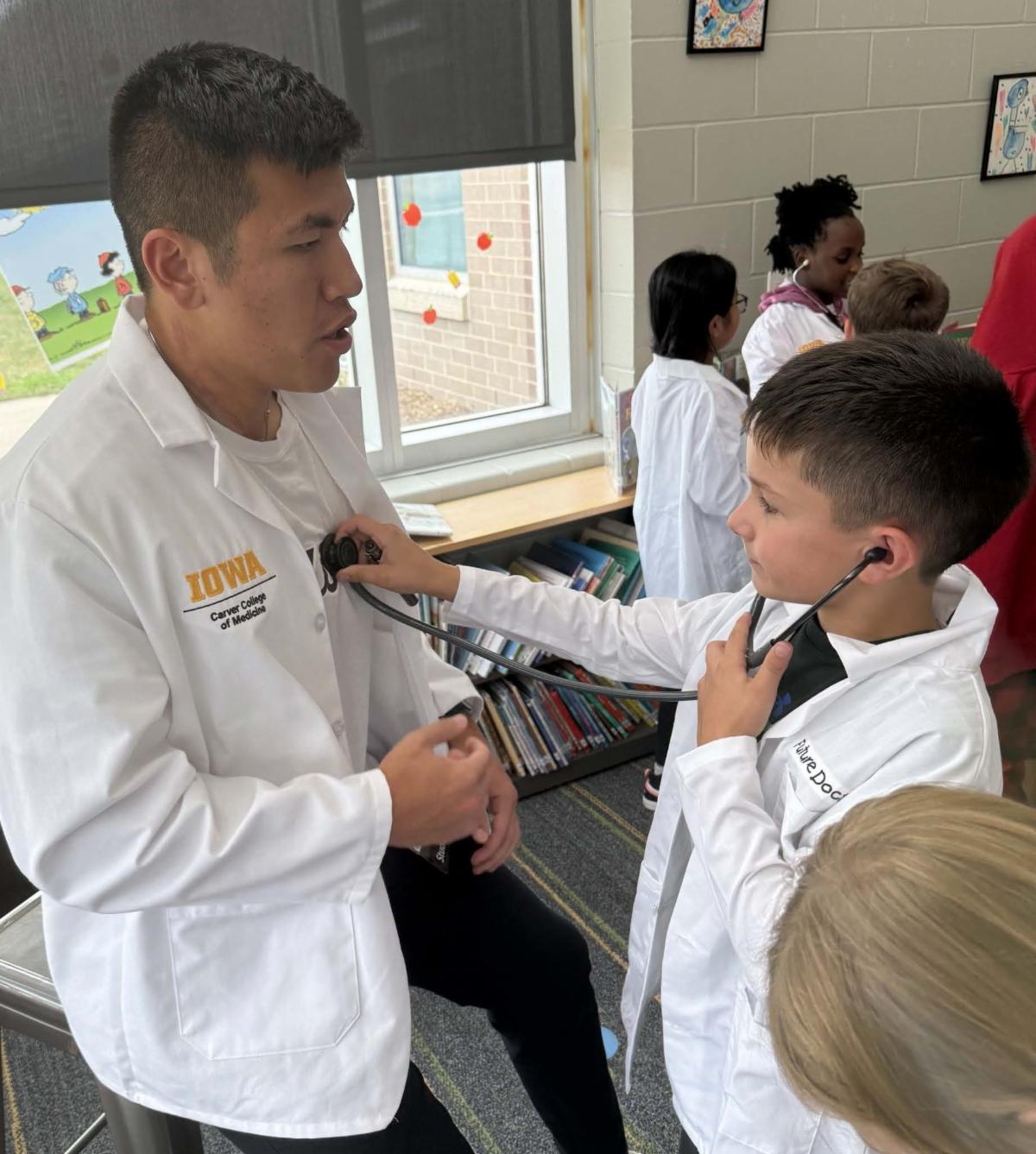
Yem (above left) teaches a child how to auscultate heart sounds.
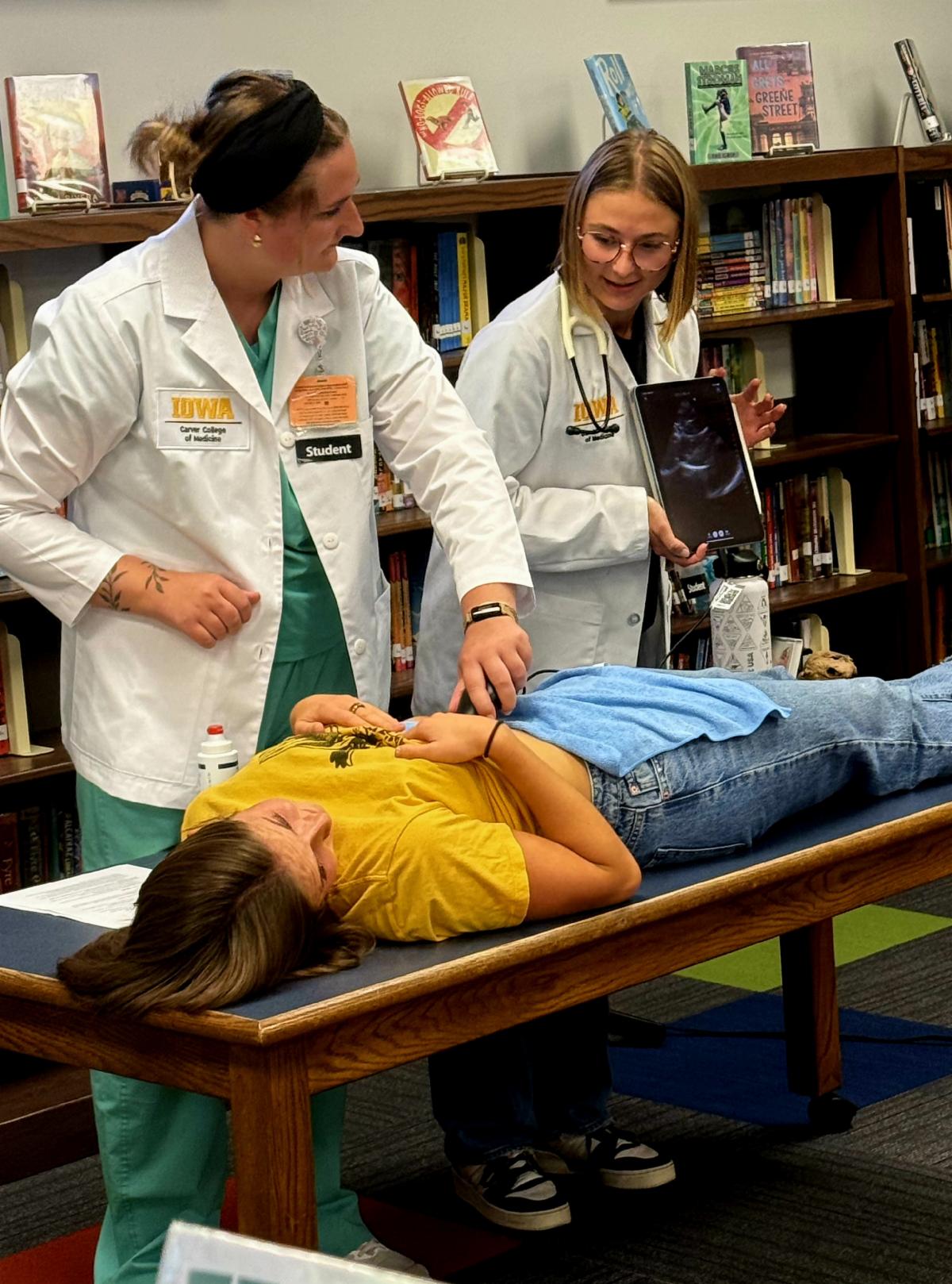
Kepros and Haasl (above right) demonstrate POCUS on classmate Dotzler.
| | |
|
Kelly Rose (expected 2027) was awarded the Denis R Oliver Foundation Award.
Colby Potts, Megan Renner, Nia Tanui, and Jack Warner (expected 2027) were awarded the Denis R Oliver PA Scholarship.
Isabel Ahmann, Alex Fouts, Jake Hampton, and Kirsten Mahoney (expected 2027) were awarded the Rex Montgomery PA Scholarship.
Nidia Villalpando (expected 2027) was elected Co-Mayor of the Rubin Flocks Learning Community at the Carver College of Medicine.
Karen Cheng, Clare Dougherty, Raginya Handoo, Noah Herkert, and Noah Vásquez (2025) were inducted into Pi Alpha Honor Society (Student) by the UI PA Program.
| |
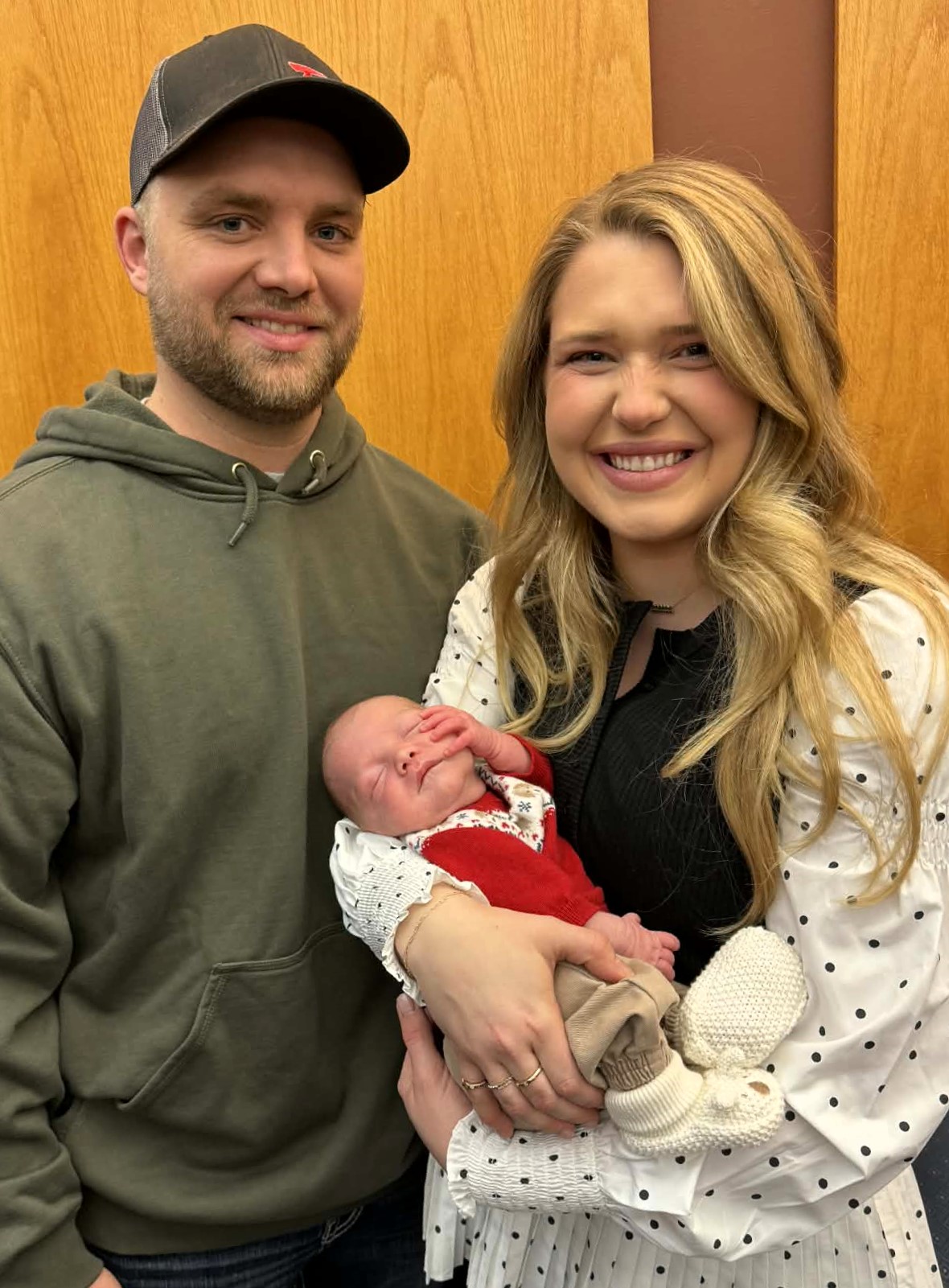
Courtney (Becker) Ambrosy (2023) and husband Brandon welcomed baby Reid on November 21, 2025.
| Jami Hagemann (2020) was inducted into Pi Alpha Honor Society (Alum) by the UI PA Program. | |
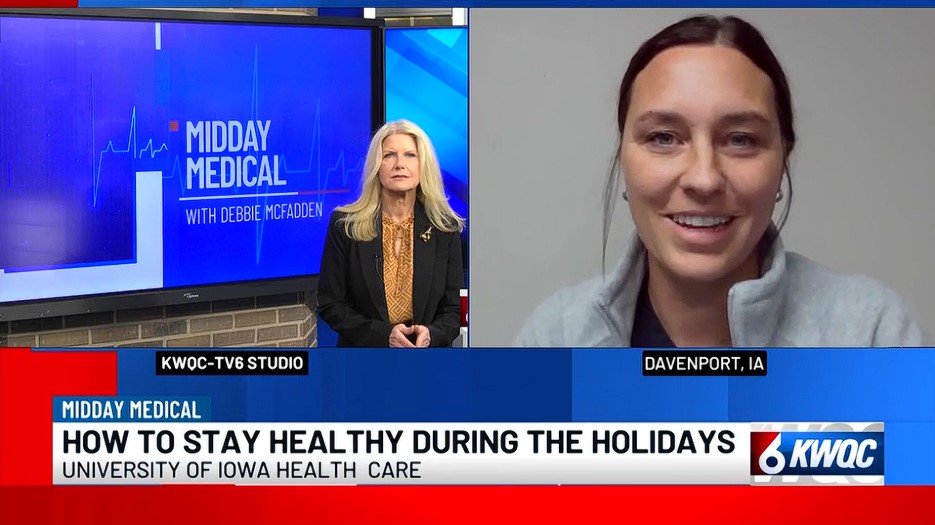
Kaitlin (Breitbach) Carr (2015) was featured on NBC affiliate KWQC TV-6 in the Quad Cities, instructing viewers on how to stay healthy during the holiday season how to stay healthy during the holiday season.
| |
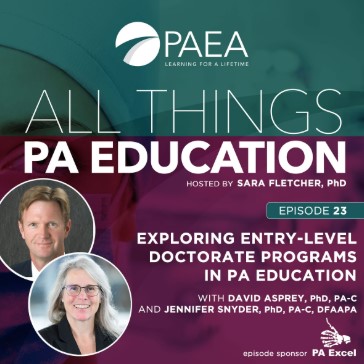
Dr. David Asprey (1987) was featured on a new episode of All Things PA Education discussing PAEA’s Doctoral Education Commission and its ongoing work, exploring the potential benefits, risks, and system-wide implications of a doctoral entry degree for the PA profession.
| |
Ed Friedmann (1977) was featured in a Medscape article highlighting his decades of work running the Redfield Medical Clinic—the only clinic in Redfield, Iowa—and caring for local patients in a rural setting.
Dr. Tom O'Shea was inducted into Pi Alpha Honor Society (Staff) by the UI PA Program.
Dr. Nicholas Mancuso was named the 2025 Preceptor of the Year for the UI PA Program.
Dr. Jason Wilbur was named the 2025-2026 President of the Iowa Academy of Family Physicians (IAFP).
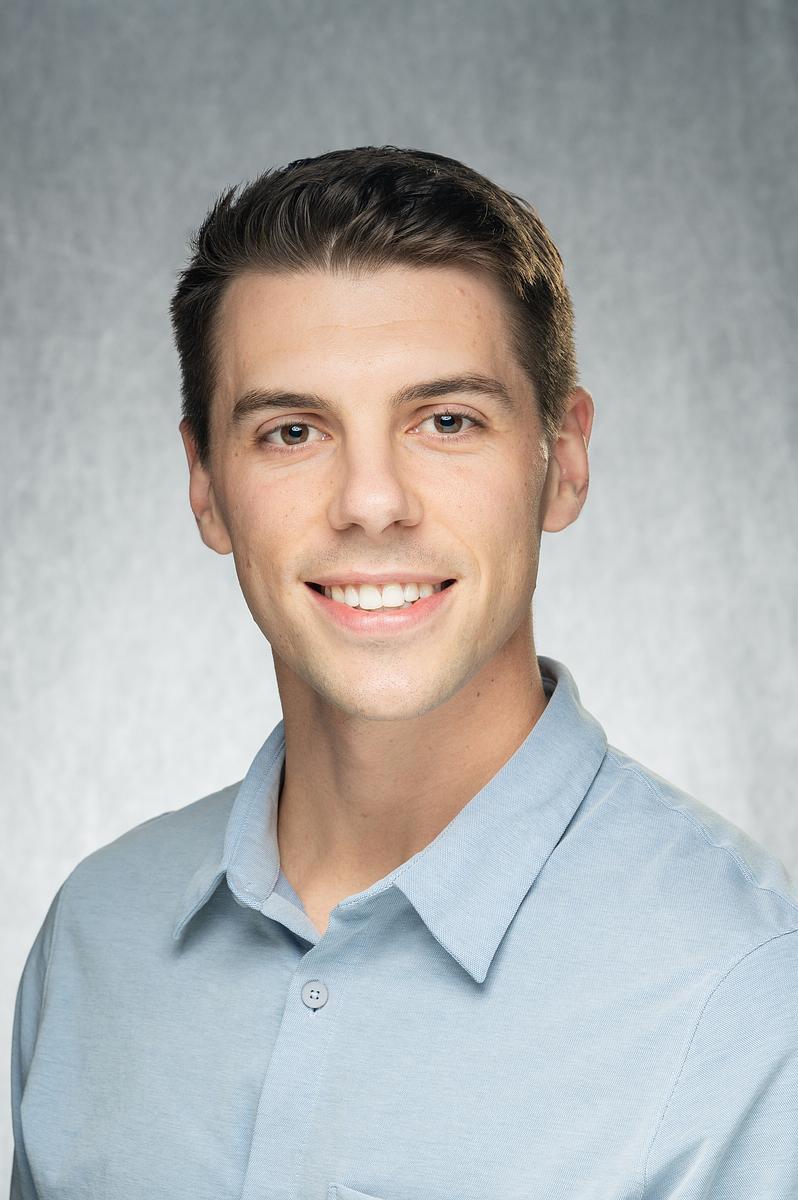
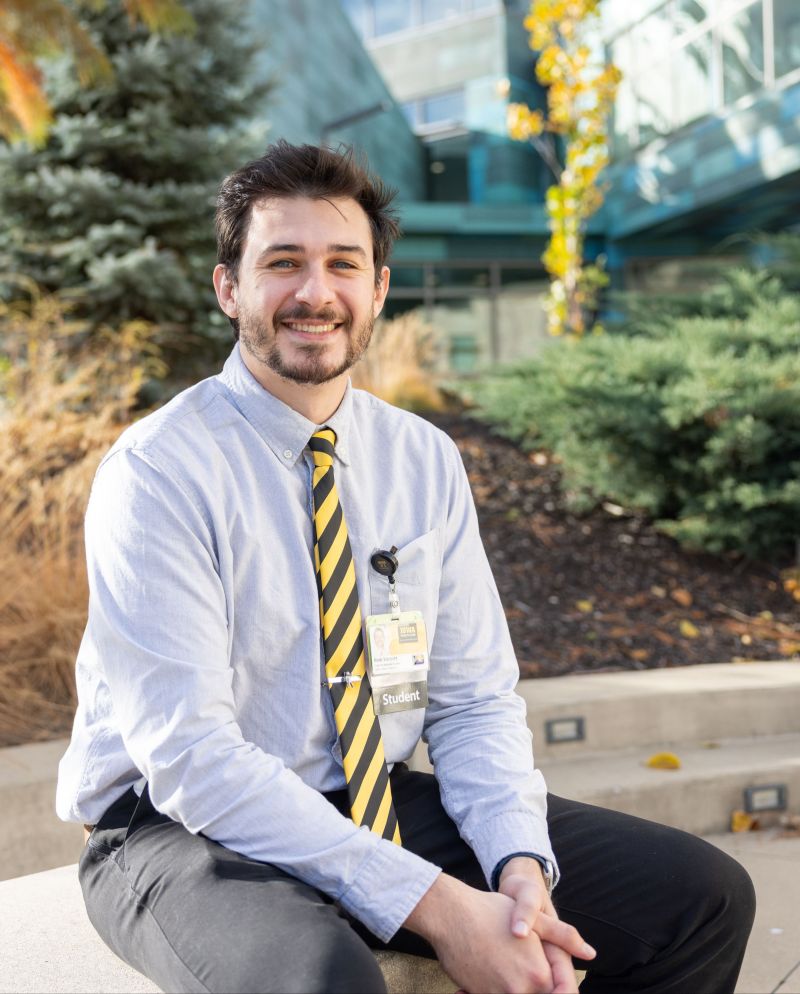
| | | | Do you recognize this member of the Hawkeye PA family? Click on the photo to reveal this member of the Class of 2003. | | |
Schuer KM, Woltenberg LN, Potter D, Cavanagh K, Asprey DP. Exploring the relationship between Accreditation Review Commission on Education for the Physician Assistant administration standards and sponsoring institution attributes in physician assistant programs. J Physician Assist Educ. 2025. doi:10.1097/JPA.0000000000000727. Epub ahead of print.
Snyder JA, Quincy B, Sivahop J, Asprey DP, Brown D. Analysis of institutional financial stability and physician assistant program accreditation outcomes. J Physician Assist Educ. 2025. doi:10.1097/JPA.0000000000000680. Epub ahead of print.
| |
Soupene VA, Jennissen CA, Stange NR, Hoogerwerf PA, Branch CA. Doobay MF. Beyond locks and lectures: what rural parents think would be effective firearm safety messaging and programming. J Community Health. 2025. doi:10.1007/s10900-025-01533-y. Epub ahead of print.
Nelson JL, Hegmann TE. Changing the applicant pool after removing standardized test requirement. PAEA 2025 Forum Poster Abstracts. J Physician Assist Educ. 2025. doi:10.1097/JPA.0000000000000714. Epub ahead of print.
| We want to hear from you! Each quarterly newsletter will highlight our alums' life events. Please submit your good news—such as a new job, growing family, or big award. Thanks for being a part of our Hawkeye PA family! | | |
Would you like to be added to our UI PA Program newsletter e-mail list? Click HERE!
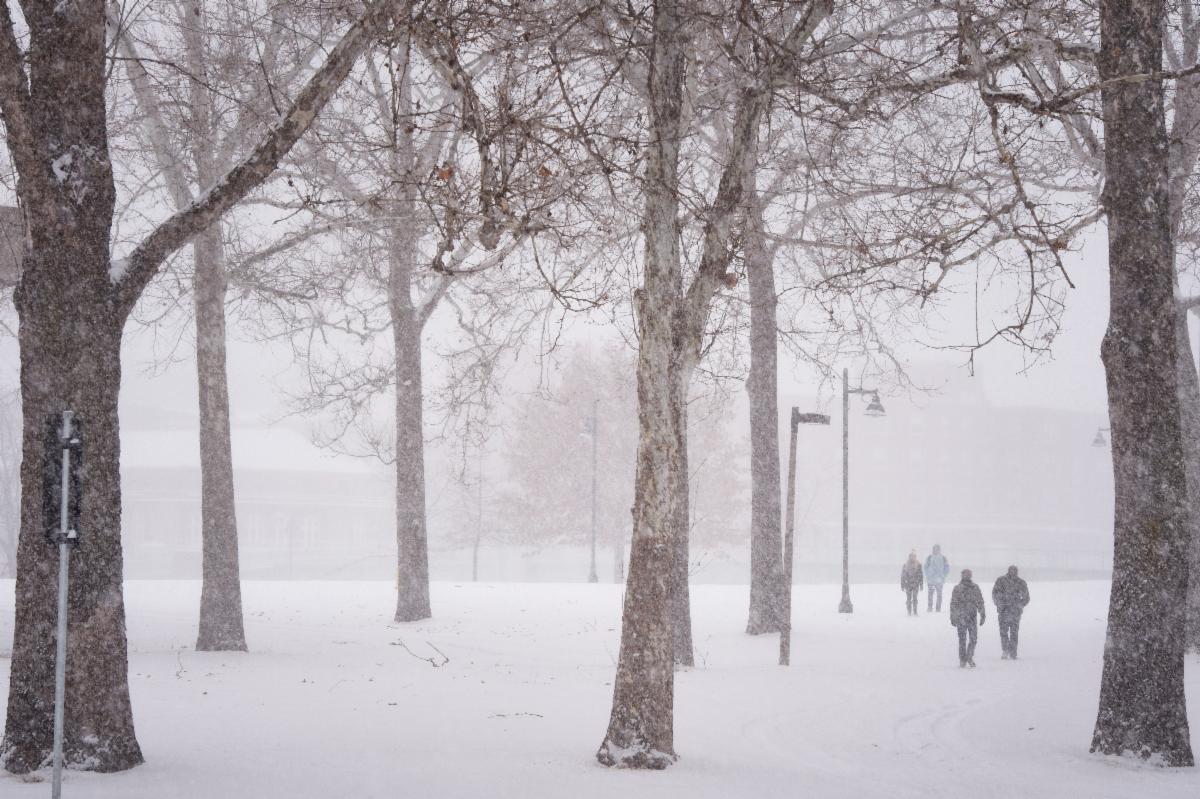
| | Snowy sidewalks, bundled-up Hawkeyes, and that quiet campus calm—another winter morning walk to class at the University of Iowa (above). | | | | |