Each year, in lieu of holiday greeting cards, Mission makes donations to charitable organizations. This year’s giving was distributed to the following:
Water.org aids communities without access to clean water receive funding, long term guidance, and partnerships. Water.org requires communities to take ownership of their projects to ensure that the people are engaged and invested.
Paul Duke STEM High School aims to ignite and foster success and creativity in all students through a challenging STEM curriculum, which connects students to their future through technology and relevant learning experiences.
Lakota Robotics seeks to inspire young people to pursue careers in science and technology; and equip them to become confident, responsible, productive citizens prepared to make a meaningful contribution in the world and motivated to improve the lives of those less advantaged than themselves using a unique learning experience in an environment that is fun and fosters creativity.
Veterans Association of Real Estate Professionals (VAREP) is a non-profit 501(c)(3) and HUD-approved housing counseling organization dedicated to increasing sustainable homeownership, financial-literacy education, VA loan awareness, and economic opportunity for the active-military and veteran communities.
On behalf of the entire Mission team, we hope you have a wonderful holiday and happy new year!
|
Log4J Vulnerability
A security vulnerability has been reported within Java-based software Log4j. Subsequently, Mission Engineers have completed a thorough vulnerability assessment to any threat posed to Log4j, and has taken all necessary steps to mitigate any potential risks. Mission does not rely on systems that use this software. Mission will remain vigilant in both monitoring and incident response to any future cyber threats to our customers.
|
Week 1: Survey of Features
Week 2: Hardware and Instrumentation
Week 4: Web Portal II-Advanced Features, Reporting, Supergraph, Volumetric Flow
Week 1: Survey of Features
Week 2: Hardware and Instrumentation
Week 3: Web Portal I-Unit Setup Options, Notification Setup Options, Alarm Groups, Website Tools
Week 4: Web Portal II-Advanced Features, Reporting, Supergraph, Volumetric Flow
Week 1: Survey of Features
Week 2: Hardware and Instrumentation
Week 3: Web Portal I-Unit Setup Options, Notification Setup Options, Alarm Groups, Website Tools
Week 4: Web Portal II-Advanced Features, Reporting, Supergraph, Volumetric Flow
Week 5: Special Topics
|
January 11-13
Pierre, SD
February 1-3
Fargo, ND
February 1-3
Held Virtually
February 15-17
Effingham, IL
February 21-23
Des Moines, IA
February 28 - March 4
St.George, UT
March 1-3
St.Cloud, MN
March 7-10
Denver, CO
March 9-11
Boise,ID
March 14-16
Banff, AB
March 15-17
St.Charles, MO
March 15-18
La Crosse, WI
March 29-31
Held Virtually
Since events are still in flux due to COVID restrictions, please make sure to confirm schedules with individual trade shows. We will update our website as new information is made available.
|
|
Over-the-Air Updates Simplify Operations for Gwinnett |
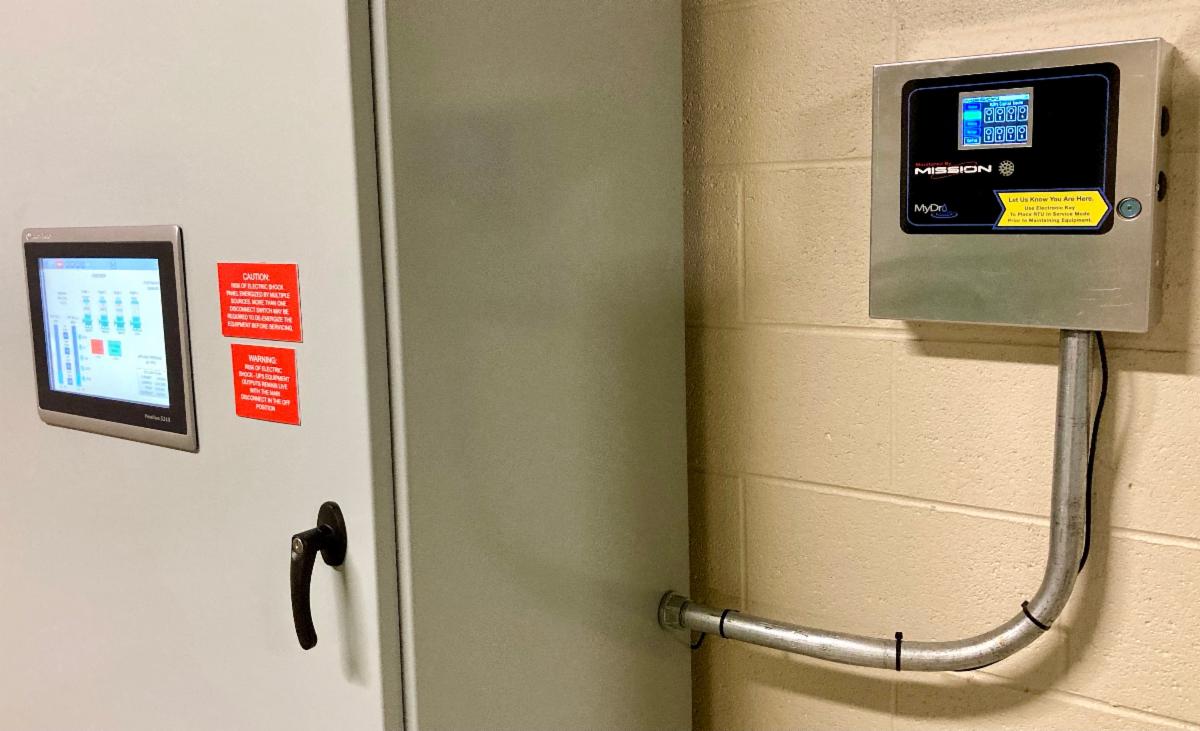
Gwinnett County Department of Water Resources, located near Atlanta, Georgia, was one of the first Mission Communications customers to transition their legacy series remote terminal units (RTUs) to the MyDro series. James Brannen, Process Control Associate for supervisory control and data acquisition (SCADA), explains that they were interested in upgrading their 211 RTUs to take advantage of over-the-air firmware updates, a feature that is only available on the newer MyDro RTUs. Mission strives to provide customers with the best possible service and features and periodically provides firmware updates when new enhancements are released. |
Gwinnett County uses MyDro units at all 211 of its stations. |
Brannen says, “With so many stations, it was a huge task to go to each and upgrade the firmware manually. Considering drive time, swapping the firmware, and completing the work order ticket, the process could take our Mechanics about an hour or two per station. We would spend hundreds of man hours just to upgrade firmware. We’ve saved an incredible amount of labor time with everything being over-the-air. It’s also led to less wear and tear on county vehicles and increased fuel savings.”
Overall, the Gwinnett team found the installation process of the new MyDro RTU to be relatively simple. After working with Mission Technical Support to learn the process, Gwinnett County’s staff electricians were able to complete each upgrade installation in about an hour, depending on the wiring at the stations.
“Having the LCD display screen and being able to see the inputs is helpful to our mechanics who do the weekly and monthly inspections on every station. If there’s an issue, it’s so much easier for them to be able to see how the input is lighting up rather than having to call an administrative worker to verify,” Brannen says.
|
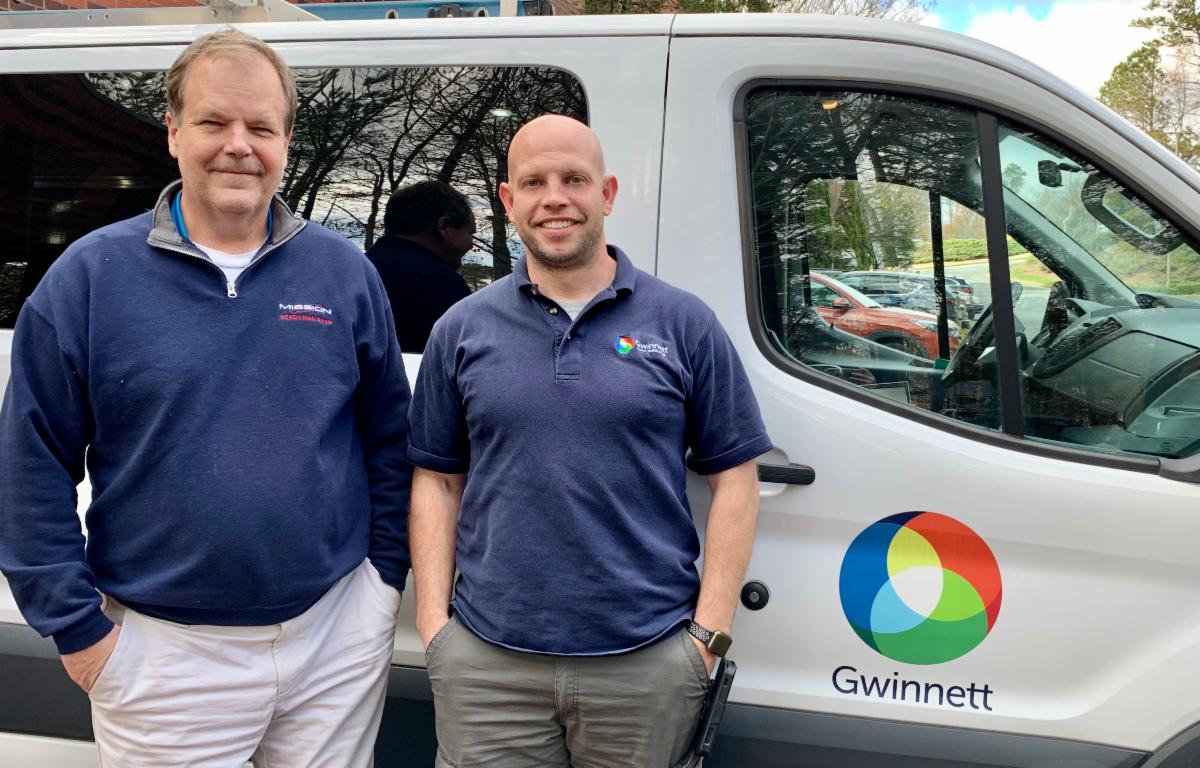
Mission representatives always appreciate the opportunity to talk with customers. Brannen visted the Mission headquarters in Norcross, Georgia and spent some time with Mission President Forrest Robinson. |
Gwinnett County is one of Mission's first customers. The utility’s RTUs are assigned to three different systems—Wastewater Collections, Dam Monitoring, and Clean Water—that service about one million people. Brannen says, “Our sewage pump stations move around 50 million gallons on a normal day and up to 80 million gallons on a high-flow day. The sewage treatment plants treat around 60 million on average and about 115 million on a high-flow day. The reason for the discrepancy in those figures is that some of the flow is brought into the plant by gravity and never enters our pump stations.” The Department of Water Resources Pump Stations group consists of a total of 38 employees, who help maintain all 211 pump stations. Brannen is one of four that manage the pump station SCADA assets. |
According to Brannen, the utility primarily uses programmable logic controllers (PLCs) and a customized SCADA system through another organization. For the past six years, Brannen and his team have been responsible for configuring the PLCs, overseeing the Mission units as well as managing the automation of the collections system. Prior to taking this role, he’d been with Gwinnett County for about five years. They use the Mission units as a secondary system to back up their most critical alarms, related to phase loss, power loss, high level, etc.
Beside being among the first of Mission’s customers to fully upgrade to the MyDro series, Gwinnett County was also the first to start utilizing the 123SCADA web portal for automated alarms, which has also saved their team time and effort. Brannen says, “The interface is really user-friendly. Before we had the new RTUs, the dispatch operator would have to figure out who to call. Being able to send those alarms directly to the person who is responsible for that area has cut out a lot of time back and forth and who needs to be there. Our mechanics also appreciate being able to decide how they receive notifications—many like to be called, but some prefer text messages.”
In addition to the LCD screen and capability for over-the-air upgrades, the MyDro series MyDro units have a boost-buck converter with a 12 or 24 VDC selectable auxiliary output, which can be helpful for applications that use a lot of instrumentation. The MyDro series also has removable terminal blocks, high current onboard relays, increased memory, a smart backup battery charging circuit, the ability to wire current sensors directly to digital inputs, and more.
To assist in the upgrade process, Mission created an instruction manual that can be accessed through the web portal. Learn more about the benefits of upgrading legacy units to MyDro by contacting sales@123mc.com or visiting our website. |
Smart Water Summit Honors Mission with Best Solution Award |
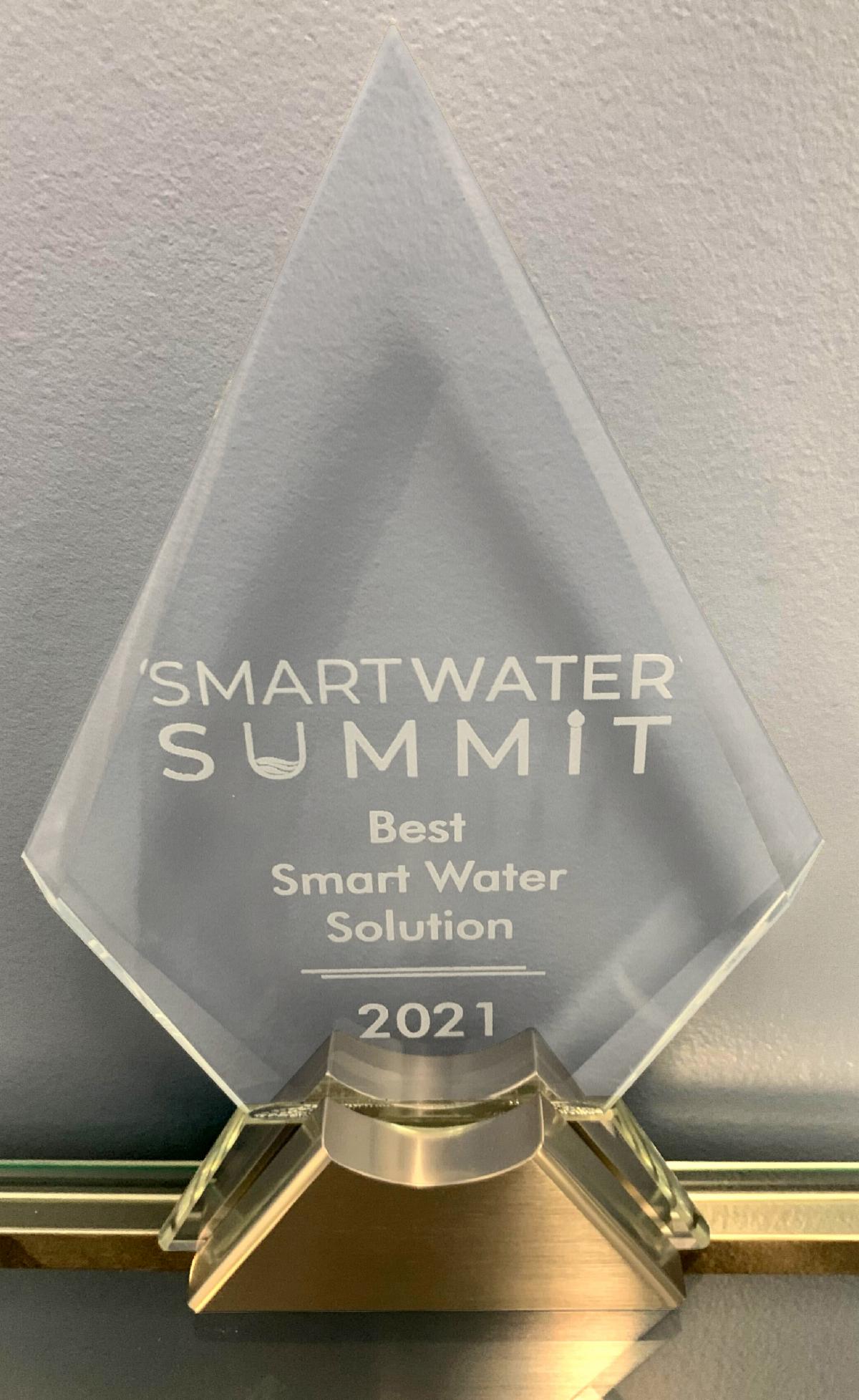
Mission Communications is proud to have received the award for Best Smart Water Solution at the Smart Water Summit (SWS) held in Ponte Vedra, Florida, on September 21, 2021.
Nearly fifty vendors competed in three award categories (Best Smart Water Solution, Smart Water Vendor to Watch, and Best Overall Boardroom Presentation). Awards were voted on by more than 100 utility executives representing water utilities across North America. Mission received this honor for its highly reliable solutions, which are designed for pump stations, lift stations, manholes, tank and well control, as well as lake and river level monitoring.
Mission Communications President Forrest Robinson says, “The format of SWS allows for quality time between attendees and presenters. We appreciate the opportunity to socialize with our customers and answer questions for prospective clients, especially since we haven’t had many chances to connect face-to-face lately because of COVID. This was the first trade show many of the participants attended in the past two years.
Throughout the conference, Robinson and National Sales Manager Matt Crousillac had the opportunity to present to about ten groups of utility experts, sharing Mission’s offerings and best practices.
|
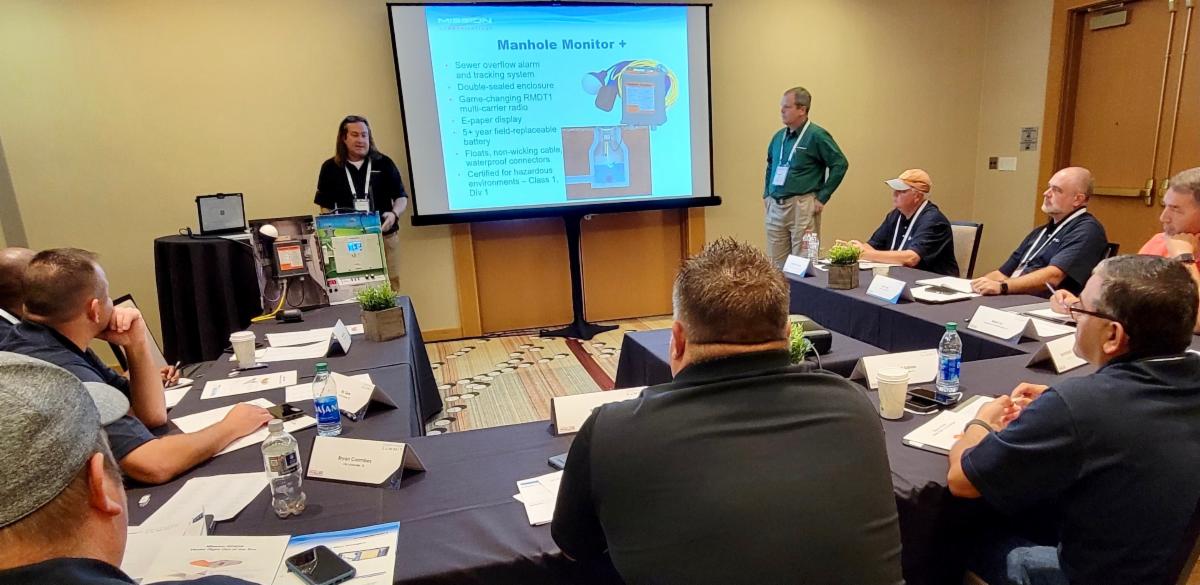
Crousillac and Robinson present to a group of industry professionals about Mission’s Manhole Monitor Plus. |
Mission representatives have attended SWS for the last four years, and Robinson was invited to give the keynote address at this year’s conference. The central theme of his talk was “Change,” focusing on the many ways COVID-19 has led the world to invent different ways of overcoming new challenges.
Robinson pointed out that, in many industries, the cost of staffing is growing more rapidly than inflation. This, coupled with the difficulties associated with maintaining a company culture in a remote work environment, has led to increased poaching among workforce members. Inefficiencies are continually present in supply chains world-wide, and the cost associated with compensating for these issues has stressed budgets because of rapidly rising costs.
|
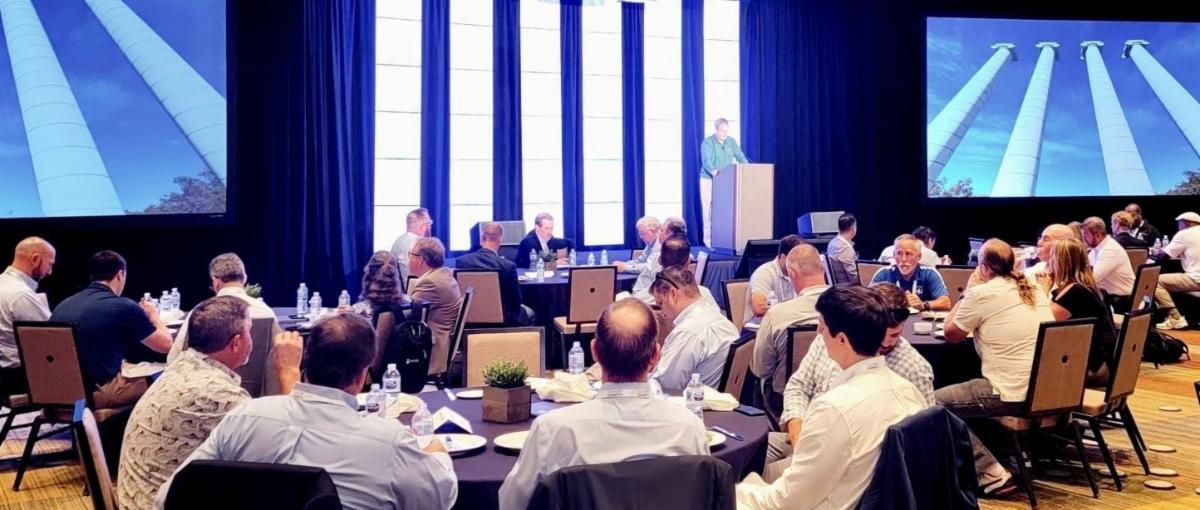
Robinson gives a keynote address to more than 100 industry professionals about the effects of change in the workplace following COVID-19. |
On the bright side, recent technology has made this period easier to navigate. Robinson’s advice to leaders experiencing similar struggles is to embrace the change rather than fighting it. “The first element to mastering something is to focus on it. It can help to formally delegate an advocate or small subset of employees to become subject matter experts on the issue or a given solution, and empower them to mentor the rest of your team,” Robinson explains.
The Mission team has implemented leads in every department, and these employees focus on a particular issue or product and provide regular status updates to the rest of the team. As one example, Production Lead Michael Loudin is responsible for coordinating order logistics and the prioritization of shipments. This change was necessary because of the organization’s rapid growth and many customers taking advantage of Mission’s LTE upgrade program.
“Throughout this evolving pandemic, Mission has remained focused on our number one priority of supporting our customer’s business and service continuity. As we enter another season of this pandemic, the world may still be in a state of flux, but we are determined to keep our customers’ service running uninterrupted and ensure their peace of mind,” Robinson explains.
Visit our website to learn more about our solutions:
|
Reclaimed Water as a Sustainable Agriculture Practice |
Water is one of Earth’s most valuable resources. Decreasing freshwater availability is a growing concern for many nations, particularly considering a rapidly growing global population.
Arid countries, which can face water shortages more acutely, have developed techniques to cope with limited freshwater supply. For instance, Israel has been using reclaimed water in irrigation for decades, with a water reuse rate of 87%. To learn how their practices could be incorporated in the United States, experts at the Environmental Protection Agency (EPA) collaborated with Israel to create the 2020 National Water Reuse Action Plan (WRAP). This plan provides guidelines and safety requirements for water reclamation procedures in agriculture.
According to the EPA, “Ultimately, the WRAP collaborative strives to ensure that water reuse is accessible, straightforward to implement, and sensitive to climate and environmental justice considerations. Over time, the collective efforts of the organizations and entities participating in WRAP actions can grow the body of reuse knowledge and best practices for the benefit of all. Reuse of treated wastewater and stormwater for agricultural, non-potable, or even potable uses provides an alternative source of water that can be more reliable than traditional raw water sources.”
|
Up to 80% of a region’s freshwater supply can be used by the agricultural industry to support food growth. Protecting Earth’s natural resources is critical to the health of global communities. With increasing demands from agriculture production, reclaimed water has become a viable and sustainable solution for agricultural planning and production.
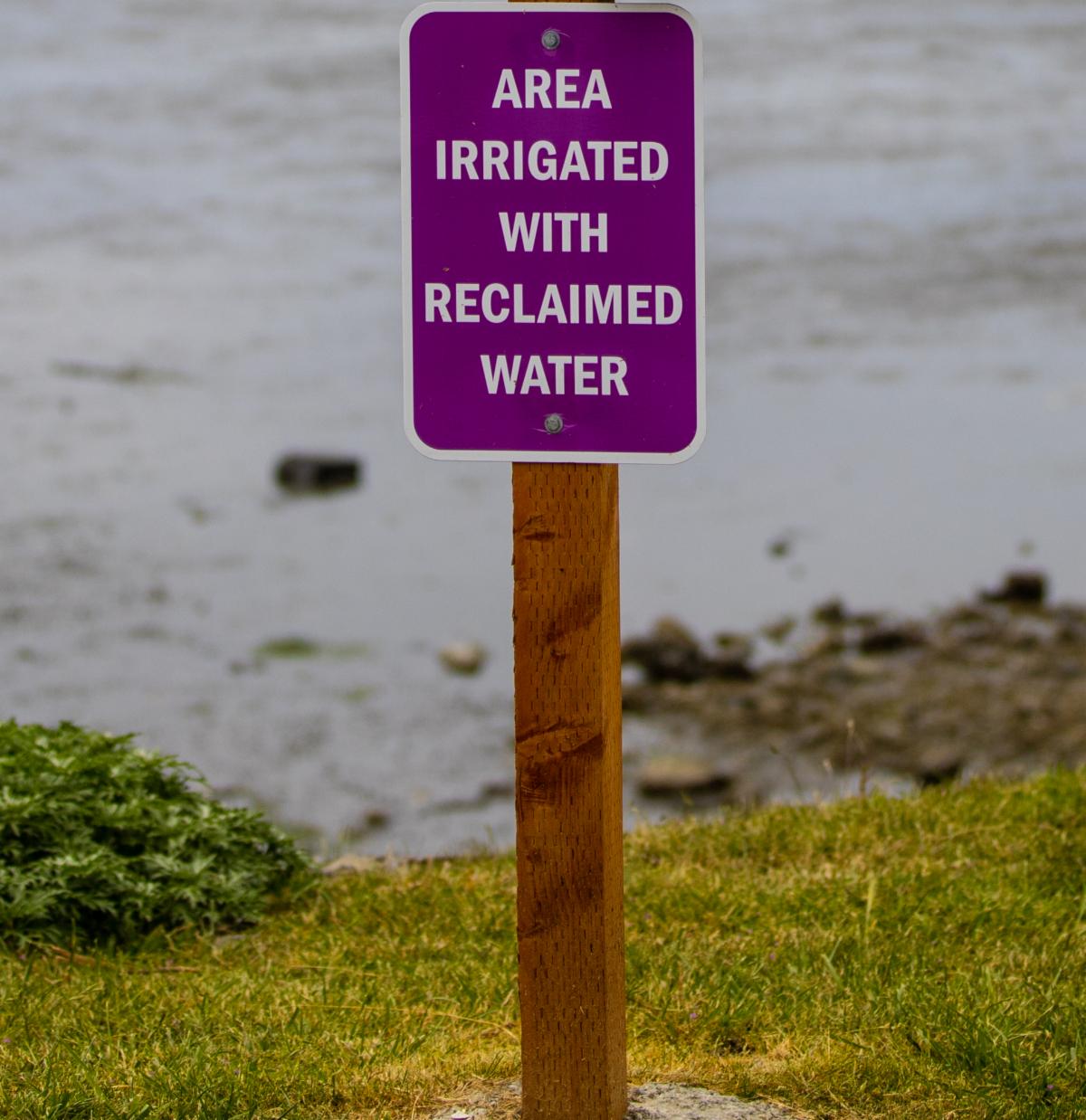
Reclaimed water—also referred to as recycled water—is converted from stormwater or wastewater, and from municipal/industrial applications, into water that can be used for a variety of purposes. While this water is generally not suitable for drinking water, it can perfectly serve for crop irrigation.
Reusing wastewater as part of sustainable water management allows water to remain as an alternative water source for human activities. This can reduce scarcity and alleviate pressures on groundwater and other natural water bodies. These applications can also have benefits for the environment, such as helping to further remove harmful contamination which could potentially leech into the drinkable water supply. Plus, reclaimed water is nitrogen-rich, helping the soil maintain healthy nutrients for the next crop.
Further benefits of reclaimed water in agricultural applications can include:
- Resiliency: Water recycling provides a constant, reliable supply of fresh water that does not rely on environmental factors or pumping restrictions.
- Local Control: Agricultural reuse creates a local water supply for arid regions that depend on imported water.
- Sustainability Benefits: Agricultural reuse saves resources, reduces pollution to sensitive water bodies, and reduces energy use associated with pumping long distances.
- Safety: State and federal regulations establish stringent standards for water quality that protect public health.
Sources:
|
Year-End System Reminders and Tips |
As the year comes to a close, the Mission team would like to remind customers of a few tips to keep their systems running effectively and efficiently. |
Upgrade 3G Radios in Mission Units
Our primary cellular carriers have announced they will turn off their 3G networks to allocate bandwidth for new and more spectrum-efficient network protocols. This change affects all cellular applications, not only Mission RTUs. The sunsets will occur according to the following schedule:
- AT&T (3G GSM) – February 22, 2022
- Verizon (2G and 3G CDMA) – December 31, 2022
All Mission units with non-LTE radios will need upgraded radio modules to continue operating. Customers have three options:
-
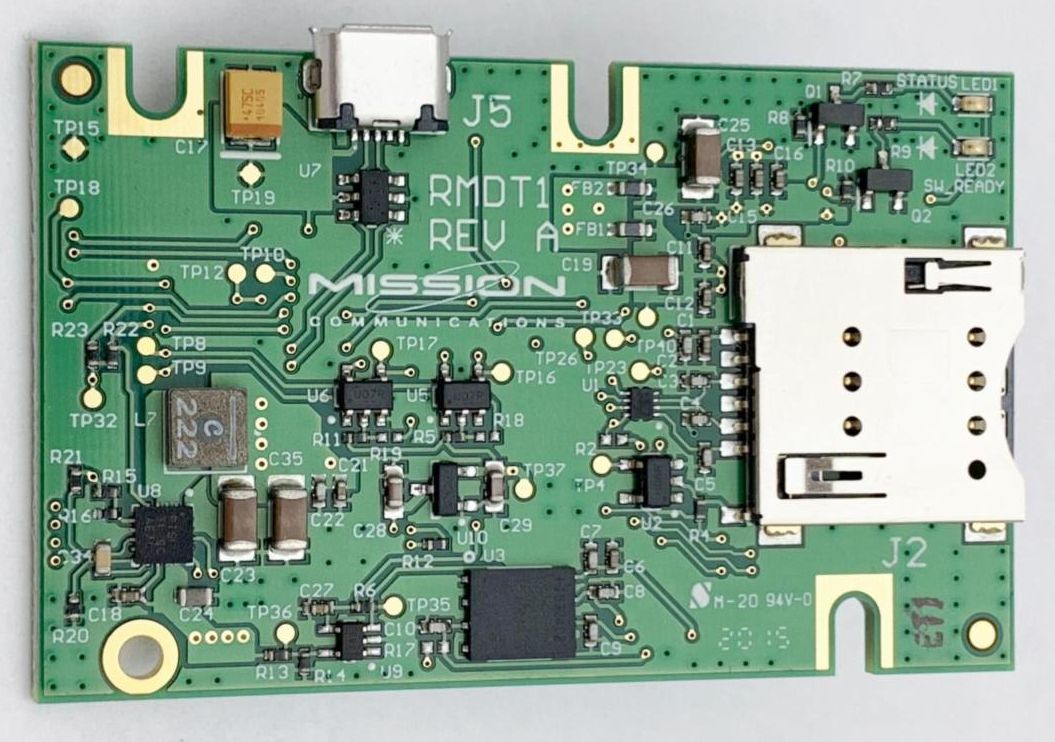
RTU Upgrade: This option provides the customer with a new RTU featuring our RMDT1 radio. Aggressive incentives are being offered for this option, so it is the best option.
-
Radio Upgrade Replacement: Customers can choose to purchase a new radio for their RTUs for $250 prior to network sunsets. This will ensure constant connection for the RTUs.
-
Radio Replacement After Network Sunset: After cellular network sunsets occur, older RTU radios will fail. As part of our Technology Obsolescence Guarantee, Mission will send a replacement radio free of charge. Note that this option will put the RTU offline until the new radio is shipped and installed.
Customers can consult their web portal to know if this applies to their RTUs, specifically by noting the pop-up banners upon logging in or by checking the weekly Management Report.
|
Streamlined SMS Alarm Notifications
Mission streamlined the process for SMS (text message) alarm notifications. The new SMS system sends notifications from a single originating number, allowing each notification to appear in the same message window. This mimics texting with personal contacts since all notifications will be easily available in the same message thread.
The Mission toll-free number (877-993-1911) is the primary sender of SMS messages. In the event of service disruption with the toll-free number, SMS messages may be sent from the Mission backup number (865-895-4498).
To help users navigate the SMS alarm notification system, Mission has created a short guide that explains the codes used for SMS notifications. For example, “OK” will acknowledge the most recently received alarm. This guide is available in the web portal under Documents in the Troubleshooting and Help Guides folder.
|
Protecting Pressure Transducers
During cold weather months, pressure transducers are vulnerable to freezing conditions. If your application utilizes this type of instrument, you can consider the following options to protect it:
- Insulate the transducer
- Wrap the feed line with heat tape to avoid freezing
- Implement oil-filled feed lines
- Bury the transducer below the frost line
- Implement pressure relief valves
You could also circumvent the issue by using a different type of device:
- Use a submersible transducer instead of non-submersible transducer
- Implement an UltraSonic or radar transducer
- Consider a bubbler level measurement device
- Use a Milltronics-style level probe
With any solution that is implemented, be sure that equipment is safe for use with any chemicals that may be present at the site.
|
Positioning Solar Panels
Mission utilizes polycrystalline photovoltaic panels which are affordable and efficient. They work best when they are pointed properly and are not shadowed by buildings or vegetation.
Mission recommends that customers make seasonal adjustments to the angle of the solar panel to optimize efficiency. This is particularly important during winter months when there are fewer hours of daylight. While the azimuth (left and right) position remains fixed for a given installation location, if voltages degrade during the winter months the elevation (up and down) angle may be adjusted to improve performance.
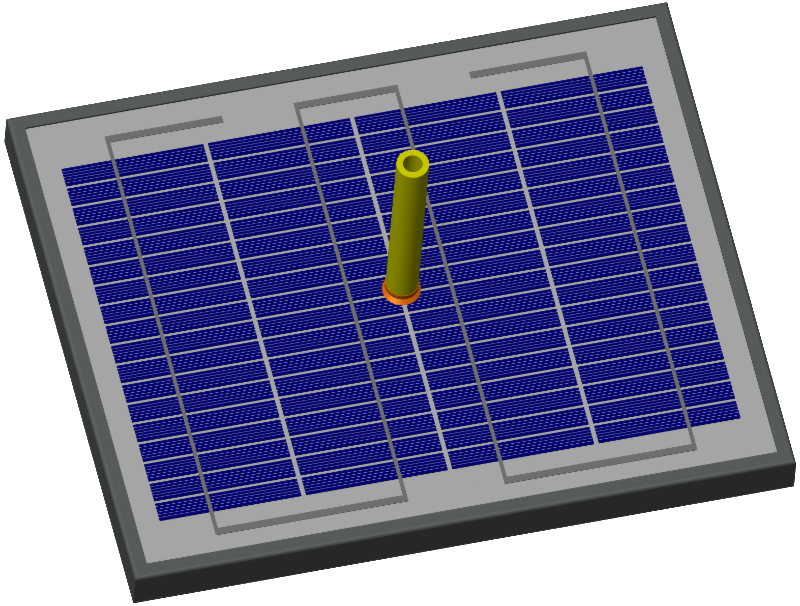
To achieve the best angle for the season, use a suction dart attached to the center of the panel at noon, local time until all shadows disappear. You can also use this calculator to ensure the proper tilt of your solar panels.
For questions related to these tips or any other element of the Mission system, please reach out to techsupport@123mc.com or sales@123mc.com. You can also reach the Technical Support team by dialing 877-993-1911, option 2.
|
|